

The query a developer asks earlier than committing to a CRM API isn’t whether or not the endpoints exist, however whether or not they cowl sufficient of the information mannequin to justify constructing in opposition to them as a substitute of the dashboard.
Pipedrive’s API is a mature REST floor with two lively variations (v1 and v2), OAuth 2.0 assist, revealed OpenAPI 3 specs, official SDKs for Node.js and PHP, full webhook assist, and API entry on each plan, together with the entry-level Lite tier.
The developer hub is public, the changelog pronounces breaking modifications with lead time, and a free sandbox account helps you to construct with out touching manufacturing knowledge. For a CRM that began in an Estonian storage in 2010, the developer floor is well-equipped.
However protection of the CRM knowledge mannequin and protection of the intelligence that feeds it are totally different questions.
Pipedrive’s API offers you programmatic management over every thing contained in the CRM: offers, contacts, organizations, leads, actions, merchandise, pipelines, phases, notes, recordsdata, and the automation engine that connects them. In case your construct is a CRM integration (syncing knowledge out and in, triggering workflows on deal occasions, embedding Pipedrive into a bigger gross sales device), the API is scoped for that job. What it intentionally doesn’t cowl is the intelligence layer upstream of the CRM: who these contacts are past what a rep has entered, what firms they work for at scale, whether or not these accounts present shopping for intent, and what their know-how stack seems to be like.
That is the place ZoomInfo enters the image. ZoomInfo is an AI GTM platform constructed on 500M contacts, 100M firms, 135M+ verified cellphone numbers, and 200M+ verified enterprise e mail addresses. Its Enterprise API is a REST suite masking search, enrichment, AI intelligence, and viewers administration, with OAuth 2.0 authentication, tiered price limits, and an MCP server for AI-agent workflows.
The 2 APIs are layers of the identical pipeline, not rivals: Pipedrive manages the gross sales course of, ZoomInfo offers the intelligence that informs it.
This evaluate covers the Pipedrive API in technical depth first (authentication, endpoints, webhooks, SDKs, price limits, and pricing), then opinions ZoomInfo’s API because the intelligence layer that picks up the place CRM knowledge stops.
Pipedrive API at a Look
|
Attribute |
Element |
|---|---|
|
API sort |
REST over HTTPS, JSON responses, CORS-enabled |
|
Authentication |
API token (question parameter or header) and OAuth 2.0 authorization code circulation |
|
Base URL |
/api/v1/ (secure) and /api/v2/ (newer, decrease token value) |
|
Price limits |
Token-based every day price range: 30,000 base tokens x plan multiplier x seat depend |
|
Pricing / entry |
API entry included on all plans, together with Lite ($14/month per seat) |
|
SDKs |
|
|
Webhooks |
Sure, Webhooks v2 with event-based subscriptions throughout all core entities |
|
App Extensions |
Customized UI extensions, JSON modals/panels, video calling and messaging extensions |
|
Documentation |
builders.pipedrive.com (API reference) and pipedrive.readme.io (narrative docs); OpenAPI 3 specs for v1 and v2 |
Pipedrive API: What Works Nicely & What to Plan Round
|
What works effectively |
What to plan round |
|---|---|
|
API entry on each plan, together with the $14/month Lite tier |
Token-based every day price range shared throughout all customers within the firm account |
|
OAuth 2.0 with scoped permissions for Market apps |
API token auth is static, no rotation: wonderful for inner scripts, dangerous if leaked |
|
OpenAPI 3 specs for each v1 and v2, importable into Postman/Insomnia |
v2 remains to be increasing; some sources stay v1-only |
|
Free developer sandbox account, separate from manufacturing |
CRM scope solely: no contact enrichment, intent knowledge, org charts, or technographics |
|
Webhooks v2 covers all core entities with field-level change occasions |
Max 40 webhook subscriptions per consumer |
|
Changelog pronounces breaking modifications with 1-3 months discover |
Token price range scales with plan tier and seats; heavy API utilization requires increased plans or top-ups |
Pipedrive API: Authentication & Getting Began
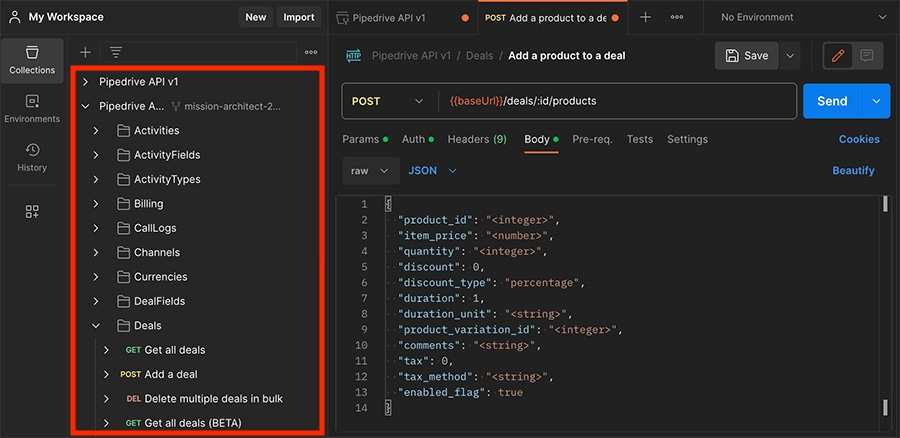
Supply: Pipedrive
Getting API entry requires a paid Pipedrive account on any plan. The Lite tier at $14/month per seat contains full API entry, and a free developer sandbox account helps you to construct and take a look at integrations with out touching manufacturing knowledge.
Pipedrive helps two authentication strategies: a private API token and OAuth 2.0.
API token: A static token generated contained in the Pipedrive app, handed as a question parameter or header on every request. This technique fits inner scripts and personal integrations the place a single consumer’s credentials are acceptable.
Beginning with API v4, accounts can maintain a number of API keys, every tied to its personal utilization statistics, so you possibly can separate site visitors from totally different integrations.
OAuth 2.0: The authorization code circulation is required for any app listed within the Pipedrive Market. The circulation is normal:
OAuth tokens are scoped at app registration (e.g., offers:learn, contacts:write, merchandise:full, webhooks:write), and customers see the requested permissions on a consent display earlier than approving. Apps registered within the Developer Hub obtain a client_id and client_secret.
Pipedrive has improved safety for OAuth entry tokens, as introduced within the changelog.
A primary authenticated request:
curl “https://api.pipedrive.com/api/v1/offers”
-H “Authorization: Bearer YOUR_ACCESS_TOKEN”
The response returns a hit boolean, the requested knowledge, and pagination metadata on listing endpoints.
Pipedrive API: Core Endpoints & Capabilities
The API covers the total breadth of Pipedrive’s CRM knowledge mannequin. All sources comply with normal REST patterns (GET, POST, PUT/PATCH, DELETE) and return paginated JSON. Each offset-based and cursor-based pagination are supported; Pipedrive launched cursor pagination for Individuals, Organizations, Actions, and Offers endpoints in v2.

Supply: Pipedrive
Offers
The offers floor is the center of the API, matching Pipedrive’s pipeline-first design.
Operations: Create, learn, replace, delete, search, and bulk-operate on offers. Helps product affiliation (Deal Merchandise), installment scheduling (Deal Installments), label administration, and deal-to-lead / lead-to-deal conversion. Pipedrive added bulk deal-product operations in v2.
What you’ll construct with this: a bidirectional CRM sync that creates offers from a billing system when a trial begins, attaches merchandise with pricing, and strikes the deal by phases based mostly on utilization occasions out of your utility.
Individuals & Organizations
Full CRUD plus merge (deduplicate) operations. Group relationships (mum or dad/youngster hierarchies) reside on a separate endpoint. Each assist customized fields for arbitrary knowledge extensions.
What you’ll construct with this: a contact deduplication service that periodically scans for duplicate particular person information, merges them programmatically, and maintains clear group hierarchies throughout imported knowledge.
Leads
Create, learn, replace, and delete leads, saved separate from offers. Consists of lead labels, lead sources, and cross-conversion endpoints for shifting leads into the deal pipeline.
Actions
Log and retrieve calls, emails, duties, conferences, and customized exercise varieties. v2 endpoints can be found in public beta. Actions connect to offers, individuals, or organizations, making them the audit path for each gross sales interplay.
Merchandise
Handle the product catalog with subscription assist, duplication, picture administration, and customized fields. Merchandise connect to offers with amount and pricing, enabling income calculations on the deal stage.
Notes & Information
Notes connect to offers, individuals, organizations, leads, or mission duties. Information might be uploaded immediately or referenced from exterior sources (Google Drive, Dropbox). Measurement limits apply.
Pipelines & Phases
Learn and handle pipeline configurations and stage definitions. Since Pipedrive helps a number of customized pipelines, these endpoints allow you to programmatically create the pipeline buildings that match totally different gross sales processes.
Merchandise Search
A unified cross-entity search endpoint (/api/v1/itemSearch) spanning Offers, Individuals, Organizations, Leads, Merchandise, and Information. That is the quickest path to constructing a worldwide search characteristic in opposition to Pipedrive knowledge.
Tasks & Duties
Challenge administration endpoints (boards, phases, templates, duties) can be found by way of the Tasks API v2, extending Pipedrive’s attain into post-sale mission monitoring.
Supporting Assets
The API additionally covers Mailbox (learn synced e mail threads), Name Logs (log CTI occasions), Customers and Roles (handle entry), Filters (save customized filter situations), Targets (create/retrieve gross sales targets), Recents (time-ordered stream of modified information throughout entity varieties), and Billing and Currencies.
All responses embrace a hit boolean. Customized fields seem as hash-keyed fields on every entity; the Fields APIs (DealFields, PersonFields, and many others.) expose subject definitions so you possibly can map keys to labels at runtime.
Pipedrive API: Webhooks & Occasions
Pipedrive has full webhook assist, managed by way of the REST API. Webhooks v2 is now the default model following a breaking change announcement.
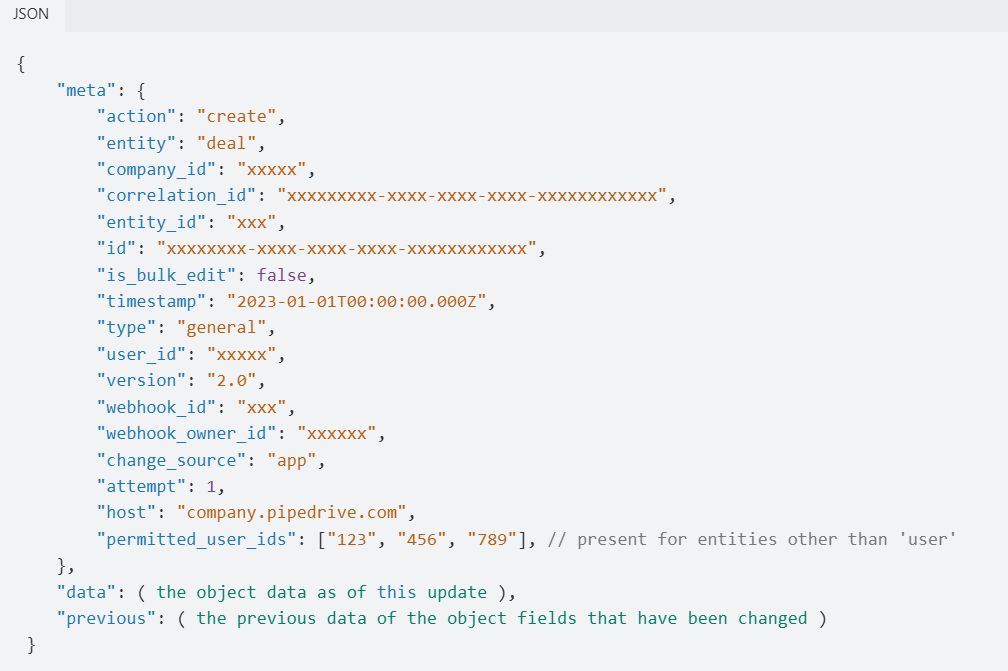
Supply: Pipedrive
Occasion specification: Every webhook subscription takes two parameters, event_action and event_object, that mix into an motion.object sample (e.g., create.deal, delete.individuals, *.* for all occasions).
Supported actions are create, change, delete, and * (wildcard). Supported objects embrace all core entities: deal, particular person, group, exercise, be aware, product, lead, stage, pipeline, mission, and job.
Current expansions (as of Could 2026):
-
Entity subject definition webhooks: hearth when customized subject schemas change (not simply values), masking Deal Fields, Lead Fields, Particular person Fields, Group Fields, Product Fields, and Challenge Fields
-
Group webhook payloads now embrace web site, linkedin, trade, annual_revenue, and employee_count
Supply: Pipedrive delivers webhooks as HTTP POST to a subscription_url that should be publicly accessible. IP allowlisting documentation is offered for firewall configurations. OAuth-scoped apps will need to have the webhooks:write scope. The restrict is 40 webhook subscriptions per consumer.
What you’ll construct with this: a real-time integration that pushes deal-stage modifications to your billing system, triggers Slack notifications when new leads arrive, and updates an exterior analytics dashboard every time a deal closes, all with out polling.
Pipedrive API: SDKs, Docs & Price Limits
SDKs & Libraries
Pipedrive maintains two official API consumer libraries:
A number of actively maintained group libraries lengthen protection:
Pipedrive additionally offers a create-pipedrive-app CLI device for scaffolding new Market apps. A Pipedrive MCP server is offered in beta, letting AI assistants join on to Pipedrive by way of the Mannequin Context Protocol.
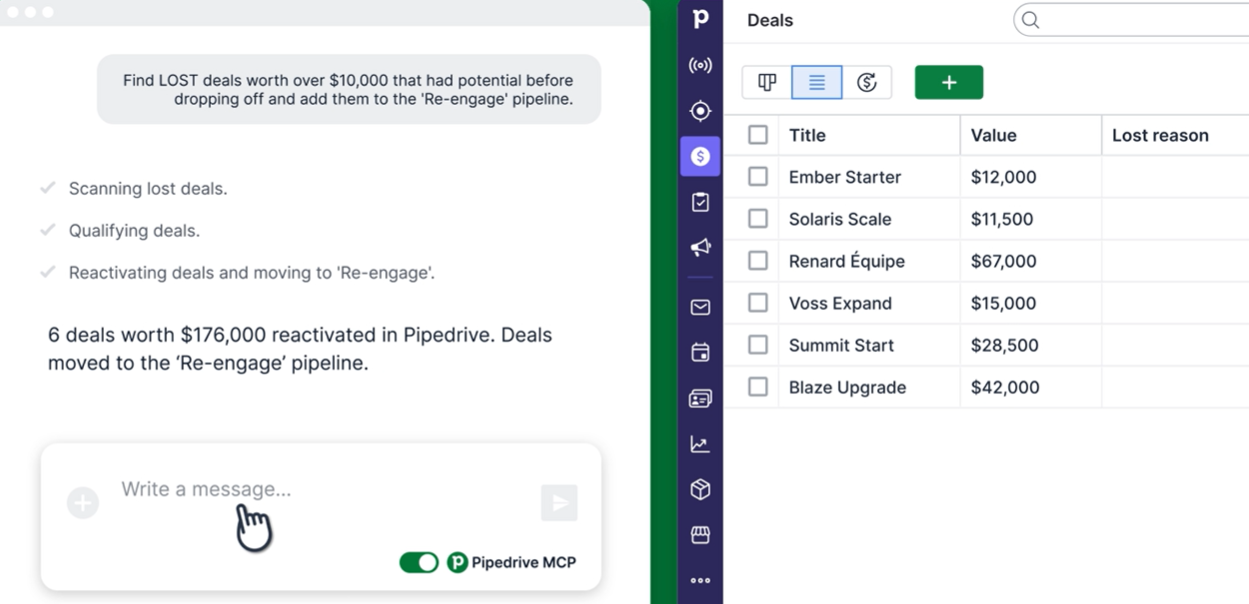
Supply: Pipedrive
Two official SDKs is proscribed in comparison with some platforms, however the OpenAPI 3 spec means you possibly can auto-generate shoppers in any language. The group libraries fill in Python, .NET, and Ruby, although they’re community-maintained, so examine every repo’s commit historical past earlier than relying on it in manufacturing.
Documentation & Developer Expertise
Pipedrive’s developer documentation is well-organized throughout two surfaces:
-
API Reference at builders.pipedrive.com: each endpoint documented with request/response schemas, parameter descriptions, and inline token value. OpenAPI 3 spec recordsdata can be found for each v1 and v2, and a “Run in Postman” button sits on the reference web page.
-
Narrative docs at pipedrive.readme.io: covers authentication flows, core API ideas (pagination, price limiting, date formatting, HTTP codes), OAuth scopes information, Market submission course of, App Extensions (JSON panels, customized UI iframes, messaging and video calling extensions), and a full information for Webhooks v2 together with migration from v1.
The Changelog is detailed and developer-friendly: the staff pronounces breaking modifications with efficient dates (sometimes 1-3 months discover) and flags them with “BREAKING CHANGE” labels, with e mail subscriptions obtainable.
A free developer sandbox account is offered for testing integrations with out danger. The Developer Group discussion board handles developer Q&A, and Pipedrive engineering publishes technical content material on Medium.
A tutorial library covers frequent duties like creating offers, pagination, working with customized fields, and constructing CTI integrations.
The documentation is full, publicly accessible, and well-maintained. The interactive reference, the sandbox account, and the OpenAPI spec give a developer 3 ways to verify response shapes earlier than writing manufacturing code.
Price Limits & Constraints
Pipedrive makes use of a token-based price limiting system, launched for brand new signups December 2, 2024 and rolled out to present prospects by December 31, 2025.
The way it works: Every API request consumes tokens from a company-wide every day price range. Light-weight endpoints eat fewer tokens; advanced or data-heavy endpoints eat extra. Pipedrive publishes token prices per endpoint within the API Reference.
When the every day price range runs out, additional requests obtain a 429 Too Many Requests response till the price range resets at midnight.
Funds system:
30,000 base tokens x plan multiplier x variety of seats (+ bought top-ups)
|
Plan |
Multiplier |
Instance (5 seats) |
|---|---|---|
|
Lite |
1x |
150,000 tokens/day |
|
Progress |
2x |
300,000 tokens/day |
|
Premium |
5x |
750,000 tokens/day |
|
Final |
7x |
1,050,000 tokens/day |
The price range is shared company-wide throughout all customers and applies solely to API site visitors, not UI actions. Firms can buy further API token top-ups in increments of 250,000 tokens (as much as 10 items), obtainable from the Progress plan onward.
One sensible consequence: migrating to API v2 reduces token consumption per request, since v2 endpoints are extra environment friendly. In case you are approaching your every day price range ceiling, switching v1 calls to their v2 equivalents is the primary optimization to strive.
Pipedrive API Pricing & Entry Prices
Pipedrive contains API entry on each paid plan. There are not any per-call fees, no separate API tier, and no enterprise-only gating. The efficient value of API entry is the plan subscription itself.
The plan tiers (per seat, per 30 days):
-
Progress: Provides e mail sync, automations, sequences, and 2x API token price range
-
Premium: Provides Good Docs, Tasks, LeadBooster, and 5x API token price range
Pricing makes use of a per-seat mannequin for the CRM, with add-ons billed per firm. Annual billing affords as much as 42% low cost over month-to-month.
For a developer sizing prices: the API itself is free on any paid plan. The actual value driver is the token price range, which scales with plan tier and seat depend.
A five-seat staff on the Lite plan will get 150,000 tokens per day. In case your integration hits advanced endpoints typically (which eat extra tokens), you will have both a higher-tier plan or bought top-ups. API token top-ups can be found from Progress onward at 250,000 tokens per unit, as much as 10 items.
The 14-day free trial contains full API entry with no bank card required, and the free developer sandbox is offered indefinitely for constructing and testing integrations.
The place the Pipedrive API Falls Quick
These are sensible limits a developer ought to plan round, not criticisms of the platform. A number of mirror the deliberate scope of a CRM API.
The API manages CRM knowledge. It doesn’t supply it. There isn’t any contact enrichment endpoint, no firm intelligence lookup, no intent sign feed, no technographic knowledge, and no org-chart traversal. In case your pipeline wants a contact’s verified e mail, their firm’s worker depend, their know-how stack, or whether or not their account is actively researching your class, you want a second API.
Pipedrive’s Prospector characteristic (a part of the LeadBooster add-on) affords some knowledge enrichment within the UI, however that functionality isn’t uncovered by the API.
Token price range gates heavy API utilization. The every day token price range is shared throughout all customers within the firm account. A Lite plan with 5 seats offers you 150,000 tokens per day, however advanced endpoints can eat 10+ tokens per name.
For prime-frequency integrations (real-time sync, massive knowledge migrations, a number of concurrent integrations), you will have both a higher-tier plan or bought top-ups. The price of API entry is technically $0, however the price of adequate API capability isn’t.
40 webhook subscriptions per consumer. For a easy integration, 40 is lots. For a platform that should subscribe to occasions throughout dozens of entity varieties and actions, you will have to make use of wildcard subscriptions (*.*) and filter in your receiver relatively than subscribing granularly.
Two official SDKs (Node.js and PHP). Python, .NET, Ruby, Go, and Java builders depend on group libraries or uncooked HTTP calls. The OpenAPI spec mitigates this (you possibly can auto-generate a consumer in your language), however an auto-generated consumer isn’t the identical as a maintained SDK with idiomatic patterns and examined edge instances.
v2 remains to be increasing. Not all sources have v2 endpoints but, so some integrations should combine v1 and v2 calls. The 2 variations use totally different pagination kinds (offset vs. cursor) and eat tokens at totally different charges, including complexity to integrations that span each.
No native knowledge intelligence. Pipedrive doesn’t expose purchaser intent indicators, technographic knowledge, funding occasions, hiring patterns, or aggressive intelligence by its API. The CRM information what reps enter and what integrations push in.
For a developer constructing a system that should motive about which accounts are price pursuing, the CRM knowledge alone is incomplete.
ZoomInfo API: The Intelligence Layer Pipedrive Does Not Cowl
Pipedrive’s API tells you every thing taking place contained in the CRM: which offers are by which stage, what actions are logged, who the contacts are as reps entered them.
ZoomInfo’s API tells you what the CRM can’t: who these contacts really are at scale, what firms they work for, what know-how these firms use, whether or not they’re actively researching your class, and the place they sit within the org chart.
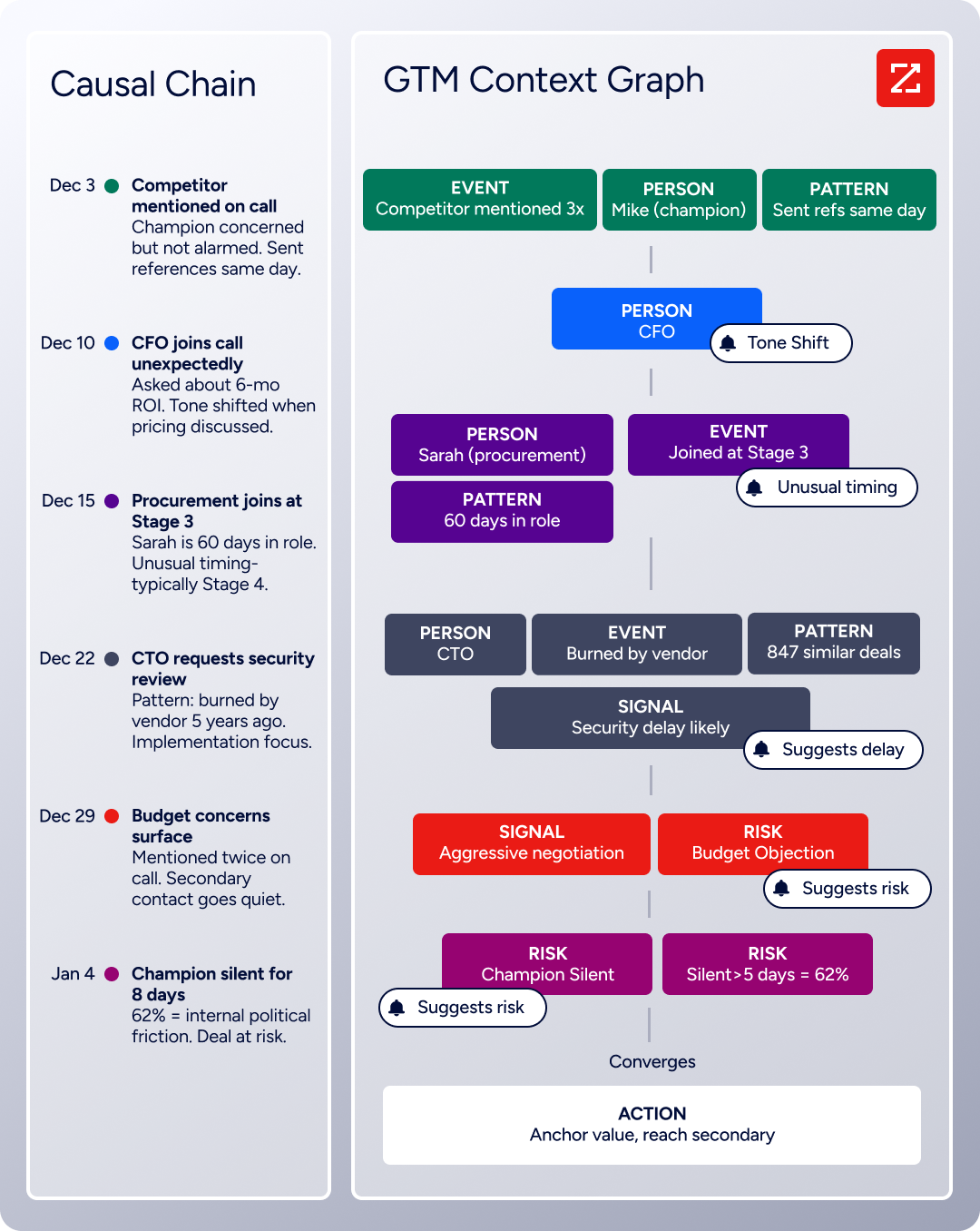
The 2 APIs function at totally different layers of a GTM knowledge pipeline. The hole between “what’s within the CRM” and “what ought to be within the CRM” is strictly the place ZoomInfo’s API matches. Powering that intelligence is the GTM Context Graph, which processes 1.5B+ knowledge factors every day by fusing ZoomInfo’s B2B knowledge together with your first-party knowledge to disclose not simply what occurred, however why.
What the API Covers: Search, Enrichment, and AI Intelligence
ZoomInfo’s Enterprise API is a REST suite served from https://api.zoominfo.com/gtm, organized into 4 areas documented within the interactive API reference.
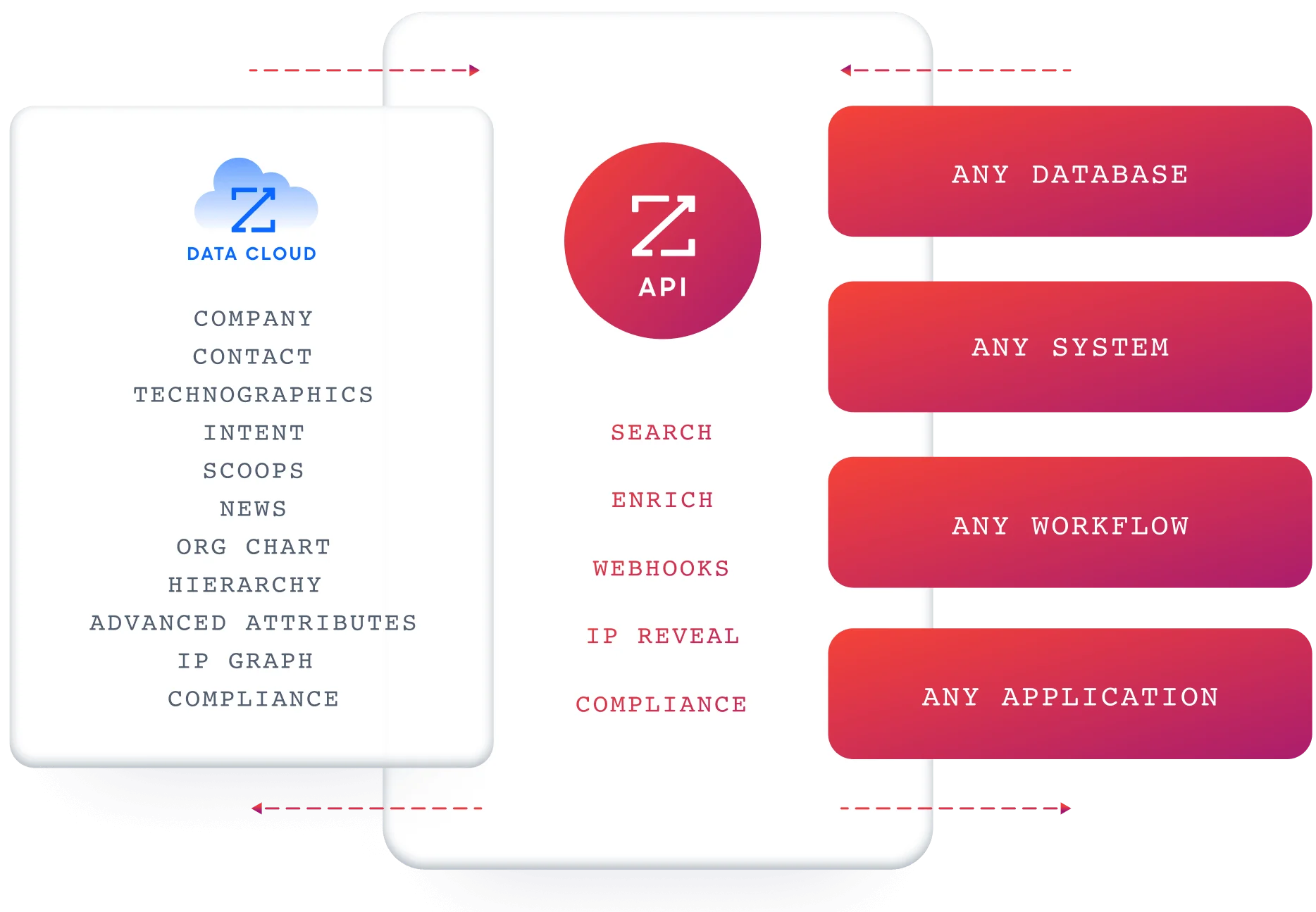
Knowledge API (Search and Enrich) is the core floor. Search endpoints cowl Contacts, Firms, Intent, Information, and Scoops, returning matched information with out consuming credit.
Enrich endpoints unlock full payloads: enterprise emails, direct dials, employment historical past, company hierarchy, org charts, technographics, and hashtag indicators, accepting as much as 25 information per name.
The underlying dataset spans 500M contacts, 100M firms, 135M+ verified cellphone numbers, and 200M+ verified enterprise e mail addresses.
Copilot API exposes the AI engine inside GTM Workspace as a programmatic floor.
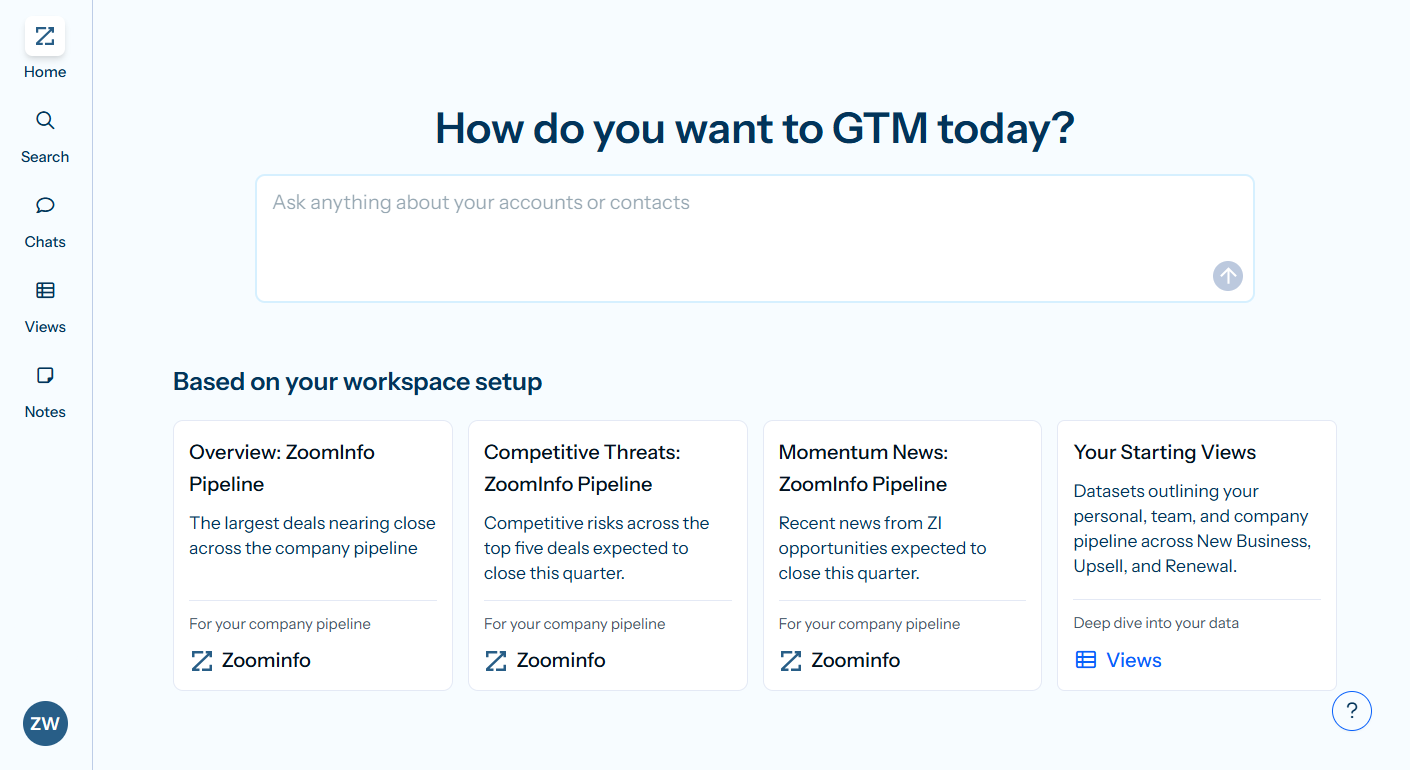
Account Abstract returns structured account intelligence with a free-form Q&A endpoint.
Discover Comparable Firms performs lookalike enlargement.
Contact Suggestions returns AI-ranked buying-committee recommendations by movement (prospecting, deal acceleration, renewals).
Advertising and Platform APIs spherical out the suite with viewers administration (CRUD for promoting audiences) and bidirectional engagement knowledge by way of the Engagements API, at the moment in Beta.
What you’ll construct with this alongside Pipedrive: a nightly enrichment job that pulls contacts from Pipedrive by way of its API, searches ZoomInfo for matching information (free, no credit consumed), enriches those price pursuing with verified emails, direct dials, and firm knowledge (1 credit score per new file), then writes the enriched knowledge again to Pipedrive’s customized fields.
The search-then-enrich sample means you filter freely and pay just for the information you decide to.
Authentication and Entry
ZoomInfo makes use of OAuth 2.0 with PKCE by way of Okta, supporting three flows: Authorization Code with PKCE (internet purposes), Consumer Credentials (server-to-server), and Refresh Token. Entry tokens are 24-hour Bearer tokens with rotating refresh tokens.
Groups register purposes by the ZoomInfo Developer Portal, the place they generate credentials, outline scopes, and take a look at endpoints.
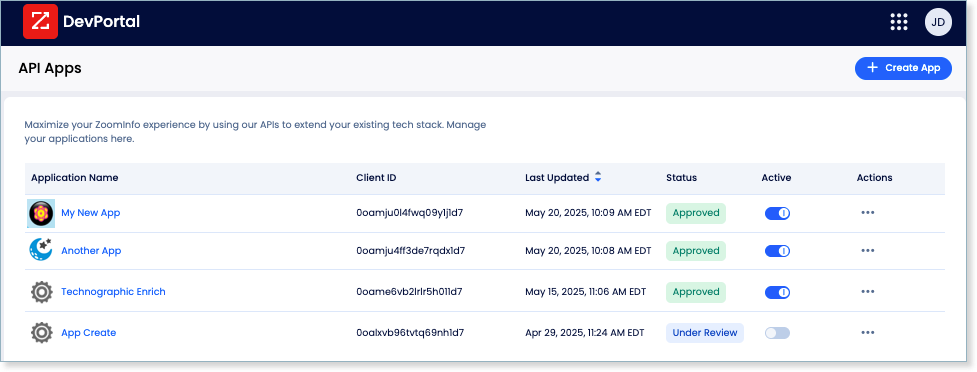
It is a extra mature authentication mannequin than Pipedrive’s static API token: it helps delegated entry, credential rotation, and scoped permissions out of the field, making it fitted to multi-tenant integrations and enterprise safety necessities.
Each platforms assist OAuth 2.0, so a system integrating each can use the identical auth sample.
Price Limits, Credit & Developer Expertise
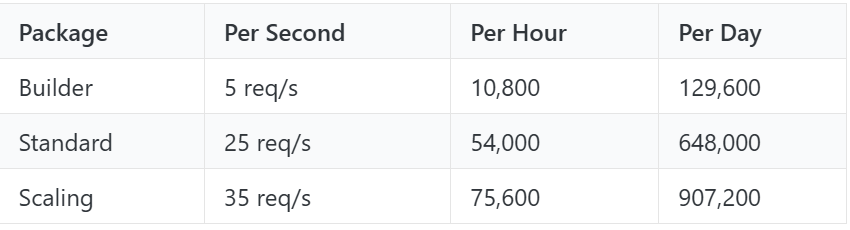
Price limits are revealed by tier: Builder (5 req/sec), Customary (25 req/sec), and Scaling (35 req/sec), with per-hour and per-day sliding-window limits enforced concurrently. Each response contains quota headers with remaining capability, and 429 responses embrace a Retry-After header with precise backoff timing.
Credit comply with a rolling 12-month window: enriching a file for the primary time consumes one credit score; re-enriching the identical file inside the yr is free. Search and lookup operations are free and don’t eat credit.
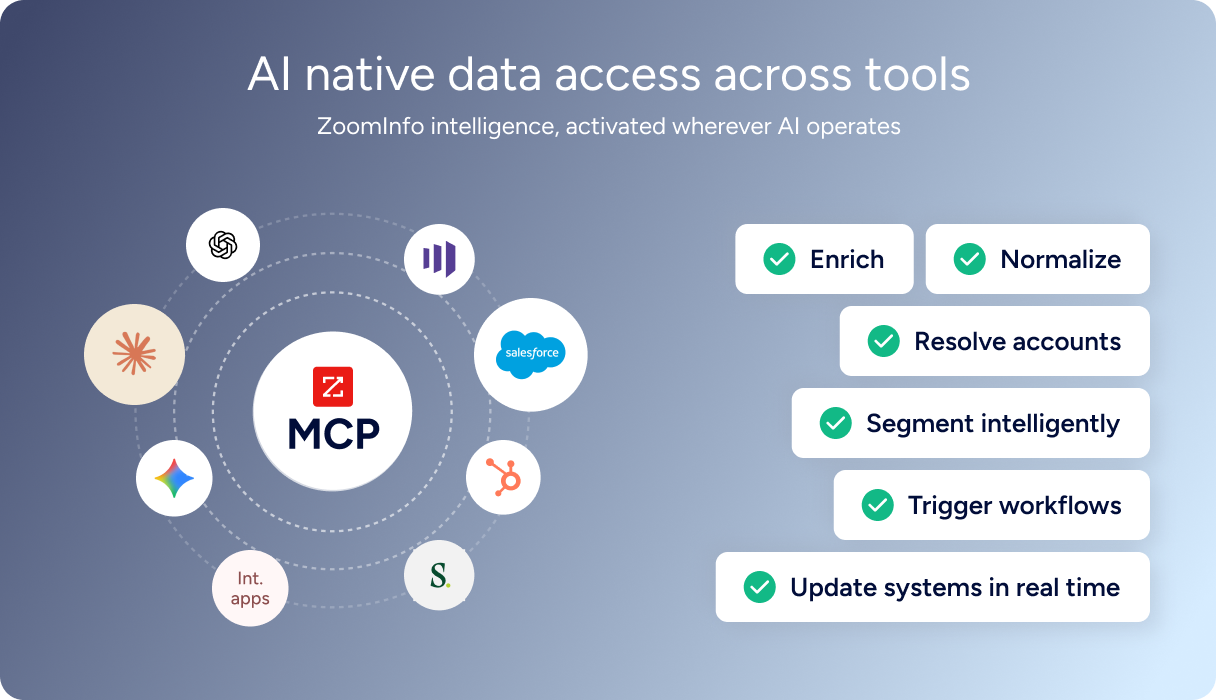
For builders constructing AI brokers, ZoomInfo’s MCP server at https://mcp.zoominfo.com/mcp exposes search, enrich, and account analysis as native instruments for MCP-compatible assistants, at the moment supporting Claude and ChatGPT.
Documentation lives at docs.zoominfo.com with an interactive API reference and an llms.txt index for AI improvement instruments. ZoomInfo doesn’t publish official SDKs, so each platforms require direct HTTP integration for languages past their official libraries.
ZoomInfo makes use of consumption-based pricing and has prolonged API entry to all related plans.
BDO Canada reported an 87% discount in time spent updating inner knowledge dashboards utilizing the ZoomInfo API, with one analyst describing the combination as plug-and-play throughout any course of. (ZoomInfo)
Remaining Verdict
Pipedrive’s API is a well-documented, overtly accessible CRM floor that covers the total knowledge mannequin: offers, contacts, organizations, leads, actions, merchandise, pipelines, webhooks, and the automation engine.
The OpenAPI specs, the developer sandbox, the changelog with breaking-change lead time, and API entry on each plan (beginning at $14/month) make it one of many extra developer-friendly CRM APIs within the SMB tier. The token-based price limiting is clear and scales with plan and seats.
For what it covers, it covers it effectively.
Select the Pipedrive API if your construct is CRM-centric: syncing deal knowledge with a billing system, embedding pipeline visibility in an inner device, automating workflow triggers on deal occasions, or constructing a Market app that extends Pipedrive’s UI.
The v2 floor is maturing, the webhook system covers each core entity, and the price of entry is low.
Add the ZoomInfo API when the construct must transcend what reps have entered into the CRM: enriching contacts with verified emails and direct dials, pulling firm attributes and technographic knowledge for account scoring, detecting purchaser intent indicators, or producing AI-powered account analysis and buying-committee suggestions.
The search-then-enrich sample (search is free, enrich consumes credit) means you solely pay for the information you decide to, and the information writes again into Pipedrive by the identical API floor you might be already utilizing.
Discover the ZoomInfo Enterprise API or begin with the developer docs to see the endpoint floor for your self.
A developer who wants neither API ought to take into account that Pipedrive’s API doesn’t supply B2B intelligence, and ZoomInfo’s API doesn’t handle a gross sales pipeline. In case your pipeline requires each, the 2 are complementary layers: one manages the method, the opposite feeds it knowledge.
FAQ
Is the Pipedrive API free?
API entry is included on each paid Pipedrive plan, beginning at $14/month per seat on the Lite tier. There are not any per-call fees or separate API subscriptions. The sensible value constraint is the every day token price range, which scales with plan tier and seat depend (30,000 base tokens x plan multiplier x seats).
A free developer sandbox account is offered indefinitely for constructing and testing, and the 14-day free trial contains full API entry with no bank card required.
Does Pipedrive have a GraphQL API?
No. Pipedrive exposes a REST API in two lively variations (v1 and v2) that communicates over HTTPS and returns JSON. There isn’t any GraphQL endpoint. When you want a GraphQL interface, you’ll construct a wrapper layer on high of the REST API, utilizing the revealed OpenAPI 3 specs to scaffold it.
What’s the Pipedrive API price restrict?
Pipedrive makes use of a token-based every day price range relatively than a requests-per-second ceiling. Every API request consumes tokens from a company-wide every day pool. The price range system is 30,000 base tokens x plan multiplier x variety of seats. On the Lite plan with one seat, that’s 30,000 tokens per day; on Final with ten seats, it’s 2,100,000. Light-weight endpoints value fewer tokens; advanced endpoints value extra.
When the price range runs out, requests obtain a 429 response till midnight reset. High-ups of 250,000 tokens are purchasable from the Progress plan onward.
Are there official Pipedrive SDKs?
Sure, however just for two languages. Pipedrive maintains official consumer libraries for Node.js and PHP, each hosted on GitHub. Group-maintained libraries cowl Python, .NET, and Ruby. For different languages, the revealed OpenAPI 3 specs for each v1 and v2 allow you to auto-generate a consumer utilizing instruments like openapi-generator. A create-pipedrive-app CLI device can be obtainable for scaffolding Market apps.
Does the Pipedrive API assist webhooks?
Sure. Pipedrive runs a full webhook system (Webhooks v2 is the present default) managed by the REST API. Every subscription specifies an occasion motion (create, change, delete, or wildcard) and an occasion object (deal, particular person, group, exercise, lead, product, and others). Current expansions added webhooks for deal merchandise, deal installments, and customized subject schema modifications.
The restrict is 40 webhook subscriptions per consumer. Pipedrive delivers webhooks as HTTP POST to a publicly accessible URL.
What does ZoomInfo’s API add to a Pipedrive construct?
ZoomInfo’s API provides the B2B intelligence layer that Pipedrive’s CRM API doesn’t cowl.
The place Pipedrive’s API manages offers, contacts, and pipeline knowledge, ZoomInfo’s API offers contact and firm search throughout 500M contacts and 100M firms, enrichment with verified emails, direct dials, org charts, and technographics, purchaser intent indicators displaying which accounts are actively researching your class, and AI-powered account analysis and buying-committee suggestions.
The sensible integration sample is to tug contacts from Pipedrive, search and enrich them by ZoomInfo (search is free; enrichment consumes 1 credit score per new file inside a 12-month window), and write the enriched knowledge again into Pipedrive’s customized fields by way of its API. Each platforms assist OAuth 2.0, and ZoomInfo’s MCP server extends the identical knowledge to AI-agent workflows.

