

The query a developer asks earlier than wiring an occasion administration API right into a pipeline shouldn’t be whether or not the platform hosts good occasions, however whether or not the API provides sufficient programmatic management to justify the dependency.
Luma’s API is a REST floor with a public OpenAPI 3.1 spec, per-route versioning, and endpoints protecting occasions, company, ticket varieties, coupons, calendars, contacts, tags, hosts, memberships, webhooks, and organization-level administration.
The developer docs sit on readme.io, the changelog will get month-to-month updates, and an llms.txt index is printed for AI agent consumption. For a six-person firm, that could be a mature developer floor.
However scope and depth are completely different questions.
Luma’s API manages the occasion lifecycle: creating occasions, registering company, promoting tickets, sending invitations, managing memberships, and receiving webhook notifications when issues change. In case your construct must orchestrate occasion workflows programmatically, the API covers that job.
But when your pipeline wants B2B intelligence on the folks attending these occasions (who they’re, what corporations they signify, what these corporations’ tech stacks appear like, whether or not these accounts present shopping for intent), that could be a completely different layer the occasion API was by no means designed to supply.
That is the place ZoomInfo enters the image.
A GTM platform constructed on 500M contacts and 100M corporations, ZoomInfo exposes a REST API suite protecting search, enrichment, AI intelligence, and viewers administration, with OAuth 2.0 authentication, tiered price limits, and an MCP server for AI-agent workflows.
The 2 APIs are layers, not rivals: Luma handles occasion operations, ZoomInfo handles the contact and firm intelligence that turns these occasions into pipeline.
This evaluate covers the Luma API in technical depth first (authentication, endpoints, webhooks, SDKs, price limits, and pricing), then covers ZoomInfo’s API because the intelligence layer that picks up the place occasion administration stops.
Luma API at a Look
|
Attribute |
Element |
|---|---|
|
API kind |
REST over HTTPS, JSON responses |
|
Authentication |
API key handed in x-luma-api-key request header |
|
Base URL |
|
|
Versioning |
Per-route versioning (endpoints carry /v1/ or /v2/ independently) |
|
Charge limits |
200 requests/minute per calendar (API key/OAuth); 500 req/min per group (Enterprise) |
|
SDKs |
No official SDKs; OpenAPI 3.1 spec accessible for consumer era |
|
Webhooks |
Sure, 8 occasion varieties with signature verification |
|
Documentation |
docs.luma.com (readme.io), llms.txt index, OpenAPI spec at public-api.luma.com/openapi.json |
|
Pricing / entry |
Bundled with Luma Plus ($59/month billed yearly); no API entry on the free plan |
Luma API: What Works Properly & What to Plan Round
|
What works properly |
What to plan round |
|---|---|
|
Public OpenAPI 3.1 spec accessible with out authentication for consumer era and Postman import |
API entry requires Luma Plus ($59/month); no free-tier API entry |
|
Per-route versioning lets particular person endpoints evolve with out breaking others |
No official SDKs in any language; you construct the HTTP layer your self |
|
Actively maintained changelog with month-to-month updates (December 2025 by June 2026) |
API keys are calendar-scoped: every calendar wants its personal key |
|
8 webhook occasion varieties with signature verification secrets and techniques |
Charge restrict of 200 req/min per calendar; no printed burst allowance |
|
Full occasion lifecycle protection: create, replace, cancel, visitor administration, ticketing, coupons |
Scope is occasion administration solely: no contact enrichment, firm information, or intelligence |
|
llms.txt index and flat Markdown docs accessible with out login |
Enterprise “Further APIs” are usually not publicly documented |
Luma API: Authentication & Getting Began
API entry requires an lively Luma Plus subscription ($59/month billed yearly).
There is no such thing as a separate developer tier, no API-specific pricing, and no free-tier API entry. The Enterprise plan consists of “Further APIs” past Plus, however Luma doesn’t publicly doc them.
You generate API keys at luma.com/calendar/handle/api-keys. Every key’s calendar-scoped: it grants full entry to a single calendar’s occasions, company, tickets, and settings, however nothing exterior that calendar. When you handle a number of calendars, you want a number of keys. Group-level API keys (Enterprise) span a number of calendars below a single group.
Authentication is simple. Each request consists of the important thing in an x-luma-api-key header:
curl “https://public-api.luma.com/v1/occasions/get?event_id=evt-abc123”
-H “x-luma-api-key: YOUR_API_KEY”
The docs additionally reference OAuth token help, utilized by the Zapier integration’s “Sign up to Luma” circulation. Full OAuth documentation shouldn’t be publicly detailed past these references. For many direct API integrations, the API key strategy is the documented path.
One operational element: all requests use GET for reads and POST for all writes (together with deletes), maintaining request physique help constant throughout the floor. Dates observe ISO 8601, and areas use Google Maps Place IDs.
Luma API: Core Endpoints & Capabilities
Luma organizes the API round useful resource teams protecting the occasion lifecycle. All endpoints return JSON, with paginated checklist endpoints returning outcomes below an entries key.
Occasions
Full CRUD and lifecycle administration for occasions on a calendar.
What you’d construct with this: an inner device that creates recurring workshop occasions, updates logistics with out notifying early registrants, and cancels occasions with automated refunds when attendance drops under a threshold.
Visitors
Registration and attendance administration throughout the visitor lifecycle.
-
POST /v1/occasions/company/add: add company with standing (authorized, pending, waitlist), ticket kind task, and registration query solutions
What you’d construct with this: a CRM sync that pushes certified leads right into a Luma occasion as authorized company, assigns them to the proper ticket kind, and manages the waitlist primarily based on exterior scoring standards.
Ticket Varieties & Coupons
-
Ticket Varieties: checklist, get, create, replace, delete for managing free and paid ticket varieties. Delete is mushy and blocked if tickets have been bought or it’s the final seen kind.
-
Coupons: create, replace, and checklist coupons at each calendar stage (apply to any managed occasion) and occasion stage. Occasion-level coupons restricted to a ticket kind can function unlock codes for hidden tickets.
Calendars & Contacts
Tags
Full CRUD for each contact tags and occasion tags: create, replace, delete, apply to entities, and unapply. Helpful for segmenting audiences and categorizing occasions programmatically.
Hosts & Occasion Submissions
-
POST /v1/occasions/hosts/add, replace, take away: handle occasion hosts with supervisor vs. check-in entry ranges; the occasion creator can’t be eliminated
Memberships (Subscription Administration)
Organizations (Enterprise)
Utility Endpoints
Luma API: Webhooks & Occasions
Luma presents a webhook system with eight occasion varieties protecting the occasion and visitor lifecycle:
|
Occasion kind |
Set off |
|---|---|
|
calendar.occasion.added |
Any occasion added to the calendar (together with linked/syndicated occasions) |
|
calendar.individual.subscribed |
Somebody follows the calendar |
|
occasion.created |
New occasion created on the calendar |
|
occasion.up to date |
Occasion particulars modified (title, time, location, and so on.) |
|
occasion.canceled |
Occasion canceled |
|
visitor.registered |
Visitor registers (together with re-registration after cancellation) |
|
visitor.up to date |
Visitor registration up to date (approval standing, check-in, profile) |
|
ticket.registered |
Particular person ticket bought; fires as soon as per ticket for multi-ticket orders |
You handle webhooks by the API. POST /v2/webhooks/create accepts a goal URL and an array of event_types (use “*” for every type). The response features a secret subject for payload signature verification, helpful for manufacturing integrations. You may set webhooks to lively or paused standing by way of POST /v2/webhooks/replace. Listing, get, and delete operations are additionally accessible.
Two issues to plan round:
-
Most webhook triggers solely fireplace for occasions the calendar manages (created on, transferred to, or granted handle entry). The calendar.occasion.added occasion is the exception: it fires for all occasions, together with linked exterior ones.
-
The general public documentation doesn’t describe retry habits for failed webhook deliveries. Design your receiver to be idempotent, and make sure the supply contract with Luma in case your pipeline relies on assured supply.
What you’d construct with this: a real-time sync that pushes new registrations into your CRM, triggers a Slack notification when occasions are canceled, and updates attendance data when company test in.
Luma API: SDKs, Docs & Charge Limits
SDKs & Libraries
Luma doesn’t publish official SDKs in any language.
The first developer affordance is the publicly accessible OpenAPI 3.1 specification at https://public-api.luma.com/openapi.json, accessible with out authentication. You need to use this spec with OpenAPI code turbines (openapi-generator, Kiota, Stainless) to provide typed consumer libraries in any supported language, or import it immediately into Postman for interactive testing.
No official SDK is an actual sign. It means you both generate a consumer from the OpenAPI spec (the meant path) or construct and preserve your personal HTTP layer, together with error dealing with, pagination, and rate-limit backoff. The spec being publicly accessible and actively maintained mitigates this greater than in most no-SDK conditions, however it nonetheless provides engineering overhead in comparison with a maintained consumer library.
Documentation & Developer Expertise
Luma hosts the API documentation at docs.luma.com on readme.io.
The interactive reference requires a login to browse within the UI, however all documentation pages can be found as flat Markdown information (e.g., https://docs.luma.com/reference/getting-started-with-your-api.md) and as an entire index at https://docs.luma.com/llms.txt, designed for AI agent consumption.
The changelog is actively maintained with month-to-month entries from December 2025 by June 2026, together with a major endpoint restructuring in June 2026 that launched flat-response endpoints to exchange nested-object predecessors. Per-route versioning means older endpoint variations stay purposeful throughout migrations, so builders can improve at their very own tempo.
For the Zapier integration, Luma publishes a versioned changelog within the assist heart alongside a built-in debugging device (Settings > Developer > API Keys > “Debug Zapier”).
Assist channels embody assist.luma.com (assist heart), help@luma.com, and precedence help for Plus subscribers.
Charge Limits & Constraints
The OpenAPI specification paperwork the next price limits:
Exceeding both restrict returns 429 Too Many Requests. The docs be aware a separate price limits reference web page documenting an older mannequin (500 GET / 100 POST per 5 minutes per calendar with a 1-minute block), which can mirror a previous model; the OpenAPI spec is the extra lately up to date supply.
For greater limits, Luma tells builders to contact help by way of e-mail. No bulk-operation-specific limits are printed past the per-minute caps, and limits are topic to vary.
At 200 requests per minute per calendar, the ceiling works for many occasion administration integrations: syncing visitor lists, creating occasions, and processing registrations. It turns into a constraint with multi-calendar operations.
When you handle 10 calendars, every has its personal 200 req/min cap and its personal API key. A company-level key on Enterprise raises the cap to 500 req/min throughout all calendars below that group, however this isn’t accessible on Plus.
Luma API Pricing & Entry Prices
Luma bundles API entry into the Plus plan at $59/month billed yearly ($69/month if billed month-to-month). There is no such thing as a metered or per-call API pricing. The free tier has no API entry.
The price construction is easy:
-
Luma Plus ($59/month annual): full API entry, webhook help, Zapier integration, 0% platform charge on paid occasions, as much as 5,000 invitations/newsletters per week, customized occasion URLs, and precedence help
-
Enterprise (customized pricing): extra APIs past Plus, native HubSpot and Salesforce integrations, SSO, and organization-level API keys
There are not any printed per-call fees, no API-specific credit score deductions, and no metered pricing. For a developer sizing prices: API entry prices $59/month (annual) or $69/month (month-to-month), no matter name quantity (inside the price limits).
The sensible price query shouldn’t be the API itself however the Luma Plus subscription because the gate. In case your crew already makes use of Luma Plus for the 0% platform charge on paid occasions, API entry comes bundled. If you’re constructing a pure API integration with no dashboard utilization, $59/month is the minimal dedication.
Zapier entry follows the identical gate: solely accessible on Luma Plus.
The place the Luma API Falls Brief
These are sensible limits a developer ought to plan round, not criticisms. A number of are scope selections that mirror what Luma is (an occasion administration platform) and what it isn’t.
The API manages occasions. That’s all it does.
There is no such thing as a contact enrichment, no firm information or attributes, no purchaser intent alerts, no org-chart traversal. In case your pipeline must register a visitor after which lookup their title, firm dimension, know-how stack, and buy intent, you want a second API. The visitor document provides you a reputation and e-mail; the intelligence behind that e-mail is exterior Luma’s scope.
No official SDKs.
The OpenAPI 3.1 spec is publicly accessible and well-maintained, which permits consumer era, however there are not any pre-built, examined SDK packages. You personal the HTTP layer, the error dealing with, and the rate-limit backoff logic.
Calendar-scoped API keys.
Every key grants entry to 1 calendar. Multi-calendar integrations require managing a number of keys, one per calendar. Group-level keys are Enterprise-only. This can be a cheap isolation mannequin for safety, however it provides complexity for companies or groups managing occasions throughout many calendars.
200 requests per minute per calendar.
Ample for traditional occasion administration workflows, but when your integration must synchronize massive visitor lists throughout a number of occasions in tight home windows, the per-calendar cap requires cautious orchestration. No burst allowance or greater tiers are documented for Plus; Enterprise raises the cap to 500 req/min per group.
Webhook retry habits is undocumented.
The webhook system consists of signature verification secrets and techniques and eight occasion varieties, however the public docs don’t describe retry coverage, supply ensures, or payload construction past the listed endpoints. In case your pipeline relies on assured webhook supply, you must construct your personal reliability layer or affirm the contract with Luma.
OAuth documentation is incomplete.
The OpenAPI spec references OAuth token help, and the Zapier integration makes use of an OAuth-based circulation, however full OAuth documentation for customized integrations shouldn’t be publicly detailed. For many use circumstances, the API key strategy works. For multi-tenant integrations the place every buyer authenticates independently, the shortage of documented OAuth is an actual hole.
API entry is gated behind a paid plan.
The free tier, which incorporates limitless occasions and company within the dashboard, has no API entry. The $59/month Luma Plus subscription is the minimal entry level for any programmatic integration.
ZoomInfo API: The Intelligence Layer Past Occasion Administration
Luma tells you who registered for an occasion, what ticket they purchased, and whether or not they checked in.
ZoomInfo tells you who that individual is professionally, what firm they work for, what that firm’s know-how stack seems to be like, whether or not the account exhibits shopping for intent, and the place the contact sits within the org chart.
The 2 APIs function at completely different layers of an information pipeline. ZoomInfo’s GTM Context Graph, an information system that processes 1.5B+ information factors each day, combines its B2B dataset along with your CRM data and behavioral alerts to indicate not simply who attended however why they matter to your pipeline.
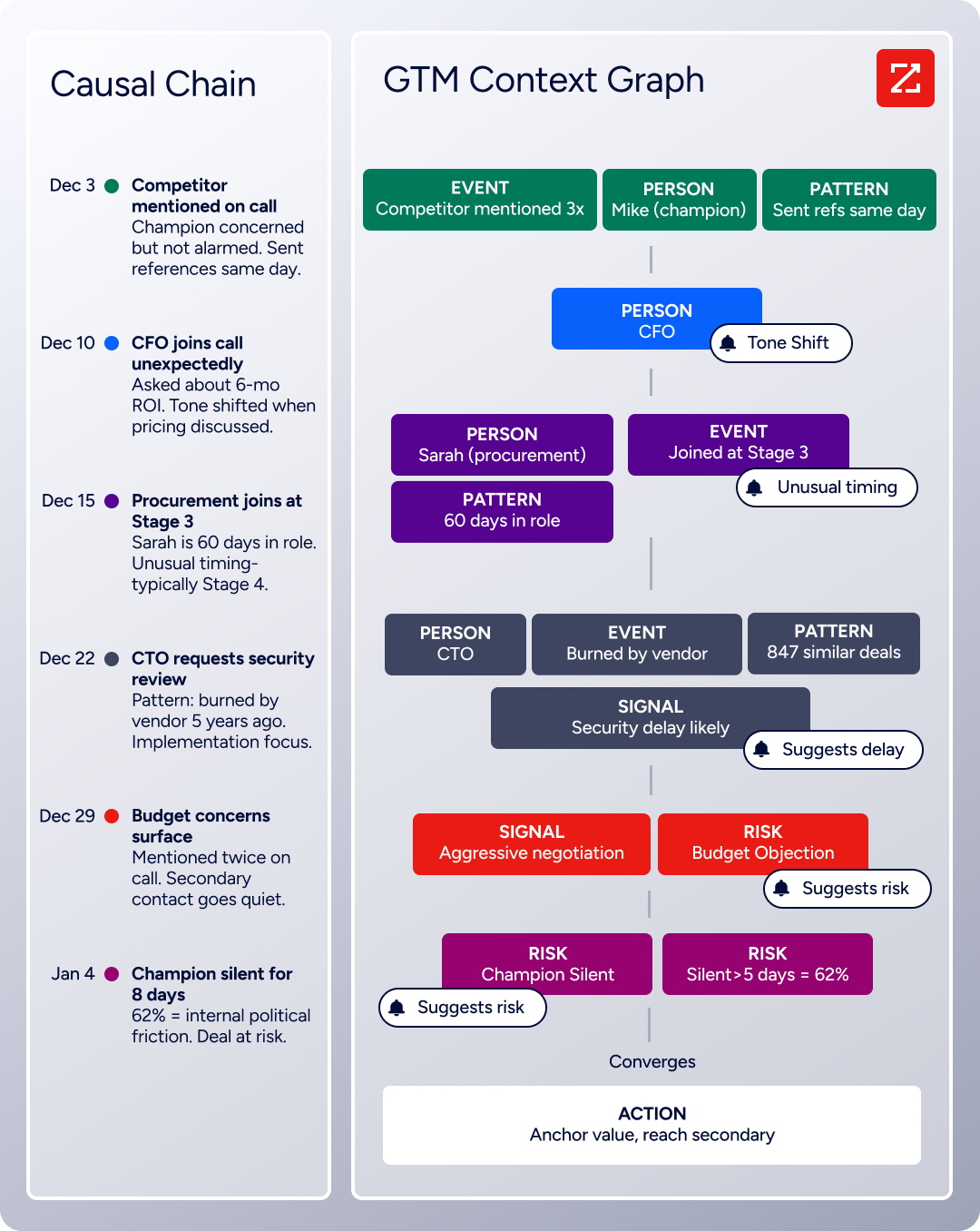
Groups entry this information by the API and MCP server (the main target of this evaluate), the GTM Workspace for sellers, or GTM Studio for entrepreneurs and RevOps. A developer constructing an entire event-to-pipeline workflow would use Luma’s API to handle the occasion and ZoomInfo’s API to resolve which attendees are value pursuing.
What the API Covers
ZoomInfo’s Enterprise API is a REST suite served from https://api.zoominfo.com/gtm, organized into 4 areas documented within the interactive API reference:
-
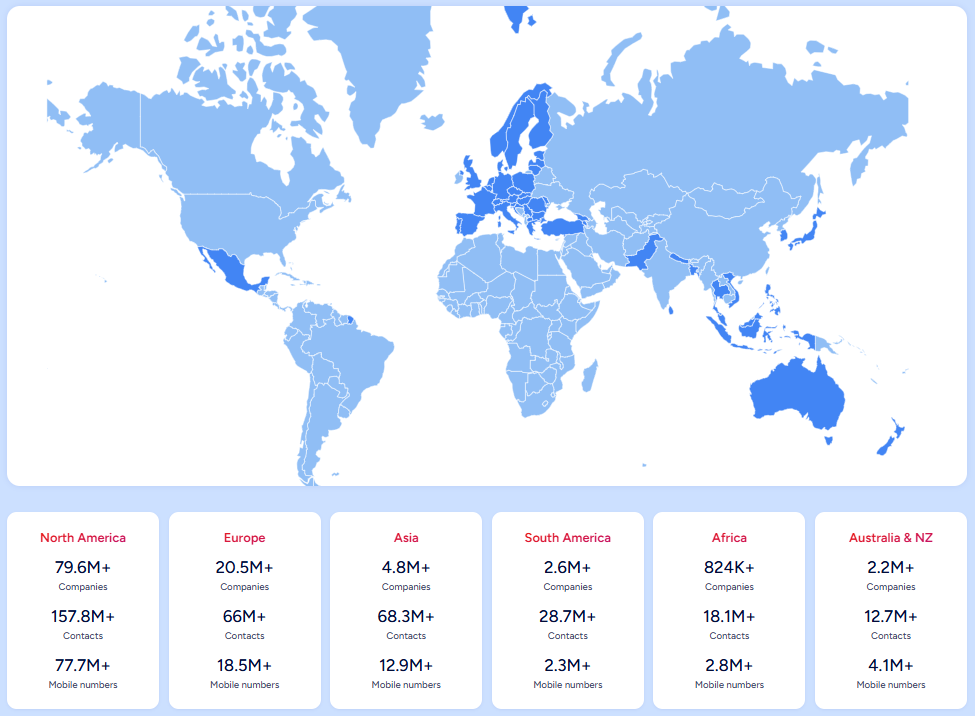
Information API (Search & Enrich): Search endpoints cowl Contacts, Corporations, Intent, Information, and Scoops, returning matched data with out consuming credit. Enrich endpoints unlock the total payload: enterprise emails, direct dials, employment historical past, company hierarchy, org charts, technographics, and hashtag alerts, as much as 25 data per name.
The underlying dataset spans 500M contacts, 100M corporations, 135M+ verified telephone numbers, and 200M+ verified enterprise e-mail addresses.
Supply: ZoomInfo
The pairing with an occasion administration API is direct: export your Luma visitor checklist by way of the API, then use ZoomInfo’s search-then-enrich sample to establish which attendees signify high-value accounts. Search is free (no credit consumed); you solely pay for the data you enrich.
Authentication & Entry
ZoomInfo makes use of OAuth 2.0 with PKCE by way of Okta, supporting three flows: Authorization Code with PKCE (net purposes), Consumer Credentials (server-to-server), and Refresh Token.
Entry tokens are 24-hour Bearer tokens with rotating refresh tokens. Groups register purposes by the ZoomInfo Developer Portal, the place they generate credentials, outline scopes, and take a look at endpoints.
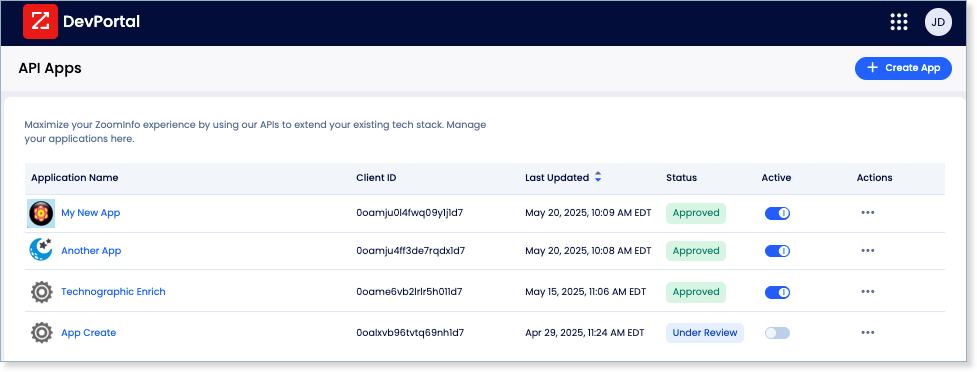
This can be a completely different auth mannequin from Luma’s static, calendar-scoped API key. OAuth 2.0 helps delegated entry, credential rotation, and scoped permissions, making it higher fitted to multi-tenant integrations and enterprise safety necessities.
Charge Limits, Credit & Developer Expertise
ZoomInfo publishes price limits by tier: Builder (5 req/sec), Normal (25 req/sec), and Scaling (35 req/sec), with per-hour and per-day sliding-window limits enforced concurrently.
Each response consists of quota headers with remaining capability, and 429 responses embody a Retry-After header with precise backoff timing.
Credit observe a rolling 12-month window: enriching a document for the primary time consumes one credit score; re-enriching the identical document inside the 12 months is free. Search and lookup operations don’t eat credit.
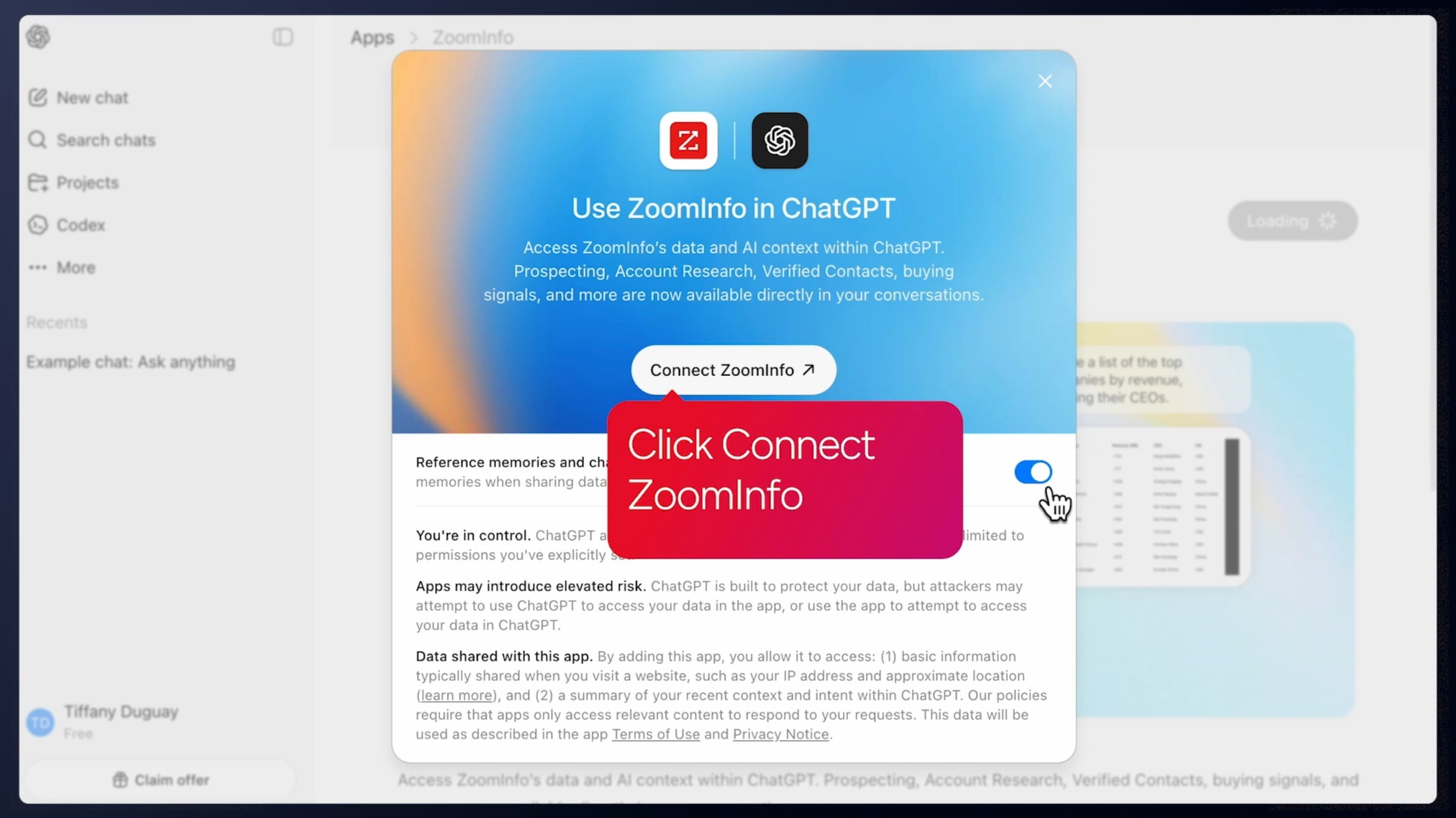
For builders constructing AI brokers, ZoomInfo’s MCP server at https://mcp.zoominfo.com/mcp exposes search, enrich, and account analysis as native instruments for MCP-compatible assistants, at present supporting Claude and ChatGPT. Documentation lives at docs.zoominfo.com with an interactive API reference, OAuth recipes in 5 languages, and an llms.txt index for AI improvement instruments.
Supply: ZoomInfo
ZoomInfo doesn’t publish official SDKs both, so each platforms require direct HTTP integration. ZoomInfo makes use of consumption-based pricing; API entry requires an Enterprise API or Copilot package deal, and ZoomInfo has prolonged API entry to all related plans.
BDO Canada reported an 87% discount in time spent updating inner information dashboards utilizing the ZoomInfo API, with one analyst describing the mixing as plug-and-play throughout any course of. (ZoomInfo)
Closing Verdict
Luma’s API is a centered, well-documented floor that covers the occasion lifecycle: creating occasions, managing registrations, promoting tickets, dealing with memberships, and receiving webhook notifications on visitor and occasion adjustments.
The general public OpenAPI 3.1 spec, per-route versioning, and actively maintained month-to-month changelog give a developer a strong basis to construct on. For an occasion administration API from a six-person firm, the floor is full.
Its limits are limits of scope, not high quality. The API manages occasions; it doesn’t enrich the folks attending them.
Select the Luma API if your integration is event-operations-first: automating occasion creation, syncing visitor lists with a CRM, processing ticket gross sales, managing group memberships, or constructing customized registration workflows. At $59/month for full API entry with no per-call fees, it’s cost-effective for groups already invested in Luma’s occasion platform.
Select the ZoomInfo API when the construct must transcend occasion logistics into who these attendees are, what corporations they signify, and whether or not these accounts are actively in-market.
Export your Luma visitor checklist, enrich by ZoomInfo’s search-then-enrich sample (search is free, enrich consumes credit), and the occasion turns into a pipeline supply with B2B intelligence behind each registration. Discover the ZoomInfo Enterprise API or begin with the developer docs to see the endpoint floor immediately.
A developer who wants neither API ought to know that Luma’s API doesn’t present B2B intelligence, and ZoomInfo’s API doesn’t handle occasions. In case your pipeline requires each, the 2 are complementary layers, not competing surfaces.
FAQ
Is the Luma API free?
No. API entry requires a Luma Plus subscription at $59/month (billed yearly) or $69/month (billed month-to-month). The free Luma plan, which incorporates limitless occasions and company within the dashboard, doesn’t embody API entry. There are not any per-call API fees on high of the subscription; upon getting Plus, API utilization is included inside the printed price limits.
Does Luma have a GraphQL API?
No. Luma exposes a REST API over HTTPS that returns JSON responses. There is no such thing as a GraphQL endpoint. The API makes use of per-route versioning (every endpoint carries its personal model independently) slightly than a world model quantity. When you want a GraphQL interface for occasion administration, you would want to construct a wrapper on high of the REST API.
What’s the Luma API price restrict?
The documented price limits are 200 requests per minute per calendar for API keys and OAuth tokens, and 500 requests per minute per group for Enterprise-level API keys. Exceeding both triggers a 429 response. These limits are per-calendar, not per-key.
For greater limits, Luma tells builders to contact help. An older rate-limits reference web page paperwork a distinct mannequin (500 GET / 100 POST per 5 minutes), however the OpenAPI spec is the extra lately up to date supply.
Are there official Luma SDKs?
No. Luma doesn’t publish official SDKs in any language. The first developer affordance is a publicly accessible OpenAPI 3.1 specification at https://public-api.luma.com/openapi.json, accessible with out authentication. You may import this spec into Postman or use it with OpenAPI code turbines to provide typed consumer libraries. No official group libraries are documented.
Does the Luma API help webhooks?
Sure. Luma helps eight webhook occasion varieties protecting the occasion and visitor lifecycle: occasions being created, up to date, or canceled; company registering or updating; tickets being bought; folks subscribing to a calendar; and occasions being added to a calendar.
You handle webhooks by the API. They embody a secret for payload signature verification and might be paused and resumed. The general public documentation doesn’t describe retry habits for failed deliveries.
What does ZoomInfo’s API add to a Luma construct?
ZoomInfo’s API provides the B2B intelligence layer that Luma’s API doesn’t cowl.
The place Luma’s API manages occasion registrations and visitor lists, ZoomInfo’s API identifies who these company are professionally: search throughout 500M contacts and 100M corporations, enrich with enterprise emails, direct dials, org charts, technographics, employment historical past, and purchaser intent alerts, and generate AI-powered account analysis and buying-committee suggestions.
The sensible workflow is to export Luma’s visitor checklist by way of its API, match attendees in opposition to ZoomInfo’s database, and enrich the high-value contacts, turning occasion registrations into certified pipeline. ZoomInfo’s MCP server extends the identical intelligence to AI-agent workflows, and the search-then-enrich sample (search is free, enrich consumes credit) means you solely pay for the data you decide to.

