

The query behind any advertising and marketing automation API is whether or not the floor covers sufficient of your workflow to justify the dependency, or whether or not you hit a wall earlier than the pipeline is full.
ActiveCampaign’s API is a v3 REST floor with an account-specific base URL, API key authentication, and endpoints spanning contacts, campaigns, offers, automations, lists, segments, SMS broadcasts, WhatsApp templates, and webhooks. A GraphQL endpoint scoped to eCommerce operations sits alongside it. The developer portal is public, free sandbox accounts can be found for testing, and API entry ships on each paid plan with no separate developer tier.
However protection of promoting operations and protection of the information that feeds them are totally different questions.
ActiveCampaign’s API controls the advertising and marketing execution layer: creating and managing contacts, triggering automations, constructing campaigns, monitoring offers, sending SMS and WhatsApp messages, and listening for occasions by way of webhooks. What it doesn’t do is inform you who these contacts ought to be. Verified enterprise emails, direct-dial telephone numbers, firm attributes, org charts, technographics, purchaser intent indicators, and AI-powered account analysis all sit outdoors the API’s scope. That may be a totally different layer of the stack.
That is the place ZoomInfo enters the image. An AI-powered go-to-market platform constructed on 500M contacts and 100M corporations, ZoomInfo’s Enterprise API covers search, enrichment, AI intelligence, and viewers administration, with an MCP server for AI-agent workflows. The 2 APIs sit at totally different layers of the identical pipeline (intelligence feeds automation, not the reverse), and the sensible query is whether or not your construct wants one or each.
This assessment covers the ActiveCampaign API in technical element first, then critiques ZoomInfo’s API as the information intelligence layer that picks up the place advertising and marketing automation stops.
ActiveCampaign API at a Look
|
Attribute |
Element |
|---|---|
|
API kind |
REST (v3) over HTTPS, JSON responses; GraphQL for eCommerce operations |
|
Authentication |
API key handed as Api-Token HTTP header |
|
Base URL |
Account-specific: https:// |
|
Price limits |
|
|
SDKs |
No official SDKs |
|
Webhooks |
Sure, occasion system with at-least-once supply |
|
Documentation |
builders.activecampaign.com (Readme.io-hosted, interactive reference) |
|
Pricing / entry |
Included on all paid plans (Starter by means of Enterprise); free developer sandbox accounts out there |
ActiveCampaign API: What Works Properly & What to Plan Round
The quick model, earlier than the deep dive:
|
What works nicely |
What to plan round |
|---|---|
|
Public developer portal with interactive API reference, no login wall |
5 requests per second price restrict, utilized account-wide no matter plan tier |
|
API entry included on all paid plans, no enterprise gate |
Static API key auth solely: no OAuth 2.0, no token rotation, no scoped delegated entry |
|
Free developer sandbox accounts for constructing and testing with out a paid subscription |
No official SDKs in any language: you personal the HTTP shopper layer |
|
Each REST and GraphQL surfaces out there |
GraphQL scope restricted to eCommerce operations (orders, merchandise, browse classes) |
|
Webhook system masking contacts, campaigns, offers, SMS, and accounts |
Webhooks are by no means retried on failure: construct your receiver to deal with missed occasions |
|
MCP server for AI agent integration (Claude, ChatGPT, Cursor) |
Pagination ceiling of 100 data per request, defaulting to twenty |
ActiveCampaign API: Authentication & Getting Began
API entry begins with any paid ActiveCampaign plan.
The pricing web page lists “API & webhooks” as a characteristic throughout all tiers (Starter by means of Enterprise), and there’s no separate developer signup or approval gate. Builders with out a paid account can use free sandbox accounts to construct and check integrations.
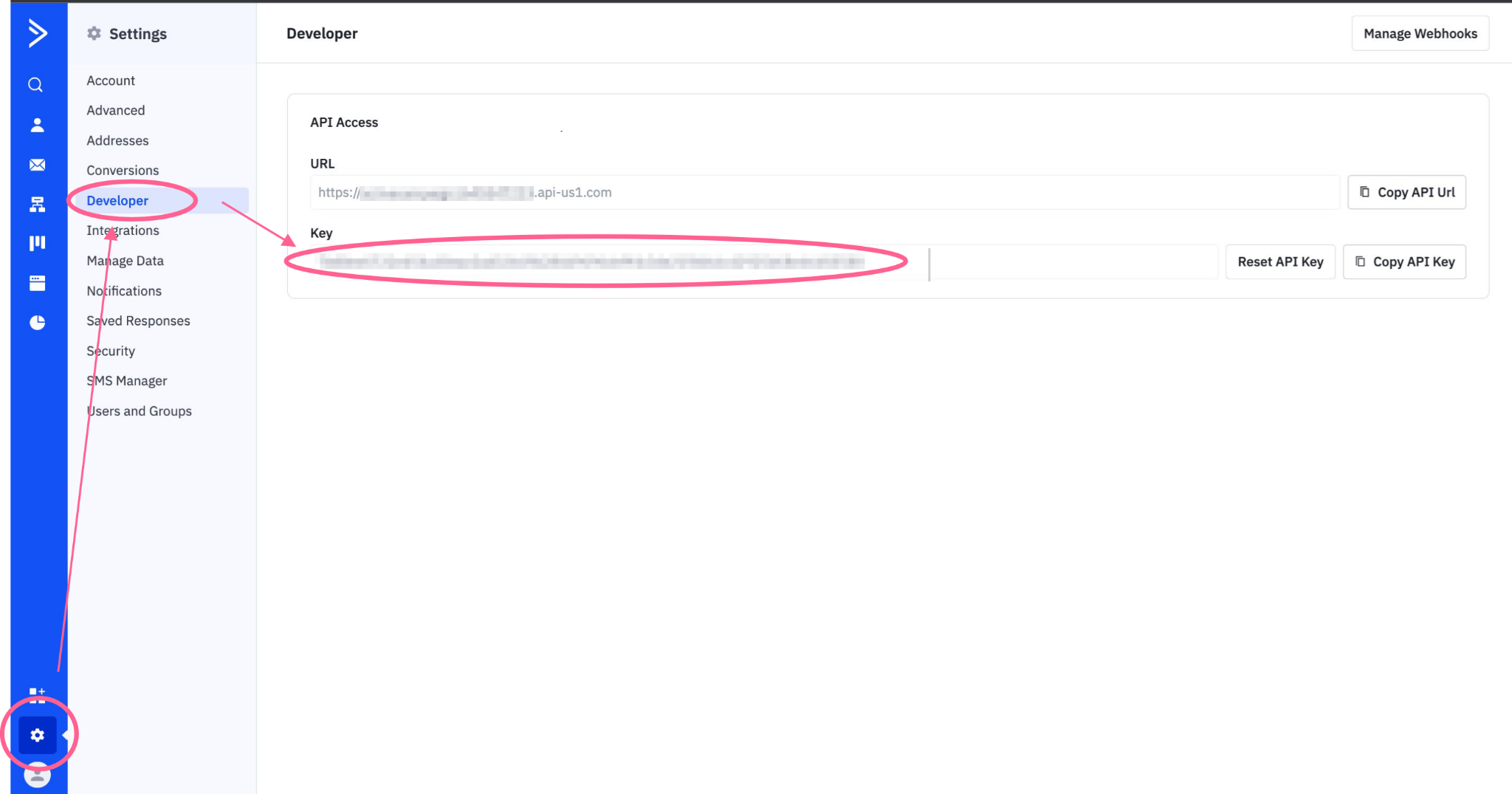
The API key lives in your ActiveCampaign account beneath Settings > Developer. Every person in an ActiveCampaign account has their personal distinctive API key, so there isn’t any single account-level credential. The identical key authenticates each the REST v3 API and the eCommerce GraphQL API.
Supply: ActiveCampaign API
One element to plan for: the bottom URL is account-specific, taking the shape https://
Authentication is easy. Each request consists of the important thing as an Api-Token HTTP header:
curl -H “Api-Token: YOUR_API_KEY”
“https://youraccountname.api-us1.com/api/3/contacts?restrict=5”
There isn’t any OAuth circulation, no token trade, and no credential rotation mechanism. The simplicity is a tradeoff: API key auth is fast to implement and inconceivable to scope. ActiveCampaign doesn’t doc delegated entry or multi-tenant authentication patterns for the general public API, so in case you are constructing a SaaS product that connects to many ActiveCampaign accounts, every buyer should generate and share their API key manually.
ActiveCampaign API: Core Endpoints & Capabilities
The v3 REST API is organized by useful resource, with endpoints following a /api/3/{useful resource} sample. All requests and responses use JSON.
Filtering makes use of the filters[field]=worth question parameter conference, ordering makes use of orders[field]=ASC|DESC, and complete file counts seem within the meta.complete property of assortment responses. The useful resource catalogue is broad for a advertising and marketing automation platform.
Contacts
Contacts are the broadest useful resource set within the API and the inspiration of the whole lot ActiveCampaign does.
Operations: Listing, search, and filter contacts by e mail, checklist membership, account affiliation, {custom} discipline values, and extra. Sync (upsert by e mail) a contact to create or replace in a single name. Bulk import contacts asynchronously with standing polling. Retrieve contact exercise historical past. Handle geo-IP information per contact. CRUD on contact {custom} fields (create, checklist, retrieve, replace values).
Pagination: Assortment endpoints return a most of 100 data per request, defaulting to twenty. For giant contact databases, ActiveCampaign recommends id_greater cursor-style pagination somewhat than offset for higher efficiency.
What you’ll construct with this: a CRM sync that upserts contacts into ActiveCampaign as offers shut in your gross sales pipeline, a lead-capture service that bulk-imports type submissions nightly, or a data-quality software that polls contact data and flags stale entries for cleanup.
Offers & Pipeline
Programmatic management over ActiveCampaign’s CRM layer.
Operations: Create, retrieve, and replace offers with {custom} fields, notes, and duties. Handle pipelines and levels. Create and checklist deal job reminders.
What you’ll construct with this: an automatic pipeline the place a webhook fires when a contact reaches a lead rating threshold, your service creates a deal in the appropriate pipeline by way of the API, and assigns it to a rep primarily based on territory guidelines in your routing logic.
Campaigns
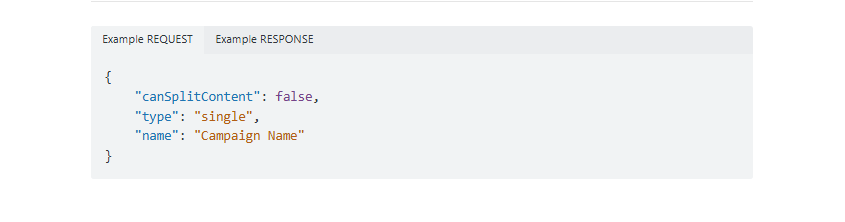
Operations: Create, duplicate, and edit campaigns, together with updating marketing campaign messages. Personalization variables utilized in campaigns may be created, edited, locked, unlocked, and bulk-deleted by way of API.
Marketing campaign creation by means of the API provides you programmatic management over e mail sends with out touching the dashboard. That is helpful for groups managing marketing campaign templates throughout a number of purchasers or producing campaigns from an exterior content material administration system.
Supply: ActiveCampaign API
Automations
Operations: Create circulation executions to set off automations programmatically. Listing and retrieve execution standing. Retrieve particular person contact data inside a circulation.
That is the way you wire exterior occasions into ActiveCampaign’s automation engine. A purchase order occasion in your eCommerce backend, a assist ticket decision in your helpdesk, or a rating change in your lead-scoring mannequin can every set off a circulation execution that enrolls the contact in the appropriate automation with out handbook intervention.
SMS & WhatsApp
ActiveCampaign’s messaging channels are API-accessible alongside e mail.
SMS Broadcasts: Managed by way of API: create, replace, delete, checklist, and retrieve broadcast messages. Metrics endpoints cowl broadcast efficiency, failure particulars, and recipient export. An AI-assisted broadcast creation endpoint can also be documented.
WhatsApp Templates: Create, replace, delete, checklist, and ship WhatsApp templates straight by way of the API.
What you’ll construct with this: a cross-channel notification system that selects the appropriate channel (e mail, SMS, or WhatsApp) per contact primarily based on choice information, then dispatches the message by means of the corresponding API endpoint with out channel-switching logic within the dashboard.
Lists, Segments & Supporting Assets
Lists: Create lists programmatically.
Segments: CRUD on contact segments, together with create, retrieve, replace, delete, and historic model retrieval. Match operations (match-all, match-one) test contact membership asynchronously, which is beneficial for validating phase standards earlier than triggering downstream actions.
Accounts: Bulk delete and handle accounts linked to contacts.
Conversations: Listing and replace conversations (chat and inbox threads).
Connections (Deep Knowledge): Create, retrieve, checklist, and replace connection assets that hyperlink exterior providers (usually eCommerce platforms) to ActiveCampaign. Deep Knowledge connections floor richer contact exercise information (order historical past, buy conduct) contained in the platform for segmentation and automation triggers.
eCommerce GraphQL API
Alongside the REST floor, ActiveCampaign exposes a GraphQL API scoped to eCommerce operations. The endpoint sits at /api/3/ecom/graphql on the identical account-specific base URL, helps introspection, and covers Orders, Merchandise, Recurring Funds, Browse Abandonment, and Browse Periods. Authentication and price limits are shared with the REST API.
A Postman assortment for the GraphQL API is on the market by means of the ActiveCampaign Developer Relations workspace on Postman. For builders already utilizing GraphQL of their stack, this endpoint avoids translating between REST and GraphQL for eCommerce information syncs, although the scope doesn’t prolong to contacts, campaigns, or automation assets.
ActiveCampaign API: Webhooks & Occasions
ActiveCampaign affords webhook assist that delivers real-time POST information to a URL of your selection when specified occasions happen. You handle webhooks programmatically by means of the /api/3/webhooks endpoints (create, replace, delete).
The supported occasion varieties cowl the core platform actions:
|
Class |
Occasions |
|---|---|
|
Contacts |
subscribe, unsubscribe, replace, subscriber_note, contact_tag_added, contact_tag_removed |
|
Campaigns |
open, click on, bounce, reply, ahead, share, despatched |
|
Offers |
deal_add, deal_update, deal_note_add, deal_pipeline_add, deal_stage_add, deal_task_add, deal_task_complete, deal_tasktype_add |
|
Lists |
list_add |
|
SMS |
sms_sent, sms_reply, sms_unsub |
|
Accounts |
account_add, account_update, account_contact_add, account_contact_update |
|
Duties |
contact_task_add |
You may scope every webhook by initiation supply: public (contact-triggered), admin (user-triggered), api (API-triggered), or system (automated processes). A number of sources may be mixed on a single webhook, providing you with management over which occasions your receiver processes.
Three issues to plan round:
-
Webhooks are by no means retried on failure. In case your endpoint is down when an occasion fires, that occasion is misplaced. There isn’t any dead-letter queue, no retry backoff, and no supply log you may replay.
The mixture of at-least-once semantics with no retry on failure is uncommon. You will need to deal with duplicates however can’t depend on supply. For important occasion flows, complement webhooks with periodic API polling as a security internet.
ActiveCampaign API: SDKs, Docs & Price Limits
SDKs & Libraries
ActiveCampaign doesn’t publish official SDKs in any language. No maintained libraries for Python, Node.js, PHP, Ruby, or different languages seem within the developer portal or the llms.txt index. Group-maintained libraries might exist, however none are catalogued within the official docs.
The absence of an official SDK is an actual sign for a developer evaluating this API. It means you personal the request layer, the error dealing with, the rate-limit backoff logic, and the response deserialization.
For a easy webhook listener or a contact sync, that’s manageable. For a manufacturing pipeline making dozens of endpoint calls with retry logic and pagination administration, it provides engineering overhead.
ActiveCampaign does publish two developer-facing instruments that slender this hole:
-
An llms.txt index itemizing all documentation pages and endpoints in OpenAPI format, usable by AI-assisted code era instruments.
-
A distant MCP server that lets AI brokers (Claude, ChatGPT, Cursor) work together with ActiveCampaign information by means of pure language. Setup requires no coding: a Distant MCP URL from ActiveCampaign’s Developer settings handles authentication.
These should not SDK replacements, however they decrease the barrier for AI-assisted integration improvement.
Documentation & Developer Expertise
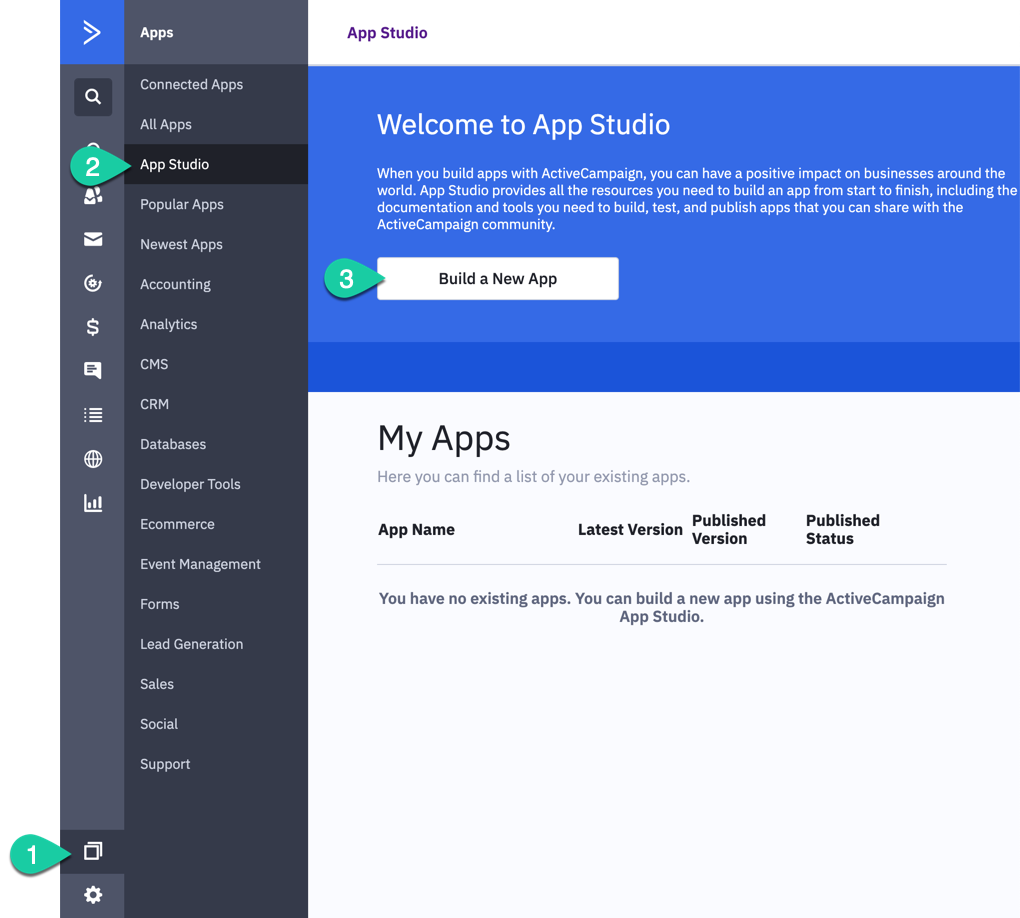
The developer documentation lives at builders.activecampaign.com, hosted on Readme.io. It’s organized into 4 sections:
-
App Studio: a self-serve developer portal for constructing CX Apps that combine with ActiveCampaign and may be listed within the market. Helps OAuth2, Primary Auth, Customized Objects, and bidirectional workflow triggers. Instance implementations for Twilio, Calendly, and Slack are documented.
-
Changelog: developer-facing launch notes masking new endpoints, schema adjustments, and App Studio updates.
Supply: ActiveCampaign API
A Postman assortment is on the market for the eCommerce GraphQL API by means of the ActiveCampaign Developer Relations workspace on Postman. No equal assortment is documented for the REST API.
Developer assist is on the market by means of the ActiveCampaign Group (180,000+ members). No devoted developer Slack channel or discussion board is referenced within the docs.
Price Limits & Constraints
The documented price restrict is 5 req/sec per account, shared throughout the REST API and the GraphQL API. This restrict applies account-wide (not per person or per API key) and isn’t differentiated by plan tier within the out there documentation. The developer portal features a Price Limits reference web page, although the web page doesn’t render publicly accessible element past the 5 req/sec determine confirmed within the eComm GraphQL documentation.
For pagination, assortment endpoints return a most of 100 data per request, defaulting to twenty. On massive contact databases, the advisable strategy is id_greater cursor-style pagination somewhat than offset-based paging, which degrades at scale.
Bulk import is on the market for contacts utilizing asynchronous processing with a status-polling mannequin, which is the appropriate path for loading massive datasets with out bumping in opposition to the per-second ceiling.
At 5 req/sec, a developer synchronizing 10,000 contacts individually would want over 33 minutes of steady API calls (assuming no errors, retries, or pagination overhead). That is the first throughput constraint to plan round, and it makes bulk endpoints and batch methods important for any integration working at scale.
ActiveCampaign API Pricing & Entry Prices
ActiveCampaign bundles API entry into all paid plans somewhat than charging per name or per credit score. The pricing web page lists “API & webhooks” as a characteristic throughout Starter, Plus, Skilled, and Enterprise tiers.
Plan entry level: ActiveCampaign Starter is $149/month for 10,000 contacts. Plus, Skilled, and Enterprise pricing is contact-count-based and requires the dynamic pricing calculator at activecampaign.com/pricing. Enterprise pricing is custom-quoted.
No per-call expenses. There are not any printed API price expenses, credit score deductions, or consumption-based API pricing. Your API utilization is bounded by the 5 req/sec price restrict and your plan’s characteristic set, not by a metering system. API calls carry no marginal price, however e mail sends dispatched by means of marketing campaign endpoints are topic to the plan’s month-to-month ship restrict (10x to 15x the contact restrict, relying on tier), with overage charged at $0.005 per e mail.
Characteristic gating by tier. Whereas API entry is on the market on all plans, superior developer-facing options are gated:
Free improvement path. Free developer sandbox accounts can be found for constructing and testing integrations with out a paid plan. ActiveCampaign additionally affords a 14-day free trial with no bank card required (e mail sends capped at 100 in the course of the trial).
For a developer sizing prices: the API is free in case you are already paying for ActiveCampaign. The actual price driver is the plan tier, which determines your contact restrict, characteristic entry, and e mail ship capability. These limits apply equally whether or not you utilize the dashboard or the API.
The place the ActiveCampaign API Falls Quick
These are the sensible limits a developer ought to plan round when constructing on this API. A number of are scope selections that replicate what ActiveCampaign’s API covers (advertising and marketing automation execution) and what it doesn’t.
No B2B information intelligence.
The API manages contacts you have already got. It doesn’t assist you to discover new ones. There are not any enrichment endpoints, no firm attribute lookup, no technographic information, no org chart traversal, no purchaser intent indicators, and no AI-powered account analysis. In case your pipeline must establish which accounts are price pursuing earlier than enrolling them in automations, that intelligence comes from a distinct API.
This isn’t a spot within the product; it’s the boundary of the product, and it’s the greatest constraint for builders constructing pipelines the place contact acquisition and advertising and marketing execution must reside on the identical programmatic floor.
5 requests per second, account-wide, with no documented improve path.
The speed restrict is low by API requirements, and the out there documentation doesn’t point out that increased plan tiers unlock quicker throughput. For pipelines doing real-time contact syncs, marketing campaign administration, and webhook administration in opposition to the identical account, 5 requests per second is a shared ceiling that requires cautious orchestration. Bulk endpoints mitigate this for contact imports, however not each operation has a bulk equal.
Static API key auth, no OAuth 2.0.
Authentication is a single API key per person, handed in a header. There isn’t any OAuth circulation for delegated entry, no token rotation, and no scoped permissions on the API stage.
For groups with credential-rotation insurance policies or builders constructing multi-tenant integrations the place every buyer authenticates independently, that is limiting. ActiveCampaign’s App Studio helps OAuth2 for CX Apps listed within the market, however the public API doesn’t.
Webhooks by no means retry.
ActiveCampaign ensures at-least-once supply semantics however doesn’t retry failed deliveries. In case your endpoint is unreachable when an occasion fires, the occasion is misplaced. There isn’t any replay mechanism, no supply log, and no dead-letter queue. For event-driven pipelines the place missed occasions cascade into information inconsistency, this requires a supplementary polling technique.
No official SDKs.
Each integration is uncooked HTTP. The MCP server and llms.txt index assist with AI-assisted code era, however there are not any maintained shopper libraries to soak up the request building, error dealing with, rate-limit backoff, and pagination logic that manufacturing integrations require.
GraphQL restricted to eCommerce.
The GraphQL endpoint covers Orders, Merchandise, Recurring Funds, Browse Abandonment, and Browse Periods. Contacts, campaigns, offers, automations, and the whole lot else run by means of the REST API solely. In case your stack is GraphQL-native, you’ll write two integration patterns in opposition to the identical platform.
ZoomInfo API: The Knowledge Intelligence Layer Past Advertising and marketing Automation
ActiveCampaign’s API tells your system what to do with contacts: enroll them in automations, ship them campaigns, transfer offers by means of pipelines.
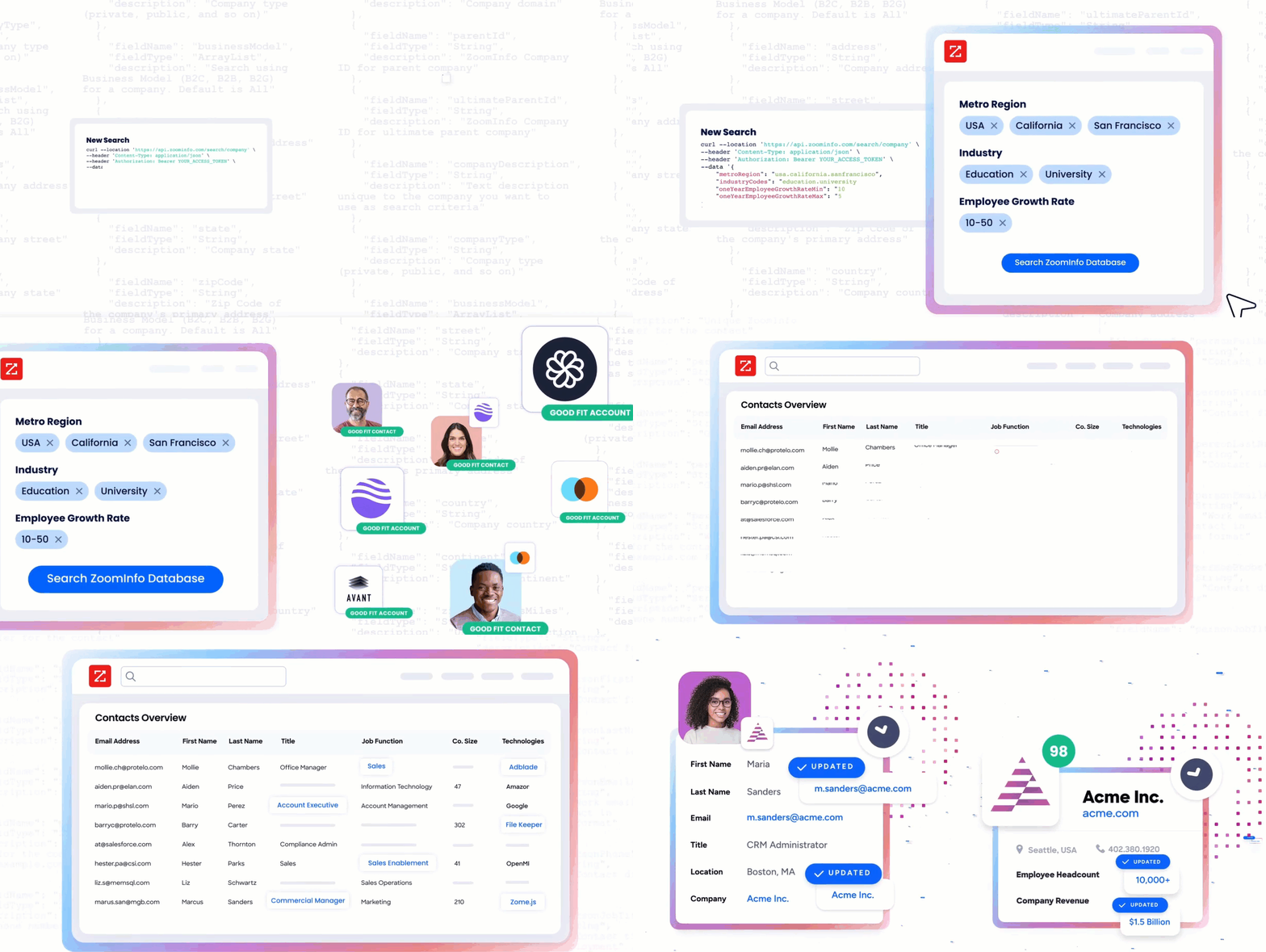
ZoomInfo is an AI-powered go-to-market platform whose API tells your system who these contacts ought to be, what corporations they work for, what know-how these corporations use, and whether or not they’re actively researching your class. Its GTM Context Graph processes 1.5B+ information factors every day, combining ZoomInfo’s B2B information together with your first-party information to indicate not simply what occurred, however why.
Supply: ZoomInfo
The 2 APIs function at totally different layers of a pipeline. A developer constructing advertising and marketing automation that targets the appropriate accounts on the proper time would use ActiveCampaign’s API to execute the automation and ZoomInfo’s API to determine who belongs in it.
What the API Covers: Search, Enrichment & AI Intelligence
ZoomInfo’s Enterprise API is a REST suite served from https://api.zoominfo.com/gtm, organized into 4 floor areas documented within the interactive API reference:
-
Knowledge API (Search & Enrich): Search endpoints cowl Contacts, Corporations, Intent, Information, and Scoops, returning matched data with out consuming credit. Enrich endpoints unlock full payloads: enterprise emails, direct dials, employment historical past, company hierarchy, org charts, technographics, and hashtag indicators, as much as 25 data per name. The search-then-enrich sample means you filter freely and pay just for the data you decide to. The underlying dataset spans 500M contacts, 100M corporations, 135M+ verified telephone numbers, and 200M+ verified enterprise e mail addresses.
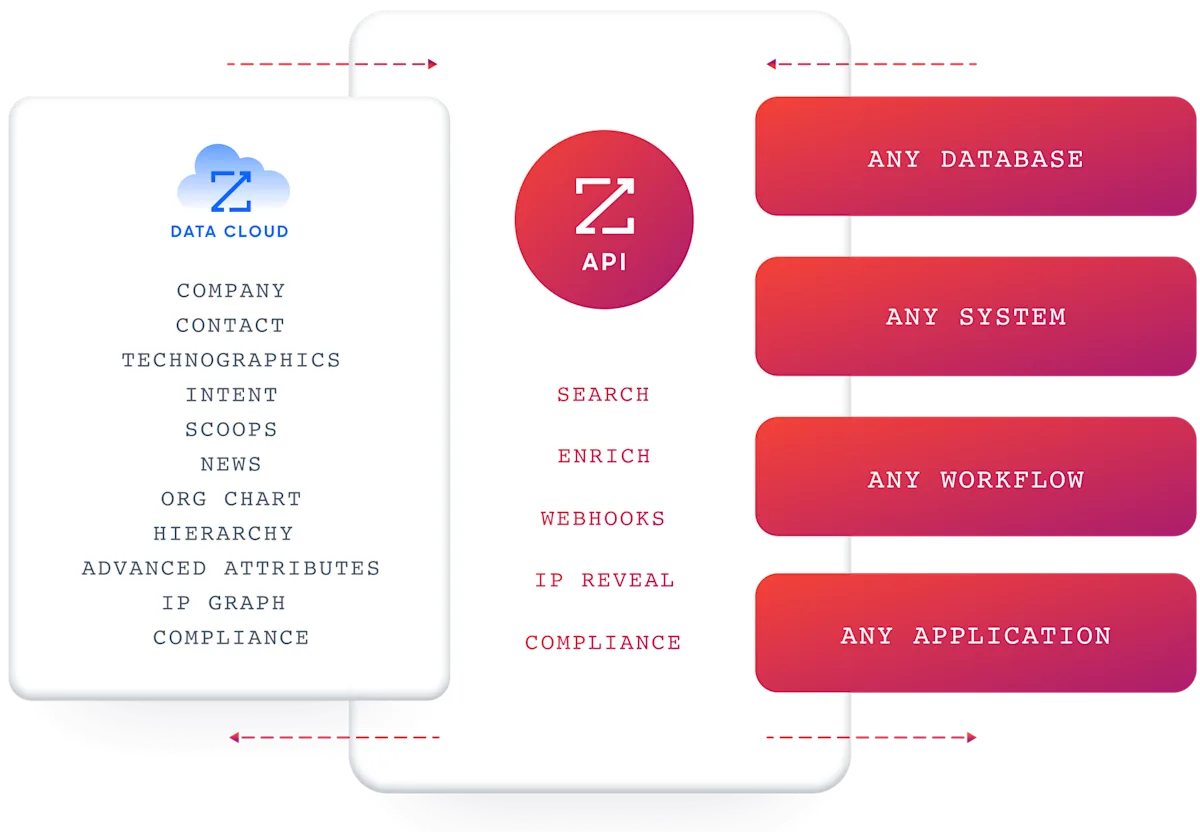
Supply: ZoomInfo
The pairing with a advertising and marketing automation API is direct: use ZoomInfo’s search endpoints to search out contacts matching your ICP (free, no credit consumed), enrich those price pursuing with verified enterprise emails and firm attribute information, then push them into ActiveCampaign’s contact and automation endpoints. The search-then-enrich sample means you construct the contact checklist with intelligence earlier than spending ActiveCampaign’s execution capability on it.
Authentication, Price Limits & Credit
Authentication makes use of OAuth 2.0 with PKCE by way of Okta, issuing 24-hour entry tokens with rotating refresh tokens. Three flows are supported: Authorization Code with PKCE (internet purposes), Consumer Credentials (server-to-server), and Refresh Token. Groups register purposes by means of the ZoomInfo Developer Portal, the place they generate credentials, outline scopes, and check endpoints.
It is a totally different authentication mannequin from ActiveCampaign’s static API key: it helps delegated entry, credential rotation, and scoped permissions out of the field.
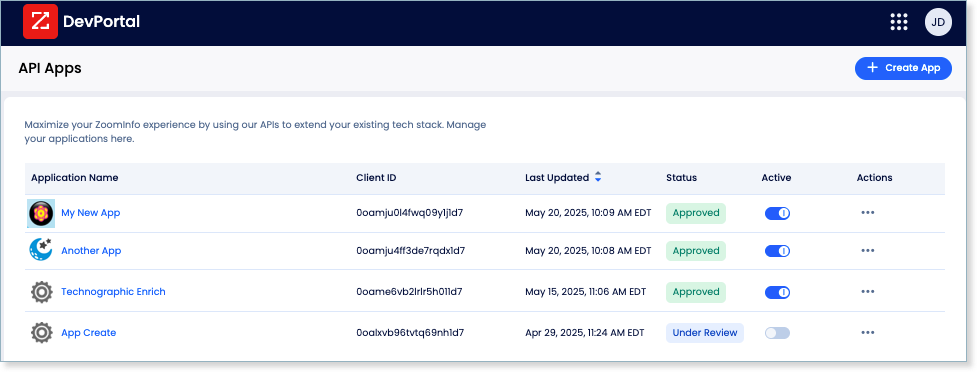
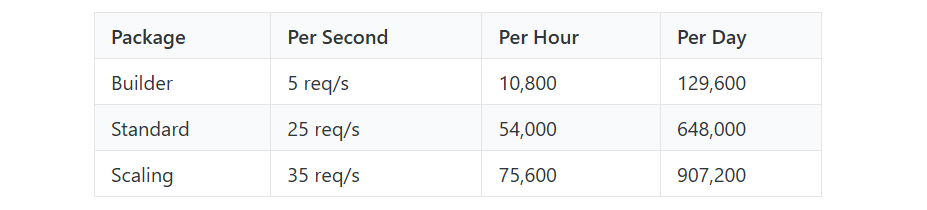
Price limits are printed by tier: Builder (5 req/sec), Customary (25 req/sec), and Scaling (35 req/sec), with per-hour and per-day sliding-window limits enforced concurrently. Each response consists of quota headers with remaining capability, and 429 responses embody a Retry-After header with precise backoff timing.
Credit observe a rolling 12-month window: a file enriched for the primary time consumes one credit score; re-enriching the identical file inside the 12 months is free. Search and lookup operations are free and don’t eat credit.
Supply: ZoomInfo
Webhooks, MCP & Developer Expertise
Webhooks can be found by way of the Brokers API, tied to ZoomInfo’s Agent Groups system. Occasion varieties cowl bulk enrichment jobs finishing, data altering, credit score utilization crossing thresholds, and new GTM indicators (scoops, funding occasions, intent spikes) changing into out there. Retry conduct and throttling are configurable per occasion kind, a distinction to ActiveCampaign’s no-retry mannequin.
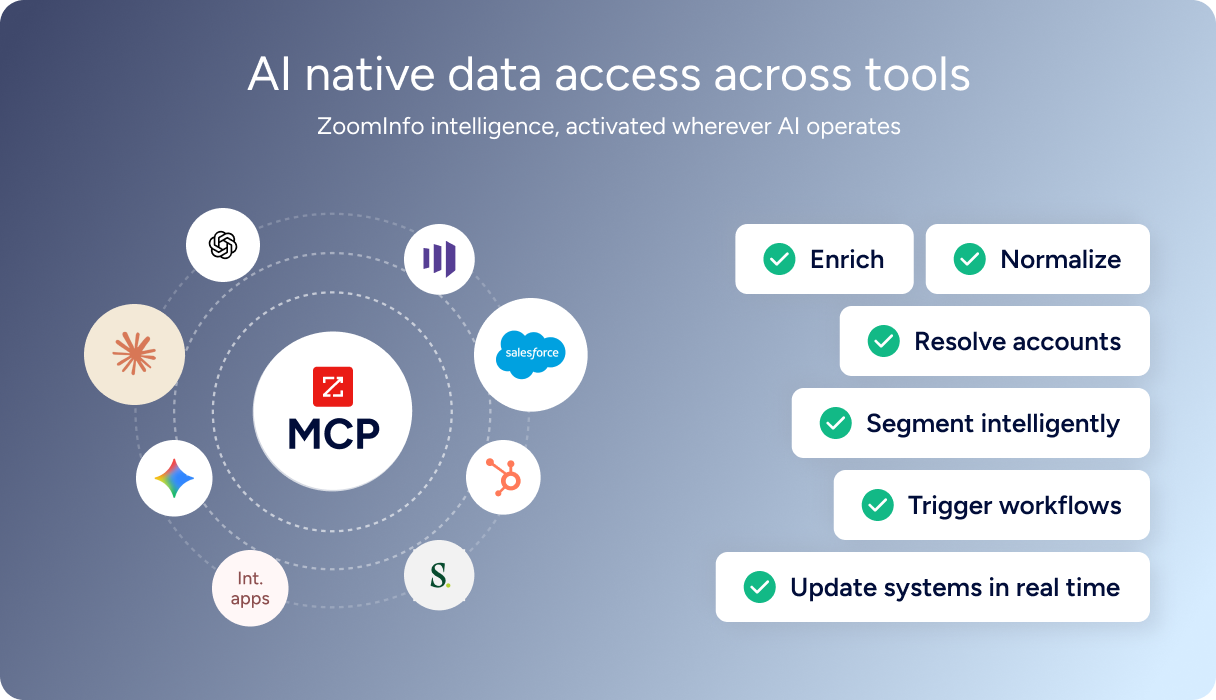
For builders constructing AI brokers, ZoomInfo’s MCP server at https://mcp.zoominfo.com/mcp exposes search, enrich, and account analysis as native instruments for MCP-compatible assistants, at the moment supporting Claude and ChatGPT.
Since ActiveCampaign additionally publishes an MCP server, a developer can join each to the identical AI assistant and orchestrate intelligence-to-automation workflows by means of pure language. The credit score mannequin carries over from the REST API.
Supply: ZoomInfo
ZoomInfo doesn’t publish official SDKs both, so each platforms require direct HTTP integration. Documentation lives at docs.zoominfo.com with an interactive API reference, OAuth recipes in 5 languages, and an llms.txt index for AI improvement instruments. A separate Docs MCP server lets AI improvement instruments generate integration code in opposition to the API spec. ZoomInfo makes use of consumption-based pricing; the corporate has prolonged API entry to all related plans.
BDO Canada reported an 87% discount in time spent updating inside information dashboards utilizing the ZoomInfo API, with one analyst describing the mixing as plug-and-play throughout any course of. (ZoomInfo)
Remaining Verdict
ActiveCampaign’s API covers the advertising and marketing execution layer with sufficient depth to interchange dashboard-driven workflows: contacts, campaigns, offers, automations, SMS, WhatsApp, and webhooks are all programmatically accessible on each paid plan.
The constraints (5 req/sec, no OAuth, no SDKs) are workable with the appropriate structure, and the free sandbox accounts make analysis cost-free.
Select the ActiveCampaign API alone if your construct begins and ends with advertising and marketing automation execution: syncing contacts from exterior programs, triggering automations primarily based on enterprise occasions, managing campaigns and deal pipelines programmatically, or coordinating cross-channel messaging throughout e mail, SMS, and WhatsApp. The $149/month entry level with API entry included, mixed with a public developer portal, makes it a low-barrier floor for advertising and marketing automation builds.
Add the ZoomInfo API when the construct wants the intelligence layer upstream of execution: deciding which contacts belong in these automations, what corporations they characterize, whether or not they’re actively researching your class, and the place they sit within the shopping for committee. The search-then-enrich sample (search is free, enrich consumes credit) and the AI intelligence endpoints cowl the information and reasoning that advertising and marketing automation APIs should not constructed to supply.
Discover the ZoomInfo Enterprise API or begin with the developer docs to see the endpoint floor straight.
A developer who wants neither API ought to contemplate that ActiveCampaign’s API doesn’t cowl B2B information intelligence, and ZoomInfo’s API doesn’t run advertising and marketing automations. In case your pipeline requires each, the 2 are complementary layers, not competing surfaces.
FAQ
Is the ActiveCampaign API free?
API entry is included on all paid ActiveCampaign plans beginning at $149/month for 10,000 contacts on the Starter tier. There are not any printed per-call expenses or API-specific credit score prices.
Free developer sandbox accounts can be found for constructing and testing with out a paid subscription, and a 14-day free trial (no bank card required) enables you to check the API with a reside account. The actual price driver is the plan tier, which determines your contact restrict, e mail ship capability, and entry to options like {custom} objects and premium CRM integrations.
Does ActiveCampaign have a GraphQL API?
Sure, however it’s restricted in scope. ActiveCampaign exposes a GraphQL endpoint at /api/3/ecom/graphql on the identical account-specific base URL because the REST API.
It covers eCommerce operations solely: Orders, Merchandise, Recurring Funds, Browse Abandonment, and Browse Periods. Contacts, campaigns, offers, automations, segments, and all different assets are accessible solely by means of the REST v3 API. The GraphQL endpoint shares the identical API key authentication and 5 req/sec price restrict because the REST floor.
What’s the ActiveCampaign API price restrict?
The documented restrict is 5 requests per second per account, shared throughout the REST v3 API and the eCommerce GraphQL API. That is an account-wide ceiling, not a per-user or per-key restrict, and the out there documentation doesn’t point out that increased plan tiers unlock quicker throughput.
Bulk import endpoints for contacts use asynchronous processing with standing polling, which is the advisable path for high-volume operations. Pagination is capped at 100 data per request, with cursor-style pagination by way of id_greater advisable for giant datasets.
Are there official ActiveCampaign SDKs?
No. ActiveCampaign doesn’t publish official SDKs in any language. The developer portal doesn’t checklist maintained libraries for Python, Node.js, PHP, Ruby, or some other language. Builders combine straight over HTTP utilizing the REST API.
ActiveCampaign does publish an llms.txt index and a distant MCP server for AI-assisted improvement, and a Postman assortment is on the market for the eCommerce GraphQL API, however these should not SDK replacements.
Does the ActiveCampaign API assist webhooks?
Sure. ActiveCampaign offers a webhook system managed by means of the /api/3/webhooks endpoints. You may create, replace, and delete webhooks programmatically, and scope each by initiation supply (contact-triggered, user-triggered, API-triggered, or system-triggered). Supported occasions span contacts (subscribe, unsubscribe, tag added/eliminated), campaigns (open, click on, bounce, reply), offers (add, replace, job completion), SMS (despatched, reply, unsubscribe), and accounts.
ActiveCampaign ensures at-least-once supply, however webhooks are by no means retried on failure, so construct receivers that deal with each duplicate occasions and missed deliveries.
Can I take advantage of the ActiveCampaign and ZoomInfo APIs collectively?
Sure, and there’s a sensible motive to take action.
ActiveCampaign’s API handles advertising and marketing execution: managing contacts, triggering automations, working campaigns, and monitoring offers. ZoomInfo’s API offers the B2B intelligence that determines who ought to be in these campaigns: search throughout 500M contacts and 100M corporations, enrich with verified emails, direct dials, org charts, technographics, and employment historical past, detect purchaser intent indicators, and generate AI-powered account analysis and buying-committee suggestions.
The sample is intelligence first, execution second: use ZoomInfo’s search endpoints to establish contacts matching your ICP, enrich them for verified information, then push them into ActiveCampaign’s contact and automation endpoints. The 2 APIs use totally different authentication fashions (API key vs. OAuth 2.0), so plan your integration layer to deal with each.
Each platforms publish MCP servers, so an AI agent related to each can orchestrate the complete workflow (discover accounts, enrich contacts, create automations) by means of a single conversational interface.

