

The query behind each messaging API analysis is whether or not the floor is deep sufficient to justify the dependency, or whether or not you’ll hit a wall three months into the construct and need you had checked sooner.
Brevo’s API is a REST floor at https://api.brevo.com/v3/ that covers transactional e-mail, SMS, WhatsApp, contact administration, eCommerce information sync, {custom} occasions, conversations, loyalty packages, and account administration.
The developer portal is public, the OpenAPI v2 spec is revealed, official SDKs cowl seven languages, and fee limits are documented to the per-second and per-hour degree for each endpoint class. For a platform that began as an e-mail advertising and marketing device for SMBs, the API floor is broader than most builders anticipate.
However breadth and depth for a given construct are totally different questions.
The Brevo API is probably going the correct alternative if:
-
You want a single API floor for transactional e-mail, SMS, and WhatsApp with out managing three vendor relationships.
-
You might be constructing advertising and marketing automation workflows that want programmatic contact administration, segmentation, and occasion monitoring alongside marketing campaign sends.
-
You want eCommerce information sync (merchandise, orders, classes) feeding into automated e-mail sequences like deserted cart restoration.
Nonetheless, it’d not be the correct match if:
-
You want B2B intelligence information alongside messaging: contact enrichment with direct dials, org charts, technographics, purchaser intent indicators, or firm attributes.
-
You want an API that returns information about who your contacts are (employment historical past, firm dimension, funding standing), not simply the power to message them.
-
You require OAuth 2.0 with scoped delegated entry for multi-tenant SaaS integrations the place every buyer authenticates independently (Brevo’s OAuth is offered however designed for associate app integrations, not common multi-tenant patterns).
-
Your pipeline requires AI-powered account analysis, lookalike growth, or buying-committee suggestions on the API layer.
On this case, it is best to contemplate ZoomInfo, a GTM platform whose API is a REST suite masking search, enrichment, AI intelligence, and viewers administration throughout 500M contacts and 100M corporations, with OAuth 2.0 authentication, tiered fee limits as much as 35 req/sec, and an MCP server for AI-agent workflows.
ZoomInfo’s API operates at a distinct layer: it tells you who your contacts are, what corporations they work for, and whether or not these accounts are in-market, whereas Brevo’s API handles the messaging as soon as who to succeed in.
This text evaluations each: the Brevo API in full technical depth first, then ZoomInfo’s API the place your construct wants the information and intelligence layer that messaging alone doesn’t cowl.
Brevo API at a Look
|
Attribute |
Element |
|---|---|
|
API sort |
REST over HTTPS, JSON responses |
|
Authentication |
API key in api-key header (major); OAuth 2.0 authorization code circulate (associate integrations) |
|
Base URL |
https://api.brevo.com/v3/ |
|
OpenAPI spec |
Printed at https://api.brevo.com/v3/swagger_definition_v3.yml (OpenAPI v2) |
|
Fee limits |
Tiered by endpoint and plan: as much as 6,000 RPS for e-mail sends on Enterprise; contacts at 10-60 RPS by tier |
|
SDKs |
Official SDKs for Node.js, Python, PHP, Java, C#, Go, and Ruby |
|
Webhooks |
Sure, occasion system masking transactional, advertising and marketing, conversations, funds, loyalty, push, CRM, conferences, and cellphone occasions |
|
Documentation |
builders.brevo.com with interactive reference, Postman workspace, sandbox mode, and changelog |
|
Pricing / entry |
API entry included on all plans together with Free (300 emails/day); no separate API tier or per-call charge |
Brevo API: What Works Effectively & What to Plan Round
|
What works effectively |
What to plan round |
|---|---|
|
API entry on each plan together with Free: no paywall to begin constructing |
Messaging-only scope: no contact enrichment, firm information, intent indicators, or org charts |
|
Official SDKs in seven languages with v4 variations for Node.js, PHP, and Python |
Contacts endpoint fee restrict begins at 10 RPS on Free/Starter/Customary plans |
|
Printed OpenAPI v2 spec for producing {custom} shoppers in any language |
Webhook creation capped at 40 whole (advertising and marketing + transactional mixed) |
|
Transactional e-mail ship endpoint handles 1,000 RPS on the bottom tier |
OAuth 2.0 is offered however scoped to associate app integrations, not common multi-tenant auth |
|
Webhook protection: 12+ transactional e-mail occasion sorts plus SMS, advertising and marketing, loyalty, CRM, and conversations |
Larger rate-limit tiers (2,000+ RPS for e-mail) require Skilled or Enterprise plans |
|
Sandbox mode for testing sends with out delivering actual messages |
SMS and WhatsApp credit billed individually from e-mail quantity |
Brevo API: Authentication & Getting Began
Supply: Brevo
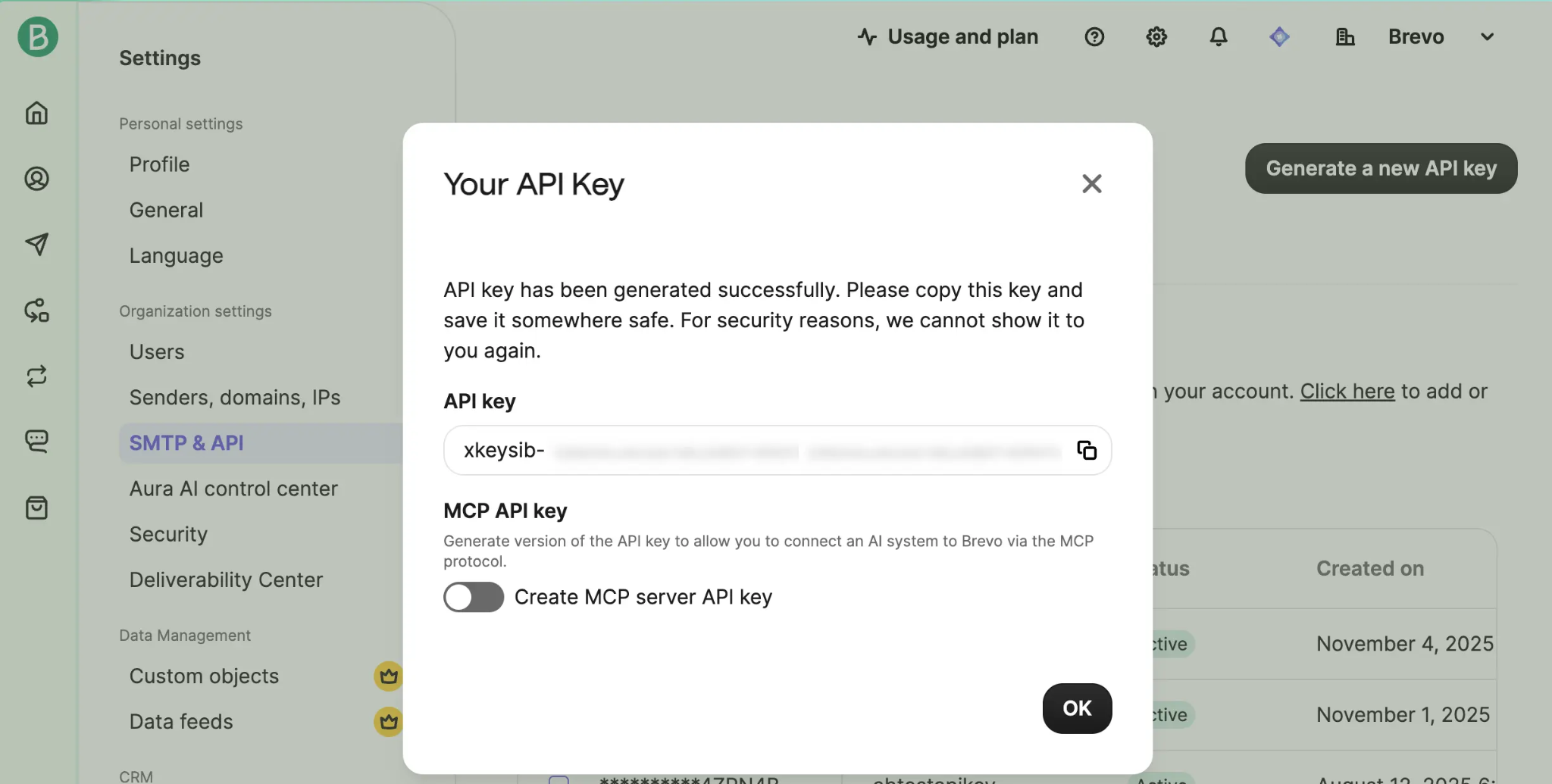
API entry begins with a normal Brevo account on any plan, together with the Free tier. There is no such thing as a separate developer signup, no approval gate, and no bank card required. The Free plan permits as much as 300 emails per day through the API with full entry to the REST endpoints, SMTP relay, outbound webhooks, and limitless log retention.
Brevo helps two authentication strategies:
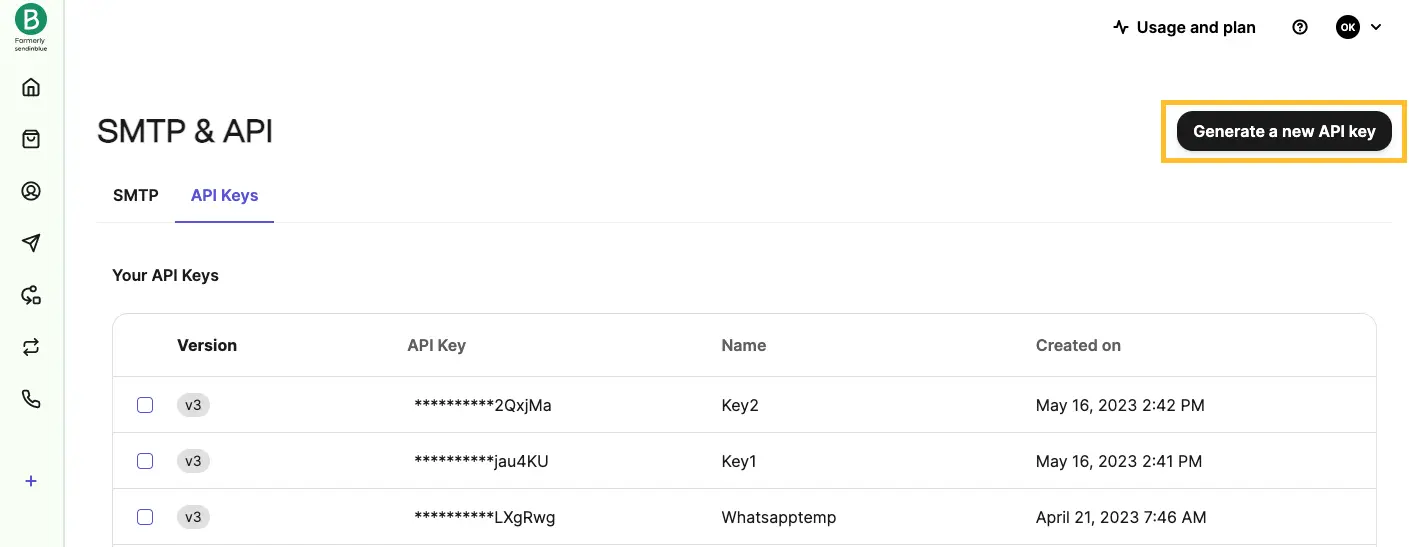
API key authentication is the first methodology for server-to-server integrations. Builders generate an API key from Account Settings within the Brevo dashboard.
Supply: Brevo
The important thing seems as soon as and have to be saved securely. You go it within the api-key request header on each name. An optionally available IP allowlist can prohibit key utilization to particular addresses.
OAuth 2.0 is offered for integrations performing on behalf of customers, following a normal authorization code circulate with scopes. That is designed for associate integrations and apps connecting a person’s Brevo account, not direct server-to-server entry.
A primary authenticated request seems to be like this:
curl https://api.brevo.com/v3/account
-H “api-key: YOUR_API_KEY”
The response returns account particulars together with plan sort, credit remaining, and sender configuration, confirming the secret’s legitimate and the account is energetic. From there, you may start sending transactional emails, managing contacts, or configuring webhooks.
One element value noting: Brevo is express that the important thing should not be uncovered in client-side code. For browser-side integrations, Brevo supplies a JavaScript monitoring library and the Conversations JavaScript API as alternate options.
Brevo API: Core Endpoints & Capabilities
The API is organized by useful resource. All requests use JSON (content-type: software/json) and commonplace HTTP strategies (GET, POST, PUT, DELETE). The endpoint catalogue spans messaging, contact administration, eCommerce, occasions, conversations, loyalty, and account administration.
Transactional E mail
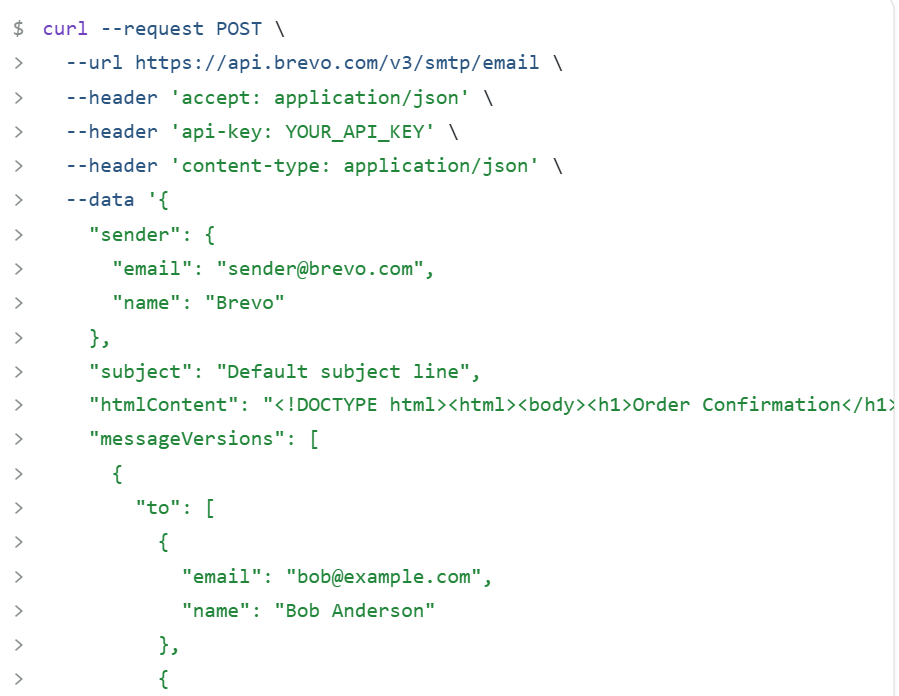
Main endpoint: POST /v3/smtp/e-mail
That is the core transactional ship endpoint. You go a JSON payload with the sender, recipient array, topic, and message physique (as uncooked HTML through htmlContent, plain textual content through textContent, or a template reference through templateId).
Dynamic content material is injected by way of a params object for per-recipient variable substitution.
The endpoint helps batch sending with as much as 1,000 personalised message variations per request through the messageVersions array.
Supply: Brevo
Every model can carry its personal recipients, topic, params, and content material. The batch endpoint accepts as much as 6,000 calls per hour on the bottom tier.
Further transactional e-mail operations:
What you’ll construct with this: an eCommerce order affirmation pipeline that sends personalised receipts with product particulars, tracks supply standing through webhooks, and parses buyer replies right into a assist ticket system.
Transactional SMS and WhatsApp
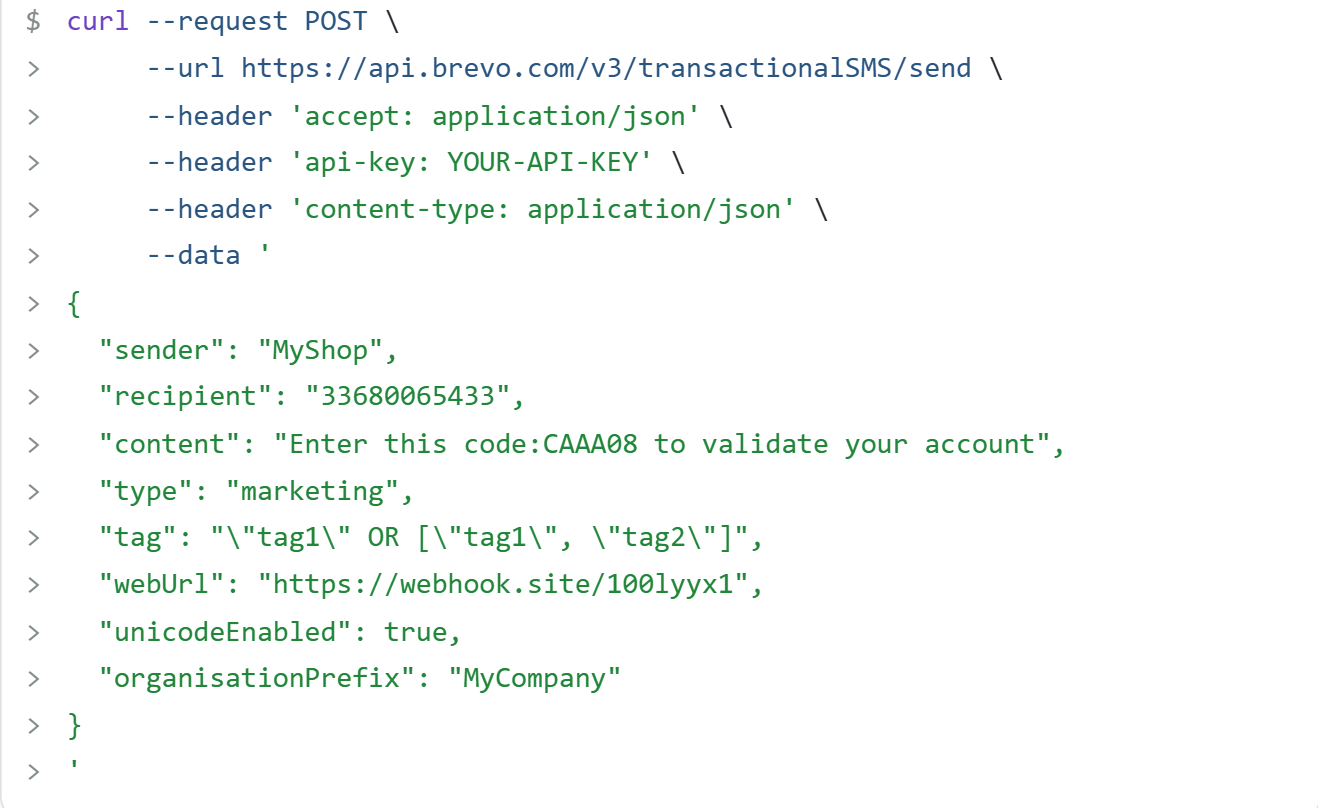
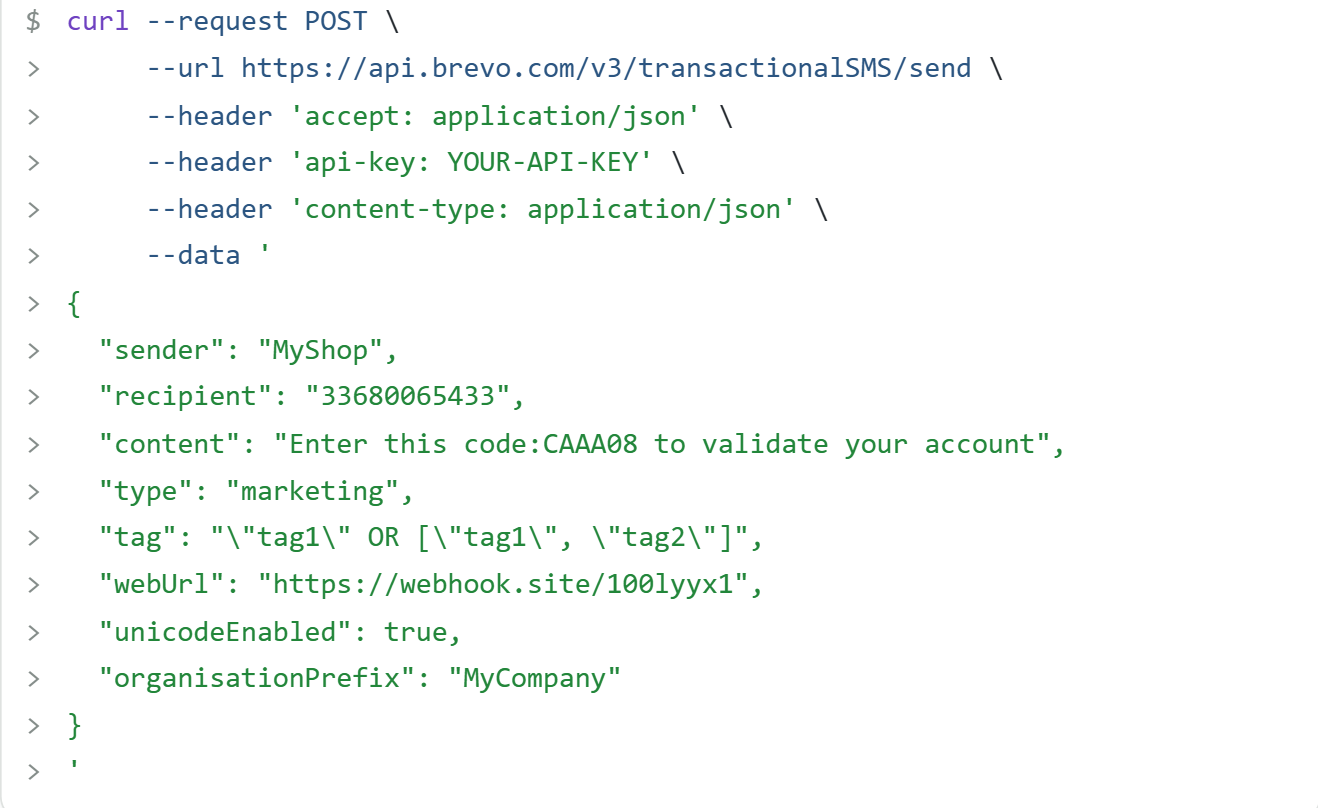
SMS: POST /v3/transactionalSMS/ship sends SMS messages with sender identify, content material, and optionally available reference tags.
Supply: Brevo
WhatsApp: POST /v3/whatsapp/sendMessage handles transactional WhatsApp messages. A separate campaigns API covers advertising and marketing WhatsApp sends.
Each channels sit beneath the identical API floor and authentication, so a pipeline that sends an order affirmation through e-mail and a delivery alert through WhatsApp makes use of one set of credentials and one integration layer.
Contacts
Base path: /v3/contacts/
The contacts floor handles CRUD, search, and import/export operations. You possibly can handle contact attributes, construct and replace segmented lists, and filter contacts by demographic, behavioral, and {custom} occasion information. Segmentation standards can be found for constructing dynamic audiences programmatically.
Contact imports assist bulk operations, and the export endpoints allow you to pull contact information for exterior processing. Pagination follows commonplace offset/restrict patterns throughout record endpoints.
What you’ll construct with this: a CRM sync that pushes new signups into Brevo contact lists, applies lead scoring based mostly on {custom} occasion information, and enrolls high-scoring contacts into automated e-mail sequences.
eCommerce
Merchandise: POST /v3/merchandise syncs your product catalogue into Brevo.
Supply: Brevo
Orders: POST /v3/orders/standing imports and updates order information.
These endpoints feed Brevo’s automation engine with the information wanted for deserted cart workflows, purchase-triggered sequences, and income attribution. Product classes and order occasions circulate into the identical contact profiles used for segmentation.
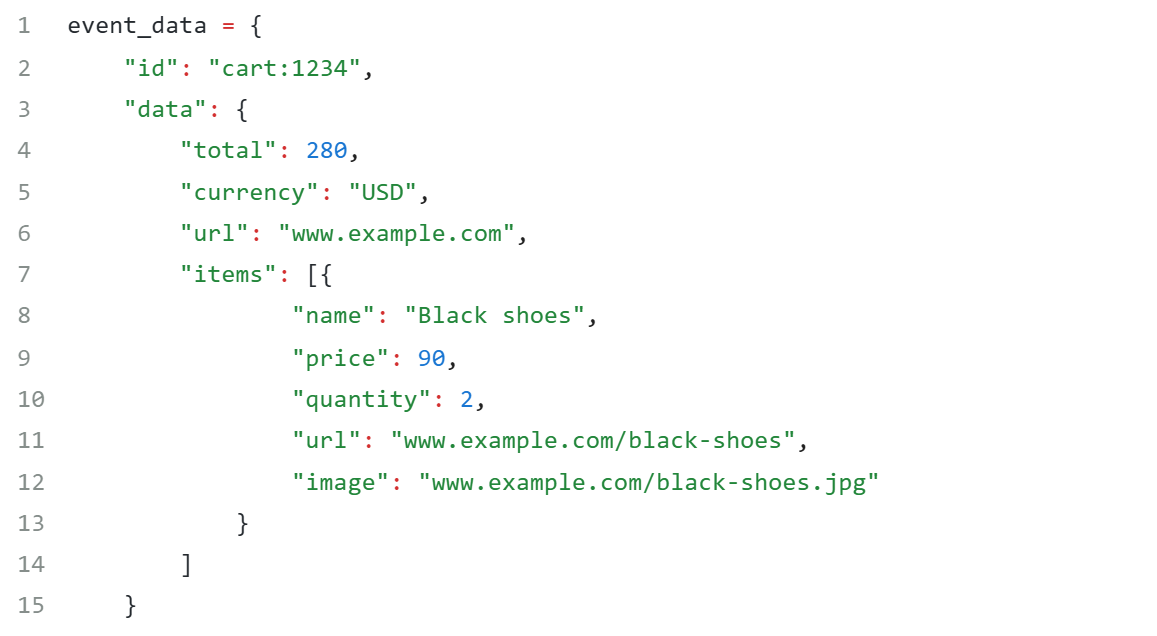
Customized Occasions
Endpoint: POST /v3/occasions
Supply: Brevo
Monitor arbitrary person behaviors from server-side or client-side JavaScript. Occasions develop into obtainable as segmentation standards and automation triggers, so you may construct workflows that fireside on actions particular to your software (characteristic utilization, onboarding milestones, subscription modifications) quite than solely e-mail interplay occasions.
Conversations
Base path: /v3/conversations
A REST API for agent messaging plus a JavaScript API for customizing the dwell chat widget. You possibly can handle dialog threads programmatically, connecting Brevo’s chat system with exterior assist instruments or CRM data.
Loyalty
Base path: /v3/loyalty/
Create and configure loyalty packages, handle member enrollments through /v3/loyalty/subscriptions, and credit score or debit factors by way of /v3/loyalty/transactions. Learn member information and tier standing programmatically. That is an Enterprise-tier characteristic.
Account Administration
GET /v3/account validates credentials and retrieves account particulars. Further endpoints handle senders, domains (creation, authentication, validation), and invited customers.
Brevo API: Webhooks & Occasions
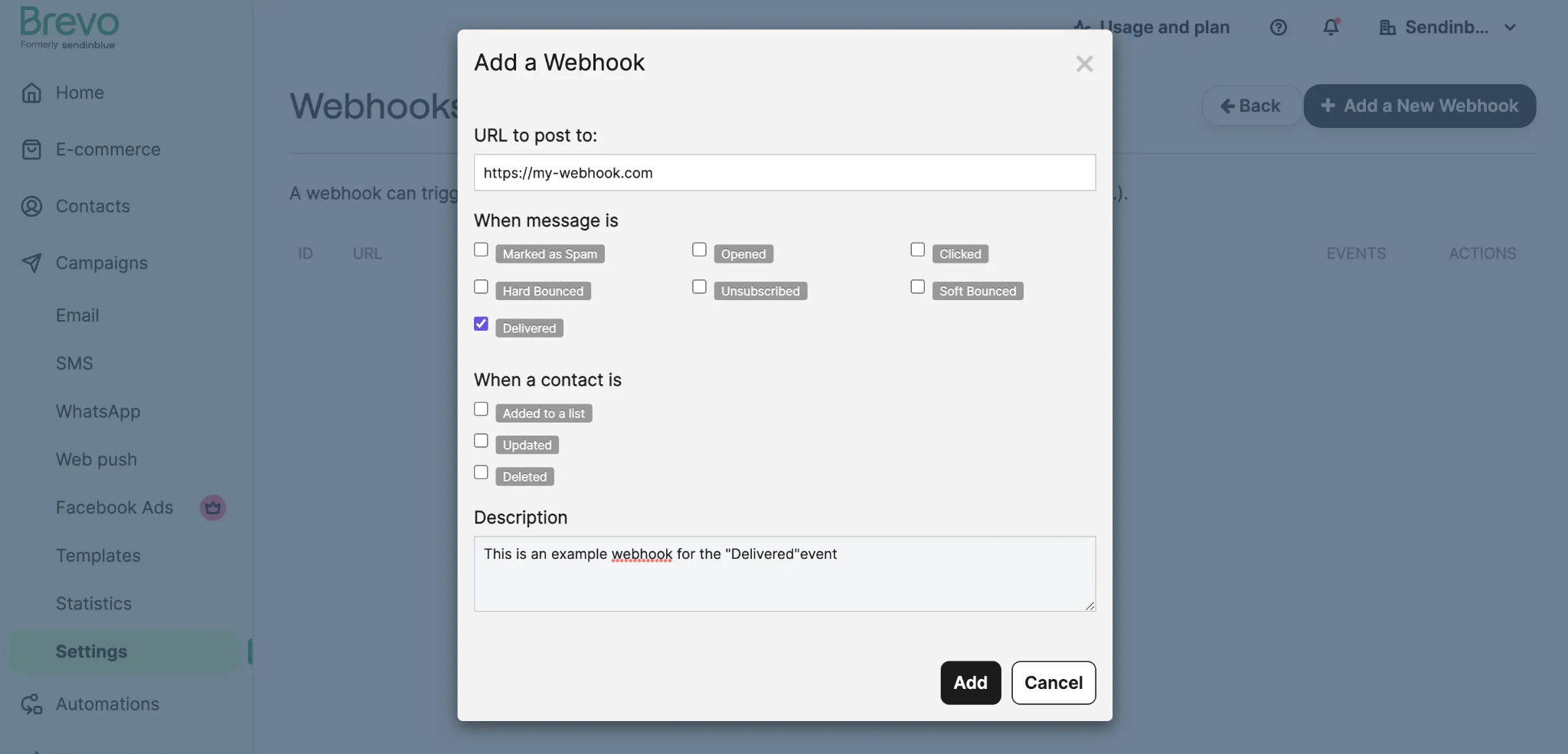
Brevo’s webhook system delivers real-time HTTP POST payloads to a developer-supplied URL. Webhooks fall into two most important classes (Advertising and marketing and Transactional) with extra sub-categories masking the total platform.
Supply: Brevo
Transactional E mail occasions (full record): Despatched, Clicked, Deferred, Delivered, Mushy Bounced, Spam/Criticism, First Opening, Onerous Bounced, Opened, Invalid E mail, Blocked, Error, Unsubscribed, Proxy Open, Distinctive Proxy Open.
Transactional SMS occasions: Despatched, Accepted, Delivered, Replied, Mushy Bounce, Onerous Bounce, Subscribe, Unsubscribe, Skip, Blacklisted, Rejected.
Further webhook classes:
You create and replace webhooks through the API itself (POST /v3/webhooks, PUT /v3/webhooks/{webhookId}). A batched webhooks choice handles high-volume occasion processing. Brevo enforces safety by way of IP-allowlisting its revealed IP ranges on the receiving server. A retry mechanism handles transient supply failures.
Three issues to plan round:
-
Webhook creation is capped at 40 whole (advertising and marketing + transactional mixed). In case your integration wants fine-grained routing throughout many occasion sorts, you will have to multiplex on the receiver quite than creating separate webhooks per occasion.
Brevo API: SDKs, Docs & Fee Limits
SDKs & Libraries
Brevo publishes seven official SDKs on GitHub beneath the getbrevo group:
Node.js, PHP, and Python carry a “New model” designation on the docs with v4 branches, and every has a devoted SDK information with changelog. The remaining 4 (Java, C#, Go, Ruby) are maintained however lack the identical v4 launch documentation.
For languages with out an official SDK, the revealed OpenAPI v2 spec may be fed into Swagger Codegen or any OpenAPI toolchain to generate a typed shopper.
Seven SDKs with three actively versioned is sweet protection for a messaging API. Earlier than relying on any SDK in manufacturing, verify the GitHub repo for latest commit exercise in opposition to the present v3 API floor.
Documentation & Developer Expertise
The developer portal at builders.brevo.com covers the total API floor:
-
SDK guides: language-specific guides for Node.js, Python, and PHP with changelogs, set up steps, and utilization examples.
-
AI-first docs: the docs web site exposes an LLMs.txt index at /llms.txt and helps the MCP protocol, letting AI coding assistants browse the reference natively.
Help channels embody the Assist Heart (assist in 6 languages on Starter+), cellphone assist on Skilled and above, a group discussion board, and a platform standing web page. The docs web site additionally consists of an “Ask AI” operate for navigating the reference.
Documentation is considered one of Brevo’s API strengths. The interactive reference, Postman workspace, sandbox mode, and revealed OpenAPI spec give builders a number of paths to validate assumptions earlier than writing manufacturing code.
Fee Limits & Constraints
Brevo publishes three rate-limit tiers, expressed in RPS (requests per second) and RPH (requests per hour). Your tier is dependent upon your plan:
Common limits (Free, Starter, Customary):
|
Endpoint |
Restrict |
|---|---|
|
POST /v3/smtp/e-mail (transactional ship) |
1,000 RPS / 3,600,000 RPH |
|
POST /v3/transactionalSMS/ship |
150 RPS / 540,000 RPH |
|
/v3/contacts/{…} |
10 RPS / 36,000 RPH |
|
POST /v3/occasions |
10 RPS / 36,000 RPH |
|
POST /v3/orders/standing |
5 RPS / 18,000 RPH |
|
GET /v3/smtp/emails (log retrieval) |
2 RPS / 7,200 RPH |
|
All different /v3/smtp/{…} |
300 RPH |
|
All different endpoints |
100 RPH |
Superior limits (Skilled): e-mail ship doubles to 2,000 RPS / 7.2M RPH; contacts to twenty RPS / 72K RPH; different endpoints to 200 RPH.
Prolonged limits (Enterprise): e-mail ship reaches 6,000 RPS; SMS 250 RPS; contacts 60 RPS; different endpoints 600 RPH.
Exceeding a restrict returns HTTP 429 Too Many Requests. All API responses embody fee restrict headers for monitoring utilization. Separate platform quotas cap whole object counts (campaigns, contact lists, and comparable assets).
The transactional e-mail ship endpoint at 1,000 RPS on the bottom tier is beneficiant for many builds. The contacts endpoint at 10 RPS on decrease tiers is the constraint most probably to have an effect on a CRM sync or bulk import. In case your pipeline includes frequent contact updates, plan for the ten RPS ceiling or improve to Skilled for 20 RPS.
Brevo API Pricing & Entry Prices
API entry comes bundled with each Brevo plan, together with the Free tier. There is no such thing as a separate API pricing, no per-call charge, and no developer-specific subscription. The pricing FAQ states: “All Brevo plans provide you with entry to transactional e-mail options, together with RESTful APIs, SMTP, outbound webhooks, limitless log retention.”
Right here is how the fee breaks down by tier:
-
Free: 300 emails/day through API (roughly 9,000/month), limitless contacts, no bank card required. Full API entry together with REST, SMTP relay, and webhooks.
-
Customary: from $18/month for five,000 emails/month. Provides advertising and marketing automation, A/B testing, and superior reporting.
-
Skilled: from $499/month for 150,000 emails/month. Unlocks Superior fee limits (2,000 RPS for e-mail sends, 20 RPS for contacts), WhatsApp campaigns, push notifications, and cellphone assist.
-
Enterprise: custom-priced. Unlocks Prolonged fee limits (6,000 RPS for e-mail sends, 60 RPS for contacts), devoted IP, SSO/SAML, and a Buyer Success Supervisor.
Pay-as-you-go credit can be found as an alternative choice to month-to-month subscriptions. One e-mail equals one credit score, and credit don’t expire.
SMS and WhatsApp credit are bought individually from e-mail quantity on all plans, priced by message quantity and vacation spot nation.
For a developer sizing prices: the API itself is free at each tier. The actual value is the e-mail quantity ceiling and the rate-limit tier that determines your throughput. A low-volume transactional use case (order confirmations, password resets) can run on the Free plan indefinitely.
A high-volume pipeline hitting 1,000+ contacts per second wants Skilled ($499/month) for the rate-limit improve alone.
The place the Brevo API Falls Quick
These are scope boundaries and constraints a developer ought to plan round, not criticisms of the platform. A number of replicate what Brevo is (a messaging and advertising and marketing automation platform) and what it’s not.
The API sends messages and manages contacts. It doesn’t return intelligence about who these contacts are. There is no such thing as a contact enrichment endpoint, no firm information, no org chart traversal, no technographic lookup, no purchaser intent indicators, and no employment historical past.
In case your pipeline must establish a contact’s title, firm dimension, expertise stack, or whether or not their firm is researching your class, you want a second API. That is the only greatest constraint for builders constructing information pipelines the place messaging is one step in a bigger enrichment and intelligence workflow.
The contacts endpoint fee restrict begins at 10 RPS on decrease tiers. The transactional e-mail endpoint handles 1,000 RPS on the bottom plan, however the contacts floor is proscribed to 10 requests per second on Free, Starter, and Customary. For a CRM sync processing hundreds of contact updates, that is the bottleneck. Skilled (20 RPS) and Enterprise (60 RPS) relieve it, however at $499/month and up.
Webhook creation is capped at 40 whole. Advertising and marketing and transactional webhooks share a single 40-webhook ceiling. In case your integration routes occasions to totally different inside techniques by sort, that you must multiplex on the receiver quite than creating one webhook per occasion.
No OAuth 2.0 for common multi-tenant SaaS integrations. Brevo’s OAuth circulate is designed for associate app integrations. For a SaaS product the place every buyer connects their very own Brevo account, the OAuth path exists however is just not scoped for common delegated entry. Most integrations will use API key auth, which implies every buyer should generate and share a key manually.
SMS and WhatsApp are billed individually. The e-mail quantity included in your plan doesn’t cowl SMS or WhatsApp sends. These channels are priced by message rely and vacation spot nation, including a variable value layer that’s tougher to foretell for multi-channel messaging pipelines.
No public changelog cadence or OpenAPI v3 spec. The API specification is revealed as OpenAPI v2 (Swagger). A changelog exists, however the replace frequency is just not acknowledged, and there’s no OpenAPI v3 spec. For groups utilizing newer code era tooling that expects v3, this provides a conversion step.
ZoomInfo API: The Knowledge and Intelligence Layer Past Messaging
Brevo’s API handles the messaging pipeline: ship emails, handle contacts, observe occasions, set off automations.
ZoomInfo’s API handles the information layer that feeds that pipeline: who these contacts are, what corporations they work for, what expertise they use, whether or not they’re researching your class, and the place they sit within the org chart.
Powering that information is the GTM Context Graph, which processes 1.5B+ information factors each day by combining ZoomInfo’s B2B information together with your first-party CRM data and behavioral indicators to floor not simply what occurred, however why offers transfer or stall.
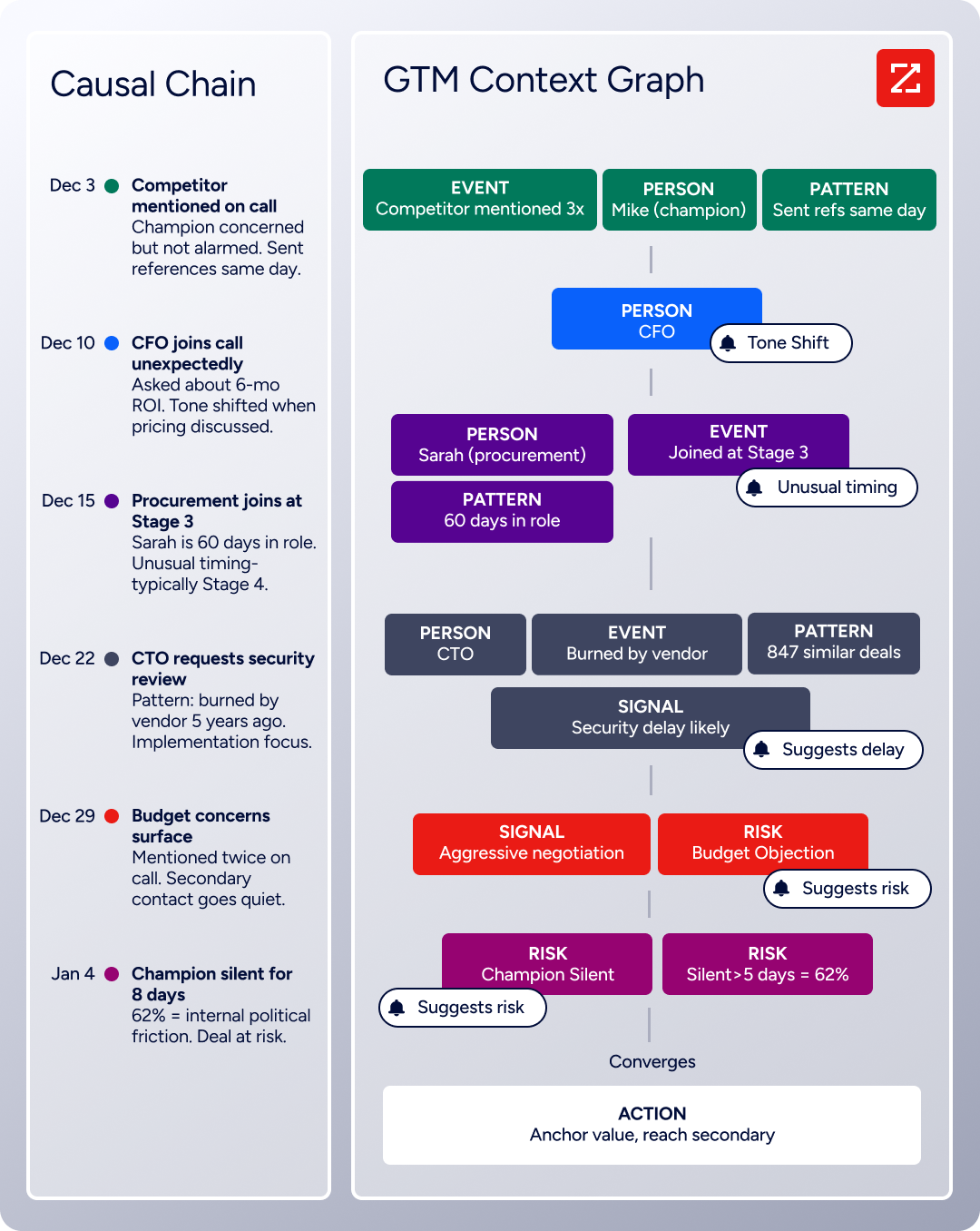
The 2 APIs function at totally different layers. A developer constructing a whole go-to-market pipeline would use ZoomInfo’s API to establish and qualify prospects, then Brevo’s API to succeed in them.
What the API Covers
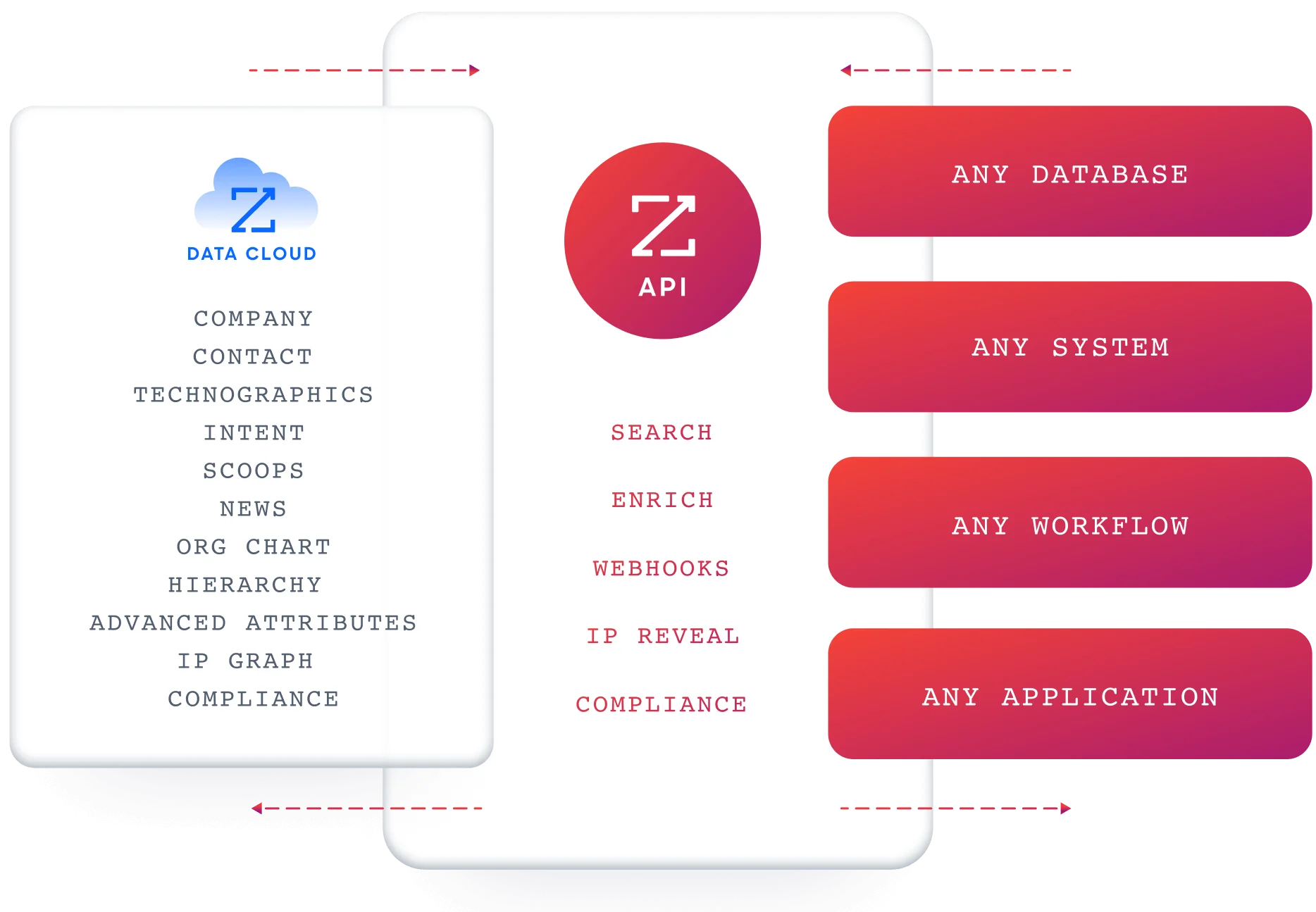
ZoomInfo’s Enterprise API is a REST suite served from https://api.zoominfo.com/gtm, organized into 4 floor areas documented within the interactive API reference:
-
Knowledge API (Search & Enrich): Search endpoints cowl Contacts, Firms, Intent, Information, and Scoops, returning matched data with out consuming credit. Enrich endpoints unlock the total payload: enterprise emails, direct dials, employment historical past, company hierarchy, org charts, technographics, and hashtag indicators (as much as 25 data per name). The underlying dataset spans 500M contacts, 100M corporations, 135M+ verified cellphone numbers, and 200M+ verified enterprise e-mail addresses.
The pairing with a messaging API is direct: use ZoomInfo’s search endpoints to seek out contacts matching your ICP (free, no credit consumed), enrich those value pursuing, then push them into Brevo’s contacts and marketing campaign endpoints. The search-then-enrich sample means you filter freely and pay just for the data you decide to.
Authentication & Entry
ZoomInfo makes use of OAuth 2.0 with PKCE through Okta, supporting three flows: Authorization Code with PKCE (internet functions), Consumer Credentials (server-to-server), and Refresh Token. Entry tokens are 24-hour Bearer tokens with rotating refresh tokens.
Groups register functions by way of the ZoomInfo Developer Portal, the place they generate credentials, outline scopes, and take a look at endpoints.
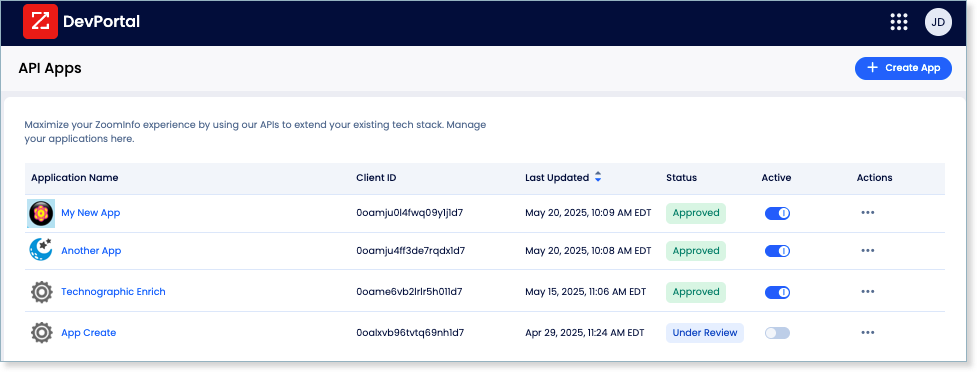
This differs from Brevo’s static API key mannequin. OAuth 2.0 helps delegated entry, credential rotation, and scoped permissions, making it higher fitted to multi-tenant integrations and enterprise safety necessities.
Fee Limits, Credit & Developer Expertise
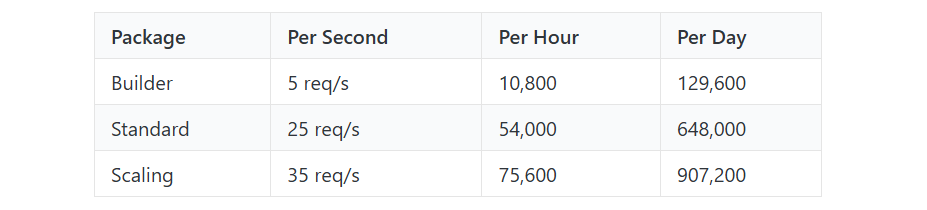
Fee limits are revealed by tier: Builder (5 req/sec), Customary (25 req/sec), and Scaling (35 req/sec), with per-hour and per-day sliding-window limits enforced concurrently. Each response consists of quota headers with remaining capability, and 429 responses embody a Retry-After header with actual backoff timing.
Credit observe a rolling 12-month window: enriching a document for the primary time consumes one credit score; re-enriching the identical document throughout the 12 months is free. Search and lookup operations don’t devour credit.
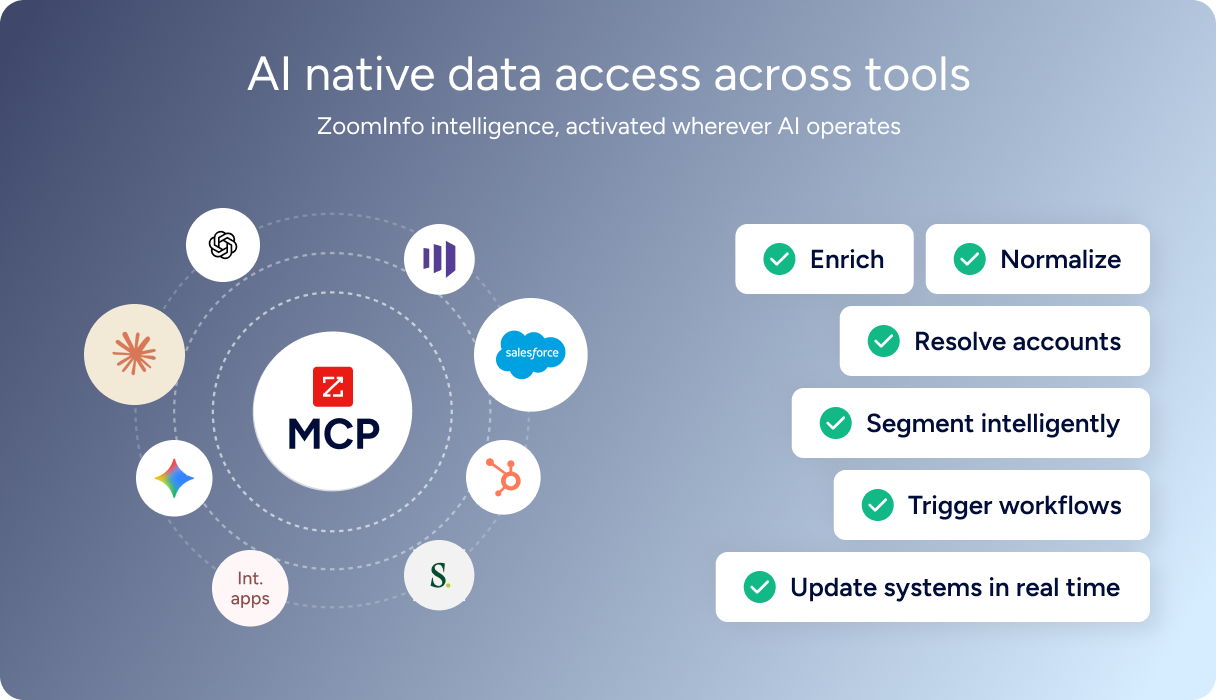
For builders constructing AI brokers, ZoomInfo’s MCP server at https://mcp.zoominfo.com/mcp exposes search, enrich, and account analysis as native instruments for MCP-compatible assistants, at the moment supporting Claude and ChatGPT.
Documentation lives at docs.zoominfo.com with an interactive API reference and an llms.txt index for AI growth instruments.
ZoomInfo doesn’t publish official SDKs, so that you combine over HTTP and personal the auth-and-retry layer your self. Pricing follows a consumption-based mannequin; API entry has been added to all related plans.
BDO Canada reported an 87% discount in time spent updating inside information dashboards utilizing the ZoomInfo API, with one analyst calling the combination plug-and-play throughout any course of. (ZoomInfo)
Brevo API vs. ZoomInfo API
|
Dimension |
Brevo API |
ZoomInfo API |
|---|---|---|
|
API sort |
REST, JSON |
REST, JSON:API format |
|
Authentication |
API key in header (major); OAuth 2.0 (associate apps) |
OAuth 2.0 with PKCE (24-hour tokens, rotating refresh) |
|
Main scope |
Messaging and advertising and marketing automation: transactional e-mail/SMS/WhatsApp, contacts, eCommerce, occasions, loyalty, conversations |
B2B intelligence: contact/firm search, enrichment, intent, org charts, technographics, AI analysis |
|
Contact information |
Shops contacts you create or import; no enrichment |
500M contacts, 100M corporations, 135M+ verified cellphone numbers, 200M+ verified enterprise emails |
|
Intent / indicators |
Marketing campaign engagement occasions (opens, clicks, bounces) |
Purchaser intent, scoops, information, job modifications, funding indicators |
|
Webhooks |
40-webhook cap; covers e-mail, SMS, advertising and marketing, loyalty, CRM, conversations, push, funds, conferences, cellphone |
Agent Groups-based webhooks (enrichment jobs, sign alerts, credit score thresholds) |
|
SDKs |
Official SDKs in 7 languages (Node.js, Python, PHP, Java, C#, Go, Ruby) |
None (code recipes in Shell, Node, Ruby, PHP, Python) |
|
Fee limits |
1,000-6,000 RPS for e-mail sends by tier; 10-60 RPS for contacts |
5-35 req/sec by tier, with per-hour and per-day sliding home windows |
|
AI endpoints |
Not obtainable |
Account Abstract, Discover Comparable Firms, Contact Suggestions |
|
MCP server |
Out there (Brevo MCP) for AI assistants to handle campaigns and contacts |
Out there at mcp.zoominfo.com (Claude, ChatGPT) for search, enrichment, and analysis |
|
Compliance API |
GDPR/CCPA instruments in-platform (consent kinds, information export) |
Knowledge privateness and opt-out administration endpoints |
|
Pricing mannequin |
Bundled with all plans ($0 entry on Free; $9/month Starter) |
Consumption-based, credit-based (search free, enrich consumes credit) |
|
Greatest for |
Builders constructing messaging pipelines: transactional sends, advertising and marketing automation, multi-channel campaigns |
Builders constructing information and intelligence pipelines: contact discovery, firm enrichment, intent detection, AI-powered account analysis |
Remaining Verdict
Brevo’s API is a succesful, well-documented messaging floor. It covers transactional e-mail, SMS, WhatsApp, contacts, eCommerce, occasions, loyalty, and conversations from a single REST interface, with seven official SDKs, revealed fee limits, an OpenAPI spec, sandbox mode, and API entry beginning at $0.
For a developer whose construct begins with “ship a message” and extends into “automate a workflow round that message,” the API delivers what the dashboard does, with out the dashboard.
Select the Brevo API if your integration is messaging-first: transactional e-mail at scale, multi-channel marketing campaign automation, eCommerce event-triggered sequences, or a loyalty program that wants programmatic contact and factors administration.
The Free tier with full API entry, the 1,000 RPS e-mail ship ceiling on the bottom plan, and 7 maintained SDKs make it simple to begin constructing.
Select the ZoomInfo API if your construct wants the intelligence layer upstream of messaging: deciding which accounts to pursue, which contacts to succeed in, what their corporations appear like, and whether or not they’re in-market.
The search-then-enrich sample (search is free, enrich consumes credit) and the AI intelligence endpoints cowl the information and reasoning that messaging APIs don’t.
Discover the ZoomInfo Enterprise API or begin with the developer docs to see the endpoint floor immediately.
A developer who wants each ought to notice that the 2 function at complementary layers: ZoomInfo identifies and qualifies the viewers, Brevo delivers the message. In case your pipeline requires each, they combine by way of their respective REST surfaces with no architectural battle.
FAQ
Is the Brevo API free?
Sure, on the Free plan. Brevo consists of full API entry (REST, SMTP relay, webhooks, limitless log retention) on each plan, together with the everlasting Free tier. The Free plan permits as much as 300 emails per day through API with limitless contacts and no bank card required. Past that each day cap, paid plans begin at $9/month for five,000 emails/month. There are not any per-call API charges on any plan.
Does Brevo have a GraphQL API?
No. Brevo exposes a REST API at /v3/ utilizing HTTPS with JSON request and response our bodies. The API specification is revealed as OpenAPI v2. If you happen to want a GraphQL interface, you would want to construct a wrapper layer on high of the REST API.
What’s the Brevo API fee restrict?
Brevo publishes tiered fee limits by endpoint and plan. On the bottom tier (Free, Starter, Customary), the transactional e-mail ship endpoint handles 1,000 requests per second, the contacts endpoint permits 10 requests per second, and most different endpoints are restricted to 100 requests per hour.
Skilled plans double the e-mail ship restrict to 2,000 RPS and contacts to twenty RPS. Enterprise plans push e-mail sends to six,000 RPS and contacts to 60 RPS. Exceeding any restrict returns a 429 response with rate-limit headers.
Are there official Brevo SDKs?
Sure. Brevo publishes official SDKs for seven languages: Node.js, Python, PHP, Java, C#, Go, and Ruby, all hosted on GitHub beneath the getbrevo group. Node.js, PHP, and Python have up to date v4 variations with devoted SDK guides and changelogs.
For unsupported languages, the revealed OpenAPI v2 specification can generate typed shoppers through Swagger Codegen.
Does the Brevo API assist webhooks?
Sure. Brevo’s webhook system covers transactional e-mail occasions (15 sorts together with delivered, opened, clicked, bounced, and complained), transactional SMS occasions (11 sorts), advertising and marketing occasions, conversations, funds, loyalty, push notifications, Gross sales CRM, conferences, and cellphone.
You create and handle webhooks through the API itself, with a batched choice for high-volume processing and a retry mechanism for transient failures. The entire webhook rely is capped at 40 throughout all classes.
What does ZoomInfo’s API add to a Brevo construct?
ZoomInfo’s API provides the information and intelligence layer that Brevo’s API doesn’t cowl.
The place Brevo manages messaging and contacts, ZoomInfo supplies the contact and firm intelligence that determines who ought to obtain these messages: search throughout 500M contacts and 100M corporations, enrich with direct dials, org charts, technographics, and employment historical past, detect purchaser intent indicators, and generate AI-powered account analysis and buying-committee suggestions.
The sensible integration sample is to make use of ZoomInfo’s search endpoints (free, no credit) to establish contacts matching your ICP, enrich the certified ones (one credit score per new document), then push these contacts into Brevo’s API for marketing campaign enrollment.
The 2 APIs use totally different authentication fashions (API key vs. OAuth 2.0) and totally different pricing constructions (volume-based vs. credit-based), so plan the combination layer to deal with each.

