

The query behind any API analysis is whether or not the floor provides you adequate programmatic management to justify the dependency. With Clay, the query is extra fundamental: is there an API to construct on in any respect?
Clay’s programmatic entry is just not what most builders anticipate after they hear “API.” There isn’t a versioned REST endpoint catalogue, no public base URL, and no OpenAPI spec.
What Clay provides as a substitute is a set of programmatic entry factors (inbound webhooks, an enterprise-only lookup API, MCP server connections, and an HTTP API device for calling exterior providers) constructed round a workflow-first platform the place tables, enrichment columns, and credit-based market queries do the work.
Clay’s personal documentation is express: “Clay is not constructed like a typical SaaS device the place you ship a request to an endpoint and get information again in milliseconds.”
That’s not a criticism. It’s an architectural alternative that shapes every little thing a developer can and can’t do.
The Clay API is probably going the correct alternative if:
-
You’re constructing an AI agent workflow and want Clay’s enrichment capabilities uncovered through MCP to ChatGPT, Claude, or Codex.
Nevertheless, it may not be the correct match if:
-
You want a standard REST API with documented endpoints, structured request/response schemas, and millisecond-range latency.
-
You want direct, programmatic entry to B2B contact and firm information (emails, cellphone numbers, org charts, intent alerts) with out routing via a workflow platform.
On this case, you need to contemplate ZoomInfo, a GTM platform with a standard API floor. Its Enterprise API is a REST suite at https://api.zoominfo.com/gtm overlaying search, enrichment, AI intelligence, and viewers administration throughout 500M contacts and 100M firms, with OAuth 2.0 authentication, tiered charge limits as much as 35 req/sec, and an MCP server for AI-agent workflows.
This text critiques each: Clay’s programmatic surfaces, then ZoomInfo’s API for builds that want a standard REST layer.
Clay API at a Look
|
Attribute |
Element |
|---|---|
|
API sort |
Not a standard REST API; programmatic entry through inbound webhooks, an enterprise-only lookup API, HTTP API enrichment device, and MCP server |
|
Authentication |
Static workspace API key (for cross-table lookups); webhook URLs are distinctive and secret by default with non-obligatory header token; exterior API calls use saved HTTP headers or JWT |
|
Base URL |
Not publicly documented |
|
Price limits |
Not publicly documented |
|
SDKs |
None |
|
Webhooks |
Sure, inbound (HTTP POST to set off workflows) and outbound (through HTTP API motion to exterior endpoints) |
|
MCP server |
Sure, at clay.com/mcp; exposes enrichment workflows to ChatGPT, Claude, and Codex |
|
Documentation |
college.clay.com/docs; no interactive API reference or OpenAPI spec |
|
Pricing / entry |
Webhooks obtainable on free tier; HTTP API integrations on Development ($495/mo) and above; Enterprise Individuals & Firm API on Enterprise solely ({custom} pricing) |
Clay API: What Works Properly & What to Plan Round
|
What works properly |
What to plan round |
|---|---|
|
Inbound webhooks obtainable on free tier with no approval gate |
No typical REST API: you can not name an endpoint and get structured information again in milliseconds |
|
150+ information suppliers accessible via one workflow platform |
Enterprise Individuals & Firm API has no public endpoint documentation and requires a gross sales contact |
|
MCP server connects Clay enrichment to AI assistants (ChatGPT, Claude, Codex) |
No official SDKs in any language |
|
HTTP API enrichment device helps GET, POST, PUT, DELETE for calling exterior providers from inside Clay tables |
No revealed charge limits for any programmatic floor |
|
Webhook tables settle for JSON payloads and set off enrichment columns immediately |
Webhook tables are capped at 50,000 submissions (lifetime, not resettable by deleting rows) |
|
Workspace-level credit score budgets and per-user MCP limits give admins price management |
Enrichment runs asynchronously, row by row: response occasions are minutes, not milliseconds |
Clay API: Authentication & Getting Began
Clay’s authentication mannequin varies by programmatic floor as a result of there is no such thing as a single API with a unified auth layer.
Workspace API key: Present in Settings > Account. This static key handles Clay-native enrichments like cross-table row lookups. There isn’t a OAuth stream, no token rotation, and no scoped entry. One key per workspace, and it by no means modifications.
Inbound webhooks: Each Clay desk can grow to be a webhook supply, producing a novel HTTPS POST URL. The URL itself is the authentication: secret by default, proven solely as soon as at creation. You possibly can add an authentication token within the request header for extra safety. No API secret is required to POST to a webhook endpoint, which simplifies integration however means anybody with the URL can submit information.
HTTP API enrichment device (calling exterior APIs from Clay): When Clay calls an exterior API in your behalf, it shops credentials on the workspace stage as reusable HTTP header key-value pairs. Clay helps any header-based auth scheme: API key headers, static bearer tokens, or {custom} headers.
For APIs that problem short-lived tokens, a devoted JWT authentication motion performs a two-step stream: Clay calls the token endpoint with saved credentials, receives a JWT, and attaches it as a bearer token on subsequent requests. Tokens auto-refresh roughly each 55 minutes.
MCP server: Authentication runs via the MCP settings within the workspace. Workspace admins management which Clay Capabilities AI instruments can entry and set per-user credit score limits. MCP credit score limits reset on the first of every month at midnight UTC.
There isn’t a getting-started stream that resembles typical developer onboarding (register an app, get credentials, make your first name). The closest path is making a webhook desk, copying the URL, and POSTing a JSON payload:
curl -X POST “https://app.clay.com/webhook/YOUR_UNIQUE_WEBHOOK_URL”
-H “Content material-Sort: utility/json”
-d ‘{“e-mail”: “check@instance.com”, “firm”: “Acme Corp”}’
The payload creates a brand new row within the Clay desk, and any enrichment columns on that desk run routinely towards the incoming information.
Clay API: Core Endpoints & Capabilities
Calling these “endpoints” requires qualification. Clay’s programmatic surfaces aren’t a REST API with resource-oriented URLs. They’re entry factors right into a workflow platform. Here’s what every floor does and what you’ll construct with it.
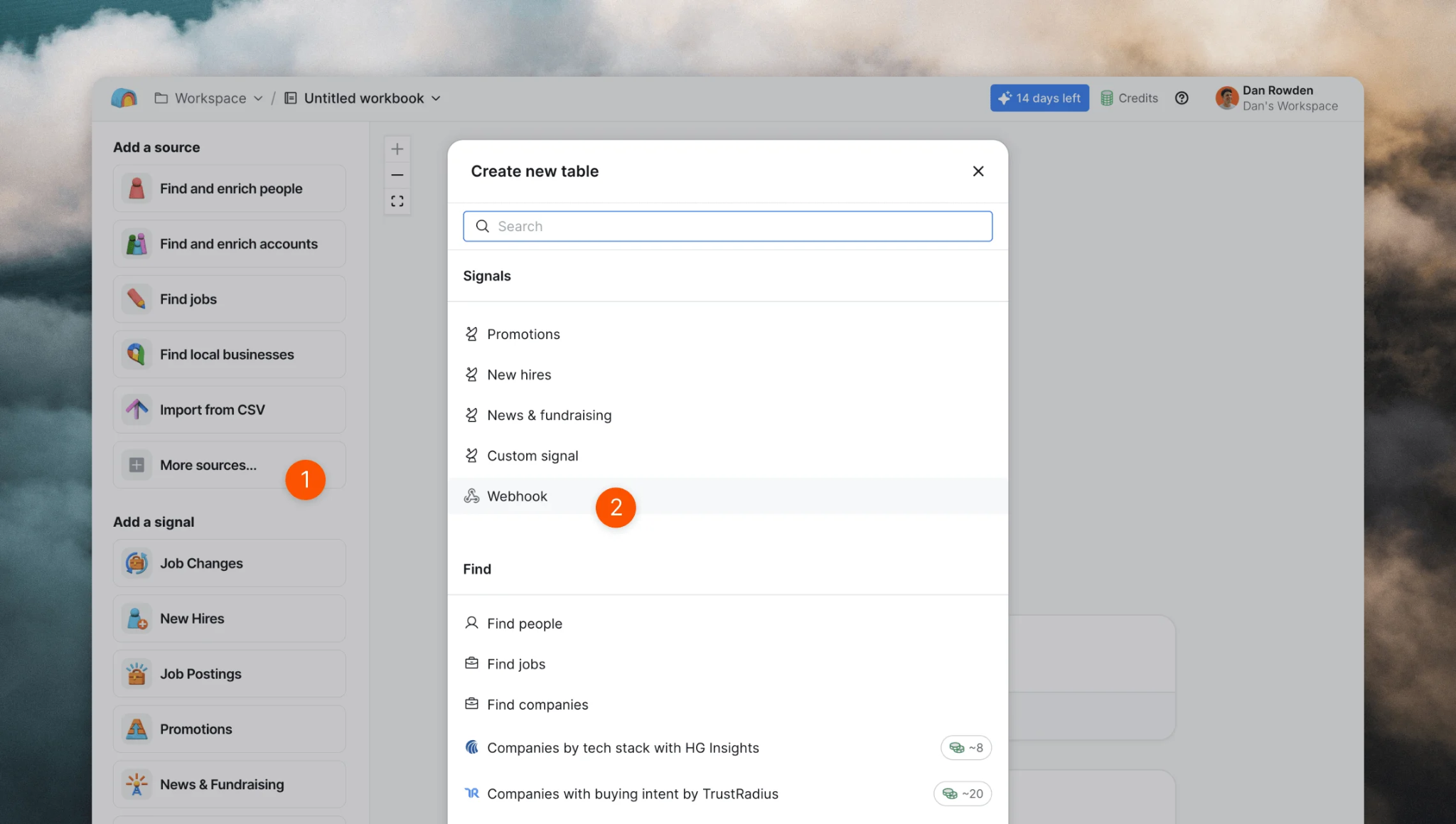
Inbound Webhooks (All Plans Together with Free)
Supply: Loops.so
Each Clay desk can grow to be a “Monitor webhook” supply, producing a novel HTTPS POST URL that accepts JSON payloads. When a payload arrives, Clay creates a brand new row within the desk, and each enrichment column runs towards that row routinely.
That is probably the most API-like workflow Clay provides. You POST structured information in, Clay’s enrichment engine processes it via whichever suppliers you might have configured (waterfall enrichment throughout 150+ sources), and the enriched outcomes sit within the desk prepared for export or downstream motion.
What you’ll construct with this: A CRM integration that pushes new results in Clay through webhook, triggers waterfall e-mail verification and firm enrichment, then exports enriched data again to the CRM through Clay’s outbound HTTP API motion. The webhook triggers; Clay’s desk processes.
Constraints:
-
Capability is capped at 50,000 submissions per webhook desk, and this restrict persists even after you delete rows. If you hit the restrict, it’s essential to create a brand new webhook.
HTTP API Enrichment Instrument (Inside Clay Tables)
This can be a device Clay makes use of, not an API Clay exposes. From inside a Clay desk, you possibly can add an HTTP API motion column that calls any exterior REST API (GET, POST, PUT, DELETE) on a per-row foundation. Clay maps the response JSON to desk columns, with help for extracting nested fields.
The identical device can function a knowledge supply, importing as much as 50,000 rows from an exterior API right into a Clay desk. Pagination choices embrace page-based, offset, cursor, and full URL strategies.
What you’ll construct with this: A workflow that pulls leads out of your inside database through API, enriches them in Clay with market suppliers, then pushes enriched data to your CRM through one other HTTP API name, all orchestrated inside a single Clay desk. You construct the pipeline inside Clay’s UI fairly than in your personal codebase.
Enterprise Individuals & Firm API (Enterprise Plan Solely)
Clay provides a restricted, quick lookup API for Enterprise clients that accepts an e-mail handle or LinkedIn URL and returns fundamental individual particulars, or accepts a site and returns fundamental firm data. That is the closest floor to a conventional API that Clay exposes.
Constraints:
-
The API returns solely fundamental fields, not deep enrichment information (emails, cellphone numbers, income).
-
No public endpoint documentation, no base URL, no request/response schema. Entry requires contacting Clay’s GTM engineers.
Clay API Key (Cross-Desk Lookups)
The workspace API key allows cross-table row lookups inside Clay: lookup a single row or a number of rows in one other Clay desk. This operates solely inside the platform and isn’t a general-purpose exterior API.
MCP Server
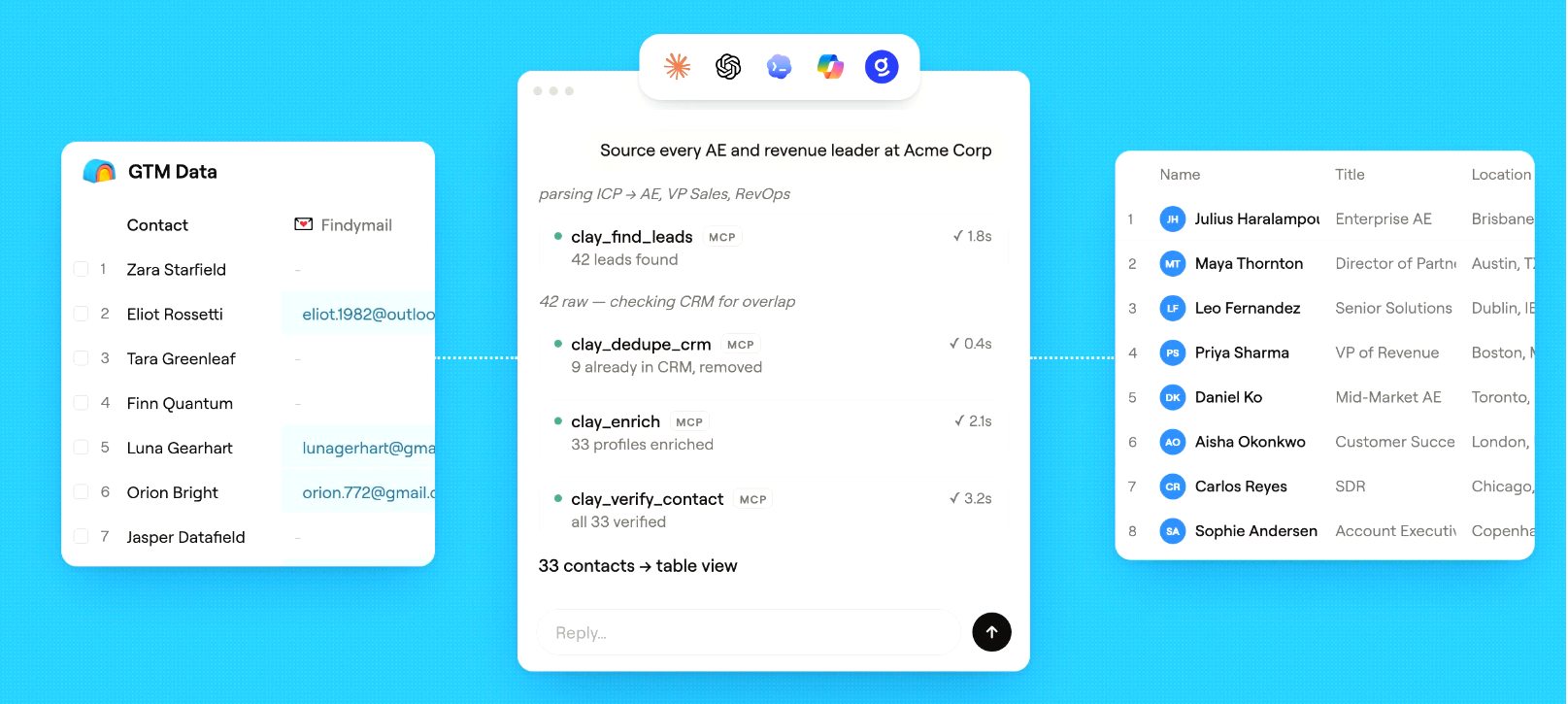
Clay’s MCP server connects the Clay workspace to AI assistants together with ChatGPT, Codex, and Claude. Workspace admins create reusable enrichment workflows referred to as “Capabilities”, allow them for MCP, and reps invoke them through pure language of their AI device of alternative.
Supply: Clay
What you’ll construct with this: An AI agent that queries Clay’s enrichment capabilities conversationally (“discover the VP of Engineering at Acme Corp and enrich with their work e-mail and firm tech stack”) with out writing any API integration code. The MCP server interprets between pure language and Clay’s enrichment engine.
Enterprise beta: reps can question Salesforce-synced account information via the AI device through Clay’s Audiences function.
Clay API: Webhooks & Occasions
Clay helps webhooks in each instructions, however the capabilities and constraints differ.
Inbound webhooks are Clay’s main programmatic entry level. Every desk can obtain HTTP POST payloads at a novel URL. Information arrives in actual time and instantly triggers enrichment columns. The 50,000-submission lifetime cap per desk is the onerous constraint for non-enterprise customers.
Outbound webhooks work via the HTTP API motion: Clay tables can ship enriched information to any webhook endpoint, together with Zapier, Make (Integromat), or {custom} receivers.
A devoted Zapier integration makes use of Zapier’s native webhook set off for less complicated setups.
Indicators and triggers present event-driven automation inside Clay. Constructed-in sign displays hearth when particular real-world occasions happen: job modifications, promotions, new hires, information, fundraising, and net intent (customer monitoring).
These are inbound occasions that set off Clay workflow runs routinely fairly than outbound webhooks.
Two issues to plan round:
Clay API: SDKs, Docs & Price Limits
SDKs & Libraries
Clay doesn’t publish official SDKs in any language. There are not any maintained shopper libraries, no GitHub repositories, and no community-endorsed wrappers. This follows from Clay’s structure: no typical public REST API means no SDK floor to wrap.
The closest programmatic interfaces are:
Builders who must work together with Clay programmatically outdoors these channels use direct HTTP calls to webhook URLs or the HTTP API enrichment device inside Clay tables.
Documentation & Developer Expertise
Clay’s documentation lives at college.clay.com/docs, organized round workflow phases (Getting Began, Discover, Enrich, Remodel, Net Scraping, Gen AI, Export, Settings & Admin, Indicators & Triggers) overlaying 100+ integrations. An AI-powered search assistant is constructed into the docs.
The documentation contains how-to guides for particular person integrations and devoted articles for API-adjacent matters: HTTP API setup, JWT authentication, webhook configuration, API key location, and MCP settings.
What the documentation doesn’t embrace:
Developer help runs via Clay’s Slack group and, for Enterprise clients, a devoted Development Strategist. There isn’t a developer help tier for API integrators. Companion programs at Clay College provide structured studying paths and certifications, however they aim workflow builders, not API builders.
Price Limits & Constraints
Clay doesn’t publish rate-limit numbers (requests per second, per minute, or per hour) for any of its programmatic interfaces. The documented constraints are structural fairly than throughput-based:
-
Processing latency: Enrichments run asynchronously, row by row. Responses take minutes, not milliseconds, as Clay processes every row via its enrichment pipeline.
The absence of revealed charge limits issues. A developer constructing a manufacturing pipeline towards Clay’s webhook endpoints has no documented ceiling for requests per second, and no documented habits for what occurs when that ceiling is hit.
Clay API Pricing & Entry Prices
Clay’s pricing makes use of two utilization currencies fairly than per-API-call costs.
Actions measure platform orchestration: enriching information, operating a desk, calling an AI mannequin, sending information to a third-party system, or exporting information. Actions begin at lower than $0.01 every and reset month-to-month with out rollover.
Information Credit buy information from Clay’s market of 150+ suppliers: discovering emails, cellphone numbers, firm information. Information credit begin at $0.05 every and roll over (Launch and Development plans accumulate as much as 2x the month-to-month credit score quantity; Enterprise will get {custom} rollover phrases).
Programmatic entry is gated by plan tier:
|
Plan |
Annual Worth |
Actions/mo |
Information Credit |
Programmatic Options |
|---|---|---|---|---|
|
Free |
$0 |
500 |
100 |
Inbound webhooks, HTTP API enrichment device, convey your personal API key |
|
Launch |
From $167/mo |
15,000+ |
2,500+ |
MCP help, webhook automation |
|
Development |
From $446/mo |
40,000+ |
6,000+ |
CRM auto-sync, HTTP API integrations, outbound webhook automation, net intent alerts |
|
Enterprise |
Customized (annual) |
200,000+ |
100,000+ |
Enterprise Individuals & Firm API, information warehouse syncs, limitless bulk enrichment, credit score budgets, auto-delete for limitless webhook throughput |
The Enterprise Individuals & Firm API, the one floor that resembles a conventional lookup API, is offered solely on Enterprise plans with {custom} pricing.
For a developer sizing prices: the free tier provides you 500 actions and 100 information credit monthly, sufficient to check webhook-triggered enrichment workflows at small scale. Manufacturing utilization on the Development plan at $446/month annual provides you 40,000 actions and 6,000 information credit.
At $0.05 per information credit score, every enrichment that returns a end result prices at the very least one information credit score ($0.05), plus one motion. Information credit are solely charged when a result’s discovered, not for each supplier tried in a waterfall sequence.
Extra price variables: variable-price AI fashions (the reasoning fashions for Claygent prompts and analysis) are charged based mostly on precise token consumption, with Clay withholding estimated credit upfront and reconciling after execution.
Ultimate prices can differ from estimates. Mid-period information credit score top-ups on Launch and Development plans carry a 30% premium.
The place the Clay API Falls Quick
These are the sensible limits a developer ought to plan round when constructing on Clay’s programmatic surfaces.
There isn’t a typical REST API to construct towards. Clay’s structure is workflow-first, not API-first. There isn’t a base URL you possibly can name with a structured request and obtain a structured response in milliseconds. The inbound webhook, the closest factor to an API endpoint, triggers an asynchronous enrichment pipeline. Builders who must name an endpoint, get information again, and proceed can’t try this with Clay.
The Enterprise Individuals & Firm API has no public documentation. The one floor that resembles a conventional lookup API is gated behind an Enterprise plan, has no public endpoint reference, no request/response schema, and no revealed throughput figures. A developer can’t consider it with out contacting Clay’s gross sales group.
No revealed charge limits. For any of Clay’s programmatic surfaces, there is no such thing as a documentation of requests per second, per minute, or per hour. A manufacturing pipeline has no technique to know prematurely when will probably be throttled or how Clay will reply when limits are hit.
No SDKs, no OpenAPI spec. There are not any shopper libraries in any language and no machine-readable API specification. Each integration requires uncooked HTTP to a webhook URL or handbook configuration inside Clay’s UI.
Webhook tables have a 50,000-submission lifetime cap. For non-enterprise customers, every webhook desk accepts 50,000 submissions whole, and this restrict doesn’t reset once you delete rows. At manufacturing volumes, you cycle via webhook tables.
Processing is asynchronous and measured in minutes. Clay’s enrichment pipeline processes rows one after the other via market suppliers. A developer who wants sub-second response occasions for information lookups is working towards Clay’s structure.
Static API key with no scoped entry. The workspace API secret is a single, static credential with no OAuth, no token rotation, and no capacity to scope permissions. For multi-tenant integrations the place every buyer authenticates independently, this mannequin doesn’t work.
ZoomInfo API: The Typical REST Floor Clay Does Not Provide
Clay provides builders a workflow platform with programmatic triggers.
ZoomInfo provides builders a structured REST API with documented endpoints, OAuth 2.0, and direct entry to B2B information on the request stage. The API attracts on ZoomInfo’s GTM Context Graph, which processes 1.5B+ information factors day by day by combining ZoomInfo’s B2B dataset together with your first-party information.
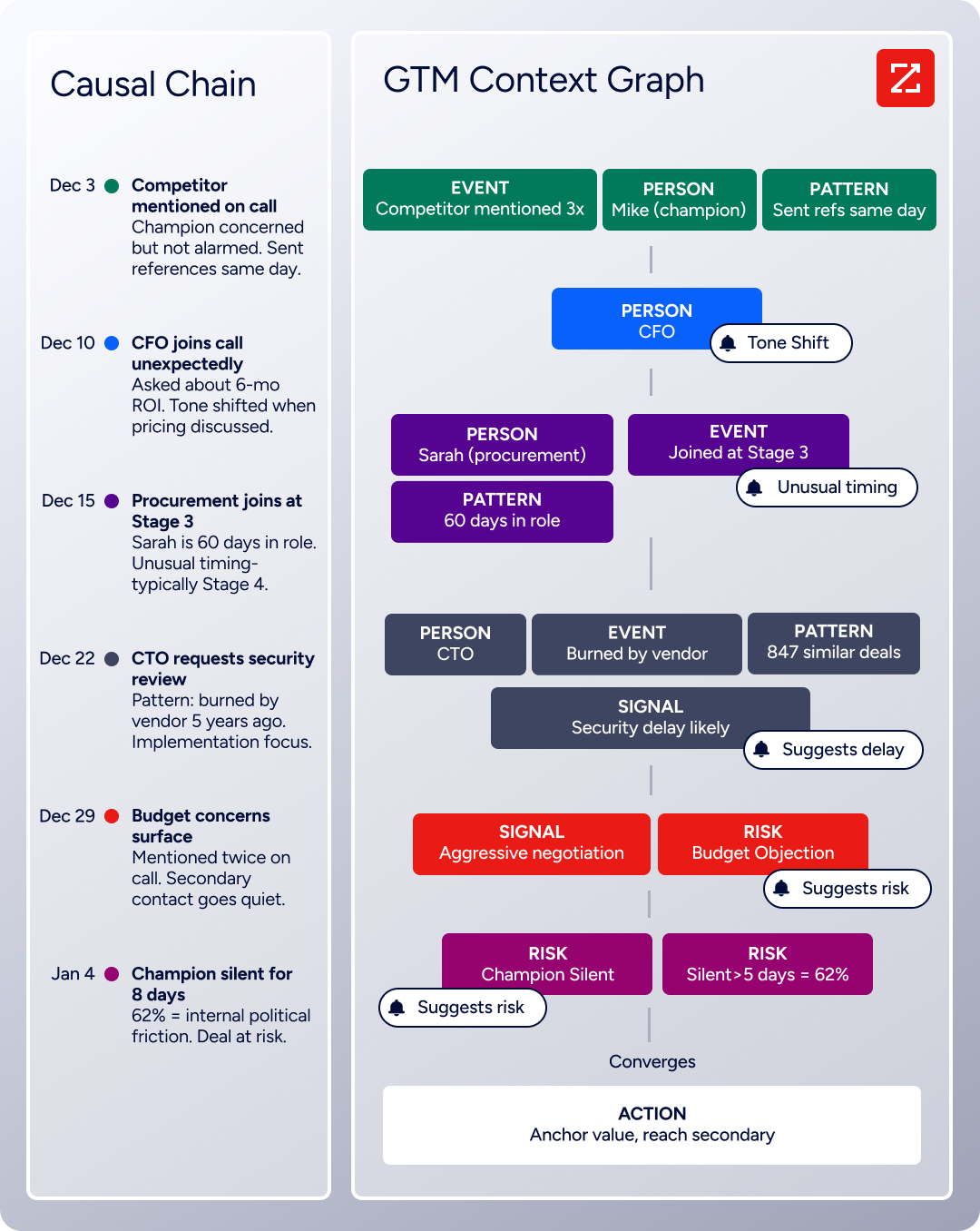
The excellence is architectural: Clay processes information via enrichment tables; ZoomInfo returns information from API calls.
What the API Covers
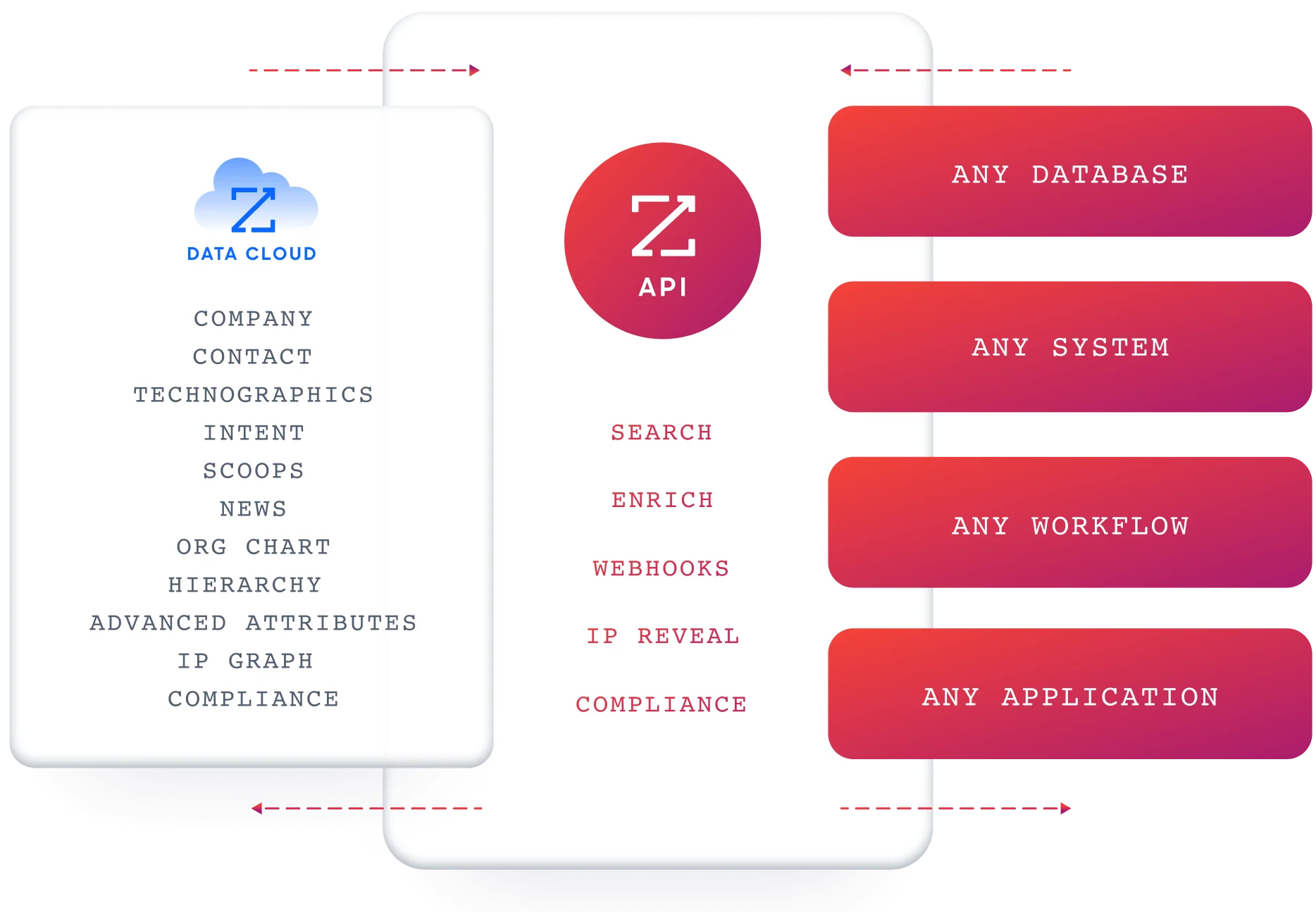
ZoomInfo’s Enterprise API is a REST suite served from https://api.zoominfo.com/gtm, organized into 4 areas documented within the interactive API reference:
Information API (Search & Enrich): Search endpoints cowl Contacts, Firms, Intent, Information, and Scoops, returning matched data with out consuming credit.
Enrich endpoints return the total payload: enterprise emails, direct dials, employment historical past, company hierarchy, org charts, technographics, and hashtag alerts, as much as 25 data per name.
The underlying dataset spans 500M contacts, 100M firms, 135M+ verified cellphone numbers, and 200M+ verified enterprise e-mail addresses. The search-then-enrich sample enables you to filter freely and pay just for the data you decide to.
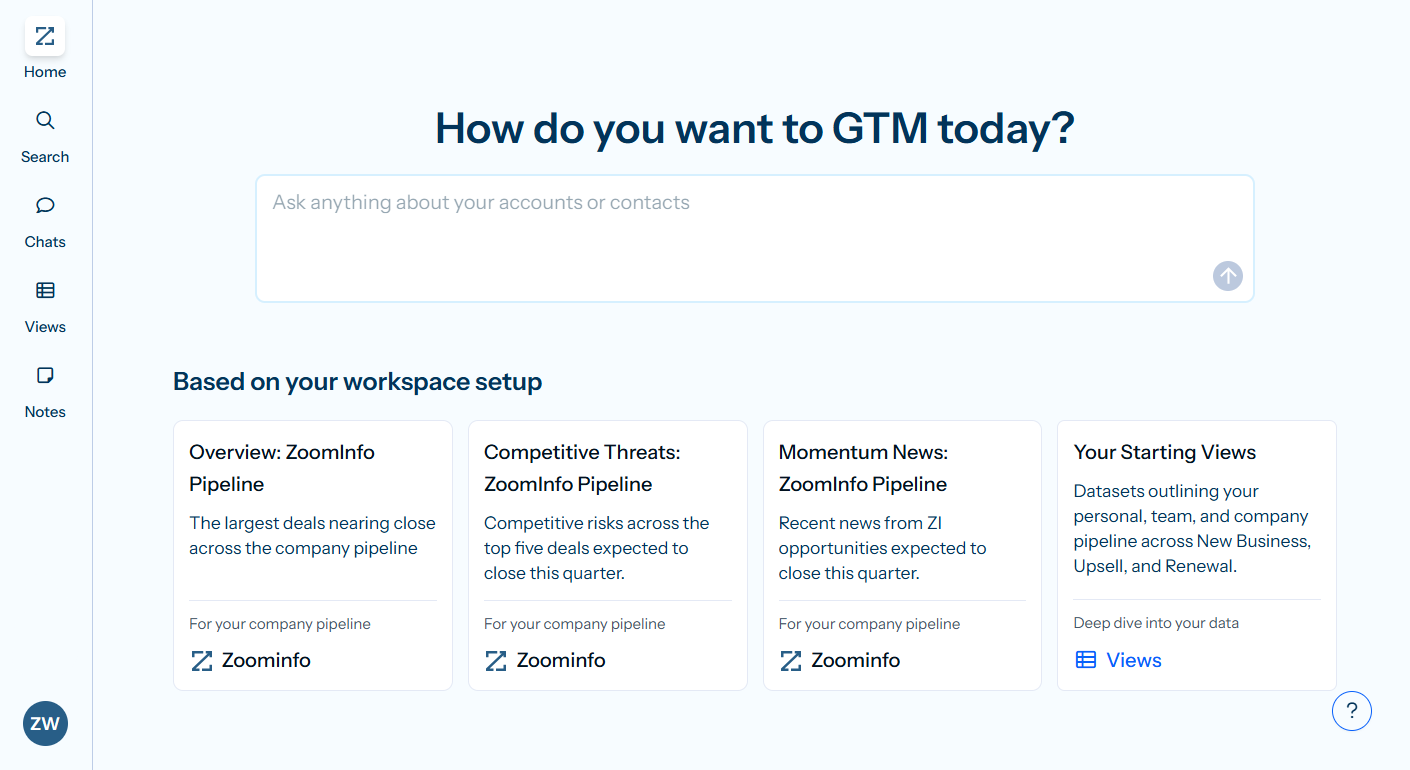
Copilot API (AI Intelligence): These endpoints floor the AI capabilities constructed into GTM Workspace. Account Abstract returns structured account intelligence with a free-form Q&A endpoint.
Discover Related Firms performs lookalike growth.
Contact Suggestions returns AI-ranked buying-committee strategies by movement (prospecting, deal acceleration, renewals).
Advertising and marketing API: CRUD endpoints for programmatic viewers administration.
Platform API (Engagements, Beta): Bidirectional engagement information through the Engagements API.
A developer constructing an enrichment pipeline calls ZoomInfo’s search endpoint, filters to matching data (free, no credit consumed), enriches the data they need (one credit score per new document), and processes the structured JSON response in their very own code.
Your complete spherical journey occurs in a single HTTP request/response cycle.
Authentication & Entry
ZoomInfo makes use of OAuth 2.0 with PKCE through Okta, supporting three flows: Authorization Code with PKCE (net purposes), Shopper Credentials (server-to-server), and Refresh Token. Entry tokens are 24-hour Bearer tokens with rotating refresh tokens.
Groups register purposes via the ZoomInfo Developer Portal, the place they generate credentials, outline scopes, and check endpoints.
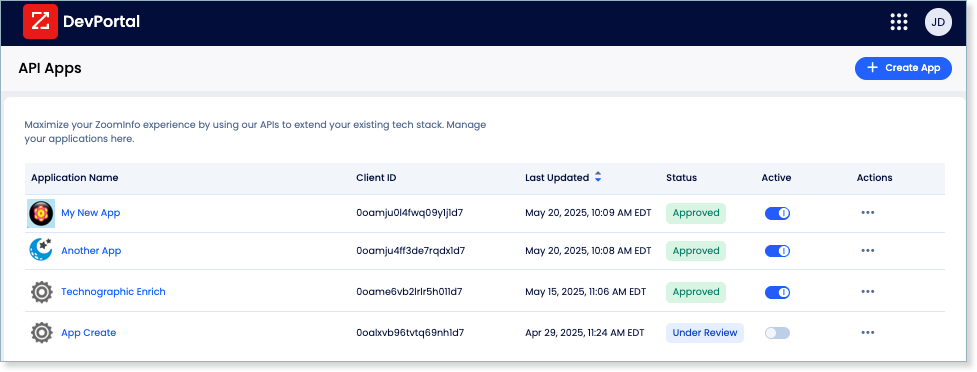
This differs from Clay’s static workspace key. OAuth 2.0 helps delegated entry, credential rotation, and scoped permissions, making it appropriate for multi-tenant integrations and enterprise safety necessities.
Price Limits, Credit & Developer Expertise
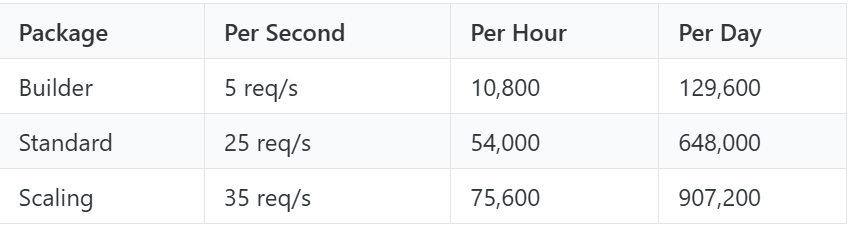
ZoomInfo publishes charge limits by tier: Builder (5 req/sec), Commonplace (25 req/sec), and Scaling (35 req/sec), with per-hour and per-day sliding-window limits enforced concurrently. Each response contains quota headers with remaining capability, and 429 responses embrace a Retry-After header with precise backoff timing.
Credit comply with a rolling 12-month window: a document enriched for the primary time consumes one credit score; re-enriching the identical document inside the yr is free. Search and lookup operations don’t devour credit.
ZoomInfo doesn’t publish official SDKs both, so each platforms require direct HTTP integration. The interactive API reference helps stay testing with code technology in Shell, Node, Ruby, PHP, and Python.
An llms.txt index is offered for AI improvement instruments, and a Docs MCP server at https://docs.zoominfo.com/mcp lets AI coding instruments generate integration code towards the API spec.
For builders constructing AI brokers, ZoomInfo’s MCP server at https://mcp.zoominfo.com/mcp exposes search, enrich, and account analysis as native instruments for MCP-compatible assistants, at the moment supporting Claude and ChatGPT.
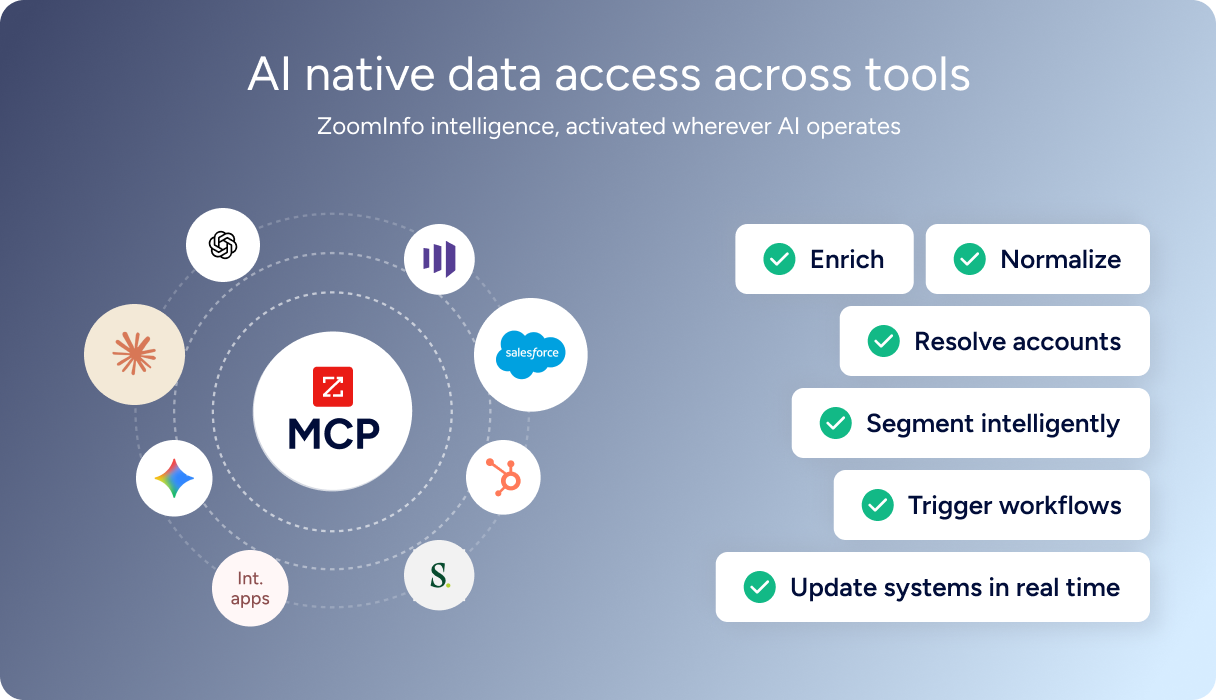
ZoomInfo prolonged API entry to all related plans, with consumption-based pricing quoted per buyer.
BDO Canada reported an 87% discount in time spent updating inside information dashboards utilizing the ZoomInfo API, with one analyst calling the combination plug-and-play throughout any course of. (ZoomInfo)
Clay API vs. ZoomInfo API
|
Dimension |
Clay |
ZoomInfo |
|---|---|---|
|
API sort |
Workflow platform with programmatic triggers (webhooks, MCP); no typical REST API |
REST API (JSON:API format) with documented endpoints |
|
Authentication |
Static workspace API key; webhook URLs as secrets and techniques; non-obligatory header tokens |
OAuth 2.0 with PKCE (24-hour tokens, rotating refresh) |
|
Major scope |
GTM workflow orchestration: set off enrichments, route information via 150+ suppliers, push to CRM/sequencers |
B2B intelligence: contact/firm search, enrichment, intent, org charts, technographics, AI analysis |
|
Information mannequin |
Aggregator of 150+ third-party suppliers through market; no proprietary database for deep enrichment fields |
Proprietary dataset: 500M contacts, 100M firms, 135M+ verified cellphone numbers, 200M+ verified enterprise e-mail addresses |
|
Endpoint documentation |
No public endpoint reference; webhook URLs are per-table |
Full interactive API reference with try-it explorer and code technology |
|
Webhooks |
Inbound (set off workflows) and outbound (ship information through HTTP motion); 50,000-submission cap per desk |
Agent Groups-based webhooks (enrichment jobs, sign alerts, credit score thresholds) |
|
SDKs |
None |
None (code recipes in 5 languages) |
|
Price limits |
Not revealed |
5-35 req/sec by tier, with per-hour and per-day sliding home windows; all limits documented |
|
AI endpoints |
MCP server for AI assistant integration |
Account Abstract, Discover Related Firms, Contact Suggestions, plus MCP server |
|
Response latency |
Asynchronous; minutes per enrichment run |
Synchronous; millisecond-range for search, seconds for enrichment |
|
OpenAPI / machine-readable spec |
Not obtainable |
TypeSpec-generated specification; llms.txt index obtainable |
|
Pricing mannequin |
Twin-currency: Actions (from <$0.01) + Information Credit (from $0.05); plans from $0/mo |
Consumption-based pricing, custom-quoted (search free, enrich consumes credit) |
|
Finest for |
Builders who need enrichment orchestration via a workflow platform with out managing particular person supplier APIs |
Builders constructing direct API integrations for B2B information entry, enrichment, and intelligence on the endpoint stage |
Ultimate Verdict
Clay’s programmatic surfaces aren’t an API in the best way most builders use the time period. They’re entry factors right into a GTM workflow platform: webhook triggers that fireplace enrichment pipelines, an MCP server that connects AI assistants to enrichment logic, and an enterprise-only lookup endpoint with no public documentation.
For groups already constructing inside Clay’s table-based setting, these surfaces prolong the platform to programmatic triggers and AI integrations with out requiring separate information infrastructure.
Clay’s programmatic surfaces match if your construct is workflow-first: you wish to set off enrichment throughout 150+ information suppliers by POSTing to a webhook, orchestrate information flows inside Clay’s desk UI, or join AI brokers to Clay’s enrichment engine through MCP.
The free tier provides you a place to begin for webhook-triggered workflows, and waterfall enrichment throughout a number of suppliers is one thing no single-source API replicates.
Select the ZoomInfo API if your construct wants direct, synchronous entry to B2B information on the endpoint stage: looking contacts and firms, enriching data with a structured response, detecting purchaser intent, or producing AI-powered account intelligence, all via documented REST endpoints with OAuth 2.0, revealed charge limits, and predictable request/response patterns.
Discover the ZoomInfo Enterprise API or begin with the developer docs to see the endpoint floor straight.
A developer who wants neither floor ought to know that Clay and ZoomInfo clear up completely different issues at completely different architectural layers.
Clay orchestrates workflows throughout many information sources; ZoomInfo supplies the info straight. In case your pipeline wants each orchestration and direct information entry, the 2 are complementary.
FAQ
Is the Clay API free?
Clay provides a everlasting free tier with 500 actions/month and 100 information credit, which incorporates inbound webhook entry and the HTTP API enrichment device. This is sufficient to check webhook-triggered enrichment workflows at small scale. The MCP server requires a paid plan (Launch at $167/month annual or above).
The Enterprise Individuals & Firm API, Clay’s solely conventional lookup endpoint, is offered solely on the Enterprise plan at {custom} pricing. There are not any per-API-call costs; all utilization is metered via Actions and Information Credit.
Does Clay have a REST API?
Not within the typical sense. Clay’s personal documentation states it’s not constructed like a typical SaaS device the place you ship a request and get information again in milliseconds.
The platform provides inbound webhooks (HTTP POST to set off workflows), an HTTP API enrichment device (for calling exterior APIs from inside Clay), cross-table lookup through the workspace API key, an MCP server for AI assistant integration, and an Enterprise-only Individuals & Firm API with no public documentation.
There isn’t a versioned REST endpoint catalogue, no public base URL, and no OpenAPI specification.
What are Clay’s API charge limits?
Clay doesn’t publish rate-limit numbers for any of its programmatic interfaces. The documented constraints are structural: webhook tables settle for as much as 50,000 submissions (lifetime), HTTP API imports help as much as 50,000 rows, and all enrichment actions devour Actions and Information Credit from the plan’s month-to-month allocation.
Processing is asynchronous, with enrichments operating row by row via market suppliers at a tempo measured in minutes, not milliseconds.
Are there official Clay SDKs?
No. Clay doesn’t publish official SDKs in any language, and there are not any maintained shopper libraries or GitHub repositories. The closest programmatic interfaces are the MCP server (for AI device integration), the Zapier integration (for workflow automation), and Make/Integromat modules. Builders constructing direct integrations work with HTTP calls to webhook URLs or configure the HTTP API enrichment device inside Clay’s UI.
Does Clay help webhooks?
Sure, in each instructions. Inbound webhooks allow you to POST JSON to a novel per-table URL, which creates a row and triggers all enrichment columns routinely. Outbound webhooks work via the HTTP API motion, which may ship enriched information to any exterior endpoint, together with Zapier and Make.
Clay additionally provides built-in sign displays (job modifications, funding occasions, net intent) that set off workflows routinely. Clay doesn’t publicly doc webhook supply retry and failure habits for outbound calls.
What does ZoomInfo’s API add to a Clay construct?
ZoomInfo’s API supplies the structured, synchronous information entry layer that Clay’s programmatic surfaces don’t provide. The place Clay triggers asynchronous enrichment workflows via webhook-based desk processing, ZoomInfo’s REST API returns search outcomes and enriched data in actual time through documented endpoints with predictable response schemas.
The sensible pairing: use ZoomInfo’s search endpoints to search out contacts and firms matching your ICP (free, no credit consumed), enrich the data you need, and push the structured outcomes into Clay tables through webhook for additional workflow processing, sequencing, or CRM sync.
ZoomInfo’s MCP server additionally extends this to AI agent workflows, with the identical information accessible from Claude, ChatGPT, or any MCP-compatible assistant.

