

Each product analytics API analysis comes all the way down to the identical query: the platform captures behavioral information in its dashboard, however how a lot of that information are you able to pull into your personal techniques, feed your personal fashions, or pipe right into a {custom} workflow?
Pendo’s API splits throughout two REST APIs (the Have interaction API for analytics and metadata, and the Suggestions API for characteristic requests), a JavaScript Net SDK, and a more moderen MCP server for AI software integration. The documentation is public, authentication is key-based, and the aggregation endpoint offers you entry to the identical behavioral information behind Pendo’s dashboards.
However entry and depth are totally different questions.
Pendo’s API is a data-extraction and metadata-management layer for a product analytics platform. If you must pull utilization information right into a warehouse, push customer metadata again into Pendo, or handle guides programmatically, the API covers that floor. What it doesn’t cowl is the broader B2B intelligence stack: who these guests are past what your utility passes in, what corporations they symbolize, whether or not these accounts present shopping for intent, and learn how to attain the individuals behind the utilization information. That could be a totally different information layer totally.
That is the place ZoomInfo enters the image, a GTM platform whose Enterprise API covers search, enrichment, AI intelligence, and viewers administration throughout 500M contacts and 100M corporations, with OAuth 2.0 authentication, tiered price limits, and an MCP server for AI-agent workflows. It fills the identification and intelligence hole {that a} product analytics API, by design, doesn’t deal with.
This overview covers the Pendo API in technical depth first, then opinions ZoomInfo’s API as the information layer that picks up the place product analytics stops.
Pendo API at a Look
|
Attribute |
Element |
|---|---|
|
API sort |
REST over HTTPS, JSON request/response |
|
Authentication |
Integration key handed as x-pendo-integration-key header (Have interaction API); auth-token header (Suggestions API) |
|
Base URL |
https://app.pendo.io/api/v1/ (US default); regional variants for EU, US1, Japan, Australia |
|
Charge limits |
Not publicly documented |
|
Pricing / entry |
Plan-gated; API entry relies on subscription tier (not out there on Free) |
|
SDKs |
JavaScript Net SDK (agent.pendo.io); additionally out there by way of npm (@pendo/web-sdk). No official server-side SDKs |
|
Webhooks |
Sure, native webhook help with retry logic and auto-disable on failure |
|
MCP server |
Sure, Pendo MCP for AI software integration |
|
Documentation |
builders.pendo.io (developer portal), engageapi.pendo.io (Have interaction API reference), feedbackapi.pendo.io (Suggestions API reference) |
Pendo API: What Works Effectively & What to Plan Round
|
What works properly |
What to plan round |
|---|---|
|
Public developer portal with separate references for Have interaction and Suggestions APIs |
Charge limits are usually not publicly documented; you uncover throttling in manufacturing |
|
Aggregation endpoint queries the identical behavioral information powering the dashboard |
API entry is plan-gated; the Free tier doesn’t embrace API entry |
|
Regional base URLs for US, EU, Japan, and Australia information residency |
Static API key auth solely; no OAuth, no token rotation, no scoped entry |
|
JavaScript Net SDK releases weekly with beta and secure tracks |
No official server-side SDKs (Python, Go, Java, and many others.); direct HTTP integration solely |
|
MCP server exposes product information to AI instruments with out {custom} API code |
Aggregation queries day trip at 5 minutes (408 error) on advanced queries |
|
Webhooks embrace retry logic (as much as 5 retries on 429/5xx) and auto-disable on failure |
Two separate APIs (Have interaction and Suggestions) with totally different auth mechanisms and endpoints |
Pendo API: Authentication & Getting Began
Pendo runs two separate APIs, every with its personal authentication mannequin.
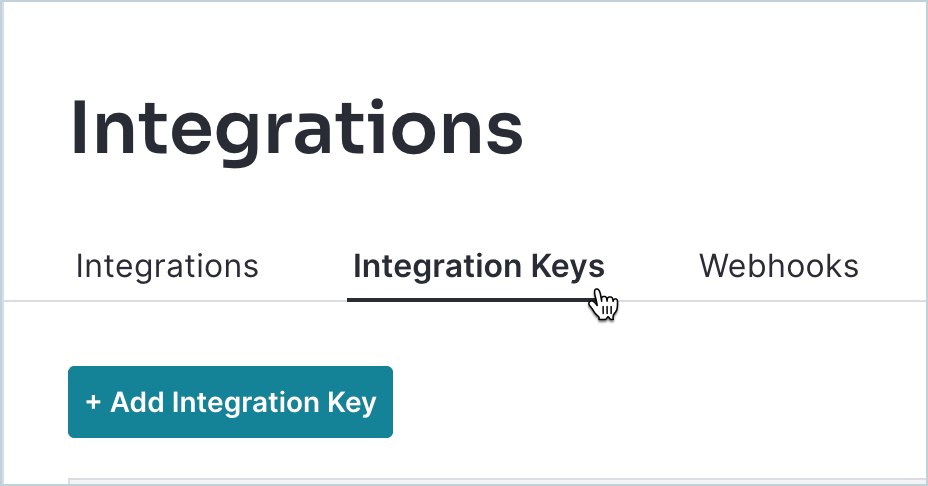
Have interaction API: You create an integration key contained in the Pendo utility at Settings > Integrations > Integration Keys. The bottom line is handed because the x-pendo-integration-key HTTP request header on each request. You possibly can provision keys as read-only (default) or read-write (by enabling “Permit Write Entry” at creation).
Pendo shows every key solely at creation time; in the event you lose it, you have to generate a brand new one. A subscription can maintain any variety of keys. Keys are subscription-wide, not scoped to a selected utility, so one key accesses all apps within the subscription.
Supply: Pendo
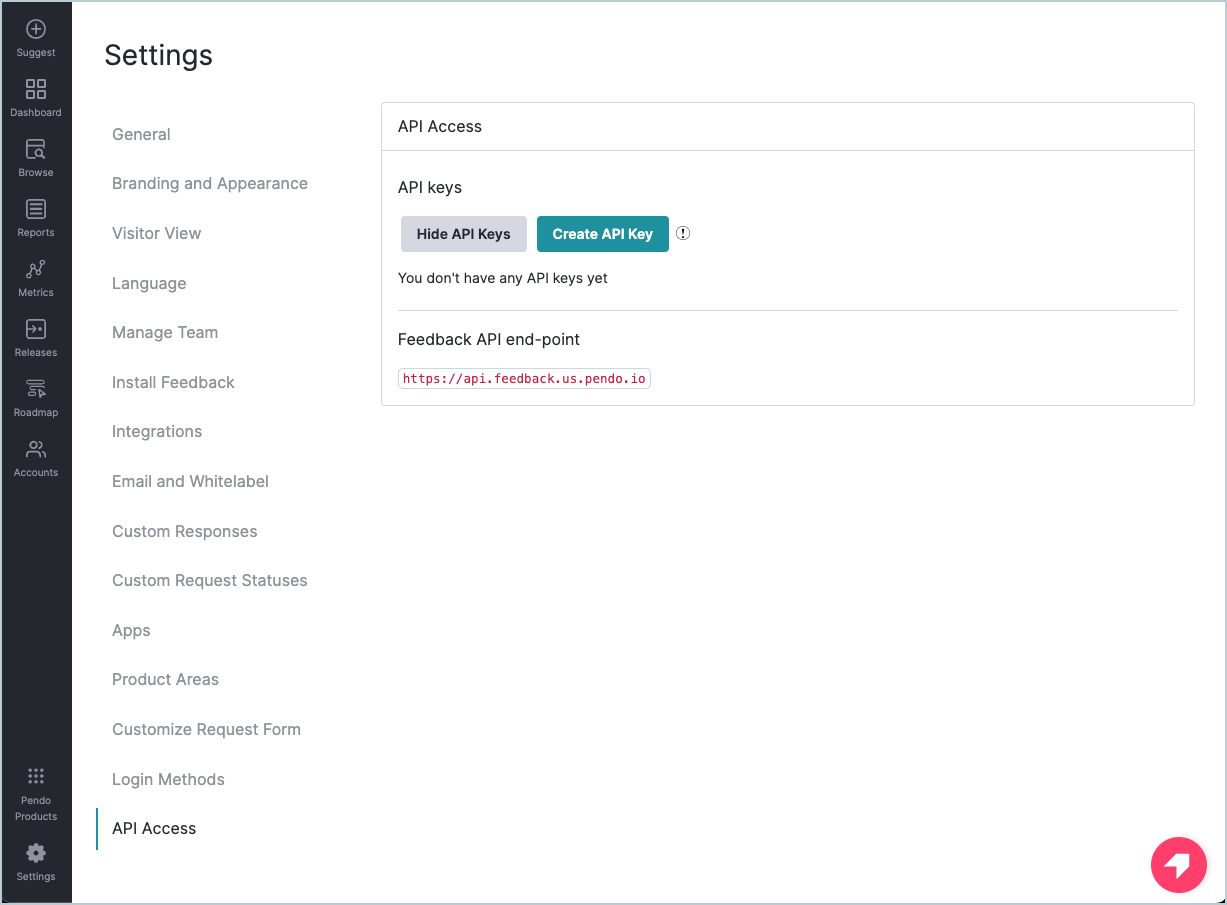
Suggestions API: Makes use of a separate API key handed because the auth-token HTTP header (or as an auth-token question parameter). Suggestions API keys are user-specific and generated in Pendo > Merchandise > Suggestions > Settings > Product Settings > API Entry.
This can be a totally different credential from the Have interaction API integration key and from the snippet key embedded within the Pendo set up code.
Supply: Pendo
A primary authenticated request to the Have interaction API seems to be like this:
curl -X POST “https://app.pendo.io/api/v1/aggregation”
-H “x-pendo-integration-key: YOUR_INTEGRATION_KEY”
-H “Content material-Kind: utility/json”
-d ‘{“response”:{“mimeType”:”utility/json”},”request”:{“pipeline”:[{“source”:{“visitors”:null}}]}}’
Two constraints to know earlier than you construct:
-
Plan-gated entry. The Have interaction API documentation states that entry “depends in your degree of service with Pendo.” The Free tier (500 MAUs) doesn’t listing API entry amongst its options. Verify your plan consists of API entry earlier than investing in an integration.
Pendo API: Core Endpoints & Capabilities
The Have interaction API covers 4 areas: aggregations (the first question interface), customer and account metadata, information administration, and server-side occasion ingestion. The Suggestions API handles feature-request information individually.
Aggregations (Major Question Interface)
Endpoint: POST /api/v1/aggregation
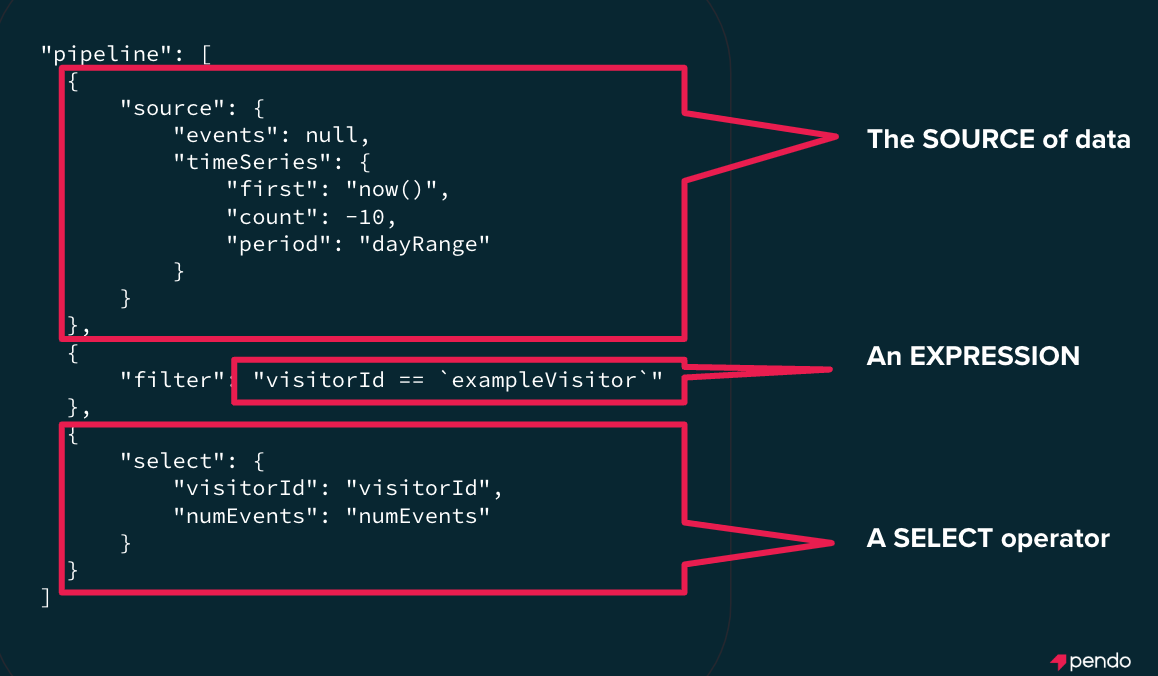
That is the core of the Pendo API. The aggregation endpoint accepts structured JSON question objects that specify a knowledge supply, filters, group-by fields, and time ranges. It queries the identical behavioral information behind Pendo’s UI studies, making it the first route for extracting analytics programmatically.
Supported information sources embrace:
You possibly can mixture outcomes on the hour or day degree. The question language is Pendo-specific (not SQL or GraphQL), and writing aggregation queries is documented on the Pendo engineering weblog.
What you’d construct with this: a nightly export of characteristic adoption information into your warehouse, a {custom} dashboard combining Pendo utilization information with income information out of your CRM, or a churn-signal pipeline that flags accounts whose characteristic utilization drops under a threshold.
Supply: Pendo
Customer & Account Metadata
Endpoint: POST /api/v1/metadata/customer/{custom}/worth
Endpoint: POST /api/v1/metadata/account/{custom}/worth
These endpoints create or replace {custom} metadata fields on customer and account information. The ?create=true question parameter creates new customer information. That is the way you push information again into Pendo: including CRM fields, subscription tiers, or {custom} attributes to customer profiles.
The write route issues. In case your integration must preserve Pendo’s customer information in sync along with your consumer database (appending plan tier, firm measurement, or lifecycle stage), these endpoints deal with the push.
Information Administration
The API exposes CRUD operations on Information objects: create, learn, replace, and delete in-app guides programmatically. Groups managing giant information libraries or automating deployment throughout a number of purposes will use these.
Observe Occasions (Server-Aspect Ingestion)
Pendo accepts server-side Observe Occasions by way of API for backend actions that do not originate within the browser. This extends information assortment past the client-side JavaScript snippet to cowl API calls, backend processes, and cell interactions the browser agent can not observe.
Suggestions API
The Suggestions API covers Pendo’s suggestions product (previously Receptive). It gives entry to feature-request and user-feedback information, with endpoints supporting restrict, begin, and order parameters for cursor-style pagination. All responses are JSON.
This API makes use of its personal authentication (the auth-token header) and lives at a special area from the Have interaction API.
Pendo API: Webhooks & Occasions
Pendo classifies webhooks as a native “Connector” integration with “Knowledge Out” route. They push occasion information to exterior techniques when specified consumer actions happen.
Key supply conduct from Pendo’s webhook documentation:
You configure webhooks within the Pendo UI. Pendo doesn’t doc any API endpoint for programmatic webhook administration. You set particular set off occasion varieties at setup time by means of the UI.
Two issues to plan round:
-
No programmatic webhook administration. In contrast to APIs that allow you to create, listing, and delete webhooks by way of endpoints, Pendo requires UI configuration.
Pendo API: SDKs, Docs & Charge Limits
SDKs & Libraries
JavaScript Net SDK: Pendo’s main SDK, documented at agent.pendo.io. You possibly can set up it two methods:
Three builds help totally different browser environments: Requirements (default, trendy APIs), XHR (some legacy help), and JSONP (full legacy, together with all IE variations). The SDK releases weekly, with modifications transport first to beta, then selling to secure. An RSS feed at https://agent.pendo.io/releases/atom.xml tracks updates, and launch notes seem at agent.pendo.io/variations.
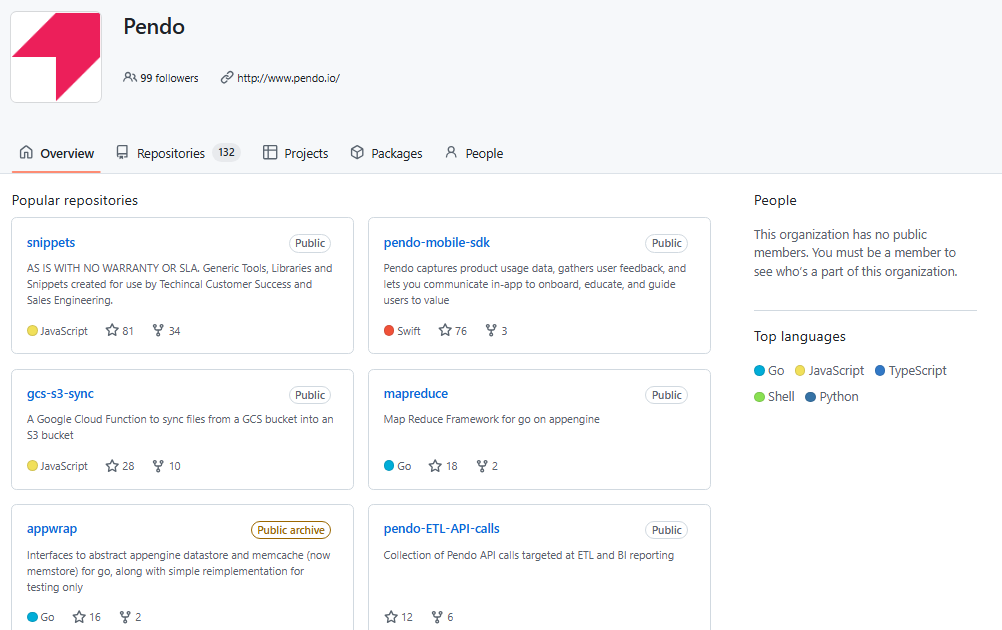
Server-side SDKs: None. Pendo doesn’t publish official server-side SDKs in Python, Ruby, Java, Go, or another language. You eat the Have interaction and Suggestions APIs immediately by way of HTTP with any consumer. Pendo maintains a GitHub group at github.com/pendo-io for the SDK and associated tooling.
Supply: Pendo
Cell SDK: Cell is listed as a platform functionality, however particular cell SDK documentation was not accessible from public developer pages.
Documentation & Developer Expertise
Pendo operates a developer portal at builders.pendo.io because the entry level for integration builders. Documentation splits throughout a number of properties:
-
Net SDK docs: agent.pendo.io protecting set up, configuration, occasions, public features, cookies, and superior customization.
The developer website studies processing 6B+ occasions each day and reaching 290M+ month-to-month finish customers.
No Swagger/OpenAPI spec, Postman assortment, or interactive API playground was publicly accessible. Pendo routes developer help by means of the Assist Middle and ticket system; there isn’t a devoted developer discussion board separate from the broader Pendo Group.
Charge Limits & Constraints
Pendo doesn’t publish API price restrict numbers in its public documentation. This can be a significant hole for a developer sizing an integration.
What’s documented:
-
Aggregation question timeout: Queries day trip at 5 minutes, returning a 408 error. Advanced queries in opposition to giant datasets may have narrower time ranges or fewer dimensions.
The absence of printed price limits is itself a discovering. A developer constructing a manufacturing pipeline in opposition to this API can not capacity-plan with out contacting Pendo immediately.
Pendo API Pricing & Entry Prices
Pendo doesn’t publish standalone API pricing.
The pricing web page lists “Integrations” as included in all plans, however the Have interaction API documentation states that API entry “depends in your degree of service with Pendo.” The Free plan (as much as 500 MAUs) doesn’t listing API entry amongst its options.
What’s confirmed:
-
All paid tiers (Base, Core, Final) carry {custom} pricing negotiated per subscription, with no printed per-call or usage-based API metering.
-
Write entry by way of the API requires an integration key provisioned with “Permit Write Entry,” an account-level permission, not a individually priced functionality.
-
Knowledge Sync (warehouse export to Snowflake, S3, Azure, Google Cloud Storage) comes with the Final plan and could also be out there as an add-on for different tiers.
-
Pendo costs by MAU (Month-to-month Energetic Customers), so the platform value scales along with your consumer base. API entry is bundled into the platform subscription, not metered individually.
For a developer sizing prices: there isn’t a per-call API cost, however the minimal value to entry the API is no matter Pendo quotes for a paid plan at your MAU quantity. Since all paid plan pricing sits behind a gross sales name, the API value stays opaque till you speak to Pendo’s gross sales staff.
The place the Pendo API Falls Brief
These are the sensible limits a developer ought to plan round. A number of are scope choices that replicate what Pendo’s API is (a data-extraction layer for a product analytics platform) and what it isn’t.
Pendo doesn’t publish price limits.
A developer can not capacity-plan an integration with out contacting Pendo immediately. You uncover throttling in manufacturing or by asking gross sales. For a platform processing 6B+ occasions each day, this can be a notable hole.
No OAuth, no token rotation.
Each the Have interaction and Suggestions APIs use static keys. No OAuth movement, no token expiration, no credential rotation, no scoped entry. Groups with credential-rotation insurance policies or multi-tenant integrations that want delegated entry will hit this wall.
Two separate APIs with totally different auth mechanisms.
Analytics information lives within the Have interaction API (authenticated by way of x-pendo-integration-key), whereas suggestions information lives within the Suggestions API (authenticated by way of auth-token). The 2 APIs use totally different credentials, base URLs, and documentation portals. An integration that wants each behavioral and suggestions information should handle two authentication paths.
No official server-side SDKs.
The JavaScript Net SDK ships weekly releases, however no official wrappers exist for Python, Go, Java, Ruby, or another server-side language. You construct and keep the HTTP layer, authentication dealing with, and error logic your self.
No Swagger/OpenAPI spec or Postman assortment.
The API portals use an interactive assortment format, however no downloadable OpenAPI spec, Postman assortment, or machine-readable API description is on the market.
Scope is product analytics information.
The API offers you entry to behavioral information Pendo captures (web page views, characteristic clicks, information interactions, customer metadata). It doesn’t present B2B intelligence: who these guests are past what your utility passes in, what corporations they symbolize, what these corporations’ tech stacks appear like, whether or not they present purchaser intent, or learn how to attain the decision-makers behind the utilization information.
Webhook administration is UI-only.
You can not create, listing, or delete webhooks by way of the API. Configuration requires guide work within the Pendo dashboard, which limits automation and infrastructure-as-code workflows.
ZoomInfo API: The Identification and Intelligence Layer Past Product Analytics
Pendo’s API tells you what customers do inside your utility: which options they undertake, the place they drop off, and the way they reply to in-app guides. ZoomInfo’s API tells you who these customers are, what corporations they work for, what expertise these corporations run, and whether or not these accounts are researching your class.
The 2 APIs sit at totally different layers of a knowledge pipeline. A developer constructing a product-led development stack would use Pendo’s API to extract behavioral indicators and ZoomInfo’s API to determine and enrich the accounts behind these indicators.
Supply: ZoomInfo
What the API Covers: Search, Enrichment, and AI Intelligence
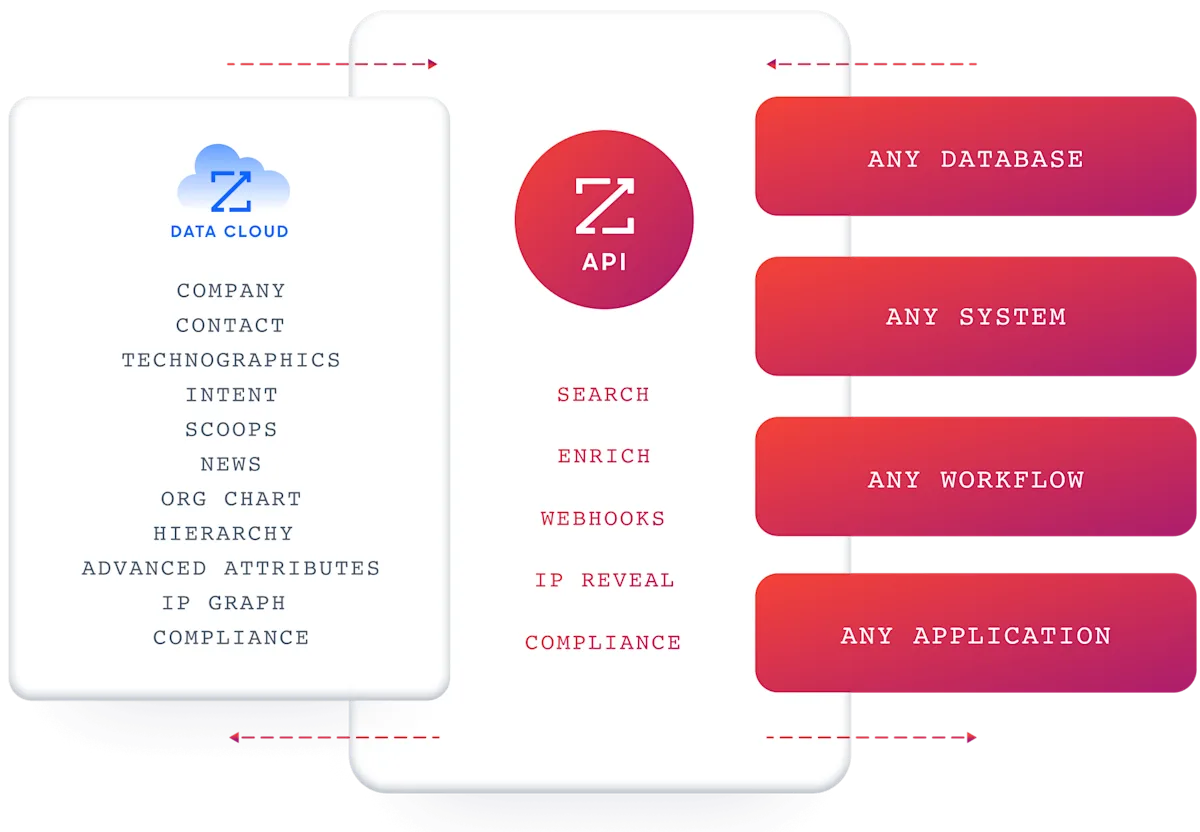
ZoomInfo’s Enterprise API is a REST suite served from https://api.zoominfo.com/gtm, organized into 4 areas documented within the interactive API reference:
Knowledge API (Search & Enrich): Search endpoints cowl Contacts, Corporations, Intent, Information, and Scoops, returning matched information with out consuming credit. Enrich endpoints return the total report: enterprise emails, direct dials, employment historical past, company hierarchy, org charts, technographics, and hashtag indicators, as much as 25 information per name.
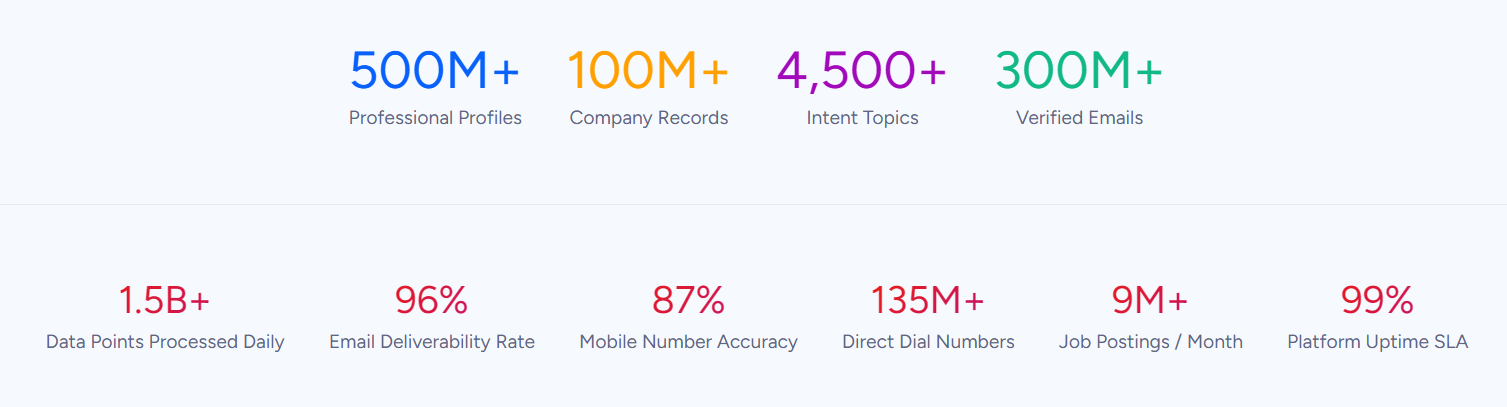
The underlying dataset spans 500M contacts and 100M corporations, 135M+ verified telephone numbers, and 200M+ verified enterprise electronic mail addresses. The search-then-enrich sample means you filter freely, then pay just for the information you decide to.
Supply: ZoomInfo
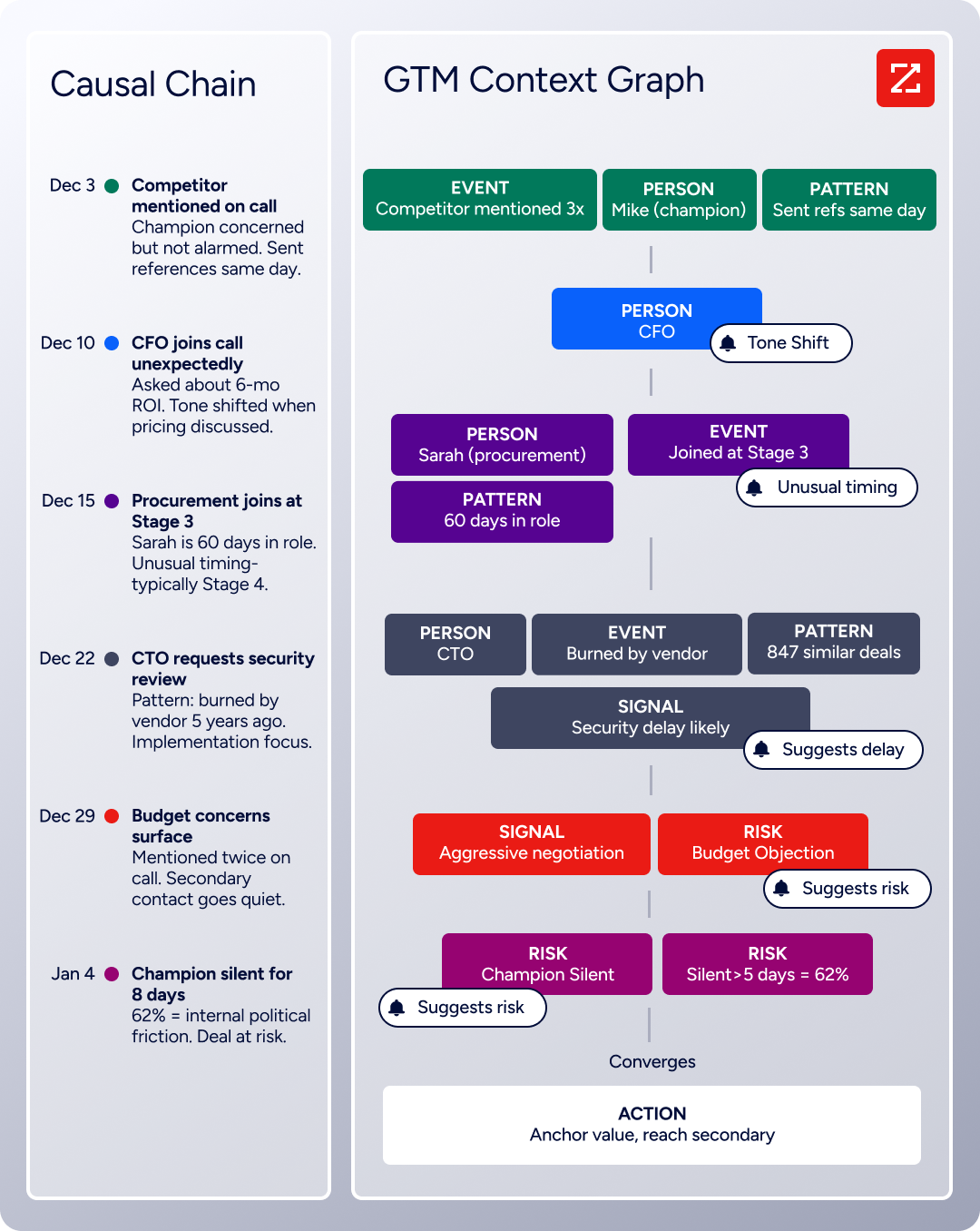
AI Intelligence (GTM Workspace Copilot): Account Abstract returns structured account intelligence with a free-form Q&A endpoint. Discover Comparable Corporations performs lookalike growth. Contact Suggestions returns AI-ranked buying-committee options by movement (prospecting, deal acceleration, renewals).
These endpoints run on the GTM Context Graph, which processes 1.5B+ information factors each day by combining ZoomInfo’s B2B information along with your first-party information.
Supply: ZoomInfo
The pairing with a product analytics API is direct: extract behavioral information from Pendo displaying which accounts are most engaged (or vulnerable to churning), then use ZoomInfo’s API to determine the stakeholders at these accounts and enrich them with contact information, org charts, and intent indicators.
Authentication & Entry
ZoomInfo makes use of OAuth 2.0 with PKCE by way of Okta, issuing 24-hour entry tokens with rotating refresh tokens. It helps three flows: Authorization Code with PKCE (for internet purposes), Shopper Credentials (for server-to-server), and Refresh Token. Groups register purposes by means of the ZoomInfo Developer Portal, the place they generate credentials, outline scopes, and check endpoints.
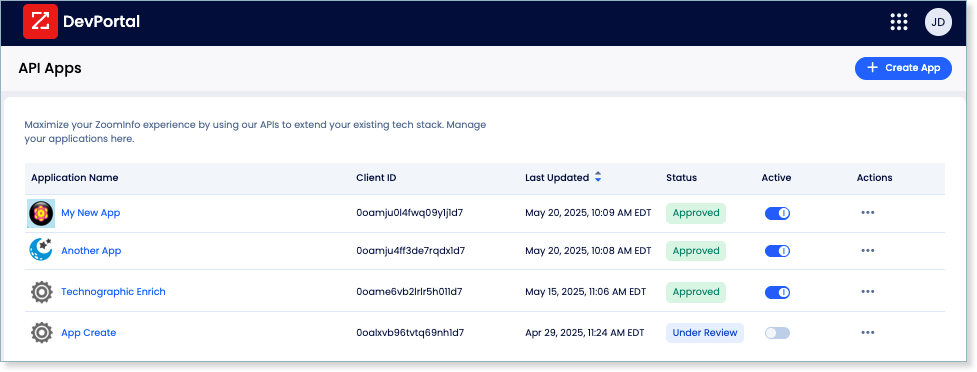
This can be a totally different authentication mannequin from Pendo’s static key: it helps delegated entry, credential rotation, and scoped permissions natively.
Charge Limits, Credit & Developer Expertise
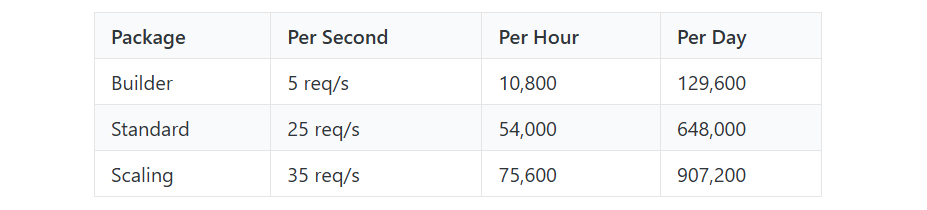
ZoomInfo publishes price limits by tier: Builder (5 req/sec), Customary (25 req/sec), and Scaling (35 req/sec), imposing per-hour and per-day sliding-window limits concurrently. Each response consists of quota headers with remaining capability, and 429 responses embrace a Retry-After header with actual backoff timing.
Supply: ZoomInfo
Credit observe a rolling 12-month window: enriching a report for the primary time consumes one credit score; re-enriching the identical report inside the yr is free. Search and lookup operations are free and don’t eat credit.
MCP Server & Webhooks
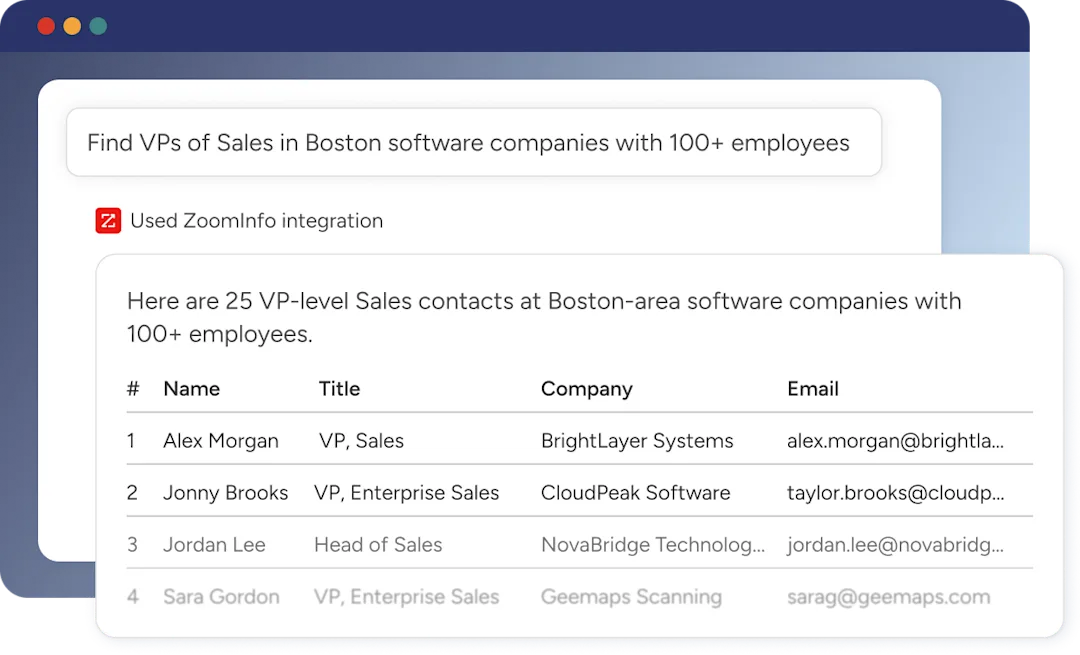
For builders constructing AI brokers, ZoomInfo’s MCP server at https://mcp.zoominfo.com/mcp exposes search, enrich, and account analysis as native instruments for MCP-compatible assistants, at present supporting Claude and ChatGPT. The credit score mannequin carries over from the REST API.
Supply: ZoomInfo
Webhooks can be found by way of the Brokers API, tied to ZoomInfo’s Agent Groups system: occasion varieties cowl bulk enrichment jobs finishing, information altering, credit score utilization crossing thresholds, and new GTM indicators, with retry conduct and throttling configurable per occasion sort.
Documentation lives at docs.zoominfo.com with an interactive API reference, OAuth recipes in 5 languages, and an llms.txt index for AI growth instruments. ZoomInfo doesn’t publish official SDKs, so each Pendo and ZoomInfo require direct HTTP integration. ZoomInfo has added API entry to all related plans, with consumption-based pricing.
BDO Canada reported an 87% discount in time spent on updates to inner information dashboards utilizing the ZoomInfo API, with one analyst describing the combination as plug-and-play throughout any course of. (ZoomInfo)
Ultimate Verdict
Pendo’s API offers you programmatic entry to the behavioral information the platform collects: web page occasions, characteristic adoption, information interactions, customer metadata, and suggestions.
The aggregation endpoint covers the total behavioral dataset, the regional base URLs deal with information residency, and the MCP server opens a path for AI-assisted product workflows. For a developer whose construct begins and ends with product analytics information (warehouse syncs, {custom} dashboards, metadata enrichment), the API delivers what the dashboard does, with out the dashboard.
Its limits are limits of scope and developer expertise, not of the information itself. Unpublished price limits, static key authentication, no server-side SDKs, no OpenAPI spec, and a break up between two individually authenticated APIs add integration overhead that extra developer-facing platforms have solved.
Select the Pendo API if your integration is product-analytics-first: exporting behavioral information to a warehouse, syncing customer metadata along with your utility, managing guides programmatically, or constructing {custom} reporting on characteristic adoption. The aggregation endpoint’s entry to the total behavioral dataset is the API’s strongest functionality.
Select the ZoomInfo API if your construct wants the identification and intelligence layer past product utilization: figuring out which corporations are behind the utilization information, who the stakeholders are, what their tech stack seems to be like, and whether or not they’re in-market. The search-then-enrich sample (search is free, enrich consumes credit) and the AI intelligence endpoints (a part of GTM Workspace) cowl the information and reasoning that product analytics APIs don’t.
Discover the ZoomInfo Enterprise API or begin with the developer docs to see the endpoints immediately.
A developer who wants neither API ought to take into account that Pendo’s API doesn’t present B2B contact or firm intelligence, and ZoomInfo’s API doesn’t observe in-product consumer conduct. In case your pipeline wants each, they’re complementary layers: Pendo captures the behavioral sign, ZoomInfo identifies and enriches the accounts behind it.
FAQ
Is the Pendo API free?
Not on the Free plan. Pendo’s Free tier (as much as 500 MAUs) doesn’t embrace API entry. The Have interaction API documentation states entry relies on your subscription degree. All paid plans (Base, Core, Final) embrace API entry, however pricing is custom-quoted by means of Pendo’s gross sales staff. There is no such thing as a per-call or usage-based metering; the API is a part of your platform subscription.
Does Pendo have a GraphQL API?
No. Pendo exposes two REST APIs (Have interaction and Suggestions) that talk over HTTPS and return JSON. The first question interface is an aggregation endpoint that accepts structured JSON question objects, not GraphQL queries. In the event you want GraphQL, you have to construct a wrapper on prime of the REST API.
What’s the Pendo API price restrict?
Pendo doesn’t publish price restrict numbers. Aggregation queries day trip at 5 minutes (returning a 408 error), and neighborhood discussions reference throttling, however actual per-second or per-minute ceilings are usually not printed. Subscription tier seems to find out price limits, enforced on the server degree. Contact Pendo’s help or gross sales staff to verify the boundaries to your plan earlier than constructing a manufacturing integration.
Are there official Pendo SDKs?
For the browser, sure. Pendo publishes a JavaScript Net SDK out there by way of an set up snippet or the npm package deal @pendo/web-sdk, with weekly releases, three browser-compatibility builds, and a versioned changelog.
For server-side languages, no. No official SDKs exist for Python, Go, Java, Ruby, .NET, or another server-side language. Builders combine with the REST APIs immediately by way of HTTP. Pendo maintains a GitHub group at github.com/pendo-io for the SDK and associated tooling.
Does the Pendo API help webhooks?
Sure. Pendo pushes occasion information to exterior techniques when specified consumer actions happen. Webhook calls day trip at 5 minutes, Pendo retries as much as 5 instances on 429 or 5xx errors, and Pendo disables webhooks routinely after repeated supply failures. You configure webhooks by means of the Pendo UI, not by way of API endpoints. Pendo paperwork no programmatic webhook administration.
What does ZoomInfo’s API add to a Pendo integration?
ZoomInfo’s API provides the identification and intelligence layer that Pendo’s API doesn’t cowl. Pendo tells you what customers do in your product; ZoomInfo tells you who they’re, what corporations they work for, and whether or not these accounts are price pursuing.
A sensible pipeline: extract behavioral indicators from Pendo’s aggregation endpoint displaying which accounts have declining characteristic adoption, then use ZoomInfo’s search and enrich endpoints to determine the stakeholders at these accounts, pull their direct contact data, and verify whether or not these corporations present purchaser intent or are researching rivals. ZoomInfo’s MCP server extends the identical information to AI-agent workflows, and search operations are free (enrich consumes credit).
The 2 APIs use totally different authentication fashions (static key vs. OAuth 2.0), so plan the combination layer to deal with each.

