

The query behind any CRM API integration is whether or not the platform exposes sufficient to justify the dependency, or whether or not you’ll spend extra time working round its limits than constructing on its strengths.
HubSpot’s API is a REST floor masking 30+ CRM object sorts, with date-based versioning (at the moment /2026-03/), OAuth 2.0 authentication, official SDKs in six languages, webhooks with signed payloads, and a GraphQL endpoint for CMS queries.
The developer portal is public, the API reference is interactive, and the documentation consists of an llms.txt index for AI-assisted improvement. For a platform serving 288,000+ prospects, that could be a severe developer funding.
However breadth of CRM endpoints and depth of knowledge intelligence are various things.
HubSpot’s API provides you programmatic management over CRM information, pipelines, advertising and marketing automation, content material, and commerce workflows. If you could create contacts, handle offers, set off sequences, subscribe to property-change webhooks, or construct market apps, the API covers that floor with printed charge limits and an 18-month model assist window.
The place its scope stops is upstream knowledge intelligence: it doesn’t supply contact or firm search throughout an exterior database, purchaser intent indicators, technographic profiling, org chart traversal, direct-dial cellphone quantity discovery, or AI-powered account analysis. The CRM manages the information you set into it; it doesn’t exit and discover new ones.
That is the place ZoomInfo, the AI GTM platform, enters the image. Its Enterprise API is a REST suite masking search, enrichment, AI intelligence, and viewers administration throughout 500M contacts and 100M firms, with an MCP server for AI-agent workflows. It’s the knowledge intelligence layer that feeds a CRM, not a CRM itself, and it pairs with HubSpot’s API as a complement moderately than a competitor.
This evaluation covers the HubSpot API in technical depth first (authentication, endpoints, webhooks, SDKs, charge limits, and pricing), then evaluations ZoomInfo’s API because the intelligence layer that gives the information HubSpot’s CRM is constructed to obtain.
HubSpot API at a Look
|
Attribute |
Element |
|---|---|
|
API sort |
REST over HTTPS (JSON); GraphQL out there for CMS queries |
|
Authentication |
OAuth 2.0 (Authorization Code) for public apps; static Bearer tokens for personal apps |
|
Base URL |
https://api.hubapi.com/ |
|
Present model |
/2026-03/ (date-based; new variations ship March and September) |
|
Charge limits |
100-190 req/10 sec relying on plan; 250K-1M calls/day |
|
Pricing / entry |
Bundled with all plans (Free by means of Enterprise); no separate API payment |
|
SDKs |
Official SDKs for PHP, Java, Ruby, Go, TypeScript, Python |
|
Webhooks |
Sure, CRM object occasions with signed payloads |
|
Documentation |
builders.hubspot.com (Mintlify-hosted, interactive reference, llms.txt) |
HubSpot API: What Works Nicely & What to Plan Round
|
What works properly |
What to plan round |
|---|---|
|
API entry included on all plans, together with Free |
CRM-scoped: no exterior contact search, enrichment database, or intent indicators |
|
Date-based versioning with 18-month assist home windows |
Publicly distributed apps capped at 110 req/10 sec, not upgradeable |
|
Official SDKs in six languages, generated from a central OpenAPI spec |
Non-public app webhook subscriptions can’t be managed by way of API (UI-only) |
|
OAuth 2.0 with scoped permissions for market apps |
Legacy numeric API paths (v1-v3) deprecation timelines not but introduced |
|
30+ standardized CRM object sorts on a single endpoint sample |
Charge limits fluctuate by plan tier: Free/Starter get 100 req/10 sec, 250K/day |
|
Webhooks signed with SHA-256 for payload verification |
GraphQL is restricted to CMS content material queries, not normal CRM entry |
HubSpot API: Authentication & Getting Began
API entry is on the market on each HubSpot plan, together with the free tier. A free developer account permits you to construct and check with no paid subscription. There isn’t any separate developer signup gate or API approval course of.
HubSpot helps a number of authentication strategies relying on how your app is distributed:
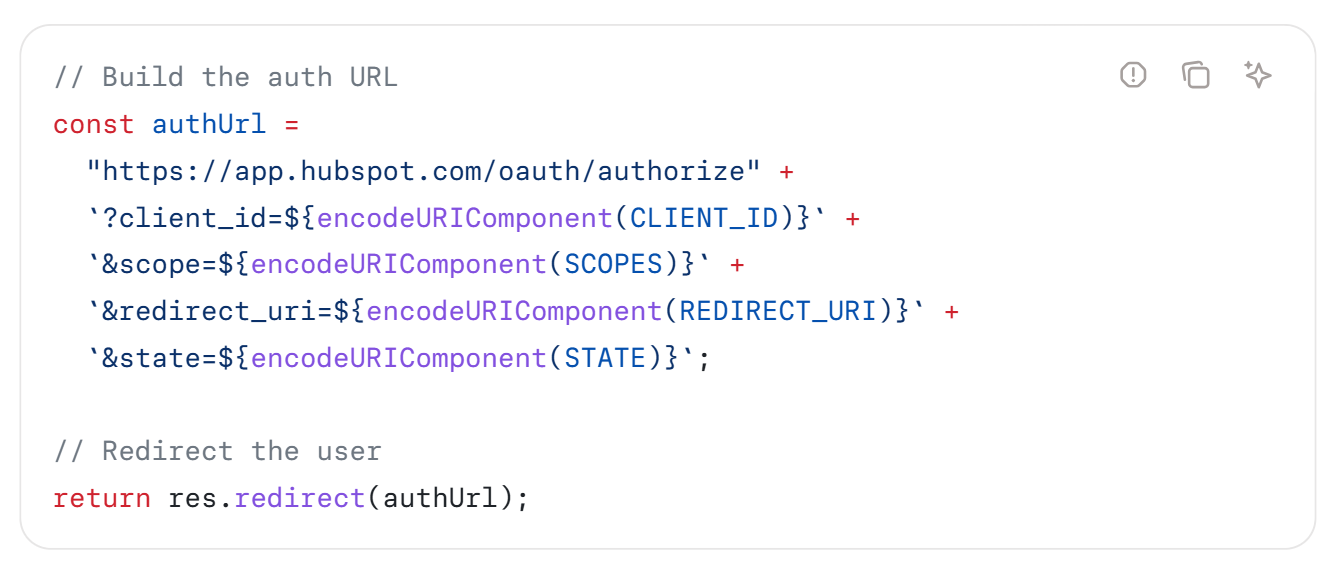
OAuth 2.0 (Authorization Code stream): Required for publicly distributed apps itemizing on the HubSpot Market, and for multi-account personal OAuth apps. Builders host an OAuth backend to provoke the stream and handle tokens. Entry tokens embrace an expires_in parameter; apps should refresh tokens earlier than expiry. A Node.js OAuth quickstart information with Docker-compatible code is on the market.
Supply: HubSpot
Static auth entry token: For single-account (personal distribution) apps, a non-expiring Bearer token is generated in app settings. Distribution is restricted to 10 licensed accounts.
Legacy personal app entry tokens: Generated by way of scope-based configuration within the HubSpot UI for legacy personal apps. Helps rotation (quick or scheduled 7-day). HubSpot emails tremendous admins rotation reminders each 180 days.
All tokens are handed as a Bearer token within the Authorization header:
curl “https://api.hubapi.com/crm/objects/2026-03/contacts”
-H “Authorization: Bearer YOUR_ACCESS_TOKEN”
Apps declare permission scopes at configuration time, defining which knowledge and performance every app can entry. HubSpot indicators outbound webhook requests with an X-HubSpot-Signature header (SHA-256 hash from the app’s consumer secret and request physique), letting receivers confirm that requests originate from HubSpot.
HubSpot API: Core Endpoints & Capabilities
HubSpot’s CRM is constructed on an Object API mannequin. Every CRM object sort has a numeric objectTypeId, and a single set of standardized endpoints handles all object sorts:
GET /crm/objects/2026-03/{objectTypeId} — checklist information
POST /crm/objects/2026-03/{objectTypeId} — create report
GET /crm/objects/2026-03/{objectTypeId}/{id} — retrieve report
PATCH /crm/objects/2026-03/{objectTypeId}/{id} — replace report
DELETE /crm/objects/2026-03/{objectTypeId}/{id} — archive report
POST /crm/objects/2026-03/{objectTypeId}/batch/create — bulk create
POST /crm/objects/2026-03/{objectTypeId}/search — filter/search
As soon as you understand how to work with one object sort, the identical strategy applies to all 30+. Information are recognized by an auto-generated hs_object_id (handled as a string); contacts can be appeared up by electronic mail and firms by area by way of the idProperty question parameter. Pagination makes use of cursor/restrict patterns.
Contacts, Corporations & Offers
The core CRM objects (Contacts at 0-1, Corporations at 0-2, Offers at 0-3) assist the total CRUD lifecycle plus batch operations and search. What you’d construct with this: a CRM sync that pushes contacts from an exterior knowledge supply into HubSpot, associates them with firms, creates offers, and tracks pipeline development, all programmatically.
Tickets, Merchandise & Commerce Objects
Tickets (0-5), Merchandise (0-7), Line Gadgets (0-8), Quotes (0-14), Invoices (0-53), Orders (0-123), Funds (0-101), and Subscriptions (0-69) lengthen the identical endpoint sample to service and commerce workflows. What you’d construct with this: a quote-to-cash automation that creates merchandise, generates quotes from deal context, tracks invoices, and reconciles cost information.
Customized Objects
Customized objects (sort IDs prefixed 2-) allow you to lengthen the CRM knowledge mannequin for any enterprise entity HubSpot doesn’t natively cowl. The Schemas API (/crm-object-schemas/2026-03/schemas) handles creation and configuration of customized object definitions (object title, show properties, searchable properties, associations).
Associations API
The Associations API (/crm/associations/2026-03/) manages relationships between information throughout object sorts. It helps customized affiliation labels (e.g., “Choice Maker”), enabling multi-relationship modeling. This API has stricter charge limits than the overall CRM endpoints.
Search API
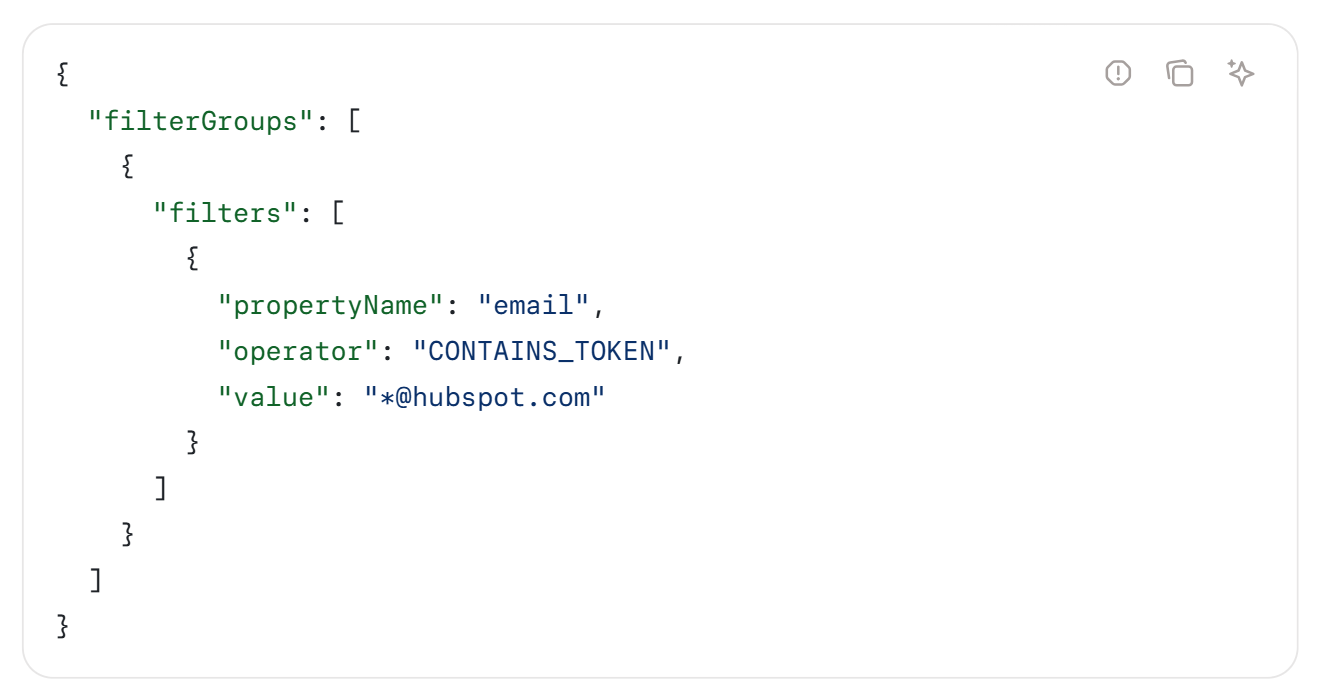
The Search API (/crm/objects/2026-03/{objectTypeId}/search) filters and types CRM information by properties and associations. Use it to question present information by standards (e.g., “all contacts at firms with 500+ staff who opened an electronic mail this month”). This endpoint additionally has particular charge limits documented individually.
Supply: HubSpot
Properties API
The Properties API (/crm/properties/2026-03/{objectTypeId}) creates and manages default and customized properties for every object sort, providing you with management over the sphere schema of each object within the CRM.
Advertising and marketing, Types & Conversations
Advertising and marketing APIs embrace Transactional Electronic mail (single-send), Advertising and marketing Occasions, and Types APIs. The Conversations API handles messaging channel integrations and inbox administration, requiring a developer API key for registration.
Exports API
The Exports API handles bulk CRM knowledge extraction with particular documented limits, helpful for knowledge warehousing or migration workflows.
GraphQL API
A GraphQL endpoint is on the market for querying CMS content material and HubDB tables, topic to question complexity limits. That is scoped to CMS knowledge, not normal CRM entry.
HubSpot API: Webhooks & Occasions
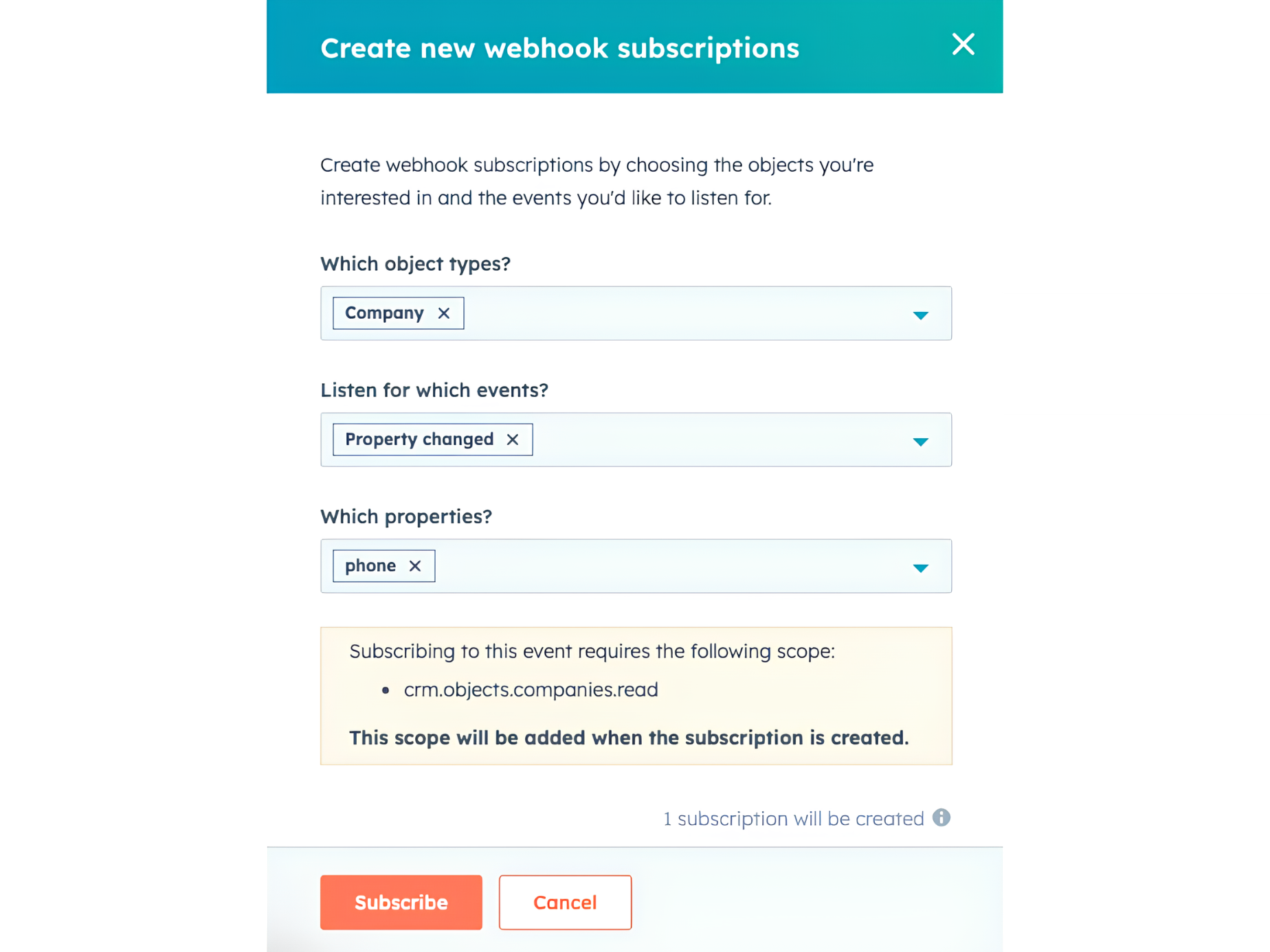
HubSpot helps webhooks in each personal apps and public apps, delivering occasion knowledge by way of HTTP POST to a developer-configured goal URL.
Supply: HubSpot
Supported occasion sources:
-
CRM objects: Contacts, Corporations, Offers, Tickets, Merchandise, Line Gadgets
Occasion sorts per CRM object: created, merged, deleted, and property modified (with elective property-level filtering, so you may subscribe to particular property adjustments moderately than receiving each change for an object).
Supply conduct:
Constraints to plan round:
What you’d construct with this: a real-time integration that listens for deal stage adjustments, new contact creations, or ticket standing updates and pushes these occasions into an exterior system (an information warehouse, a Slack channel, or a workflow engine) with out polling.
HubSpot API: SDKs, Docs & Charge Limits
SDKs & Libraries
HubSpot maintains official SDKs for six languages (up to date in June 2026 to assist date-based versioning):
The SDKs are generated from a centrally managed OpenAPI specification, so protection expands because the spec evolves and documentation drift shrinks. Repositories dwell underneath github.com/HubSpot.
Past the SDKs, HubSpot supplies developer tooling that goes additional than most CRM APIs:
-
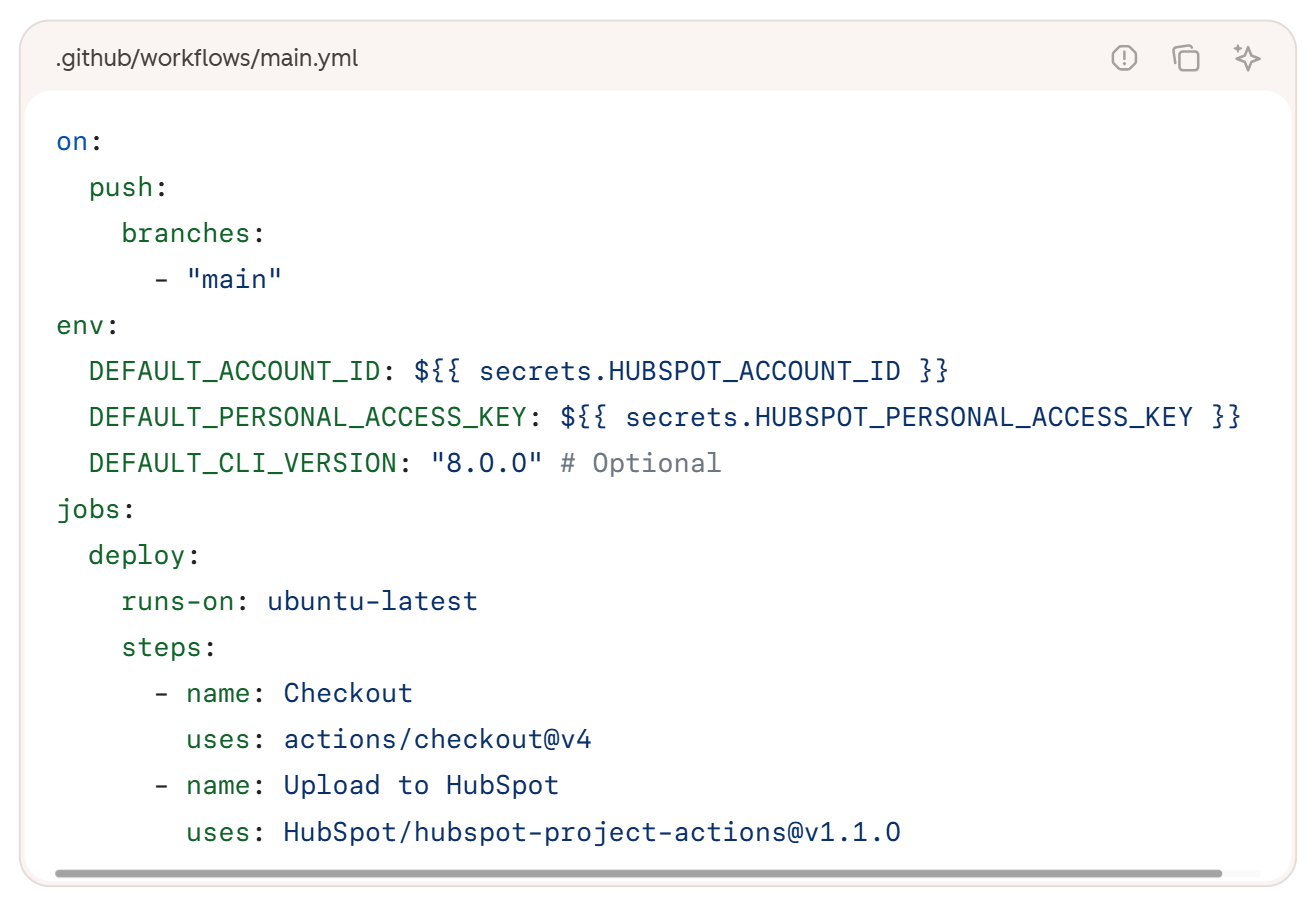
HubSpot CLI: command-line tooling for constructing, deploying, and managing HubSpot tasks
-
VS Code extension: HubL syntax highlighting, autocomplete, and config file validation
Supply: HubSpot
Documentation & Developer Expertise
The developer documentation lives at builders.hubspot.com and is organized into API reference, apps, CMS, and developer tooling sections.
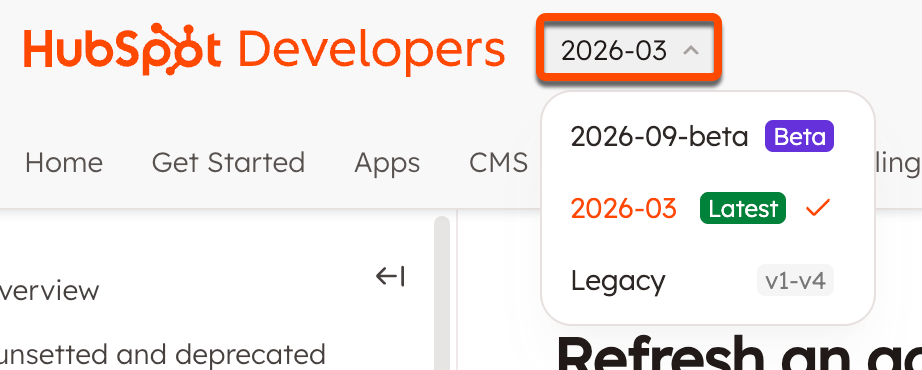
The date-based API reference covers endpoints launched since /2026-03/, with an older numeric-version reference (v1-v4) nonetheless out there. A full documentation index is on the market by way of llms.txt for machine-readable discovery by AI instruments. The docs use a Mintlify-based interactive explorer embedded in reference pages.
Supply: HubSpot
The date-based versioning system provides builders an 18-month assist window per model and limits breaking adjustments to twice per 12 months (March and September). An lively Developer Changelog tracks updates by API space.
Developer assist channels embrace:
HubSpot’s developer expertise is mature and well-maintained. Generated SDKs, interactive docs, predictable versioning, and AI-native tooling (MCP servers, Agent CLI) put it forward of most CRM APIs in developer funding.
Charge Limits & Constraints
Charge limits fluctuate by app distribution sort and HubSpot subscription tier.
Publicly distributed OAuth apps (marketplace-listed):
Privately distributed apps:
|
Tier |
Per 10 Seconds |
Per Day |
|---|---|---|
|
Free & Starter |
100 requests |
250,000 requests |
|
Skilled |
190 requests |
625,000 requests |
|
Enterprise |
190 requests |
1,000,000 requests |
|
With API Restrict Improve add-on |
250 requests |
+1,000,000 per capability pack (max 2 packs) |
Different constraints value figuring out:
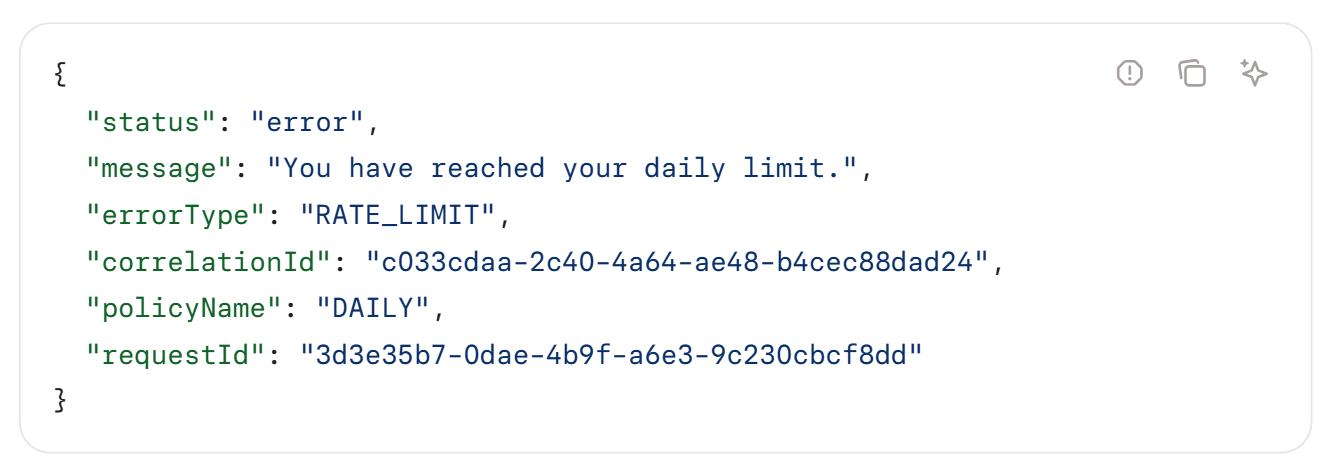
Charge restrict violations return a 429 error with “errorType”: “RATE_LIMIT”. The boundaries are well-documented and express, which is a real energy: discovering charge limits in manufacturing is much worse than studying them upfront.
Supply: HubSpot
HubSpot API Pricing & Entry Prices
HubSpot bundles API entry into all subscription plans, together with the free tier. There isn’t any separate API entry payment. The bottom API name quantity by plan:
|
Plan |
API Calls / Day |
|---|---|
|
Free & Starter |
250,000 |
|
Skilled |
650,000 |
|
Enterprise |
1,000,000 |
For many builds, these every day ceilings are beneficiant. A CRM sync polling each 5 minutes and processing a number of hundred information per cycle is not going to come near 250,000 calls in a day. The ceiling issues for high-frequency integrations: real-time enrichment, market apps serving many accounts, or bulk migration scripts.
API Restrict Improve add-on: $500/month per capability pack. Every pack provides 1,000,000 API calls/day and raises the speed restrict to 250 requests per 10 seconds. You should buy a most of two packs per account (ceiling: as much as 3,000,000 calls/day on Enterprise with two packs). The add-on doesn’t elevate the 110 req/10 sec restrict for publicly distributed market apps.
For a developer sizing prices: the API itself is free on each plan. The actual price is the HubSpot subscription tier that determines your every day name ceiling, charge restrict, and have entry. A free account provides you 250,000 API calls/day and 100 req/10 sec, sufficient to construct and check a manufacturing integration.
In the event you want extra, Skilled at $90-100/seat/month practically triples the every day ceiling. The $500/month API Restrict Improve is the escape valve for integrations that want quantity past what Enterprise supplies.
The place the HubSpot API Falls Brief
These are the sensible limits a developer constructing an information pipeline ought to plan round. A number of are scope selections that mirror what HubSpot’s API is (a CRM platform API) and what it’s not.
No exterior contact or firm search. HubSpot’s Search API queries information already in your CRM. There isn’t any endpoint to go looking an exterior database of contacts or firms, uncover new prospects, or discover folks at a goal account who will not be but in your system. In case your construct requires prospecting (discovering new contacts by title, firm dimension, or trade), HubSpot’s API doesn’t cowl it.
No purchaser intent, technographics, or org chart knowledge. The API doesn’t expose purchaser intent indicators (which firms are actively researching your class), expertise stack profiles, or organizational hierarchy knowledge.
These indicators assist a builder determine which accounts to prioritize and which contacts to succeed in. HubSpot’s Breeze AI options use a few of these indicators internally, however they aren’t out there as API endpoints.
No direct-dial cellphone quantity discovery. HubSpot shops cellphone numbers that customers or integrations put into the CRM, however the API doesn’t present a cellphone quantity lookup or verification service. In case your pipeline wants verified direct dials, you want an exterior knowledge supply.
Non-public app webhook subscriptions are UI-only. You can not create, replace, or delete webhook subscriptions in personal apps by way of API. You will need to configure them manually within the HubSpot settings UI. For a developer managing webhooks throughout environments (dev, staging, manufacturing) or automating integration setup, this creates actual friction.
Market apps hit a tough 110 req/10 sec ceiling. Publicly distributed apps are capped at 110 requests per 10 seconds per put in account, and the API Restrict Improve add-on doesn’t apply. For a market app serving prospects with high-volume CRM operations, this ceiling can’t be raised.
GraphQL is CMS-only. The GraphQL API is scoped to CMS content material and HubDB tables, not normal CRM entry. Builders preferring GraphQL for CRM queries should use the REST endpoints.
Charge limits on Free and Starter are shared throughout all personal apps. The 250,000 calls/day restrict on Free and Starter tiers is per account, shared throughout all personal apps. A number of integrations operating in opposition to the identical account compete for a similar capability.
ZoomInfo API: The Knowledge Intelligence Layer HubSpot Does Not Present
HubSpot’s API manages CRM information, pipelines, and workflows. ZoomInfo’s API supplies the intelligence that determines which information belong within the CRM within the first place: who to contact, what firms they work for, what expertise these firms use, and whether or not they’re actively in-market.
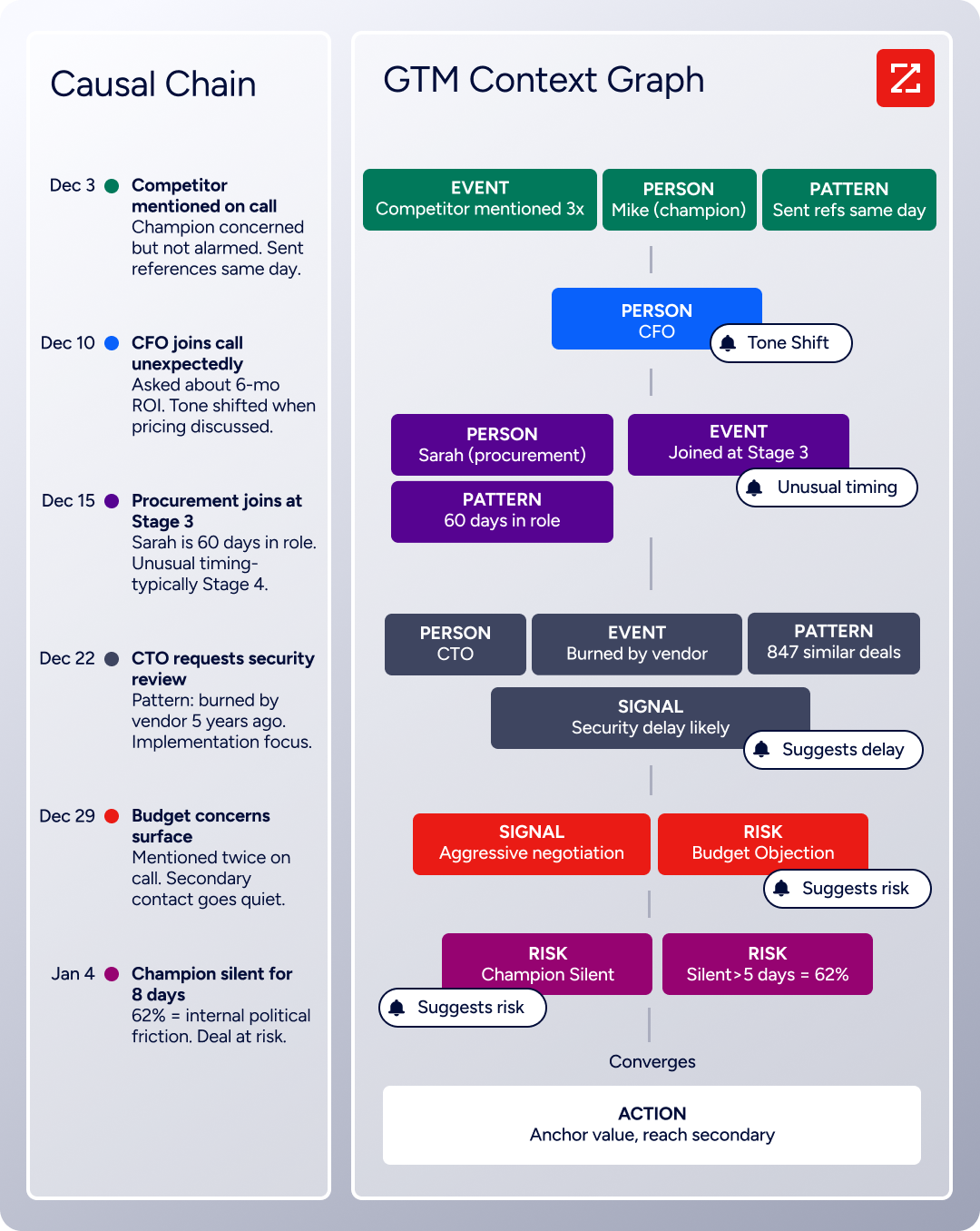
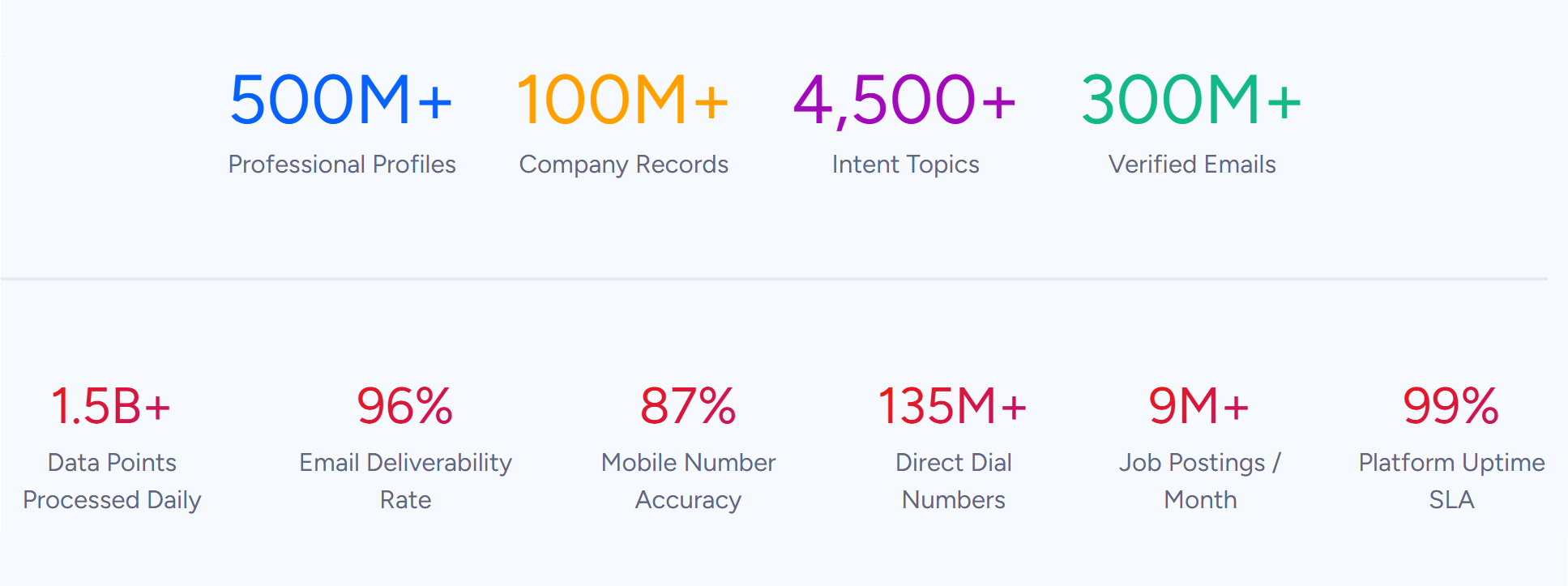
That intelligence flows from the GTM Context Graph, which processes 1.5B+ knowledge factors every day by fusing ZoomInfo’s B2B knowledge along with your first-party indicators.
Supply: ZoomInfo
The 2 APIs function at completely different layers of a GTM knowledge pipeline. HubSpot is the system of report; ZoomInfo is the information supply that feeds it.
What the API Covers: Search, Enrichment, and AI Intelligence
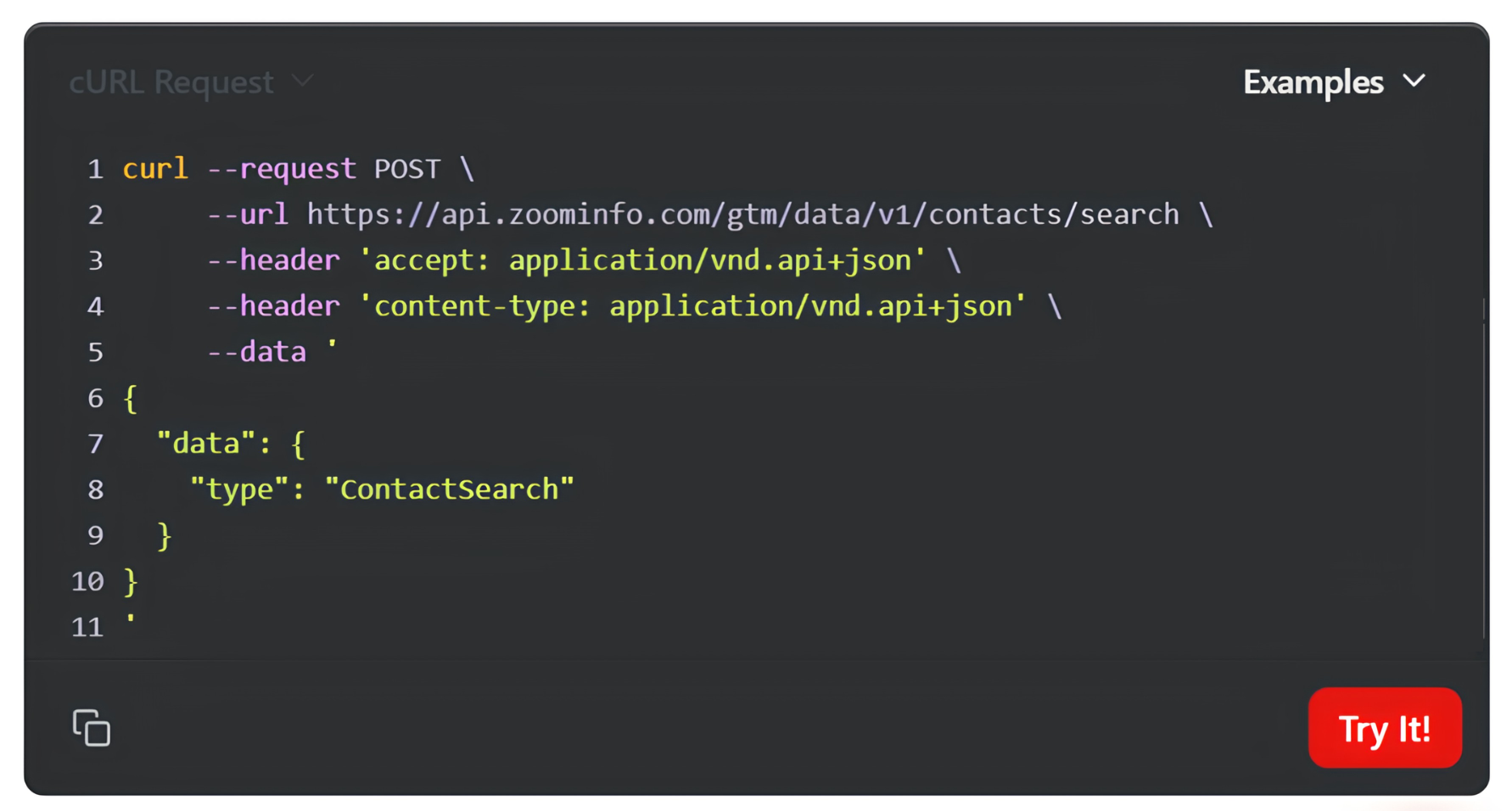
ZoomInfo’s Enterprise API is a REST suite served from https://api.zoominfo.com/gtm, organized into 4 areas documented within the interactive API reference:
Knowledge API (Search & Enrich): Search endpoints cowl Contacts, Corporations, Intent, Information, and Scoops, returning matched information with out consuming credit.
Supply: ZoomInfo
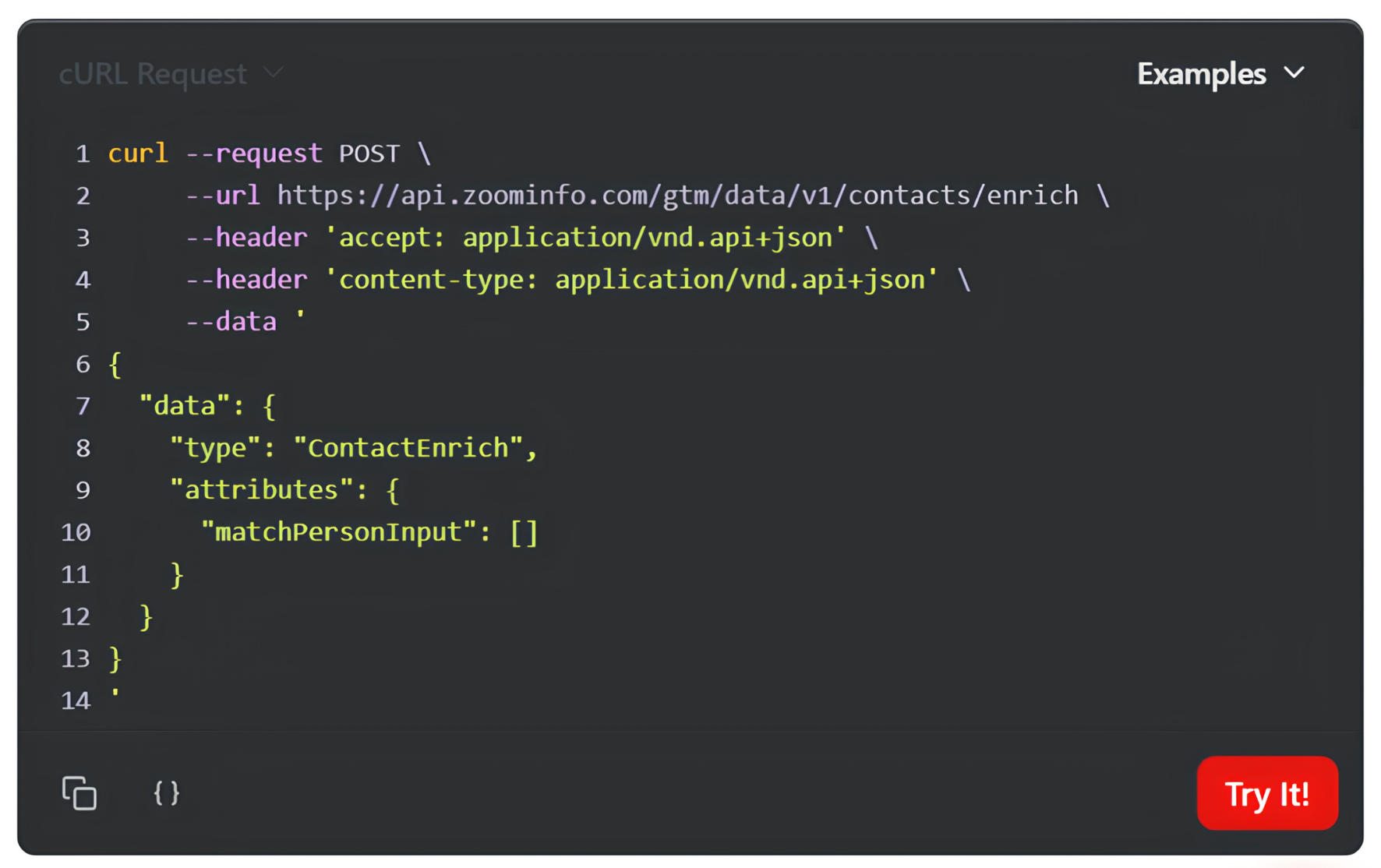
Enrich endpoints unlock the total payload: enterprise emails, direct dials, employment historical past, company hierarchy, org charts, technographics, and hashtag indicators, as much as 25 information per name.
Supply: ZoomInfo
The underlying dataset spans 500M contacts, 100M firms, 135M+ verified cellphone numbers, and 200M+ verified enterprise electronic mail addresses. The search-then-enrich sample means you filter freely, then pay just for the information you decide to.
Supply: ZoomInfo
AI Intelligence Endpoints: Account Abstract returns structured account intelligence with a free-form Q&A endpoint. Discover Related Corporations performs lookalike growth. Contact Suggestions returns AI-ranked buying-committee recommendations by movement (prospecting, deal acceleration, renewals).
Advertising and marketing API: CRUD endpoints for programmatic viewers administration.
Platform API (Engagements, Beta): Bidirectional engagement knowledge by way of the Engagements API.
The pairing with a CRM API is direct: use ZoomInfo’s search endpoints to seek out contacts matching your ICP (free, no credit consumed), enrich those value pursuing, then push them into HubSpot’s CRM object endpoints. ZoomInfo’s search does what HubSpot’s Search API can’t: question an exterior intelligence database moderately than your individual information.
Authentication & Entry
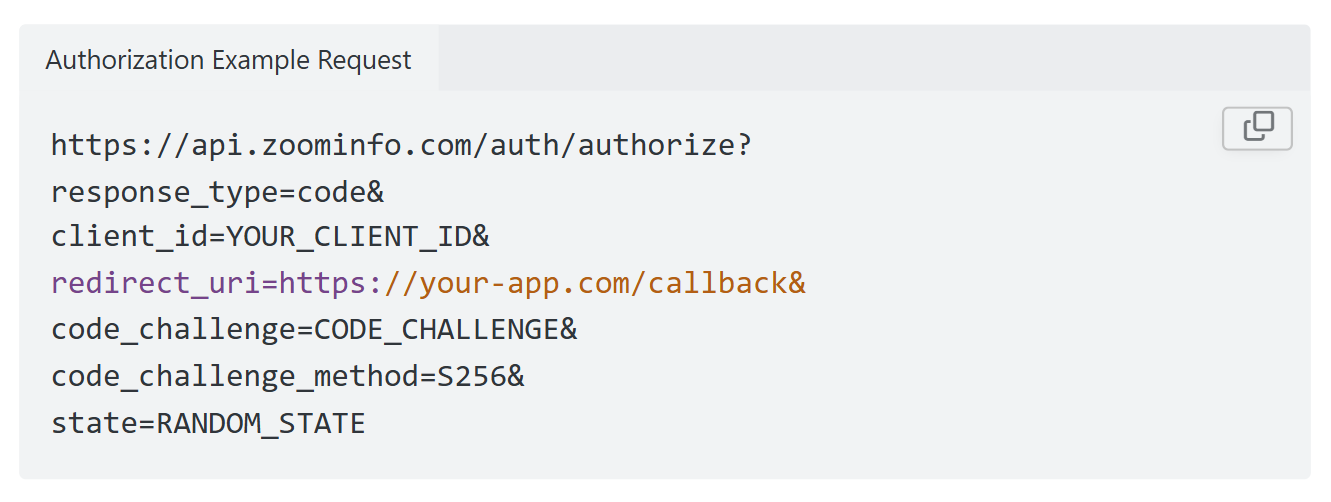
ZoomInfo makes use of OAuth 2.0 with PKCE by way of Okta, supporting three flows: Authorization Code with PKCE (internet purposes), Shopper Credentials (server-to-server), and Refresh Token. Entry tokens are 24-hour Bearer tokens with rotating refresh tokens. Groups register purposes by means of the ZoomInfo Developer Portal, the place they generate credentials, outline scopes, and check endpoints.
Supply: ZoomInfo
Each APIs use OAuth 2.0, however ZoomInfo’s implementation is extra prescriptive (Okta-based, 24-hour token expiry with necessary rotation), whereas HubSpot provides extra flexibility (static tokens for easy integrations, OAuth for market apps, legacy tokens for backward compatibility).
Charge Limits, Credit & Developer Expertise
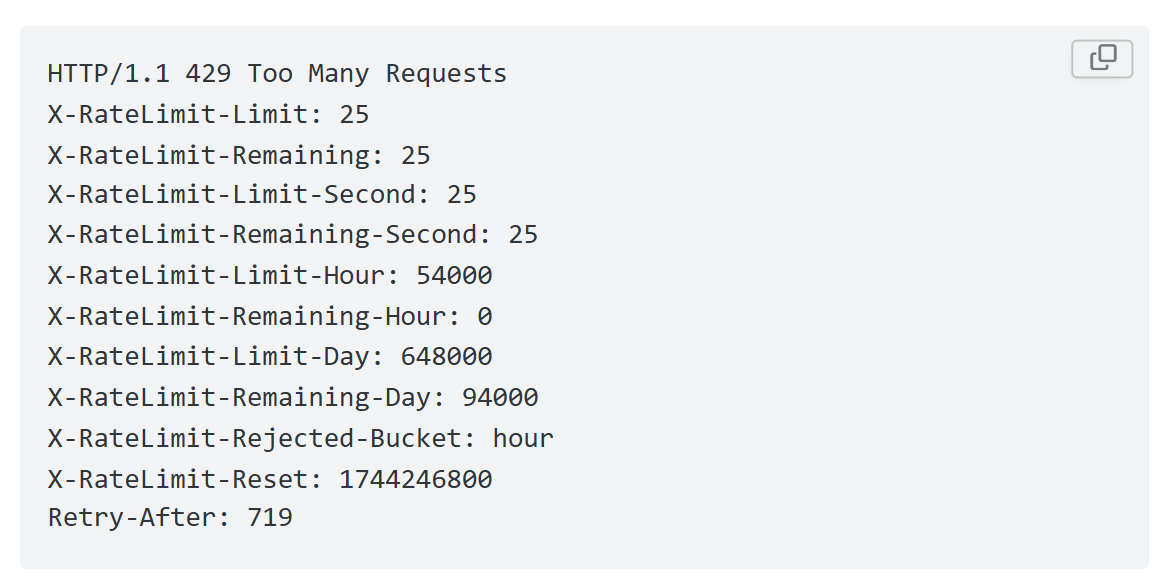
Charge limits are printed by tier: Builder (5 req/sec), Commonplace (25 req/sec), and Scaling (35 req/sec), with per-hour and per-day sliding-window limits enforced concurrently. Each response consists of quota headers with remaining capability, and 429 responses embrace a Retry-After header with actual backoff timing.
Supply: ZoomInfo
Credit observe a rolling 12-month window: enriching a report for the primary time consumes one credit score; re-enriching the identical report inside the 12 months is free. Search and lookup operations don’t eat credit.
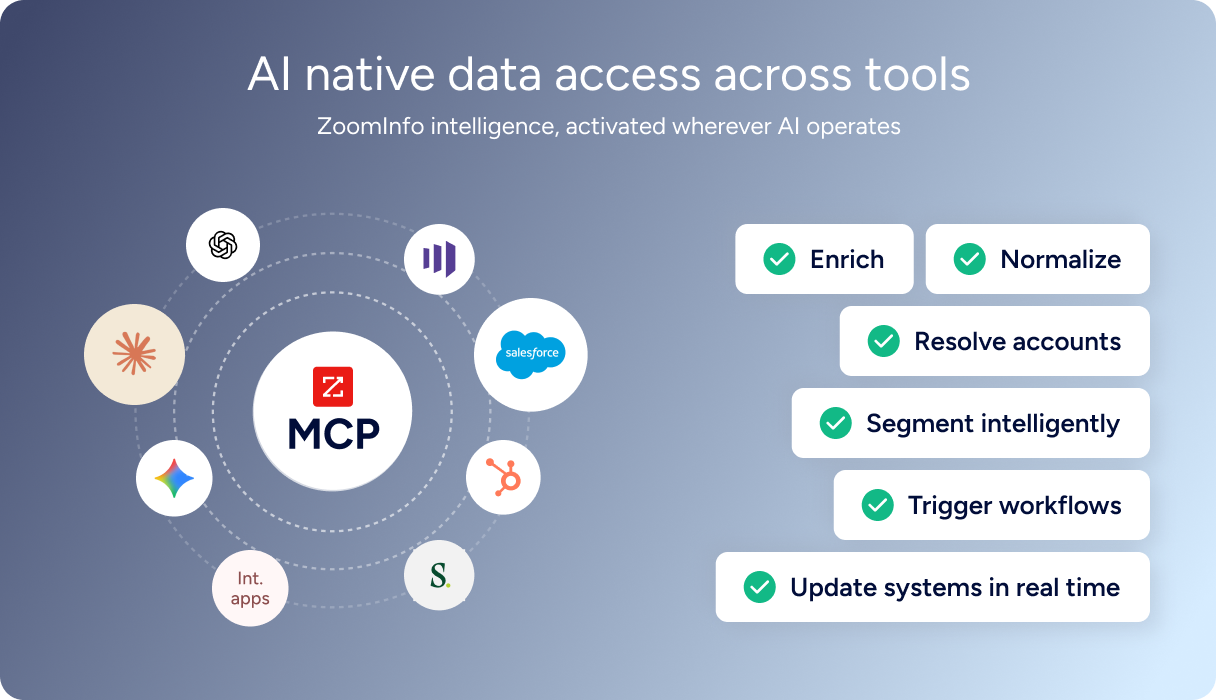
For builders constructing AI brokers, ZoomInfo’s MCP server at https://mcp.zoominfo.com/mcp exposes search, enrich, and account analysis as native instruments for MCP-compatible assistants, at the moment supporting Claude and ChatGPT. A separate Docs MCP server allows AI-assisted code technology in opposition to the API spec.
Supply: ZoomInfo
ZoomInfo doesn’t publish official SDKs, so that you combine over HTTP and personal the auth-and-retry layer your self. Documentation lives at docs.zoominfo.com with an interactive API reference, OAuth recipes in 5 languages, and an llms.txt index for AI improvement instruments. ZoomInfo has added API entry to all plans, with consumption-based pricing.
BDO Canada reported an 87% discount in time spent updating inner knowledge dashboards utilizing the ZoomInfo API, with one analyst describing the combination as plug-and-play throughout any course of. (ZoomInfo)
Remaining Verdict
HubSpot’s API is a powerful CRM platform floor: well-versioned, well-documented, and broad sufficient to cowl 30+ CRM object sorts, advertising and marketing automation, commerce, and webhooks from a single REST interface. Six official SDKs, generated from a central OpenAPI spec, scale back integration overhead.
Date-based versioning with 18-month assist home windows provides builders stability ensures which can be uncommon for a SaaS API. For a construct that begins and ends with CRM workflow automation, it delivers what the platform does, programmatically.
Select the HubSpot API if your integration manages CRM knowledge: syncing contacts and firms from exterior programs, automating deal pipelines, subscribing to property-change occasions, constructing market apps, or orchestrating advertising and marketing and repair workflows. The free tier with 250,000 calls/day and $0 API entry price make it one of the accessible CRM APIs to construct on.
Select the ZoomInfo API when your construct wants the intelligence upstream of CRM administration: deciding which contacts to create, which firms to focus on, what these firms’ expertise stacks seem like, and whether or not they’re actively in-market.
The search-then-enrich sample (search is free, enrich consumes credit) and the AI intelligence endpoints cowl the information a CRM API doesn’t. Discover the ZoomInfo Enterprise API or begin with the developer docs to see the endpoint floor straight.
A developer who wants neither ought to contemplate that HubSpot’s API doesn’t uncover or confirm contacts, and ZoomInfo’s API doesn’t handle CRM information. In case your pipeline requires each, the 2 are complementary layers in the identical construct, not competing surfaces.
FAQ
Is the HubSpot API free?
Sure. API entry is included on all HubSpot plans, together with the everlasting free tier. There isn’t any separate API payment. The free plan supplies 250,000 API calls per day and 100 requests per 10 seconds, sufficient for many integrations.
The actual price issue is the HubSpot subscription tier: Skilled and Enterprise plans enhance the every day name ceiling and charge limits. An API Restrict Improve add-on is on the market at $500/month for builds that want greater than 1,000,000 calls/day.
Does HubSpot have a GraphQL API?
Sure, however it’s restricted in scope. HubSpot’s GraphQL API covers CMS data-driven content material queries (HubDB tables and CMS content material), not normal CRM entry. CRM operations (contacts, firms, offers, tickets, and all different object sorts) use the REST API solely. The GraphQL endpoint is topic to its personal question complexity and account limits.
What’s the HubSpot API charge restrict?
It will depend on your app sort and subscription tier. Publicly distributed OAuth apps are capped at 110 requests per 10 seconds per put in account, and this restrict can’t be elevated. Non-public apps on Free and Starter plans get 100 requests per 10 seconds and 250,000 calls/day; Skilled and Enterprise get 190 requests per 10 seconds with 625,000-1,000,000 calls/day.
The API Restrict Improve add-on ($500/month) raises personal app limits to 250 requests per 10 seconds and provides 1,000,000 calls/day per capability pack. The CRM Search API and Associations API have extra, stricter limits documented on their respective pages.
Are there official HubSpot SDKs?
Sure. HubSpot publishes official SDKs for six languages: PHP, Java, Ruby, Go, TypeScript, and Python. All are generated from a centrally managed OpenAPI specification and have been up to date in June 2026 to assist the brand new date-based versioning.
They’re distributed by means of commonplace bundle managers and maintained underneath the HubSpot GitHub group. Past the SDKs, HubSpot additionally supplies a CLI, a VS Code extension, and MCP servers for AI-assisted improvement.
Does the HubSpot API assist webhooks?
Sure. HubSpot webhooks ship CRM object occasions (created, merged, deleted, property modified) and Conversations occasions by way of signed HTTP POST requests. As much as 1,000 subscriptions per app are supported.
Every webhook request can include as much as 100 occasions, with a concurrency restrict of 10 in-flight requests per personal app. Payloads are signed with an X-HubSpot-Signature header for verification. One constraint: personal app webhook subscriptions can solely be configured within the HubSpot UI, not by way of API.
What does ZoomInfo’s API add to a HubSpot construct?
ZoomInfo’s API provides the information intelligence layer that HubSpot’s CRM API doesn’t cowl.
The place HubSpot’s API manages present CRM information, ZoomInfo’s API searches throughout 500M contacts and 100M firms to seek out new prospects matching your ICP, enriches them with direct dials, org charts, technographics, and employment historical past, and detects purchaser intent indicators exhibiting which accounts are actively in-market.
The standard integration sample: use ZoomInfo’s search endpoints to find contacts (free, no credit consumed), enrich those value pursuing (one credit score per new report), then push the enriched information into HubSpot’s CRM object endpoints.
Each APIs use OAuth 2.0 and Bearer tokens, and ZoomInfo’s MCP server extends the identical intelligence to AI-agent workflows that may learn and write HubSpot CRM knowledge by way of HubSpot’s personal MCP server.
Different instruments value evaluating aspect by aspect:

