

At a fast look, the finest rising AI instruments I discovered on G2 are Miro, Meshy, Blotato AI, Coder, Algolia, Purple Panda, Workday Lengthen, Apify, Leo, and Phygital Plus.
Ever opened a listing of “game-changing” AI instruments and felt extra confused than whenever you began?
Similar. New AI instruments launch each week, and each one among them claims to repair your drawback. I evaluate software program for a dwelling at an AI-first firm, and even I discover it laborious to inform what’s value attempting. Choose the incorrect software, and also you’re explaining a burned token funds to your supervisor.
That’s why I didn’t simply skim characteristic lists and approached this with a transparent, data-backed mindset to create a listing that may assist individuals inform worth from hype. As a result of “rising” is a shifting goal, I caught to new AI-first instruments listed underneath G2’s Rising AI Software program class web page.
I evaluated 40+ rising AI options (unironically, with the assistance of an incredible AI software) and narrowed the record right down to a various set of 10 that tackle completely different use instances throughout collaboration, 3D era, social media automation, developer environments, search infrastructure, picture era, enterprise customization, internet scraping, mechanical engineering, and multi-model content material creation.
Whether or not you’re an early adopter looking for the perfect rising AI instruments to attempt, or a developer, marketer, designer, or engineer who wants one thing that truly works, there’s one thing right here for you.
Be aware: Effectively-known instruments like ChatGPT and Claude, which sit in mature classes corresponding to AI chatbots and AI coding assistants, aren’t on this record. In case you’re in search of these, see the finest generative AI instruments as a substitute.
10 finest rising AI instruments for 2027: My prime picks
- Miro: Finest for real-time visible collaboration and brainstorming
Infinite canvas, real-time collaboration, template library, deep integrations, AI-powered synthesis. (Starter plan at $8/month per member, billed yearly) - Meshy: Finest for AI-powered 3D mannequin era
Textual content-to-3D and image-to-3D era, quick turnaround, sport engine export, versatile enter strategies. (Professional plan at $20/month) - Blotato AI: Finest for AI-automated social media scheduling and distribution
Cross-platform scheduling, MCP/AI-agent integration, AI content material era, multi-account administration. (Starter plan at $29/month) - Coder: Finest for safe, self-hosted cloud growth environments
Terraform-based workspace templates, self-hosted deployment, quick provisioning, cloud-agnostic infrastructure. (Pricing accessible upon request) - Algolia: Finest for lightning-fast search and product discovery
Sub-millisecond search, customizable rating, developer-friendly APIs, pre-built UI parts. (Pricing accessible upon request) - Purple Panda: Finest without spending a dime AI picture era with textual content rendering
Textual content-to-image era, textual content rendering in pictures, SVG vector export, HD downloads. (Pricing accessible upon request) - Workday Lengthen: Finest for constructing {custom} apps inside the Workday ecosystem
Customized app growth, AI Developer characteristic, native Workday safety, knowledge object integration. (Pricing accessible upon request) - Apify: Finest for internet scraping and knowledge extraction at scale
Actor market, proxy administration, MCP/AI-agent integration, structured knowledge output. ($17/month + pay as you go) - Leo: Finest for AI-powered mechanical engineering workflows
CAD/PLM-aware search, cited engineering solutions, geometric half search, enterprise safety. (Pricing accessible upon request) - Phygital Plus: Finest for multi-model AI content material creation in a single workspace
Multi-model AI aggregator, node-based workflow, picture/video/voice era, Figma-like interface. ($12/month)
*These are the most well-liked rising AI software program instruments on G2, ranked by reputation rating on G2’s Rising AI Software program class web page. I’ve additionally added their beginning costs to make comparisons simpler for you.
10 finest rising AI instruments I like to recommend
Everyone knows in regards to the reputation of AI, however it’s value operating via the eye-watering numbers once more. Whereas researching this piece, I discovered that enterprise AI is more and more changing into a startup-led utility market. In line with Menlo Ventures’ 2025 State of Generative AI within the Enterprise, startups captured 63% of AI application-layer income in 2025, whereas the appliance layer attracted $19 billion, greater than half of the $37 billion spent on generative AI by enterprises that yr.
What’s extra, S&P World initiatives generative AI software program income to develop at a compound annual development fee of about 39% between 2024 and 2029, reaching $103 billion. Collectively, these figures recommend that enterprise budgets are shifting past basis fashions towards specialised instruments for software program growth, customer support, gross sales, authorized work, and information administration.
One of the best rising AI instruments span a variety of merchandise, from visible collaboration platforms and 3D asset mills to developer infrastructure, search engines like google, and multi-model artistic workspaces. What ties them collectively is that every software applies AI in a means that addresses a particular workflow bottleneck. In contrast to mature software program classes with well-established market leaders, rising AI is an area the place new entrants achieve traction shortly based mostly on the energy of their AI capabilities and the way nicely they resolve a particular drawback.
That makes consumer critiques particularly worthwhile when evaluating rising AI options, as a result of verified suggestions reveals how these instruments carry out in real-world workflows moderately than simply in demo environments.
How did I discover and consider the perfect rising AI instruments?
I began with G2’s Rising AI Software program class web page, sorted by reputation rating, to construct a shortlist of the highest instruments based mostly on evaluate quantity, consumer satisfaction, and market traction. Since this can be a new G2 class and not using a printed Grid Report but, the recognition rating served as the first data-backed baseline for figuring out which instruments are persistently performing nicely.
From there, I analyzed G2 evaluate knowledge at scale with the assistance of AI instruments to determine recurring themes in real-world utilization. Opinions had been particularly helpful for understanding whether or not a software delivers sensible worth in day-to-day workflows or just checks characteristic containers on paper.
All through the analysis, I centered on how nicely every platform solves its core use case, the standard and consistency of consumer suggestions, the depth of its AI capabilities, and whether or not it presents significant differentiation from general-purpose options.
The result’s a sensible, buyer-focused record grounded in verified consumer suggestions and actual utilization patterns, not simply characteristic checklists or vendor claims.
I would additionally like to notice that each one screenshots on this article are from G2 vendor profiles and publicly accessible documentation.
What makes the perfect rising AI instruments: My choice standards
After analyzing G2 Information and tons of of verified consumer critiques, I saved seeing frequent priorities floor throughout completely different roles and industries.
- AI functionality depth and differentiation: I regarded for platforms the place AI is core to the worth proposition, not only a characteristic add-on. The rising AI instruments should apply AI in ways in which resolve particular workflow issues, whether or not that’s producing 3D fashions from textual content, looking out engineering databases with pure language, or automating multi-platform content material distribution.
- Ease of adoption and time-to-value: Robust rising AI instruments ought to ship worth shortly. I prioritized platforms the place customers persistently point out quick onboarding, intuitive interfaces, and minimal setup friction. Instruments that require in depth configuration earlier than delivering any profit scored decrease.
- Output high quality and reliability: AI-generated output is just helpful if groups can belief it. I evaluated how persistently every platform delivers correct, usable outcomes, whether or not that’s search relevance, picture constancy, 3D mannequin high quality, or cited engineering solutions.
- Integration with present workflows: I gave choice to instruments that join with the programs groups already use, whether or not that’s challenge administration platforms, sport engines, CRM programs, PLM environments, or AI agent frameworks. Instruments that function in isolation scored decrease than people who match into broader workflows.
- Scalability and pricing transparency: I evaluated whether or not every platform can develop with a workforce’s wants and whether or not pricing is predictable. Instruments with clear, printed pricing or beneficiant free tiers scored larger than these the place prices are troublesome to estimate or scale unpredictably.
- Group and assist high quality: For rising instruments, responsive assist and energetic group sources matter greater than they do for established platforms. I regarded for instruments the place customers persistently point out useful assist groups, stable documentation, and a monitor file of delivery enhancements based mostly on consumer suggestions.
- AI-agent and automation readiness: With agentic AI workflows gaining traction, I paid consideration as to if platforms assist MCP integration, API-first architectures, or different patterns that permit AI brokers to find, configure, and use the software autonomously.
Not each platform excels in each class. However the perfect rising AI instruments persistently ship the place it issues most: significant AI differentiation, quick time-to-value, dependable output, and the flexibility to combine into the workflows groups already rely on.
The record under contains real consumer suggestions from the Rising AI Software program class on G2.
*This knowledge was pulled from G2 in 2026. Some critiques could have been edited for readability.
1. Miro: Finest for real-time visible collaboration and brainstorming
G2 ranking: 4.6/5
The very first thing that stood out to me about Miro is simply how persistently customers discuss real-time collaboration. Throughout tons of of G2 critiques, the flexibility to work concurrently on a shared infinite canvas, whether or not it’s brainstorming, consumer journey mapping, or dash planning, comes up time and again. That makes it no shock that it counts as the most effective rising AI instruments on this record.
Groups describe how watching reside cursors, dropping sticky notes, and constructing workflows collectively in the identical visible area replaces the type of passive silence that comes with reviewing static paperwork.
One other space the place Miro earns robust reward is its visible brainstorming and diagramming toolkit. Customers often point out thoughts maps, flowcharts, wireframes, and sticky word clusters as core to how they assume via issues. The infinite canvas offers groups the room to discover concepts freely with out operating out of area, whereas nonetheless protecting completely different threads related in a structured means.
I additionally observed how usually the template library comes up in critiques. Slightly than ranging from a clean board each time, groups lean on pre-built templates for retrospectives, journey maps, dash planning, and extra. Reviewers describe these as sensible and well-designed, not simply filler. For groups seeking to cut back setup time and get into productive work shortly, this appears to be a significant benefit.
What additionally got here via clearly is how nicely Miro integrates with the broader software stack. Customers often spotlight connections with challenge administration platforms, design instruments, and workforce communication apps that maintain their workflows aligned. As an alternative of switching between disconnected programs, groups can maintain their boards synced with execution instruments, which reduces friction and context-switching.
Miro’s low barrier to entry is one other theme I observed. A number of reviewers point out that the platform runs easily in a browser with no set up required, which makes adoption simpler throughout departments. Even workforce members who aren’t notably technical describe getting comfy with the interface shortly, which helps drive cross-functional adoption.
One thing else that stood out is how customers discuss Miro’s AI options. Whereas nonetheless comparatively new, capabilities like auto-clustering sticky notes, producing diagrams from unstructured enter, and summarizing workshop content material look like saving groups significant time throughout synthesis and post-session cleanup. For organizations operating frequent ideation workshops, this provides a layer of effectivity on prime of the core collaboration expertise.
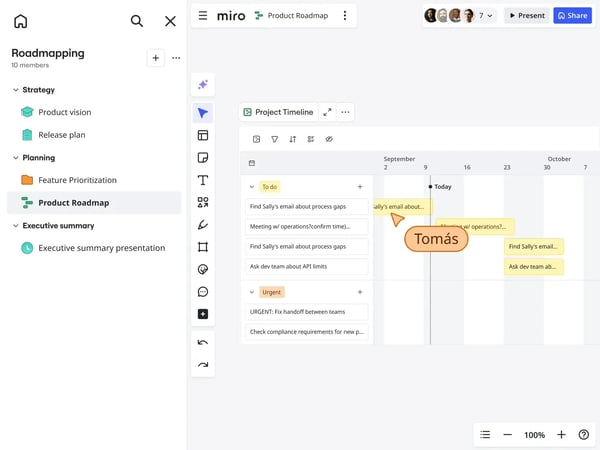
Whereas Miro is a feature-rich platform with deep customization choices, some reviewers word that absolutely exploring all the pieces it presents can take time, particularly for brand new customers navigating the wide selection of modules. That stated, most customers describe this as a brief ramp-up moderately than an enduring barrier, and the depth is usually what makes the platform worthwhile for groups with complicated workflows.
One other sample I observed in G2 critiques is that boards with a big quantity of objects, pictures, or embedded recordsdata can sometimes expertise slower efficiency. For groups managing content-heavy planning boards with a number of layers, this will have an effect on navigation velocity. Nonetheless, reviewers additionally acknowledge that this tends to floor solely on notably giant or dense boards, and the general efficiency throughout normal collaboration periods stays quick and responsive.
Total, Miro delivers a compelling mixture of real-time collaboration, visible brainstorming instruments, a wealthy template library, robust integrations, and accessible AI options that make it particularly nicely suited to cross-functional groups that depend on visible pondering. For organizations seeking to centralize ideation, planning, and workshop actions in a single shared area, it persistently earns reward as a platform that brings distributed groups nearer collectively.
What I like about Miro:
- Miro’s real-time collaboration on an infinite canvas makes visible brainstorming, journey mapping, and dash planning really feel seamless throughout distributed groups.
- The in depth template library and built-in AI options assist cut back setup time and automate post-workshop synthesis, making ideation periods extra productive.
What G2 customers like about Miro:
“Miro has turn out to be an important visible hub for our workforce and persistently delivers throughout the board. The UI/UX feels intuitive, and the infinite canvas makes visible mapping and brainstorming easy. Its top-tier integrations with Figma, Jira, and Slack additionally maintain our workflows aligned and in sync. Even throughout heavy real-time collaboration, efficiency stays quick and primarily lag-free.
The huge template library makes onboarding easy and simple, and Miro AI considerably quickens synthesis by clustering stickies and auto-generating diagrams. Total, the time we save on planning and workforce alignment interprets into a wonderful pricing ROI.”
– Miro evaluate, Ijaz A.
What I dislike about Miro:
- Some G2 customers word that Miro’s depth and wide selection of modules can require a brief studying interval for brand new customers, although most discover the interface intuitive as soon as they’re conversant in the format.
- G2 reviewers point out that notably giant or content-heavy boards can sometimes expertise slower navigation, although normal collaboration periods stay responsive.
What G2 customers dislike about Miro:
“Boards are likely to carry out slowly when they’re giant (e.g., we’ve one giant planning board that has a number of layers of plans and concepts — it takes a number of seconds to scroll via), and infrequently boards have didn’t render sure elements, and required me to restart them. As nicely, though free, the variety of editable boards is restricted to 3 (which implies as soon as you have reached your restrict, earlier boards are primarily read-only), and we’ve discovered archiving and changing previous boards to be a really painful course of.”
– Miro evaluate, Jeff P.
2. Meshy: Finest for AI-powered 3D mannequin era
G2 ranking: 4.7/5
In case you work in sport growth, product design, or 3D prototyping, Meshy is likely one of the extra thrilling instruments I’ve come throughout on this class. Probably the most constant theme in G2 critiques is how shortly it turns a textual content immediate or reference picture right into a usable 3D mannequin. Customers describe going from idea to textured asset in minutes moderately than hours, which basically modifications how briskly groups can iterate on concepts.
What additionally impressed me is how accessible the platform feels to non-experts. A number of reviewers point out that they don’t have a conventional 3D modeling background however had been capable of create usable property with out constructing all the pieces from scratch. For groups that want visible prototypes or game-ready fashions however lack devoted 3D artists, this lowers a major barrier.
The standard of Meshy’s AI-generated output is one other space that earns frequent reward. Customers describe the textures, shapes, and general constancy of generated fashions as robust sufficient to be used in shows, sport engines, and speedy prototyping workflows. Whereas not each era is production-perfect on the primary try, the flexibility to regenerate and refine shortly retains the workflow shifting.
I observed that sport builders and customers working with well-liked sport engines spotlight Meshy as a very robust match. The platform helps frequent export codecs, and reviewers describe a easy pipeline from era to engine import. For indie builders or small studios seeking to speed up asset creation with out outsourcing, this integration with present manufacturing workflows seems to be an actual differentiator.
One other spotlight is the flexibleness of enter strategies. Customers can generate fashions from textual content prompts, add reference pictures, or mix each to information the AI. This versatility means the software adapts to completely different artistic beginning factors, whether or not somebody has a tough sketch, {a photograph}, or only a written description of what they want.
One thing else that stood out is how usually reviewers deliver up prototyping and 3D printing. A number of describe utilizing Meshy to dam out characters and secondary property early in a challenge, evaluating a few variants from one idea earlier than committing to a course. Others point out creating fashions for resin printing, with the choice to edit, refine, and break up a mannequin earlier than making ready it for the printer. For makers and designers who need to check an thought with out weeks of guide modeling, that early-stage flexibility appears to be an actual draw.
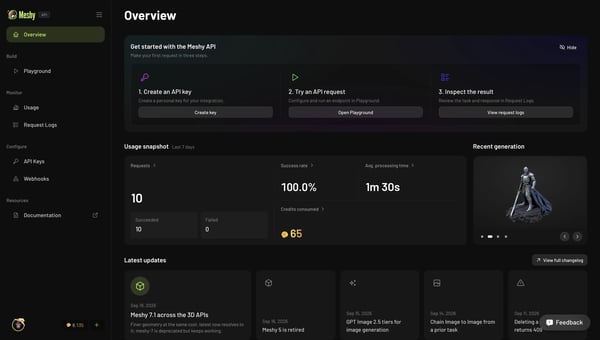
Whereas Meshy delivers spectacular velocity and accessibility, some reviewers word that AI-generated mesh topology could require guide cleanup earlier than property are prepared for manufacturing use. For workflows involving animation rigging, physics simulation, or low-poly optimization, the generated geometry doesn’t all the time distribute polygons as effectively as hand-modeled property. That stated, for speedy prototyping, idea visualization, and early-stage design exploration, the output high quality is usually greater than ample.
One other consideration that comes up in critiques is the credit-based pricing mannequin. Customers who often regenerate or refine fashions to get the precise end result they need point out that credit will be consumed shortly throughout intensive artistic periods. Nonetheless, many additionally word that the time saved in comparison with guide 3D modeling offsets the credit score value, and the platform’s pricing stays aggressive relative to hiring devoted 3D artists or outsourcing asset creation.
In apply, Meshy delivers probably the most worth for sport builders, product designers, and artistic groups that want to maneuver shortly from idea to 3D asset with out counting on specialised modeling experience. Its mixture of velocity, accessibility, and versatile enter strategies makes it a powerful selection for groups that prioritize speedy iteration over pixel-perfect first-pass outcomes.
What I like about Meshy:
- Meshy’s AI-powered era turns textual content prompts or reference pictures into textured 3D fashions in minutes, dramatically accelerating the prototyping and asset creation workflow.
- The platform is accessible to customers with out conventional 3D modeling backgrounds, making it sensible for indie builders and small groups that want visible property shortly.
What G2 customers like about Meshy:
“What I like most about Meshy is how shortly I can flip an thought or a reference picture right into a 3D mannequin I can really use. I haven’t got a sophisticated background in 3D modeling, so having the ability to create property with out constructing all the pieces from scratch has made an actual distinction in my workflow.”
– Meshy evaluate, Jorge L.
What I dislike about Meshy:
- G2 reviewers point out that AI-generated mesh topology may have guide cleanup or retopology earlier than property are appropriate for manufacturing workflows like animation or physics simulation.
- Some G2 customers word that credit will be consumed shortly throughout intensive periods involving a number of regenerations, although the time financial savings in comparison with guide modeling usually outweigh the associated fee.
What G2 customers dislike about Meshy:
“The inconsistency of the mannequin era. As I work with Low Poly fashions largely, the remeshing of extremely detailed fashions down from 1m polys to 10k does have its drawbacks, because the AI mannequin doesn’t make the most of the accessible poly depend as precisely as one would really like. To some extent, one might argue that the effectivity of the AI generator can generally be lackluster.”
– Meshy evaluate, Yen J.
3. Blotato AI: Finest for AI-automated social media scheduling and distribution
G2 ranking: 4.6/5
What stands out most about Blotato AI is how customers describe it as a real time-saver for multi-platform social media distribution. The most typical theme I observed is cross-platform posting, the place groups can schedule and publish content material throughout a number of social channels from a single interface, with out manually logging into every platform.
One other space that got here via clearly is Blotato’s MCP and AI-agent integration. Customers operating agentic content material workflows describe having the ability to join their AI instruments on to Blotato’s scheduling infrastructure, which implies they will go from content material creation to totally scheduled posts throughout a number of platforms in a single automated session. For groups already working with AI-powered content material pipelines, this sort of integration eliminates a major quantity of guide distribution work.
I additionally observed that Blotato’s built-in AI content material era capabilities earn reward from customers who want to supply social media property at scale. The platform helps generate infographics, captions, and visible content material tailor-made for various platforms, which reduces the back-and-forth between content material creation and distribution instruments.
The velocity of preliminary setup is one other theme that exhibits up often. Customers describe connecting their social accounts and getting their first posts scheduled inside minutes moderately than hours. For smaller groups or solo entrepreneurs who need to begin distributing content material instantly and not using a complicated onboarding course of, this issues.
Pricing is one other level that comes up positively. Reviewers often evaluate Blotato’s value to different social media administration platforms and describe it as extra inexpensive, notably given the variety of related accounts and scheduling capabilities included even at lower-tier plans.
Content material repurposing is one other theme that got here up time and again. Reviewers describe beginning with a single video, weblog put up, or YouTube hyperlink and turning it into platform-ready posts for a number of networks with out rebuilding every one from scratch. For solo creators and small groups operating social on the aspect, that create-once method seems to provide again actual time and makes it simpler to remain constant.
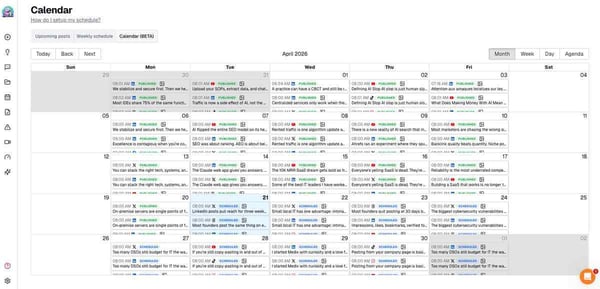
Whereas Blotato handles multi-platform scheduling nicely, some G2 reviewers point out that the analytics and reporting capabilities are nonetheless maturing. Sure platforms could not have full analytics protection inside the Blotato dashboard, which implies groups that rely closely on efficiency knowledge could must examine native platform analytics individually. That stated, customers additionally word that the workforce behind Blotato is responsive and actively delivery enhancements on this space.
Notable patterns in G2 critiques additionally level to occasional friction throughout platform-specific setup or content material formatting. Since every social channel has its personal posting necessities and content material restrictions, customers generally encounter limitations tied to the platform’s API moderately than Blotato itself. Nonetheless, reviewers recognize that the software is clear about these limitations and continues to develop its supported codecs.
All in all, Blotato AI is a powerful match for content material creators, entrepreneurs, and small groups that must distribute content material throughout a number of social channels effectively with out investing in a fancy enterprise-grade social media suite. Its AI-agent integration and inexpensive pricing make it notably compelling for groups already constructing AI-powered content material workflows.
What I like about Blotato AI:
- Blotato’s MCP integration permits groups operating AI-powered content material workflows to automate multi-platform scheduling immediately from their AI instruments, saving important guide effort.
- The platform presents aggressive pricing with beneficiant account limits, making it a sensible selection for smaller groups managing content material throughout many channels.
What G2 customers like about Blotato AI:
“The MCP integration is the primary purpose I am right here. I run an agentic content material workflow via Claude, and having Blotato accessible through MCP means I can go from completed clips to 40 scheduled posts throughout 4 platforms in a single session, with out touching the Blotato UI. That is actual time again.”
– Blotato AI evaluate, Danny T.
What I dislike about Blotato AI:
- G2 reviewers point out that analytics protection doesn’t but prolong to all related platforms, which can require checking native platform dashboards for full efficiency knowledge.
- Some G2 customers word that sure platform-specific content material codecs or posting restrictions can create friction throughout setup, although these limitations usually stem from the social platform’s personal API constraints.
What G2 customers dislike about Blotato AI:
“Analytics do not cowl LinkedIn, so I am unable to see how my LinkedIn posts are doing from inside Blotato. It may possibly additionally solely put up to a Fb Web page, not a private profile, though that restrict comes from Fb moderately than Blotato.”
– Blotato AI evaluate, Rick L.
4. Coder: Finest for safe, self-hosted cloud growth environments
G2 ranking: 4.3/5
For platform engineering and DevOps groups managing developer environments at scale, Coder is a software that comes up persistently in G2 critiques. Coder is a platform that helps software program builders create and handle cloud-based coding environments.
The strongest theme I observed is the way it delivers constant, reproducible growth environments that remove the traditional “works on my machine” drawback. Groups describe standardized workspaces that guarantee each developer begins from the identical configuration, no matter their native setup.
The velocity of provisioning new environments is one other space that earns frequent reward. Reviewers point out that builders can spin up absolutely configured workspaces in minutes, which reduces the time spent on surroundings setup and troubleshooting. For organizations onboarding new engineers, this interprets into sooner time-to-first-commit and fewer reliance on senior workforce members for setup steering.
What additionally stood out to me is how Coder leverages Terraform as its infrastructure layer. As a result of workspace templates are outlined as code, groups can version-control their environments, share configurations throughout initiatives, and deploy throughout completely different infrastructure suppliers. This extensibility is a serious benefit for organizations that function throughout a number of clouds or must assist specialised {hardware} like GPUs.
I additionally observed that onboarding acceleration is a recurring profit. A number of reviewers describe how new builders can begin contributing inside their first day moderately than spending the primary week wrestling with surroundings configuration. For groups which might be rising shortly or have a excessive onboarding cadence, this consistency reduces friction and quickens productiveness ramp-up.
Self-hosted management is one other theme that resonated strongly in critiques. Organizations that must maintain supply code and growth exercise inside their very own infrastructure describe Coder as an answer that provides them the flexibleness of cloud-based environments with out sending knowledge outdoors their safety perimeter. For groups in regulated industries or with strict knowledge residency necessities, this can be a crucial differentiator.
I additionally got here throughout a number of mentions of how Coder suits into AI-assisted growth. Reviewers describe operating coding brokers inside remoted workspaces, which lets them give an agent broad filesystem and shell entry to work autonomously with out touching their native machine. Some additionally level to the AI integrations constructed into the platform as a productiveness enhance inside their regular IDE movement. For groups beginning to deliver brokers into their engineering course of, that sandboxed method seems to be like a significant benefit.
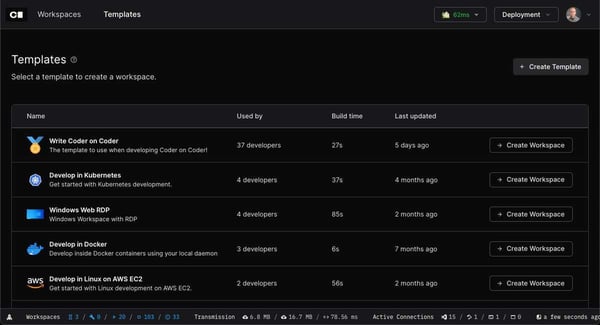
Whereas Coder’s Terraform-based method is a energy for skilled platform groups, it does introduce a studying curve for organizations with out deep infrastructure-as-code experience. G2 reviewers word that preliminary template authoring and workspace configuration assume familiarity with Terraform and container orchestration, which can require further ramp-up time for smaller groups. Nonetheless, as soon as templates are in place, the day-to-day expertise for builders is described as easy and productive.
Throughout many G2 critiques, I additionally observed mentions of documentation gaps for extra superior configurations. Whereas the core documentation covers normal setups nicely, customers engaged on edge instances or complicated workspace builds generally must depend on group sources or direct assist. That stated, reviewers additionally word that the Coder workforce is responsive and actively bettering documentation protection.
At its core, Coder delivers probably the most worth for platform engineering groups that need to standardize, safe, and speed up developer environments throughout their group. Its infrastructure-as-code method and self-hosted deployment mannequin make it particularly compelling for groups that prioritize safety, consistency, and developer productiveness at scale.
What I like about Coder:
- Coder’s Terraform-based workspace templates present constant, reproducible growth environments that remove configuration drift throughout groups and initiatives.
- The self-hosted deployment mannequin offers organizations full management over their supply code and growth infrastructure, which is crucial for groups with strict safety necessities.
What G2 customers like about Coder:
“The most important issue for us is the extensibility. As a result of ultimately it’s ‘simply’ a wrapper round Terraform, we will simply use it throughout completely different platforms: Each VMs and Kubernetes. So it is extraordinarily versatile. In addition to that, the truth that it is self-hosted means it is tremendous simple to make use of with our personal GPUs and {hardware}.”
– Coder evaluate, Alexandre C.
What I dislike about Coder:
- G2 reviewers point out that preliminary setup and template authoring assume a powerful Terraform and container orchestration background, which can be a barrier for smaller groups with out devoted platform engineering sources.
- Some G2 customers word that documentation for superior workspace configurations has gaps, although the Coder workforce is responsive and actively bettering protection.
What G2 customers dislike about Coder:
“The preliminary setup and template authoring can really feel complicated, and it actually assumes a powerful Terraform and Kubernetes background, which can be a barrier for smaller groups. The documentation for extra superior workspace configurations nonetheless has some gaps, and when a workspace construct fails, debugging it may be time-consuming and irritating. A extra guided onboarding expertise would go a good distance towards making the platform simpler to undertake.”
– Coder evaluate, Arshad A.
5. Algolia: Finest for lightning-fast search and product discovery
G2 ranking: 4.5/5
Think about you go to an enormous toy store with 10,000 toys. You need to discover your favourite pink automotive. As an alternative of strolling across the total store in search of it, you ask somebody: “The place is the pink automotive?” They usually discover it for you in only a second!
That is what Algolia does, however for web sites and apps with an AI-powered search and retrieval platform. One factor I observed instantly when studying via Algolia’s G2 critiques is how persistently customers discuss velocity. The platform delivers search outcomes so shortly that a number of reviewers describe it as near-instantaneous, with outcomes showing earlier than customers even end typing their question. For groups constructing customer-facing search experiences, that type of responsiveness immediately impacts consumer satisfaction and conversion charges.
One other energy that comes via clearly is how developer-friendly the platform is. Customers often spotlight the standard of Algolia’s documentation, pre-built UI parts, and well-structured APIs. Builders describe getting a working search prototype up and operating shortly without having to construct a search engine from scratch, which considerably reduces implementation time.
Reliability is one other theme I observed throughout critiques. Customers in manufacturing environments describe Algolia as persistently reliable, with robust uptime and minimal disruptions. For groups the place search is a core a part of their product expertise, that reliability issues as a lot as velocity.
I additionally observed that assist high quality earns optimistic mentions. Reviewers describe responsive, educated assist groups that assist with implementation questions and optimization. For organizations which might be configuring seek for the primary time or fine-tuning relevance for complicated use instances, having accessible assist could make a significant distinction in time-to-value.
Customizable rating and relevance tuning is one other space the place Algolia stands out. Customers describe having the ability to management how search outcomes are prioritized, apply enterprise guidelines, and fine-tune relevance with out deep search infrastructure experience. This flexibility permits groups to tailor the search expertise to their particular product, viewers, and content material construction.
Algolia’s AI capabilities additionally get particular point out in critiques. Some customers spotlight options like dynamic re-ranking, suggestions, neural search, and personalization that enhance the search expertise with out a lot further effort. Others level to AI-driven choices that mix guide merchandising management with pure language administration and automatic relevance. For groups that need to layer intelligence onto search with out giving up management over outcomes, that mixture comes throughout as a transparent energy.
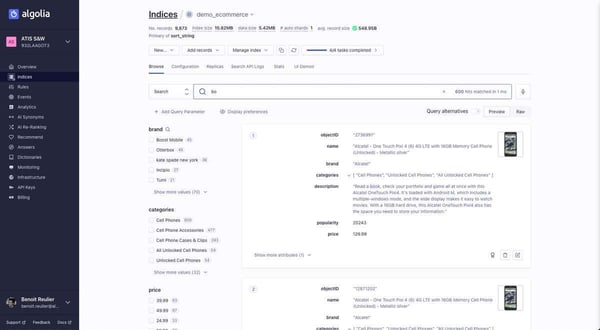
Whereas Algolia delivers robust efficiency and developer expertise, some G2 reviewers point out that pricing can scale shortly as search quantity and file counts develop. For groups managing giant datasets or experiencing speedy site visitors development, it’s value evaluating utilization tiers fastidiously through the planning section. That stated, many reviewers additionally word that the efficiency and reliability justify the funding, notably when search is a revenue-critical operate.
Notable patterns in G2 critiques additionally level to a studying curve when configuring extra superior options like synonyms, {custom} rating formulation, and faceted search. Whereas the essential setup is described as quick and intuitive, unlocking the complete depth of Algolia’s configuration choices can take time for groups with out prior search infrastructure expertise. Nonetheless, the documentation and pre-built parts assist bridge this hole successfully.
For groups that want quick, dependable, and customizable search built-in into their product, Algolia persistently earns reward as a platform that balances energy with developer accessibility. It delivers probably the most worth for product and engineering groups constructing search-driven experiences the place velocity, relevance, and scalability are non-negotiable.
What I like about Algolia:
- Algolia delivers near-instantaneous search outcomes with robust relevance tuning, making it a dependable basis for customer-facing search experiences.
- The developer-friendly documentation, pre-built UI parts, and well-structured APIs considerably cut back implementation time for engineering groups.
What G2 customers like about Algolia:
“The documentation may be very simple to comply with and nicely maintained. Trying to find any service or product is extremely quick, virtually like having your personal private Google. It additionally integrates simply with any software program.”
– Algolia evaluate, Anand R.
What I dislike about Algolia:
- G2 reviewers point out that pricing can scale shortly as search quantity and file counts enhance, making it necessary to guage utilization tiers fastidiously throughout planning.
- Some G2 customers word that configuring superior options like {custom} rating and faceted search entails a studying curve, although the documentation helps bridge this hole.
What G2 customers dislike about Algolia:
“What I dislike about Algolia is that it may get costly as utilization scales, particularly for rising companies coping with giant datasets or excessive search volumes. It additionally takes some technical setup and ongoing configuration to attain the perfect search relevance, which will be troublesome for non-technical customers to handle.”
– Algolia evaluate, Rahul Ok.
6. Purple Panda: Finest without spending a dime AI picture era with textual content rendering
G2 ranking: 4.2/5
What instantly stood out to me about Purple Panda is that it’s fully free and produces HD-quality pictures with out watermarks. For a class the place most picture era instruments lock high quality options behind paid tiers, this accessibility is a serious differentiator. Customers describe it as a software that’s fast to select up, which makes it particularly sensible for quick artistic duties.
I additionally observed that customers spotlight Purple Panda’s velocity. Textual content-to-image era occurs shortly, and reviewers describe having the ability to produce a number of visible choices in speedy succession. For groups or people who want quick visible property for shows, social media, or early-stage design exploration, that turnaround time issues.
One other theme that exhibits up in critiques is the flexibility of use instances. Customers describe producing all the pieces from advertising graphics and presentation visuals to product mockups and academic illustrations. The platform handles a variety of visible kinds, which makes it sensible for various artistic contexts moderately than being restricted to 1 output sort.
Purple Panda’s textual content rendering capabilities are one other level that earns particular point out. In contrast to many AI picture mills that wrestle with legible textual content inside pictures, reviewers describe Purple Panda as notably stronger on this space. Mixed with SVG vector export assist, this makes the software notably helpful for creating graphics that embody readable textual content, logos, or typographic components.
Ease of use got here via clearly as nicely. Reviewers describe typing what they take into consideration and seeing what comes again, and not using a steep studying curve, and a few name the interface clear and intuitive. That low barrier makes it sensible for individuals outdoors design, corresponding to analysts and challenge groups who want visuals for shows, stories, and monetary communications.
Output high quality additionally earns particular reward. Some reviewers point out reasonable, high-resolution outcomes from a easy textual content immediate, with HD downloads that go well with web site designs and challenge visuals. One reviewer provides that the outcomes often want solely minor edits, which retains the trail from immediate to usable asset brief.
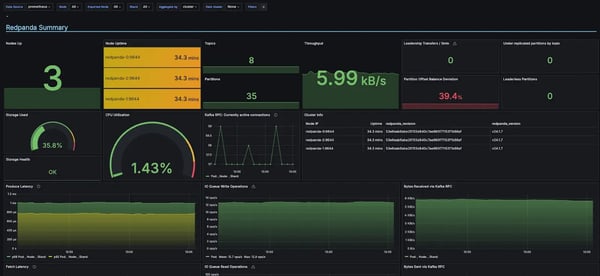
Whereas Purple Panda presents spectacular accessibility and velocity, some G2 customers word that the output doesn’t all the time match their meant imaginative and prescient on the primary try. Producing the precise picture a consumer has in thoughts could require a number of iterations with refined prompts, which is a standard problem throughout AI picture era instruments. Nonetheless, the truth that the platform is free means the price of iteration is actually zero, which offsets this friction.
I additionally observed a couple of reviewers point out that modifying and fine-tuning choices are comparatively restricted in comparison with extra full-featured picture modifying platforms. Customers in search of granular management over particular components inside a generated picture could must export their output and refine it in a separate modifying software. That stated, for customers who want quick, high-quality visible property and not using a complicated modifying workflow, the generated output is usually ample as-is.
What stands out most about Purple Panda is its mixture of zero-cost entry, quick era, and sensible output high quality. For people, small groups, and content material creators who want visible property shortly with out subscribing to a paid picture era service, it presents a remarkably low-friction entry level into AI-powered picture creation.
What I like about Purple Panda:
- Purple Panda is totally free with no watermarks and HD-quality output, making it one of the crucial accessible AI picture era instruments accessible.
- The platform handles textual content rendering inside pictures higher than many opponents and helps SVG vector export, which is beneficial for creating graphics with legible typographic components.
What G2 customers like about Purple Panda:
“It’s so simple to make use of, hassle-free, and simple. Person-friendly; no should be a graphic designer or engineer.”
– Purple Panda evaluate, Amit D.
What I dislike about Purple Panda:
- G2 reviewers point out that generated pictures don’t all the time match the meant imaginative and prescient on the primary try, requiring a number of immediate iterations to attain the specified end result.
- Some G2 customers word that modifying and fine-tuning choices inside the platform are restricted, so customers searching for granular management over particular particulars could must refine outputs in a separate software.
What G2 customers dislike about Purple Panda:
“Typically the photographs do not come out precisely how I anticipated, so I’ve to attempt a couple of occasions to get the end result I would like, and efficiency is gradual. It will even be good to have extra management over the small particulars. Aside from that, it is fairly simple to make use of.”
– Purple Panda evaluate, Dhashwin Ok.
7. Workday Lengthen: Finest for constructing {custom} apps inside the Workday ecosystem
G2 ranking: 4.1/5
For organizations already operating on the Workday platform, Workday Lengthen opens up a layer of customization that the native product doesn’t all the time present. The strongest theme I observed in G2 critiques is the way it permits groups to construct {custom} functions, workflows, and interfaces that tackle particular enterprise necessities with out leaving the Workday ecosystem.
One other space the place Workday Lengthen earns reward is its AI Developer characteristic. Customers describe having the ability to use pure language prompts and AI-assisted growth to construct {custom} apps extra shortly than conventional coding approaches. For HR and IT groups that want {custom} options however do not need deep developer sources, this functionality lowers the barrier to constructing on the Workday platform.
I additionally observed that customers persistently spotlight the benefit of native safety and knowledge integration. As a result of Lengthen functions function inside the Workday safety mannequin and join on to present Workday knowledge objects, groups don’t must handle separate authentication, knowledge syncing, or compliance frameworks. For organizations in regulated industries, this native integration reduces threat and simplifies governance.
Buyer critiques additionally return to the concept Lengthen lets organizations match the software program to their course of moderately than the opposite means round. Reviewers describe constructing {custom} flows for wants Workday doesn’t cowl natively, corresponding to authorized maintain monitoring, a expertise utility, and payroll processes for a union workforce. Some say they really feel restricted extra by their very own concepts than by the product.
The top-user expertise is one other level that surfaced. Reviewers say {custom} pages will be constructed to appear to be the remainder of Workday, with their very own built-in logic, so staff aren’t pushed right into a separate software. For groups rolling out inside apps, that familiarity appears to make new functions simpler for individuals to select up.
Reviewers additionally describe getting began shortly. A number of name the preliminary setup simple and easy, and others say {custom} functions will be created quickly. One reviewer provides that group options assist them get solutions quick, which is beneficial for groups nonetheless discovering their toes with Lengthen growth.
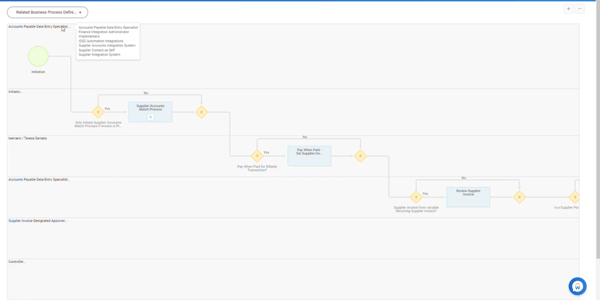
Whereas Workday Lengthen presents significant flexibility, some reviewers word that UI and UX choices can really feel restricted in comparison with absolutely custom-built functions. Customers describe having the ability to construct purposeful options, however the visible design and interplay patterns could not all the time match the precise feel and appear they envision. That stated, the trade-off of native Workday integration and safety usually outweighs the design constraints for many use instances.
Throughout many G2 critiques, I additionally observed that getting probably the most out of Lengthen requires some developer ability or familiarity with the platform’s constructing blocks. Whereas the AI Developer characteristic helps simplify the method, extra complicated functions should demand configuration experience. Organizations that put money into coaching or accomplice with skilled consultants are likely to get stronger outcomes.
Taken collectively, Workday Lengthen is a compelling possibility for enterprises that need to prolong the Workday platform to satisfy distinctive enterprise necessities with out introducing exterior instruments or safety dangers. It delivers probably the most worth for organizations that want {custom} workflows, interfaces, or enterprise processes tightly built-in with their present Workday knowledge and governance mannequin.
What I like about Workday Lengthen:
- Workday Lengthen permits organizations to construct {custom} functions and workflows that tackle particular necessities with out leaving the native Workday ecosystem.
- The AI Developer characteristic helps groups create {custom} options utilizing pure language prompts, reducing the technical barrier for HR and IT groups with out deep developer sources.
What G2 customers like about Workday Lengthen:
“Possibility so as to add new options to Workday. Possibility so as to add performance that’s not available in Workday.”
– Workday Lengthen evaluate, Joshua H.
What I dislike about Workday Lengthen:
- G2 reviewers point out that UI and UX customization choices can really feel restricted in comparison with absolutely custom-built functions, although the native Workday integration usually outweighs the design constraints.
- Some G2 customers word that constructing extra complicated functions could require developer ability or platform experience, although the AI Developer characteristic helps simplify frequent use instances.
What G2 customers dislike about Workday Lengthen:
“Workday Lengthen will be rigid at occasions with UI/UX choices. Nothing prevents constructing a purposeful utility, nevertheless it won’t look precisely how we would like it to.”
– Workday Lengthen evaluate, Sean Ok.
8. Apify: Finest for internet scraping and knowledge extraction at scale
G2 ranking: 4.7/5
The very first thing that drew my consideration to Apify is its Actor market. Customers describe a library of pre-built scrapers and automation instruments masking all the pieces from social media knowledge extraction to e-commerce monitoring, job board scraping, and lead era. As an alternative of constructing scrapers from scratch, groups can deploy a ready-made Actor and begin gathering knowledge inside minutes.
One other theme I observed is how customers describe Apify’s scraping infrastructure as dependable and well-maintained. Reviewers point out built-in proxy administration, automated retries, and structured knowledge output that cut back the operational burden of operating scrapers at scale. For groups that rely on constant knowledge pipelines, this infrastructure reliability is crucial.
I’ve additionally come throughout robust reward for Apify’s MCP and AI-agent integration. Customers operating agentic workflows describe giving their AI coding instruments a single API key that enables the agent to find, configure, and run Actors autonomously. This integration means groups constructing AI-powered knowledge pipelines can use Apify as the info assortment layer with out guide intervention, which is a major benefit for automation-focused workflows.
{The marketplace} mannequin itself is one other energy. Past Apify’s personal Actors, a group of builders maintains and publishes scrapers for particular platforms and use instances. This ecosystem implies that even area of interest knowledge sources usually have an present resolution, and customers can consider group Actors earlier than committing to constructing one thing {custom}.
Apify’s pay-per-use pricing mannequin additionally earns optimistic mentions. As an alternative of committing to a flat subscription no matter utilization, groups pay based mostly on precise compute consumption. For workflows with variable or seasonal knowledge wants, this flexibility helps management prices extra exactly than fixed-tier pricing.
Lastly, scheduling is one other standout in critiques. Reviewers describe setting a job up as soon as and letting it run on a schedule, so recurring knowledge assortment, like weekly analysis or worth monitoring, now not depends upon somebody remembering to do it. A number of additionally point out that failures are flagged with clear particulars, which helps groups catch issues earlier than they quietly corrupt downstream knowledge.
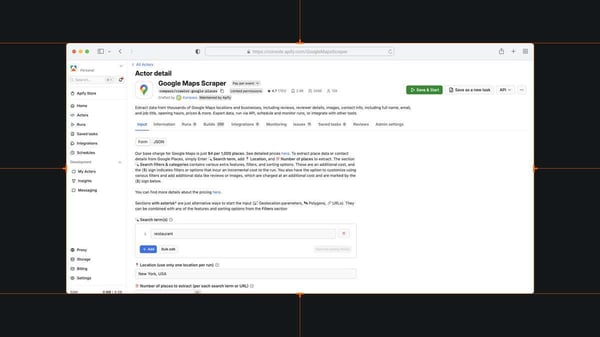
Whereas Apify’s pay-per-use mannequin presents flexibility, some G2 reviewers point out that predicting the precise value of complicated or large-scale runs will be difficult. Since billing relies on compute models, reminiscence allocation, and proxy utilization, groups operating intensive scraping jobs could discover it troublesome to estimate prices forward of time. Nonetheless, many customers additionally word that the platform offers utilization monitoring instruments that assist set spend caps and monitor consumption.
Notable patterns in G2 critiques additionally level to a studying curve when constructing {custom} Actors. Whereas pre-built scrapers are described as simple to deploy, creating {custom} options with particular JSON configurations, proxy settings, and dataset storage requires extra technical depth. For non-technical customers, this ramp-up can really feel steep. That stated, the documentation and group sources assist bridge the hole for groups keen to put money into studying the platform.
Total, Apify delivers probably the most worth for engineering groups, knowledge analysts, and AI-focused organizations that want dependable, scalable internet scraping and knowledge extraction with out constructing infrastructure from scratch. Its Actor market, AI-agent integration, and versatile pricing make it a powerful selection for groups that deal with internet knowledge as a core enter to their merchandise and workflows.
What I like about Apify:
- Apify’s Actor market offers a library of ready-made scrapers that cowl a variety of knowledge sources, permitting groups to begin gathering structured knowledge in minutes moderately than constructing from scratch.
- The MCP and AI-agent integration permits autonomous knowledge assortment inside agentic workflows, making Apify a pure match for groups constructing AI-powered knowledge pipelines.
What G2 customers like about Apify:
“I am a solo full-stack developer, and I’ve used Apify for over a yr to scrape Twitter/X accounts and posts, discover leads on LinkedIn, and run my very own Actor that scrapes Y Combinator jobs and corporations. What I like most is that I may give one Apify API key to my coding agent (Claude Code) and it finds the best Actors within the Retailer and runs them for me. There’s an Actor for nearly something, so I hardly ever construct a scraper from scratch.”
– Apify evaluate, Artem L.
What I dislike about Apify:
- G2 reviewers point out that predicting the precise value of complicated or large-scale scraping runs will be difficult because of the compute-unit-based billing mannequin, although utilization monitoring instruments assist set spend caps.
- Some G2 customers word that constructing {custom} Actors entails a steep studying curve for non-technical customers, although the pre-built market covers many frequent knowledge sources.
What G2 customers dislike about Apify:
“Pricing differs quite a bit between actors (pay-per-event, per end result, compute models), so estimating the month-to-month value takes some effort at first. Some pay-per-event actors even have a minimal cost restrict, and if you happen to set your run funds under it the API rejects the run with a 400 error. This wasn’t apparent till we checked every actor’s pricing particulars. The free plan is sort of restricted for some well-liked actors, so severe use actually wants a paid plan. None of those are deal-breakers, although.“
– Apify evaluate, Esat B.
9. Leo: Finest for AI-powered mechanical engineering workflows
G2 ranking: 4.9/5
Leo addresses an issue I had not seen one other software on this class deal with: making a long time of collected engineering information immediately searchable and actionable. The strongest theme throughout G2 critiques is how the platform connects on toCAD recordsdata and PLM programs, permitting mechanical engineers to look their group’s inside library utilizing pure language moderately than precise half numbers or file names.
One other energy that got here via persistently is the standard and traceability of Leo’s solutions. In contrast to general-purpose AI instruments, Leo is educated on engineering-specific sources, together with requirements, textbooks, and datasheets. Customers describe getting solutions which might be backed by citations they will confirm, which builds the type of belief that engineering groups want earlier than counting on AI output for design selections.
I additionally observed that quick onboarding and time financial savings are recurring themes. A number of reviewers describe reducing their half search time from hours to minutes, and new engineers changing into productive inside days moderately than weeks. For organizations the place senior engineers spend a major period of time answering repetitive knowledge-retrieval questions, this effectivity achieve compounds shortly.
Some customers point out SOC 2 certification and enterprise-grade safety across the PLM knowledge Leo works with. For engineering groups dealing with proprietary design info, that degree of knowledge safety is a vital a part of the analysis.
Some customers additionally point out how Leo handles engineering calculations. They describe it working via mechanical issues like stress, thermal, and fluid evaluation, and infrequently sharing the Python-based logic behind a end result so it’s simpler to confirm. Others say it takes repetitive calculation and search work off their plate, leaving extra time for design selections.
Some customers additionally level to fewer errors and stronger design high quality. Reviewers describe catching potential errors earlier, with one noting that engineers lowered design errors in crucial assemblies by drawing on confirmed calculations and design guidelines from previous initiatives. Others point out extra constant decision-making throughout the workforce, which issues when a single missed element will be expensive.
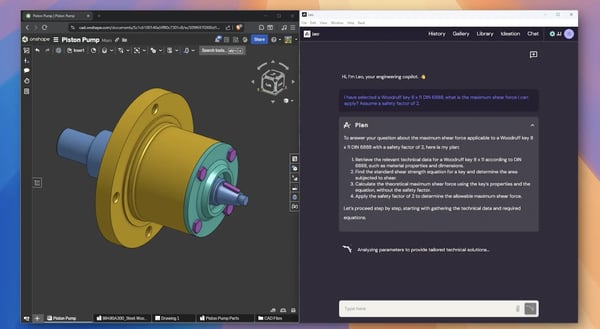
Whereas Leo connects easily with PLM programs as soon as configured, some G2 reviewers word that the preliminary integration setup requires coordination with IT groups. Connecting inside doc repositories, CAD libraries, and PLM environments entails a setup section that depends upon the complexity of the group’s present infrastructure. That stated, reviewers persistently point out that the Leo workforce offers hands-on assist throughout this course of and that the setup goes easily as soon as the coordination is in place.
I additionally observed a couple of critiques mentioning that probably the most highly effective options, together with direct PLM and PDM integration and personal company-wide information bases, are geared towards enterprise-tier pricing. Smaller organizations or particular person engineers could discover the complete characteristic set out of attain. Nonetheless, many customers additionally word that for organizations with giant volumes of engineering knowledge, the ROI from lowered search time and improved information reuse justifies the funding.
For groups that work with complicated assemblies, legacy design knowledge, and engineering requirements day by day, Leo delivers a specialised expertise that general-purpose AI instruments merely can’t match. It’s particularly nicely suited to mid-market and enterprise mechanical engineering organizations that need to make their institutional information searchable, traceable, and actionable.
What I like about Leo:
- Leo connects on to CAD and PLM programs, enabling mechanical engineers to look inside design libraries utilizing pure language moderately than precise half numbers.
- Each reply is backed by cited engineering sources, giving groups the traceability and confidence wanted to behave on AI-generated suggestions in manufacturing environments.
What G2 customers like about Leo:
“I have been utilizing Leo AI for about six months now, and it is minimize down my half search time dramatically. Earlier than, I would spend half a day searching via provider catalogs and our PLM system looking for an present element that met specs. Now I simply describe what I want, and Leo pulls related components from its catalog in minutes. The geometric search is especially helpful when I’ve a CAD mannequin and wish to seek out one thing related we have already certified.
Very simple to implement and combine, particularly contemplating its connection to a PLM system (Windchill), which often takes months to implement”
– Leo evaluate, erga Ok.
What I dislike about Leo:
- G2 reviewers point out that integrating Leo with inside doc repositories and PLM programs requires coordination with IT, although the Leo workforce offers hands-on assist all through the setup course of.
- Some G2 customers word that probably the most superior options, together with direct PLM integration and personal information bases, are geared towards enterprise pricing tiers, which can be out of attain for smaller organizations.
What G2 customers dislike about Leo:
“Getting the combination arrange with our inside doc repositories took a little bit of coordination with IT. It was dealt with easily by the Leo workforce, however it’s value realizing that it requires that preliminary step.”
– Leo evaluate, Yuval F.
Associated: Involved about AI-generated content material accuracy? Take a look at the finest AI detectors for 2027.
10. Phygital Plus: Finest for multi-model AI content material creation in a single workspace
G2 ranking: 4.6/5
What I discovered most compelling about Phygital Plus is the way it brings a number of AI era fashions right into a single, unified workspace. Customers describe gaining access to picture mills, video creation instruments, voice synthesis, and textual content fashions multi function place, which eliminates the necessity to bounce between separate subscriptions and interfaces for various artistic duties.
The node-based workflow interface is one other theme that earns constant reward. Customers describe a visible canvas, much like Figma, the place they will chain completely different AI instruments collectively in a pipeline. For instance, a consumer may refine a immediate with a textual content mannequin, generate a picture with one AI, then flip that picture right into a video with one other, all related visually inside the similar challenge. This method makes complicated multi-step artistic workflows really feel organized and reproducible.
I additionally observed that the platform’s Figma-like interface helps decrease the barrier to entry for designers and creatives who’re already conversant in visible workspace instruments. Reviewers describe the training curve as manageable, and a number of other point out that the interface felt intuitive from the beginning. For customers transitioning from conventional design workflows to AI-assisted content material creation, this familiarity reduces friction.
Affordability in comparison with subscribing to a number of particular person AI instruments is one other optimistic that comes up often. Customers describe the platform’s pricing as aggressive, notably because it consolidates entry to many AI fashions underneath a single subscription moderately than requiring separate funds for every software.
The platform additionally helps multi-channel output, with customers creating content material for social media, advertising campaigns, product visualization, and video manufacturing from the identical workspace. The flexibility to go from idea to closing deliverable with out switching instruments is a workflow benefit that a number of reviewers spotlight.
Time financial savings are one other theme I observed. Some reviewers describe duties that when took hours, like retouching images or producing product movies, now taking a fraction of the time, whereas others level to quick era and fewer back-and-forth between separate instruments. For artistic groups working towards tight timelines, that velocity provides up shortly.
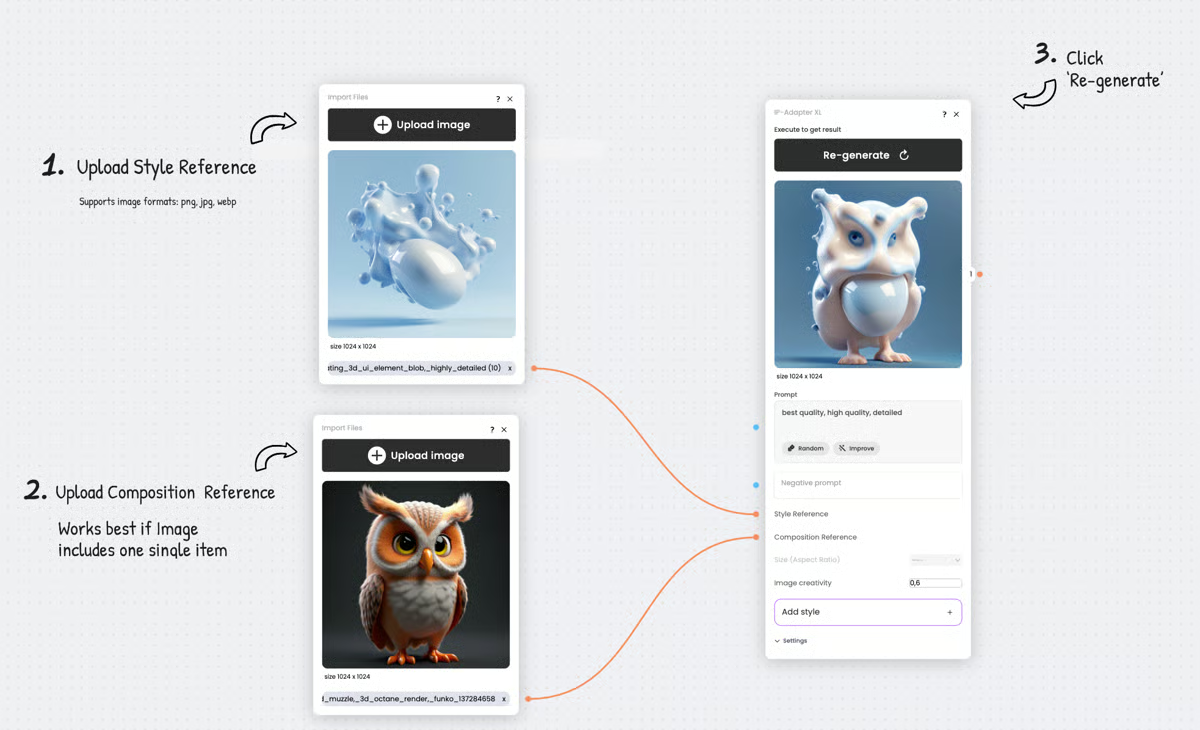
Whereas Phygital Plus presents entry to a variety of AI fashions, some G2 customers word that credit score prices can add up shortly for resource-intensive duties, notably video era. Customers engaged on video-heavy initiatives could must plan their credit score utilization fastidiously or funds for added credit past the bottom subscription. That stated, for image-focused workflows, the included credit are sometimes described as beneficiant and ample.
I additionally observed a couple of reviewers point out that the node-based interface, whereas highly effective, can really feel cluttered or unfamiliar through the first few days of use. Customers coming from easier, prompt-and-generate instruments may have a brief adjustment interval to get comfy with connecting nodes and managing multi-step pipelines. Nonetheless, most reviewers describe this as a short ramp-up that pays off shortly as soon as the workflow turns into acquainted.
On the finish of the day, Phygital Plus is a powerful match for designers, content material creators, and advertising groups that need to consolidate a number of AI era instruments into one visible workspace. Its node-based pipeline method and multi-model entry make it notably compelling for groups producing numerous artistic property throughout picture, video, and textual content at scale.
What I like about Phygital Plus:
- Phygital Plus consolidates entry to a number of AI era fashions, together with picture, video, voice, and textual content, right into a single workspace, eliminating the necessity for separate subscriptions.
- The Figma-like node-based interface permits groups to chain completely different AI instruments into reproducible artistic pipelines, making complicated multi-step workflows really feel organized and visible.
What G2 customers like about Phygital Plus:
“I actually just like the consumer‑pleasant interface of Phygital Plus. It is easy to grasp and feels much like Figma, which I recognize — this similarity made my transition to the software tremendous easy since I used to be already conversant in Figma’s format and logic. I additionally like that each one the AI options can be found in a single place, so I haven’t got to look elsewhere for what I want. That comfort helps me work sooner and extra effectively, and I’ve observed an actual enhance in my productiveness: duties that used to take me hours now get finished in a lot much less time.”
– Phygital Plus evaluate, Evgenia Z.
What I dislike about Phygital Plus:
- G2 reviewers point out that credit score prices for resource-intensive duties, notably video era, can add up shortly past the bottom subscription.
- Some G2 customers word that the node-based interface can really feel cluttered through the first few days, although most discover the workflow intuitive after a brief adjustment interval.
What G2 customers dislike about Phygital Plus:
“I feel it might be improved by including extra options for translating pictures into 3D, particularly with supplies, as a result of proper now 3D objects are simply blanks. I would really like them to have materials. Additionally, working with sound might be higher: I would really like extra variations in voice era and the flexibility so as to add completely different musical compositions, generate music based mostly on some reference.”
– Phygital Plus evaluate, Tatiana M.
Finest rising AI software program: Often Requested Questions (FAQs)
Nonetheless have questions on the perfect rising AI software program? G2 has the solutions.
Q1. Which rising AI software program platforms are most trusted by engineering leaders based mostly on consumer critiques?
Among the many instruments on this record, Coder and Leo stand out for incomes robust belief from engineering-focused groups. Coder is extensively adopted by platform engineering and DevOps leaders who worth its self-hosted, infrastructure-as-code method to managing safe growth environments at scale. Leo has constructed credibility with mechanical engineering leaders particularly, because of its CAD and PLM-aware search that delivers cited, traceable solutions moderately than generic AI output. Algolia additionally earns constant reward from engineering groups for its velocity, reliability, and developer-friendly documentation, making it a trusted layer in manufacturing search infrastructure.
Q2. What’s the highest-rated rising AI software program for groups constructing AI-first product options?
Among the many instruments on this record constructed for AI-first product work, Apify is the best rated at 4.7/5 on G2, adopted by Algolia at 4.5/5 and Coder at 4.3/5. Algolia brings AI-powered search, suggestions, and dynamic re-ranking into customer-facing product experiences with minimal latency. Apify helps AI-first growth by offering structured internet knowledge pipelines that feed into AI brokers, LLM workflows, and enrichment layers via its API and MCP integration. Coder permits groups to construct and check AI-powered options inside safe, reproducible cloud growth environments. The suitable selection depends upon whether or not the precedence is customer-facing intelligence, knowledge infrastructure for AI fashions, or safe growth environments.
Q3. Which rising AI software program instruments present clear value breakdowns and rate-limiting controls?
Value transparency is a recurring theme in G2 critiques throughout a number of instruments on this record. Apify operates on a pay-per-result mannequin with per-call spend caps that permit groups set laborious limits earlier than a run executes. Blotato AI presents flat month-to-month pricing with clear account-level limits on scheduled posts and related accounts, making prices predictable for social media automation. Algolia offers usage-based pricing tied to look requests and data, although reviewers word that prices can scale shortly at larger volumes. For instruments the place pricing is quote-based, corresponding to Leo and Workday Lengthen, groups could need to request detailed breakdowns through the analysis course of.
This fall. What ought to I search for when evaluating rising AI software program for detailed documentation and group examples?
Robust documentation can considerably cut back onboarding time and ongoing troubleshooting effort. Among the many instruments on this record, Algolia is often praised for its clear, well-structured documentation and pre-built frontend parts that assist builders get a working prototype operating shortly. Coder presents thorough reference-style documentation alongside instance templates, although some reviewers word that edge instances may gain advantage from extra sensible examples. Apify offers stable documentation for its API and Actor market. For platforms like Meshy and Purple Panda, which serve extra artistic workflows, the documentation tends to concentrate on immediate steering and export choices moderately than deep technical references.
Q5. Which rising AI software program platforms combination a number of AI fashions like ChatGPT, Claude, picture, and voice era APIs?
Phygital Plus is the clearest instance on this record of a multi-model AI aggregator. It brings collectively picture era, video era, voice synthesis, and textual content fashions right into a single node-based workspace, permitting customers to chain completely different AI instruments inside one challenge with out switching platforms. Blotato AI additionally integrates with AI fashions for content material era and connects to exterior AI workflows via its API and MCP server, although its focus is particularly on social media content material moderately than general-purpose AI aggregation.
Q6. Which rising AI software program instruments embody picture and video era for content material creation?
A number of instruments on this record assist visible content material era, every with a unique focus. Meshy focuses on AI-powered 3D mannequin era, turning textual content prompts and reference pictures into textured, export-ready 3D property for sport growth and prototyping. Purple Panda focuses on text-to-image era with standout capabilities in textual content rendering inside pictures and SVG vector export. Phygital Plus combines picture and video era throughout a number of AI fashions in a single workspace, supporting workflows that chain immediate refinement, picture creation, and video output collectively. Blotato AI additionally helps AI-generated pictures as a part of its social media scheduling workflow, although its major energy is in content material distribution.
Q7. How do I assess API stability in rising AI software program when mannequin suppliers push breaking modifications?
API stability issues most for groups constructing automated workflows that rely on constant outputs. Among the many instruments on this record, Apify handles this nicely by abstracting away the complexity of upstream modifications via its Actor market, the place maintainers replace scrapers when goal web sites change. Algolia maintains a steady, well-documented REST API with versioned endpoints and robust backward compatibility. Coder makes use of Terraform as its infrastructure layer, which offers version-controlled templates that groups can replace and roll again as wanted. For AI era instruments like Meshy and Purple Panda, reviewers advocate constructing in iteration buffers and testing outputs usually.
Q8. Which rising AI software program platforms assist {custom} mannequin fine-tuning for domain-specific duties?
Goal-built area specialization is the place Leo stands out on this record. It makes use of a Giant Mechanical Mannequin educated on over 1,000,000 engineering-specific sources, making it deeply specialised for mechanical engineering moderately than counting on generic LLM output. Workday Lengthen takes a unique method by enabling organizations to construct {custom} functions inside the Workday platform that leverage present Workday knowledge and safety fashions. For groups that want fine-tuning within the conventional machine studying sense, it’s value confirming immediately with distributors whether or not their platform helps that degree of customization.
Q9. How can I keep away from vendor lock-in when selecting rising AI software program that helps a number of mannequin suppliers?
Vendor lock-in threat depends upon how tightly a platform ties your workflows to a single supplier’s infrastructure. Phygital Plus reduces this threat by aggregating a number of AI fashions from completely different suppliers into one workspace, so groups can change between fashions with out rebuilding their pipeline. Coder addresses lock-in on the infrastructure degree by being cloud-agnostic and self-hosted. Apify mitigates lock-in via its open Actor market and normal API. For platforms like Algolia and Blotato AI, evaluating knowledge export choices and API portability through the trial section helps guarantee a transition path exists if wants change.
Q10. Which rising AI software program platforms supply inexpensive free API tiers for proof-of-concept prototyping?
A number of platforms on this record supply accessible entry factors for testing earlier than committing to a paid plan. Purple Panda stands out as a free picture era software with no watermarks and HD-quality downloads, making it one of the crucial accessible choices for fast prototyping, although you will have to create an account to generate your personal pictures. Apify offers a month-to-month free utilization credit score that lets groups check completely different Actors and API workflows with out upfront value. Coder is open supply and will be self-hosted at no licensing value for its group version. Algolia presents a free tier masking a restricted variety of search requests monthly, which is ample for proof-of-concept testing on smaller datasets.
Do not chase the hype, chase the info
On the finish of all this, it’s clear that there isn’t any single winner among the many finest rising AI instruments. The suitable selection relies upon fully on the workflow you are attempting to enhance. A sport developer evaluating 3D asset era has basically completely different wants from a platform engineer standardizing growth environments or a mechanical engineer attempting to make a long time of CAD knowledge searchable.
What I observed throughout all 10 rising AI options is that the strongest ones share a standard sample: they apply AI to resolve a particular, well-defined drawback moderately than attempting to be all the pieces to everybody. The instruments that earn probably the most constant reward in G2 critiques are those that ship clear time financial savings, cut back guide effort, and combine into the workflows groups already depend on.
I’ve additionally observed that AI-agent integration is changing into a significant differentiator. Instruments that assist MCP connections, API-first architectures, and autonomous discovery by AI coding brokers are positioning themselves nicely for the following wave of automated workflows. It is a pattern value watching as groups more and more construct AI pipelines that join a number of specialised instruments collectively.
For groups evaluating rising AI software program, I might advocate beginning with the precise workflow bottleneck you need to resolve, then evaluating how nicely every software addresses that drawback based mostly on verified consumer suggestions. The G2 critiques surfaced on this article supply a sensible place to begin for understanding how these instruments carry out in real-world circumstances moderately than simply in demo environments.
On the lookout for a broader view of the generative AI panorama? We have compiled a listing of the finest generative AI instruments on G2 for straightforward comparability based mostly in your wants.

