Key Takeaways
- Luxor confirmed that simply over a dozen shopper accounts have been affected by unauthorized hashrate redirection by its Commander platform.
- CEO Nick Hansen attributed the compromise to a “subtle AI-enabled vector,” though the corporate has not publicly detailed the mechanism.
- Luxor says it patched the vulnerability inside two hours, prevented knowledge exfiltration and can compensate affected clients for misplaced mining income.
Luxor Breaks Silence on Bitcoin Mining Safety Breach
What initially seemed to be an unverified bitcoin mining hijack has developed right into a confirmed safety incident, with Luxor Know-how acknowledging that attackers redirected mining gear by its Commander administration platform.
In an official assertion issued Sunday, Nov. 15, 2026, Luxor disclosed that inside monitoring programs detected unauthorized modifications to mining pool configurations, prompting a direct engineering response. The workforce wrote:
“Final evening our inside monitoring alerted us to an unauthorized redirect of hashrate by Commander. Our on-call engineering workforce jumped on it immediately.”
In accordance with Luxor, simply over a dozen buyer accounts have been affected, with mining machines briefly redirected to a different pool. The corporate maintains that no info was stolen from its programs.
“Impression: simply over a dozen shopper accounts. Affected machines have been pointed to a special pool for a restricted window. No knowledge was leaked or exfiltrated from our programs,” the workforce disclosed on X.
Luxor defined that its engineers patched Commander inside two hours and commenced restoring affected gear to its unique configurations. The corporate additionally dedicated to reimbursing each affected buyer for the computational energy diverted throughout the incident. “Compensation: each affected shopper shall be paid in full for the redirected hashrate, as if it had mined usually,” Luxor added.
The corporate additional emphasised that the compromise was confined to Commander, with its mining pool and LuxOS firmware remaining unaffected.
CEO Nick Hansen Attributes Compromise to Refined AI-Enabled Assault
Luxor CEO Nick Hansen subsequently supplied a extra private account of the incident, acknowledging the operational disruption and figuring out what he described as a man-made intelligence-assisted intrusion.
“The final 12 hours have been fairly tough,” Hansen wrote. He mentioned the compromise started round 6 p.m. Pacific time Saturday, Nov. 14, affecting a subset of Commander clients. The CEO continued:
“Round 6:00p PDT yesterday, a subset of Commander clients have been compromised, by a complicated AI-enabled vector.”
Though Hansen attributed the intrusion to an AI-enabled methodology, Luxor has not but revealed technical findings establishing exactly how the attackers gained entry or manipulated mining configurations.
Hansen detailed that engineers recognized and patched the difficulty earlier than enterprise the extra laborious technique of restoring affected machines. He additionally apologized to clients and reiterated that Luxor would cowl their losses. He mentioned:
“I apologize. You belief us along with your fleet, and we should be higher.”
The manager additionally remarked that affected clients would obtain further info by electronic mail, whereas Luxor promised a complete autopsy analyzing the incident.
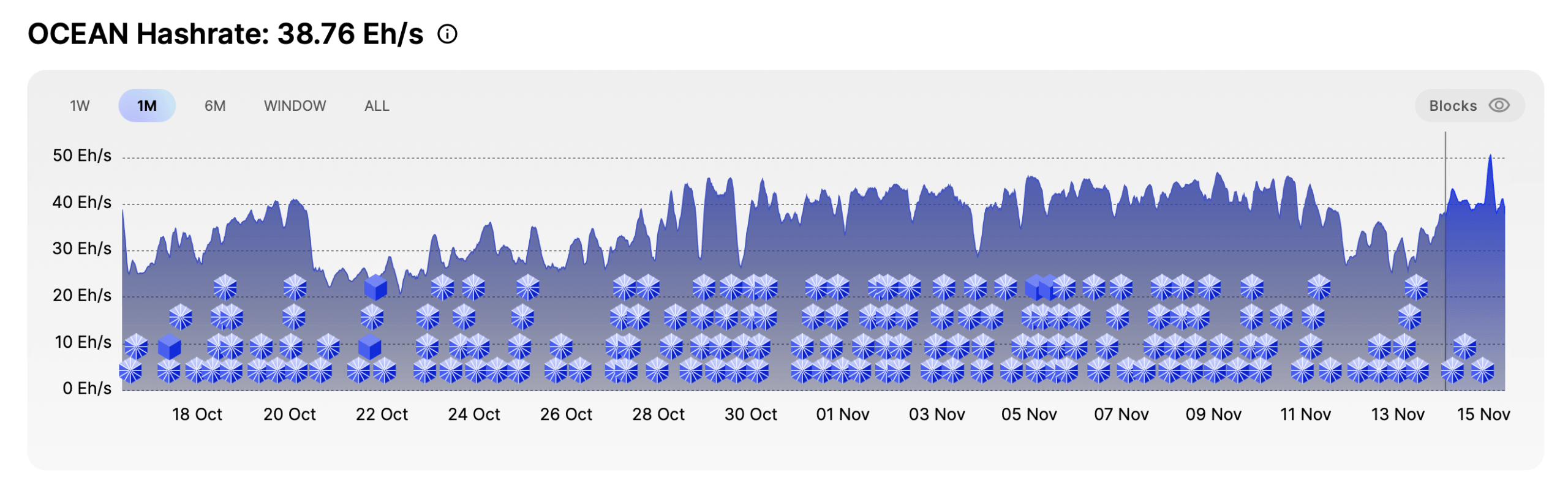
OCEAN Mining Knowledge Reveals Uncommon Hashrate Exercise
Earlier than Luxor’s affirmation, studies circulating late Saturday urged roughly 64,000 mining machines, representing an estimated 13 exahash per second (EH/s), had been redirected towards the Ocean mining pool. These figures stay independently unverified, and Luxor’s disclosure of simply over a dozen compromised accounts doesn’t set up the full variety of affected machines.
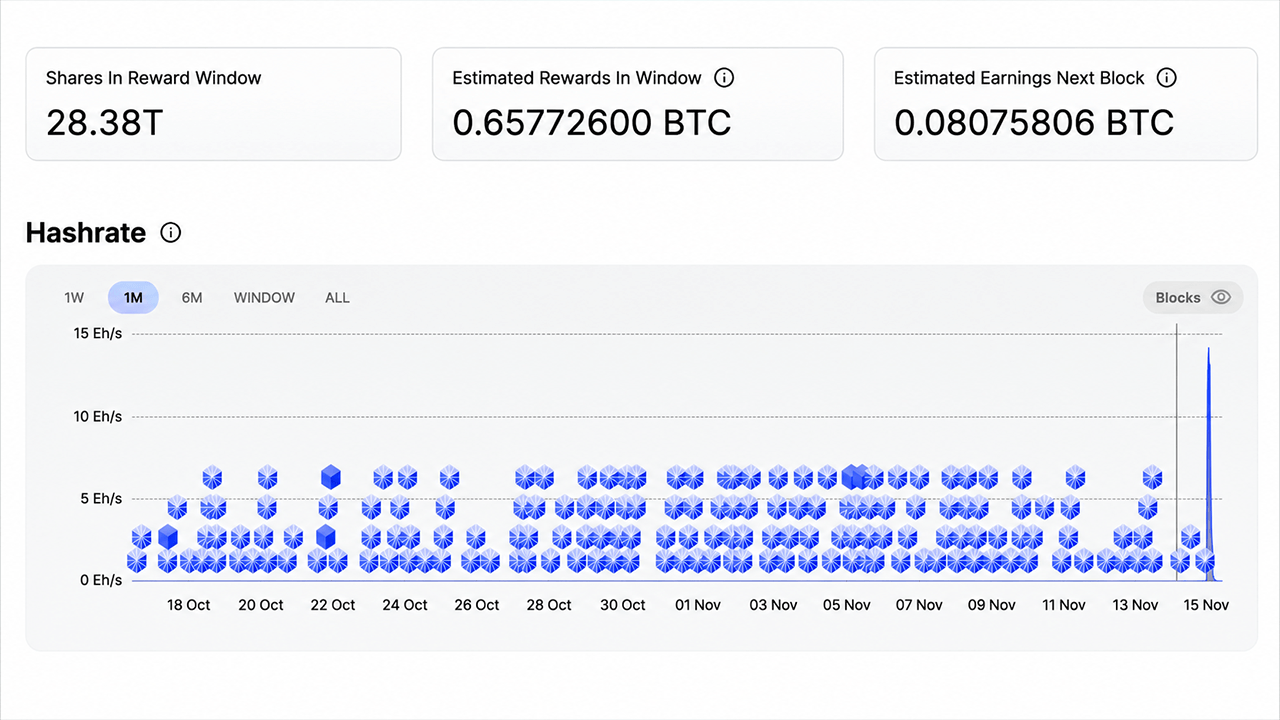
Ocean, a noncustodial Bitcoin mining pool launched in 2023 with monetary backing from Jack Dorsey, permits miners to obtain funds instantly by block coinbase transactions. Its public dashboard confirmed uncommon mining exercise across the reported incident, whereas a suspected vacation spot handle gathered an estimated 0.65761026 BTC in mining rewards.
Mempool.area developer Mononaut noticed:
“Oof, about 0.657 BTC of shares earned from stolen hash, per ocean’s dashboard”
Nonetheless, estimated rewards don’t represent accomplished funds. Accessible blockchain information confirmed no confirmed incoming transactions to the suspected handle, suggesting the operator had not collected bitcoin from the redirected mining exercise.
CoreX Internet hosting, which initially publicized the suspected assault, subsequently reported that the unauthorized hashrate had declined to roughly 100 petahash per second (PH/s).
Luxor’s affirmation resolves the central query of whether or not unauthorized redirection occurred, however vital particulars stay unsettled. The exact variety of affected machines, whole computational energy diverted, and technical mechanics of the alleged AI-assisted compromise await additional disclosure.
For mining operators, the incident illustrates how unauthorized adjustments to fleet configurations can jeopardize income with out requiring attackers to grab cryptocurrency instantly. Luxor’s compensation pledge addresses the rapid monetary penalties, however its forthcoming investigation will face a extra consequential query: how attackers obtained adequate management to redirect industrial mining gear within the first place.