

Groups that run ZoomInfo and HubSpot aspect by aspect often uncover the identical issues inside 1 / 4:
-
contact data enriched in ZoomInfo by no means make it into HubSpot, so reps work from incomplete profiles,
-
lead scores in HubSpot depend on stale firm knowledge becauhubse the CRM and the intelligence platform replace independently,
-
and somebody on the staff is at all times toggling between tabs to piece collectively a prospect’s profile earlier than selecting up the telephone.
Nevertheless the 2 platforms ended up coexisting (a gross sales staff adopting ZoomInfo for prospecting whereas advertising and marketing runs campaigns via HubSpot, or an ops staff layering intelligence knowledge onto a longtime CRM), the longer they function and not using a connection, the broader the hole between what ZoomInfo is aware of and what HubSpot acts on.
Connecting ZoomInfo and HubSpot closes that hole.
Verified contact knowledge, firmographics, technographics, and intent indicators from ZoomInfo stream into HubSpot data so that each rep, marketer, and workflow makes use of the identical knowledge.
New leads captured in HubSpot might be enriched mechanically so scoring fashions and nurture sequences begin with full data quite than no matter a kind subject collected. CRM data keep present as ZoomInfo’s verification course of catches job adjustments, title updates, and firm shifts earlier than they flip into bounced emails and wasted outreach.
ZoomInfo presents a native HubSpot integration via the “ZoomInfo Inbound Enrich” app on the HubSpot Market. For groups that want customized workflows past what the native connector handles, ZoomInfo’s Enterprise API and MCP server present programmatic entry to the identical knowledge.
Third-party automation instruments like Zapier may also bridge particular workflows between the 2 platforms. Every technique differs in setup complexity, knowledge protection, sync path, and value.
This text covers the ZoomInfo-HubSpot integration: which strategies can be found, what knowledge each handles, how you can set them up, the use instances that justify connecting each platforms, and the restrictions to plan for.
Let’s begin with an outline of the mixing.
Integration Overview

Does a local integration exist?
Sure. ZoomInfo presents a local HubSpot integration via the “ZoomInfo Inbound Enrich” app on the HubSpot Market. The combination allows real-time contact enrichment, scheduled database refresh, and lead scoring inside HubSpot’s CRM.
What knowledge can sync?
Contact knowledge (verified enterprise emails, direct-dial telephone numbers, job titles, seniority), firm attributes (income, worker rely, trade, location, technographic profiles), and enrichment attributes (division org charts, firm hierarchy).
ZoomInfo pushes enriched knowledge into HubSpot contact and firm data. Intent and shopping for indicators from ZoomInfo may also floor in HubSpot via the native integration’s workflow triggers.
Is the sync bidirectional?
The first stream is ZoomInfo to HubSpot: ZoomInfo enriches and updates HubSpot data with verified knowledge. HubSpot data (new leads from varieties, imports, or handbook entry) can set off ZoomInfo enrichment mechanically, making a suggestions loop, however the intelligence knowledge flows one path: from ZoomInfo into HubSpot.
Is it real-time or batch?
The native integration helps each. Actual-time enrichment triggers when new contacts or corporations are created in HubSpot. Scheduled database refresh runs on configurable intervals to maintain present data present. Third-party automation by way of Zapier operates in close to real-time (1 to fifteen minutes relying on plan tier).
What are the accessible strategies?
Native ZoomInfo-HubSpot integration, ZoomInfo Enterprise API, ZoomInfo MCP, and third-party automation (Zapier).
|
Technique |
Setup Issue |
Information Circulate |
Actual-time? |
Value |
|---|---|---|---|---|
|
Native Integration |
Low |
ZoomInfo to HubSpot |
Sure (real-time + scheduled) |
Included with ZoomInfo subscription |
|
ZoomInfo Enterprise API |
Excessive |
Customized |
Relies on implementation |
ZoomInfo API package deal + dev time |
|
ZoomInfo MCP |
Medium |
ZoomInfo to any AI agent |
Close to real-time |
Included with eligible ZoomInfo plans |
|
Zapier |
Medium |
One-way per Zap |
Close to real-time (1-15 min) |
From $19.99/mo |
One distinction value settling upfront: the native integration is designed for ongoing enrichment of HubSpot data, each new and present.
Zapier handles event-triggered flows for particular use instances (e.g., pushing a HubSpot kind submission right into a ZoomInfo enrichment workflow), however doesn’t replicate the native integration’s subject mapping depth or scheduled refresh. The API is the one technique with no ceiling on customization, nevertheless it requires growth assets to construct and keep.
Integration Strategies
Native ZoomInfo-HubSpot Integration
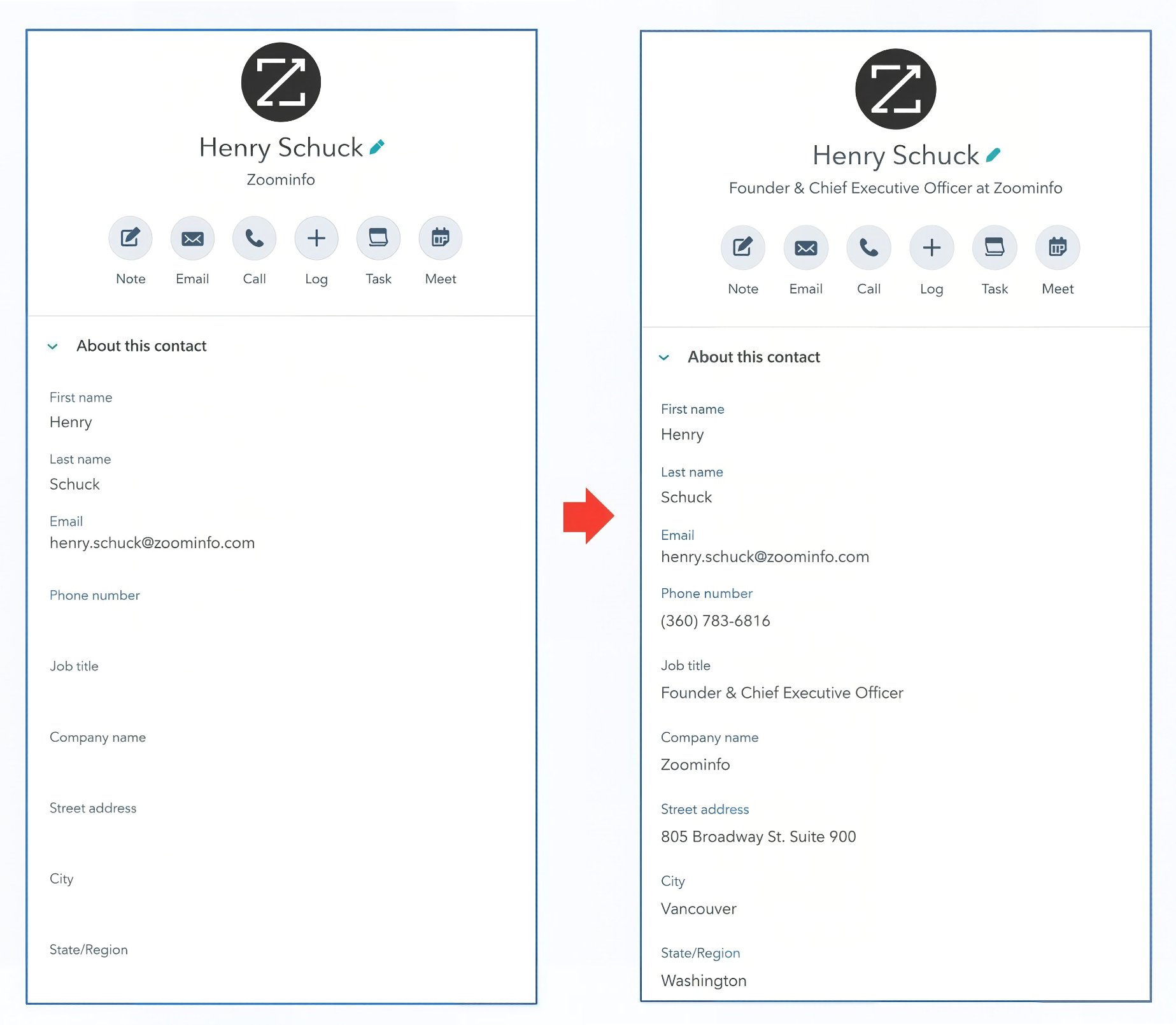
The way it works: The ZoomInfo Inbound Enrich integration connects ZoomInfo to HubSpot’s CRM. When a brand new contact or firm report is created in HubSpot (via a kind submission, import, or handbook entry), ZoomInfo mechanically enriches it with verified knowledge from its B2B database of 500M contacts and 100M corporations.
Supply: ZoomInfo
The combination additionally helps scheduled bulk enrichment to maintain present data present and configurable subject mapping so groups management which ZoomInfo fields write to which HubSpot properties.
What it syncs: Verified enterprise e mail addresses, direct-dial telephone numbers, job titles, seniority ranges, division info, firm firmographics (income, worker rely, trade, location), technographic profiles, and firm hierarchy knowledge.
ZoomInfo’s enrichment updates HubSpot contact and firm properties with these fields, filling gaps in data that arrived with minimal info (e.g., a kind submission with solely identify and e mail).
Matches: ongoing enrichment of latest and present HubSpot data; additionally helps preliminary database cleanup and enrichment.
Setup course of:
-
Configure subject mapping: choose which ZoomInfo knowledge fields map to which HubSpot contact and firm properties. ZoomInfo offers default mappings for traditional fields (e mail, telephone, title, firm identify) and allows you to map further fields to HubSpot customized properties.
-
Set enrichment triggers: select whether or not new data are enriched mechanically on creation, on a scheduled interval, or each. Configure the scheduled refresh frequency for present data.
-
Outline enrichment guidelines: set standards for which data get enriched (e.g., solely contacts with a enterprise e mail area, solely corporations above a sure worker rely) to handle credit score consumption.
Strengths: First-party integration maintained by ZoomInfo and accessible on the HubSpot Market. No third-party middleware to configure or pay for individually. Helps each real-time enrichment of latest data and scheduled refresh of present ones. Discipline mapping is configurable, so groups management what knowledge enters HubSpot. Enriched data feed HubSpot’s workflows, lead scoring, and listing segmentation.
Limitations: The first knowledge stream is ZoomInfo to HubSpot; HubSpot knowledge doesn’t push again into ZoomInfo’s platform. Enrichment consumes ZoomInfo credit, so groups must configure guidelines rigorously to keep away from burning credit on low-value data. Superior use instances (customized enrichment logic, multi-step workflows triggered by ZoomInfo indicators) could require the API.
Finest for: Gross sales and advertising and marketing groups that use HubSpot as their main CRM and wish verified, present contact and firm knowledge of their data with out engineering work.
ZoomInfo Enterprise API
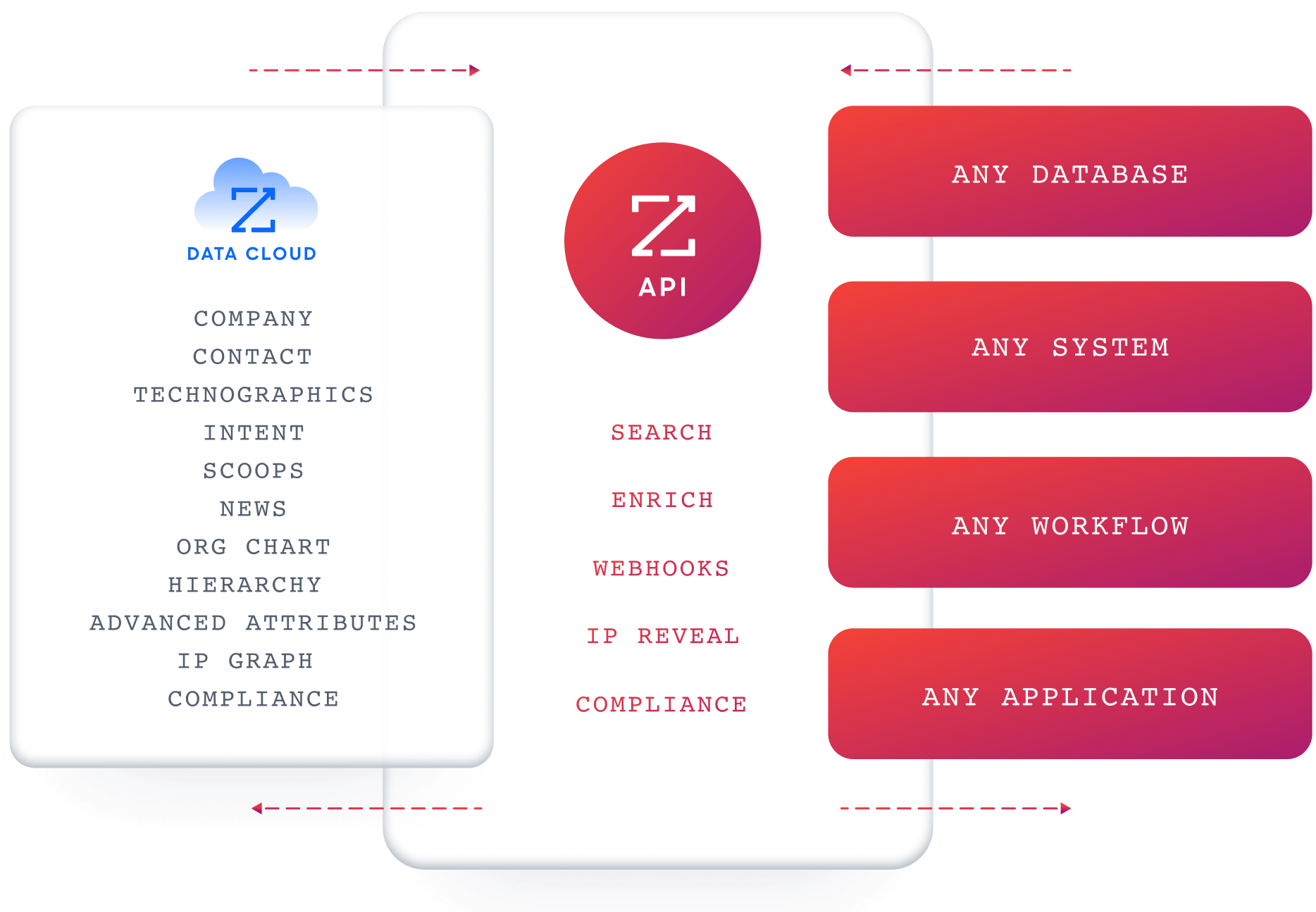
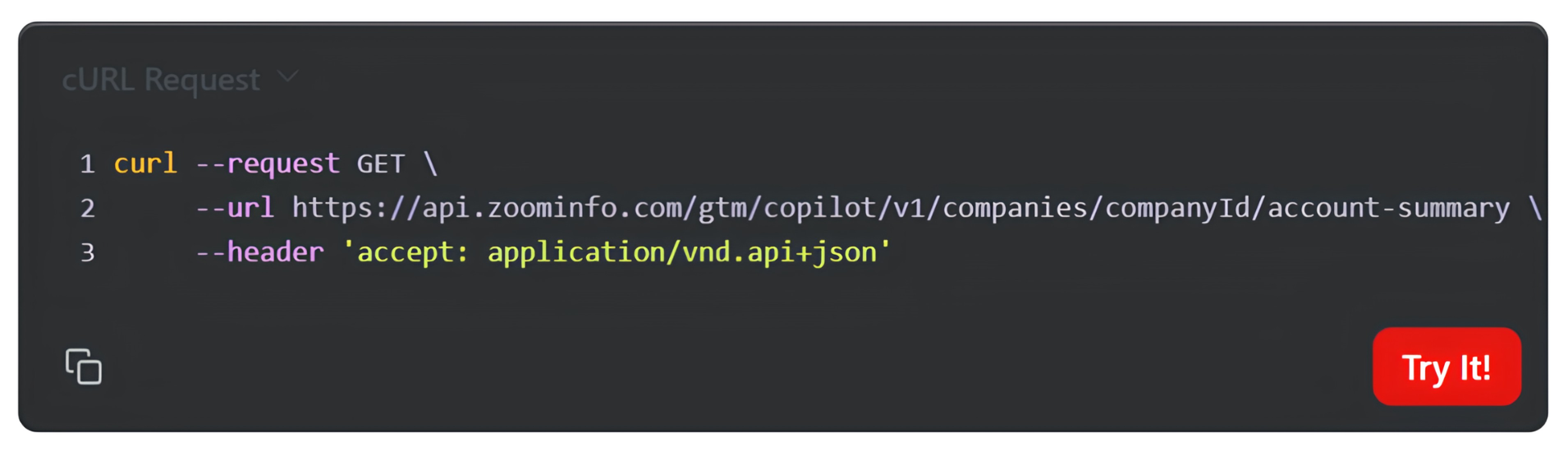
The way it works: ZoomInfo’s Enterprise API offers programmatic entry to ZoomInfo’s B2B knowledge. The API follows a search-then-enrich sample: Search endpoints discover matching data (free, no credit consumed), and Enrich endpoints unlock the information payload (one credit score per new report).
Supply: ZoomInfo
A customized integration connects ZoomInfo’s API to HubSpot’s REST API via middleware dealing with authentication, subject mapping, transformations, and sync scheduling.
What it syncs: Something each APIs expose. On ZoomInfo’s aspect: contacts, corporations, intent knowledge, scoops (management adjustments, funding occasions), technographics, org charts, and company hierarchy.
On HubSpot’s aspect: contacts, corporations, offers, customized objects, and any customized properties. The API additionally offers entry to ZoomInfo’s Copilot API for AI-generated account summaries, firm insights, lookalike enlargement, and speak to suggestions.
Supply: ZoomInfo
Matches: ongoing enrichment, bulk migration, or advanced customized workflows; the one technique with no ceiling on both.
Setup course of:
-
Receive ZoomInfo API credentials via the ZoomInfo Developer Portal. A ZoomInfo admin should assign the DevPortal subscription to any developer earlier than they will entry the portal. Register an software and procure a Consumer ID and Consumer Secret.
-
Arrange HubSpot API entry by creating a personal app in your HubSpot account (Settings > Integrations > Non-public Apps) with scopes for the objects you plan to write down to (contacts, corporations, customized objects).
-
Construct the mixing service: authenticate with each APIs utilizing OAuth 2.0 with PKCE for ZoomInfo and Bearer token for HubSpot. Implement the search-then-enrich workflow towards ZoomInfo’s API, then write enriched knowledge to HubSpot utilizing the CRM Object API.
-
Design the sector mapping and transformation layer. ZoomInfo returns knowledge in JSON:API format; HubSpot’s API makes use of customary JSON. Map ZoomInfo fields to HubSpot properties, together with any customized properties you’ve got created.
-
Implement scheduling, error dealing with, and credit score administration. ZoomInfo enforces charge limits (25 req/sec on Normal tier) and credit are consumed per enriched report. HubSpot enforces its personal charge limits (100-190 requests per 10 seconds relying on plan).
-
Deploy, monitor, and keep. Each APIs evolve independently: HubSpot makes use of date-based API versioning with twice-yearly releases; ZoomInfo’s API is versioned beneath /gtm/knowledge/v1/.
Strengths: Full management over what knowledge flows, when, and the way. Entry to ZoomInfo knowledge the native integration doesn’t expose (intent indicators by matter, scoops, company hierarchy, AI-generated account summaries).
Can implement advanced enterprise logic: enrich solely data matching particular standards, set off HubSpot workflows based mostly on ZoomInfo sign adjustments, or feed enriched knowledge into a number of programs directly. No per-operation charges from a third-party connector.
Limitations: Requires an Enterprise API or Copilot package deal from ZoomInfo, priced individually from customary subscriptions. Requires growth assets to construct and keep. You personal the infrastructure, monitoring, and error restoration. API adjustments on both platform require ongoing upkeep.
Finest for: Enterprise groups with customized enrichment logic, multi-system architectures, or workflow necessities that exceed what the native integration helps. Organizations with in-house growth groups that want ZoomInfo knowledge in HubSpot alongside different programs.
ZoomInfo MCP
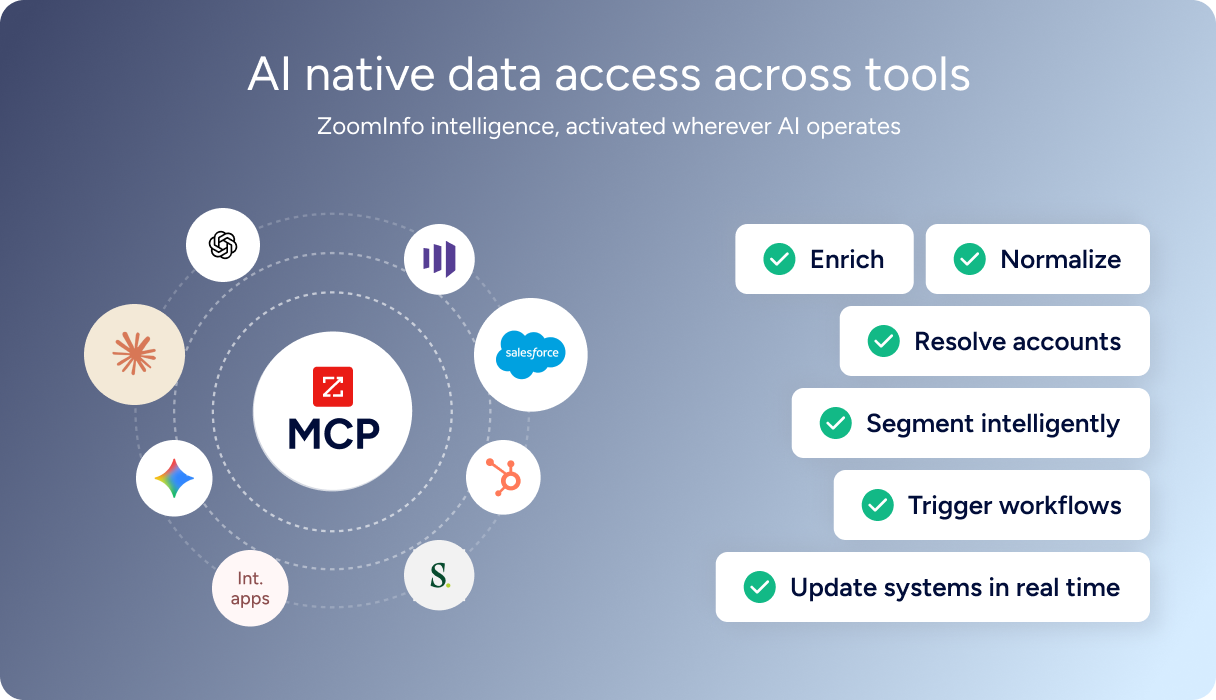
The way it works: ZoomInfo’s Mannequin Context Protocol server connects AI fashions to ZoomInfo’s B2B knowledge as a instrument. The MCP server endpoint at https://mcp.zoominfo.com/mcp exposes ZoomInfo’s search, enrichment, and analysis capabilities to any MCP-compatible AI shopper. Customers work together with ZoomInfo knowledge via pure language, and the AI selects the suitable instrument name mechanically.
Supply: ZoomInfo
For HubSpot integration, AI brokers can pull ZoomInfo knowledge by way of MCP and write it to HubSpot utilizing HubSpot’s distant MCP server or API, creating an AI-driven enrichment pipeline.
What it syncs: The MCP instrument set covers 5 search instruments (Search Firms, Search Contacts, Discover Related Firms, Discover Related Contacts, Discover Really useful Contacts), two enrichment instruments (Enrich Firms, Enrich Contacts), and analysis instruments (Account Analysis, Contact Analysis).
Mixed with HubSpot’s personal MCP server or API entry, an AI agent can search ZoomInfo for contacts matching particular standards, enrich them, and create or replace the corresponding HubSpot data.
Matches: AI-assisted enrichment workflows, advert hoc analysis and CRM updates, or constructing customized AI brokers that orchestrate knowledge between ZoomInfo and HubSpot.
Setup course of:
-
Configure your MCP-compatible AI assistant (Claude, ChatGPT, or one other MCP-compatible instrument) to connect with ZoomInfo’s MCP server at https://mcp.zoominfo.com/mcp. Authentication makes use of OAuth2 together with your ZoomInfo credentials.
-
Outline the workflow in pure language: “Discover the VP of Gross sales at [company], enrich their contact particulars, and create a contact report in HubSpot with their verified e mail and telephone quantity.”
Strengths: No customized code required for fundamental workflows. Pure language interface makes it accessible to non-technical customers. Combines ZoomInfo knowledge with HubSpot CRM operations in a single AI-assisted workflow. Search and similarity operations are free; solely enrichments devour credit.
Limitations: Relies on MCP-compatible AI instruments, that are nonetheless maturing. Not designed for high-volume automated sync (the API is best fitted to that). Enrichment calls devour ZoomInfo knowledge credit; AI analysis calls devour separate AI motion credit. Workflows are conversational quite than scheduled, making this higher for advert hoc analysis than ongoing automated enrichment.
Finest for: Income operations groups and particular person sellers who wish to enrich HubSpot data on demand via AI-assisted workflows with out constructing a customized integration. Groups experimenting with AI brokers for GTM operations.
Zapier
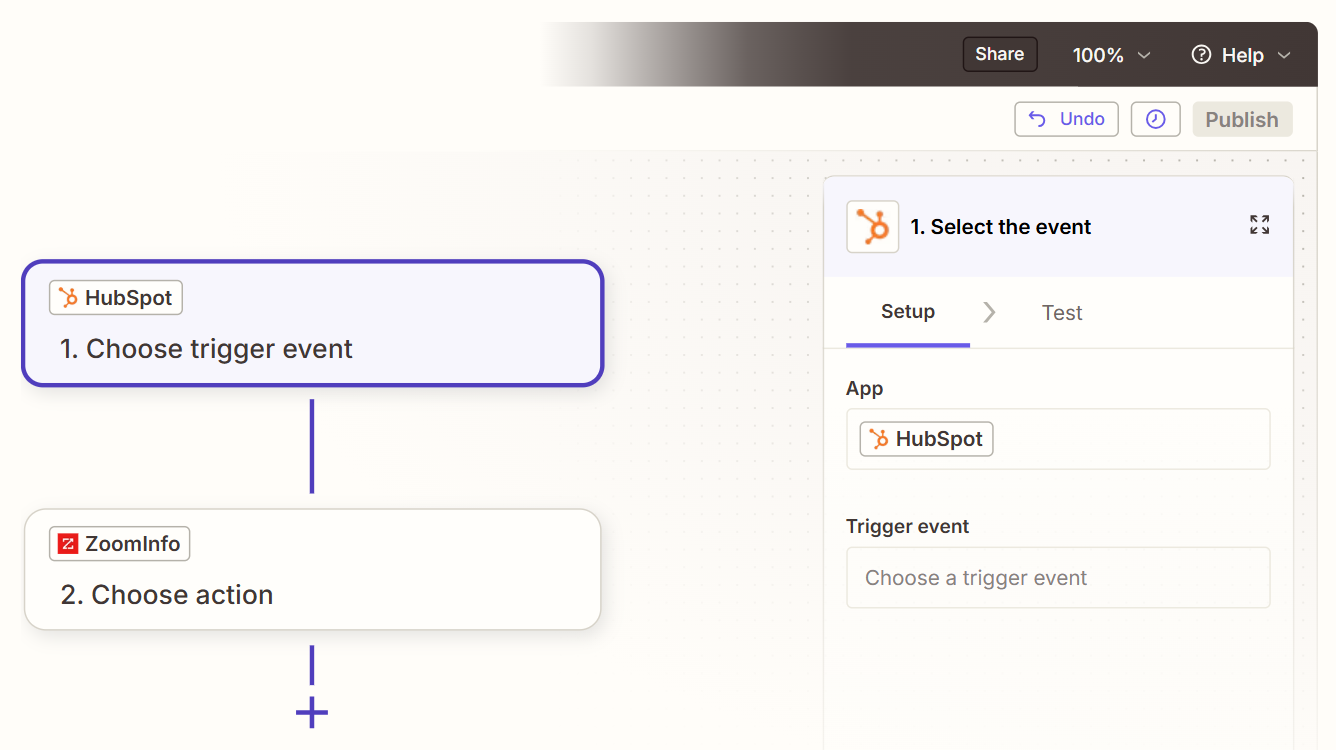
The way it works: Zapier connects ZoomInfo and HubSpot via event-driven automations known as Zaps. Every Zap pairs a set off (an occasion in a single app) with a number of actions (what occurs within the different). Since each ZoomInfo and HubSpot are supported platforms, groups can construct light-weight bridges between particular occasions with out engineering assets.
Supply: Zapier
What it syncs: Relying on accessible triggers and actions, Zapier can push knowledge between the 2 platforms for particular occasions (e.g., when a brand new contact is created in HubSpot, set off a ZoomInfo lookup and replace the report). Discipline mapping is handbook and configurable within the Zap setup stream. Zapier doesn’t replicate the native integration’s subject mapping depth or scheduled bulk enrichment.
Matches: event-triggered workflows for particular use instances; not a substitute for the native integration’s enrichment capabilities.
Setup course of:
Strengths: No engineering assets required. Fast to arrange for easy, single-event workflows. Zapier’s filter and formatting steps can add conditional logic. Can bridge ZoomInfo and HubSpot to be used instances the native integration does not cowl (e.g., triggering a Slack notification when ZoomInfo detects a job change for a HubSpot contact).
Limitations: Every Zap handles one trigger-action pair, so a number of workflows require a number of Zaps (every counting towards your plan’s activity allocation). Doesn’t help scheduled bulk enrichment or the native integration’s subject mapping. Historic data created earlier than the Zap was activated don’t course of. Zapier expenses by activity rely, and high-volume workflows accumulate prices shortly.
Finest for: Small groups that want a light-weight bridge between ZoomInfo and HubSpot for a selected workflow the native integration does not cowl. Groups already utilizing Zapier for different automations who wish to add a ZoomInfo-HubSpot connection and not using a separate instrument.
Key Use Instances
1. Inbound Lead Enrichment for Quicker Qualification
A prospect fills out a HubSpot kind with their identify, e mail, and firm. The native ZoomInfo integration enriches the report with verified telephone quantity, job title, seniority degree, division, firm income, worker rely, and trade. HubSpot’s lead scoring mannequin has sufficient knowledge to attain the lead precisely, and the SDR who picks up the report has a whole profile with out handbook analysis.
Finest integration technique: Native ZoomInfo-HubSpot integration (real-time enrichment set off on new contact creation).
2. Database Cleanup and Ongoing Hygiene
A advertising and marketing staff inherits a HubSpot database with 50,000 contacts, many with incomplete or outdated info. The native integration’s scheduled refresh enriches present data in bulk, filling in lacking fields and updating stale knowledge (job adjustments, new telephone numbers, firm updates). Going ahead, the scheduled refresh retains the database present with out handbook intervention.
Finest integration technique: Native ZoomInfo-HubSpot integration (scheduled database refresh).
3. Account-Primarily based Advertising with Intent-Pushed Concentrating on
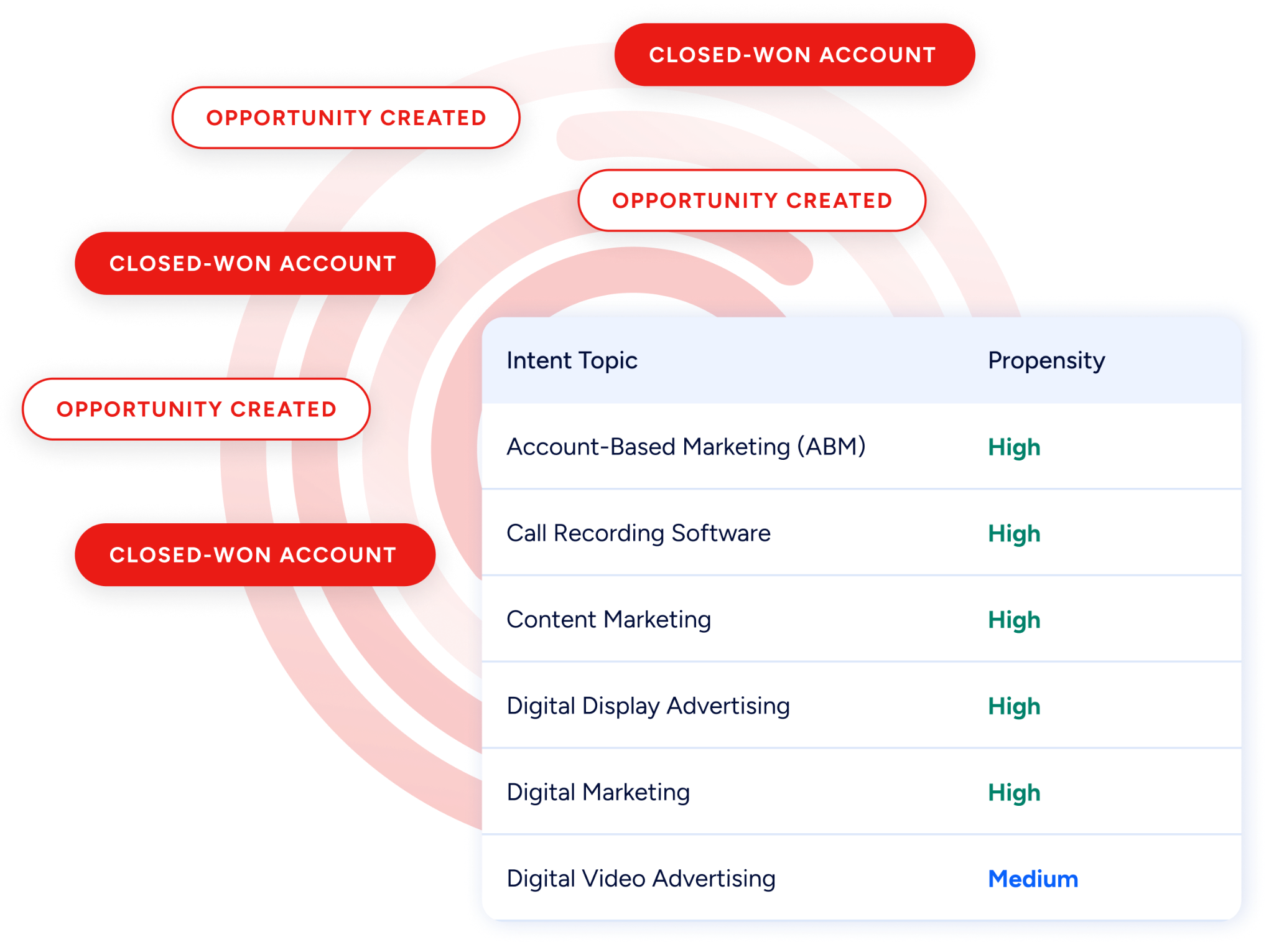
A advertising and marketing staff makes use of ZoomInfo’s Purchaser Intent knowledge to determine accounts actively researching options of their class. Intent indicators stream into HubSpot, the place they set off advert campaigns, e mail sequences, and SDR outreach. ZoomInfo’s intent knowledge and HubSpot’s advertising and marketing automation collectively create a closed-loop ABM workflow.
Supply: ZoomInfo
Finest integration technique: Native integration for contact and firm enrichment, supplemented by the ZoomInfo API for intent sign knowledge if the native connector doesn’t floor the precise intent fields wanted.
4. AI-Assisted Prospecting and CRM Updates
A vendor making ready for a name makes use of an AI assistant related to each ZoomInfo (by way of MCP) and HubSpot (by way of its MCP server) to analysis the account, pull the newest shopping for committee knowledge from ZoomInfo, and replace the HubSpot contact data with verified particulars. The AI handles the analysis, enrichment, and CRM replace in a single conversational workflow.
Finest integration technique: ZoomInfo MCP mixed with HubSpot’s distant MCP server.
5. Multi-System Information Orchestration
An enterprise RevOps staff wants ZoomInfo knowledge flowing into HubSpot, Salesforce, and an information warehouse concurrently.
A customized integration constructed on ZoomInfo’s Enterprise API enriches data and distributes them to HubSpot by way of its API, whereas the identical knowledge feeds the warehouse and different programs via parallel pipelines. Enterprise logic within the middleware determines which data go the place based mostly on territory guidelines and account possession.
Finest integration technique: ZoomInfo Enterprise API with customized middleware.
Limitations and Issues
Credit score Consumption and Value Administration
ZoomInfo makes use of consumption-based pricing: every new report enriched consumes one credit score. Groups that join ZoomInfo to HubSpot with out configuring enrichment guidelines can burn via credit on low-value data (generic e mail domains, duplicate entries, contacts exterior the goal market).
Establishing filters within the native integration (e.g., solely enrich contacts with company e mail domains, solely enrich corporations above a sure worker rely) is important for managing prices.
Discipline Mapping Complexity
HubSpot and ZoomInfo construction knowledge in another way. ZoomInfo’s contact data embody fields (seniority degree, administration degree, division org charts) that haven’t any default HubSpot properties. Groups must create customized properties in HubSpot to obtain these fields and configure the mapping within the integration settings. Misconfigured mappings may end up in knowledge touchdown within the incorrect fields or being dropped totally.
One-Directional Information Circulate
The native integration flows from ZoomInfo to HubSpot. HubSpot deal knowledge, lifecycle phases, and customized properties don’t push again into ZoomInfo. Groups that need ZoomInfo’s AI capabilities (by way of GTM Workspace or GTM Studio) to replicate the newest HubSpot deal context want to make use of ZoomInfo’s CRM sync options inside these merchandise individually from the HubSpot Market integration.
API Charge Limits on Each Sides
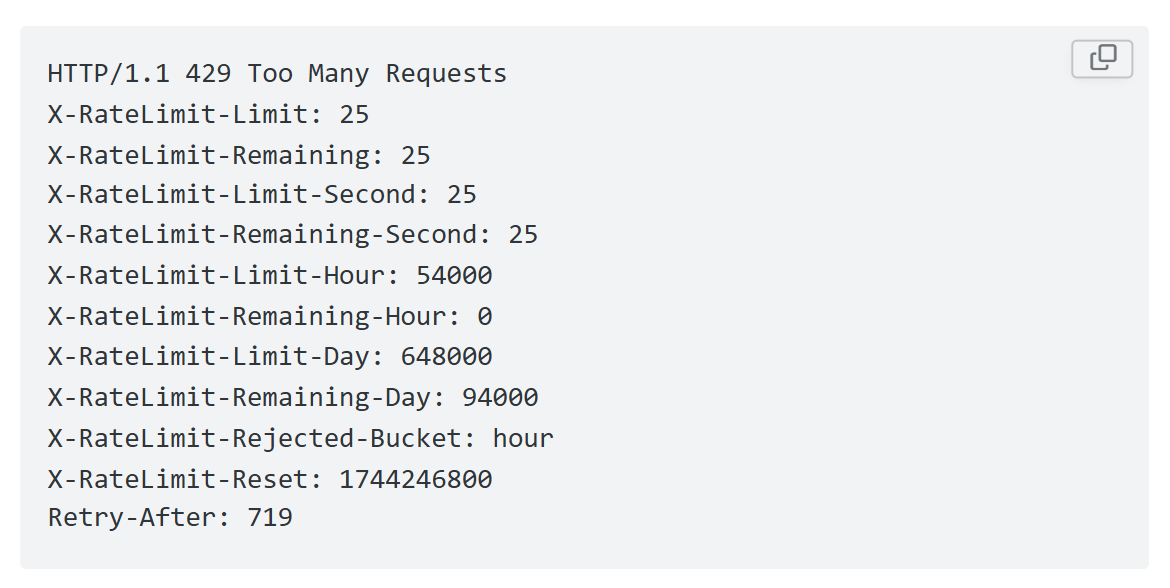
Customized API integrations should respect charge limits from each platforms. ZoomInfo enforces tiered charge limits (25 req/sec on Normal, 35 req/sec on Scaling). HubSpot enforces charge limits of 100 to 190 requests per 10 seconds relying on plan tier and app kind, plus every day limits (250,000 to 1,000,000 requests per day). Excessive-volume enrichment runs should be throttled to remain inside each platforms’ limits.
Supply: ZoomInfo
Permissions and Entry
Establishing the native integration requires admin entry on each side. In ZoomInfo, an administrator should configure the HubSpot connection within the integrations settings. In HubSpot, account admin rights are wanted to put in Market apps and authorize OAuth connections.
For the Enterprise API, a ZoomInfo admin should assign DevPortal entry to builders. HubSpot’s field-level safety and customized property permissions should additionally permit the mixing to write down to the supposed fields.
Upkeep
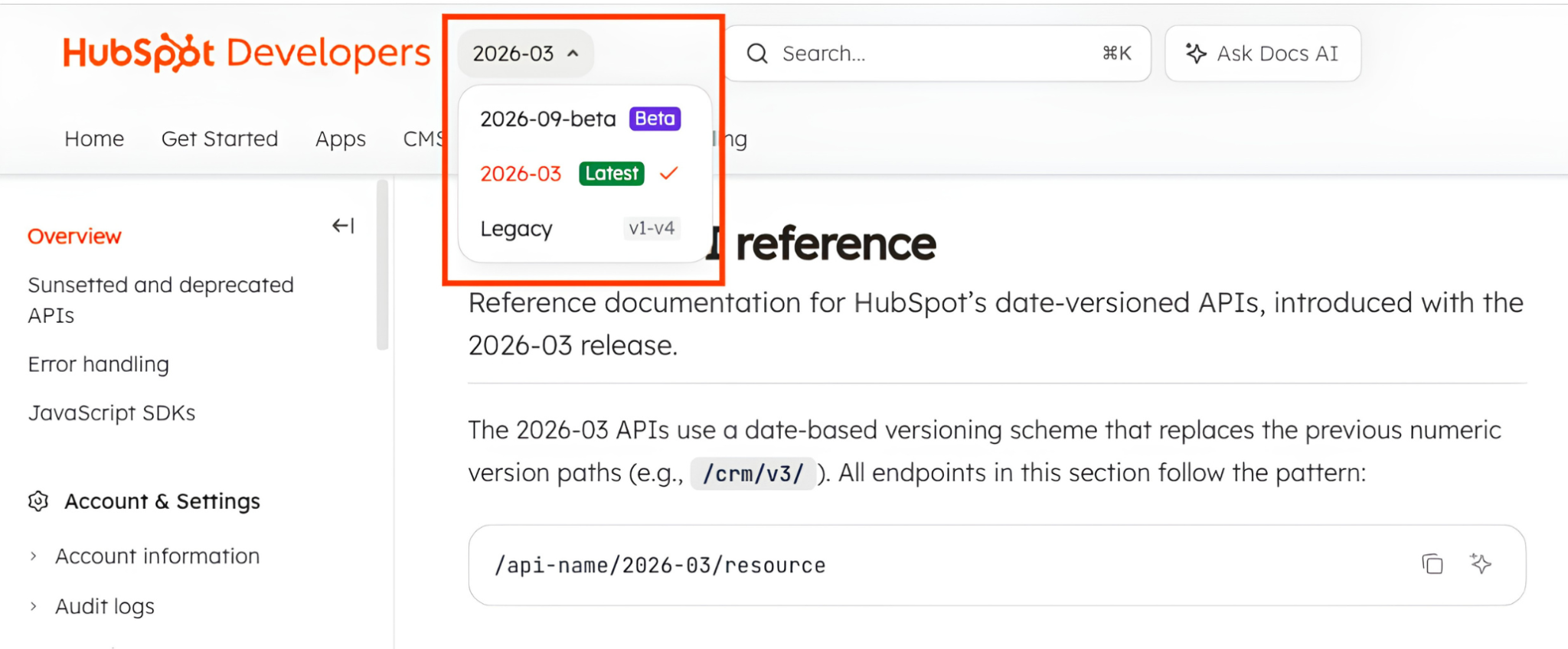
Each platforms evolve independently. HubSpot makes use of date-based API versioning with new variations in March and September, every supported for 18 months. ZoomInfo’s API is versioned beneath /gtm/knowledge/v1/ and the platform continues to increase its knowledge mannequin.
Supply: Hubspot
Customized API integrations require periodic upkeep as endpoints, authentication flows, or knowledge schemas change. The native integration is maintained by ZoomInfo and updates mechanically, decreasing this burden for groups utilizing the Market app.
Closing Verdict
A local ZoomInfo-HubSpot integration exists and handles the most typical use case: enriching HubSpot CRM data with ZoomInfo’s verified B2B knowledge. The correct alternative is determined by the complexity of the staff’s knowledge workflows and the way a lot customization they want.
-
Gross sales and advertising and marketing groups that need verified, present contact and firm knowledge in HubSpot with out engineering work ought to begin with the native integration. It covers real-time enrichment of latest data, scheduled refresh of present ones, and configurable subject mapping, all put in from the HubSpot Market in minutes.
-
Groups that want ZoomInfo’s intent indicators, AI-generated account intelligence, or customized enrichment logic inside HubSpot ought to construct a customized integration utilizing ZoomInfo’s Enterprise API. That is the one technique that exposes the depth of ZoomInfo’s knowledge and intelligence, nevertheless it requires growth assets and ongoing upkeep.
-
Groups exploring AI-assisted workflows ought to join each platforms by way of their MCP servers. This method fits advert hoc analysis and enrichment quite than high-volume automated sync, nevertheless it lets particular person sellers and ops groups orchestrate knowledge between ZoomInfo and HubSpot via pure language.
Earlier than committing to a way, make clear what knowledge must stream and the way usually.
If the objective is protecting HubSpot data enriched with verified contact and firm knowledge, the native integration handles it out of the field. If the objective is an intelligence layer the place ZoomInfo’s intent indicators, shopping for committee knowledge, and account analysis drive HubSpot workflows, the API provides you the depth the native connector doesn’t.
Both manner, the mixing connects HubSpot’s CRM and automation capabilities to ZoomInfo’s database of 500M contacts, 100M corporations, 135M+ verified telephone numbers, and 200M+ verified enterprise emails, verified by 300+ human researchers and reaching as much as 95% accuracy on first-party knowledge. The CRM turns into the execution layer; ZoomInfo offers the intelligence.
FAQ
Does ZoomInfo combine natively with HubSpot?
Sure. ZoomInfo presents the “ZoomInfo Inbound Enrich” app via the HubSpot Market. The combination allows real-time contact enrichment when new data are created in HubSpot, scheduled bulk enrichment to maintain present data present, and configurable subject mapping that controls which ZoomInfo knowledge factors write to which HubSpot properties.
The native integration is included with a ZoomInfo subscription and requires admin entry on each platforms to arrange.
What knowledge does the ZoomInfo-HubSpot integration sync?
The native integration pushes verified contact knowledge (enterprise emails, direct-dial telephone numbers, job titles, seniority, division) and firm knowledge (firmographics together with income, worker rely, trade, location, plus technographic profiles) from ZoomInfo into HubSpot contact and firm data.
The combination fills gaps in data that arrived with minimal info and updates present data as ZoomInfo’s verification course of detects adjustments.
Does the mixing work in each instructions?
The first stream is ZoomInfo to HubSpot. ZoomInfo enriches HubSpot data with verified knowledge, however HubSpot deal phases, lifecycle knowledge, and customized properties don’t push again into ZoomInfo via the native integration. HubSpot occasions (new contact created, kind submitted) can set off ZoomInfo enrichment, making a suggestions loop, however the intelligence knowledge flows in a single path.
How does the mixing deal with ZoomInfo credit?
Every new report enriched via the mixing consumes one ZoomInfo credit score. Groups ought to configure enrichment guidelines to handle credit score consumption: limit enrichment to contacts with company e mail domains, filter by firm measurement or geography, and set thresholds for which data are value enriching.
Scheduled bulk refresh additionally consumes credit for every report up to date, so refresh frequency and scope ought to match the staff’s credit score funds.
Can I exploit ZoomInfo’s intent knowledge in HubSpot?
Intent indicators from ZoomInfo might be surfaced in HubSpot, although the depth of intent knowledge accessible via the native integration could differ.
For groups that want ZoomInfo’s full intent intelligence (topic-level analysis indicators from 210 million IP-to-Group pairings) driving HubSpot workflows, the Enterprise API offers essentially the most full entry. Intent knowledge might be written to HubSpot customized properties and used to set off workflows, replace lead scores, or section lists.
What HubSpot plan do I want for the mixing?
The native ZoomInfo integration is offered via the HubSpot Market and works with HubSpot’s paid plans.
HubSpot’s API entry (which customized integrations rely on) is offered throughout all tiers however with totally different charge limits: Free and Starter plans permit 250,000 API calls per day, Skilled permits 625,000, and Enterprise permits 1,000,000. The native Market integration doesn’t require API configuration on the HubSpot aspect.
How does ZoomInfo examine to HubSpot’s built-in knowledge enrichment?
HubSpot’s Good CRM consists of native AI enrichment that pulls knowledge from e mail threads, calls, and HubSpot’s personal dataset. ZoomInfo operates at a distinct scale: 500M contacts, 100M corporations, 135M+ verified telephone numbers, and 200M+ verified enterprise emails, verified by 300+ human researchers.
HubSpot’s enrichment works properly for knowledge captured via platform interactions, whereas ZoomInfo offers third-party intelligence on contacts and firms the CRM has by no means touched. The 2 are complementary quite than competing. For a deeper have a look at how the 2 platforms stack up general, see our HubSpot vs ZoomInfo comparability.
Can I join ZoomInfo to HubSpot via an AI assistant?
Sure. ZoomInfo’s MCP server and HubSpot’s distant MCP server each help connections from MCP-compatible AI assistants like Claude and ChatGPT.
An AI assistant related to each platforms can search ZoomInfo for contacts or corporations, enrich data, and create or replace the corresponding HubSpot data via pure language instructions. This method fits advert hoc analysis and particular person report updates quite than high-volume automated enrichment.
Construct out your HubSpot stack:

