

Groups that run Pipedrive and HubSpot facet by facet often hit the identical issues inside 1 / 4:
-
contacts exist in each CRMs with conflicting particulars, as a result of reps replace one system however not the opposite,
Nevertheless the 2 platforms ended up coexisting (separate departments selecting completely different instruments, a partial migration that stalled, or an acquisition that introduced a second CRM into the stack), the longer each run independently, the broader the hole grows and the more durable it turns into to belief both system as a supply of fact.
Connecting Pipedrive and HubSpot eliminates that hole.
Contacts created in a single system seem within the different so each rep and marketer works from the identical report. Offers replace throughout each CRMs so pipeline experiences keep correct with out guide reconciliation. Exercise historical past follows the report, so a handoff between a gross sales crew in Pipedrive and a advertising crew in HubSpot doesn’t imply shedding context.
A local integration exists: HubSpot presents an app within the Pipedrive Market that syncs information bidirectionally between the 2 platforms. Third-party automation instruments (Zapier, Make) and devoted sync providers like Outfunnel also can bridge the 2 CRMs with completely different ranges of knowledge protection and management.
Customized API growth is another choice, since each platforms expose full REST APIs. Every technique differs in setup complexity, sync route, information protection, and price.
One downside no connection technique solves: the sync strikes data between programs, nevertheless it doesn’t confirm, full, or enhance the info inside them.
That’s the place ZoomInfo is available in. ZoomInfo integrates natively with each HubSpot and Pipedrive, and presents API and MCP entry that may feed verified, enriched information into both CRM. Each programs then sync data which might be correct and full earlier than they ever journey by the connector.
This text covers the total panorama of the Pipedrive-HubSpot integration: which strategies can be found, what information each handles, set them up, the use circumstances that justify connecting each CRMs, and the constraints to plan for. It additionally covers how ZoomInfo matches into the image as a knowledge enrichment layer for each platforms.
Let’s begin with an outline of the combination.
Integration Overview
Supply: Pipedrive
Does a local integration exist?
Sure. HubSpot presents an app out there within the Pipedrive Market that gives bidirectional sync between the 2 platforms. Third-party connectors like Outfunnel additionally supply devoted Pipedrive-HubSpot sync with advertising engagement information.
What information can sync?
Contacts, firms/organizations, offers/alternatives, actions, and notes. The particular objects supported rely on the tactic. The native HubSpot app handles core CRM objects bidirectionally. Third-party automation instruments deal with particular person object syncs per workflow. Customized API builds can sync something each platforms expose.
Is the sync bidirectional?
It may be. The native integration helps bidirectional sync. Zapier defaults to one-way sync per Zap (bidirectional requires two Zaps with loop prevention). Outfunnel helps configurable sync route. Customized API integrations can implement any sync sample.
Is it real-time or batch?
The native integration syncs on a schedule. Zapier triggers inside 1 to fifteen minutes of an occasion relying on plan tier. Make eventualities can run on triggers or configurable schedules. Customized API integrations can obtain close to real-time sync by webhooks on each platforms.
What are the out there strategies?
Native HubSpot app (by way of Pipedrive Market), third-party automation (Zapier, Make), devoted sync instruments (Outfunnel), and customized API growth.
|
Methodology |
Setup Problem |
Information Movement |
Actual-time? |
Price |
|---|---|---|---|---|
|
Native (HubSpot App) |
Low |
Bidirectional |
Scheduled |
Included with each platforms |
|
Zapier |
Low |
One-way per Zap |
Close to real-time (1-15 min) |
From $19.99/mo |
|
Outfunnel |
Medium |
Configurable |
Scheduled |
From $29/mo |
|
Make (Integromat) |
Medium |
Configurable per state of affairs |
Close to real-time or scheduled |
From $10.59/mo |
|
Customized API |
Excessive |
Totally customizable |
Actual-time by way of webhooks |
Developer time + internet hosting |
One distinction price settling upfront: Zapier and Make solely act on new occasions after activation, making them ongoing-sync instruments somewhat than migration instruments. The native HubSpot app and Outfunnel deal with each preliminary historic sync and ongoing updates in a single setup. Customized API builds don’t have any ceiling on both.
Integration Strategies
Native HubSpot App (by way of Pipedrive Market)
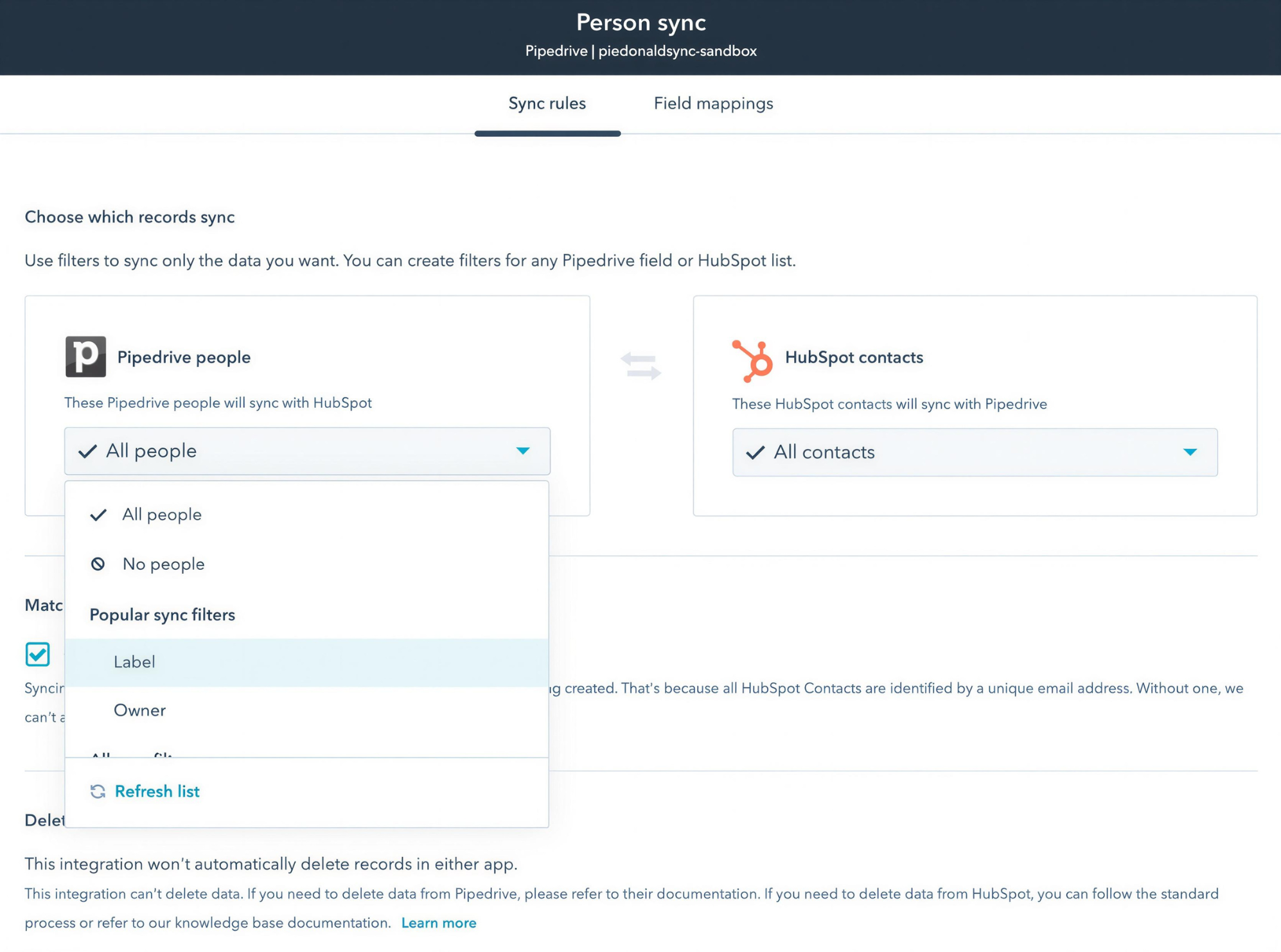
The way it works: HubSpot presents a local integration app listed within the Pipedrive Market that connects the 2 platforms immediately. The app syncs core CRM information bidirectionally, preserving contacts, firms, offers, and actions aligned with no third-party device.
Supply: Pipedrive
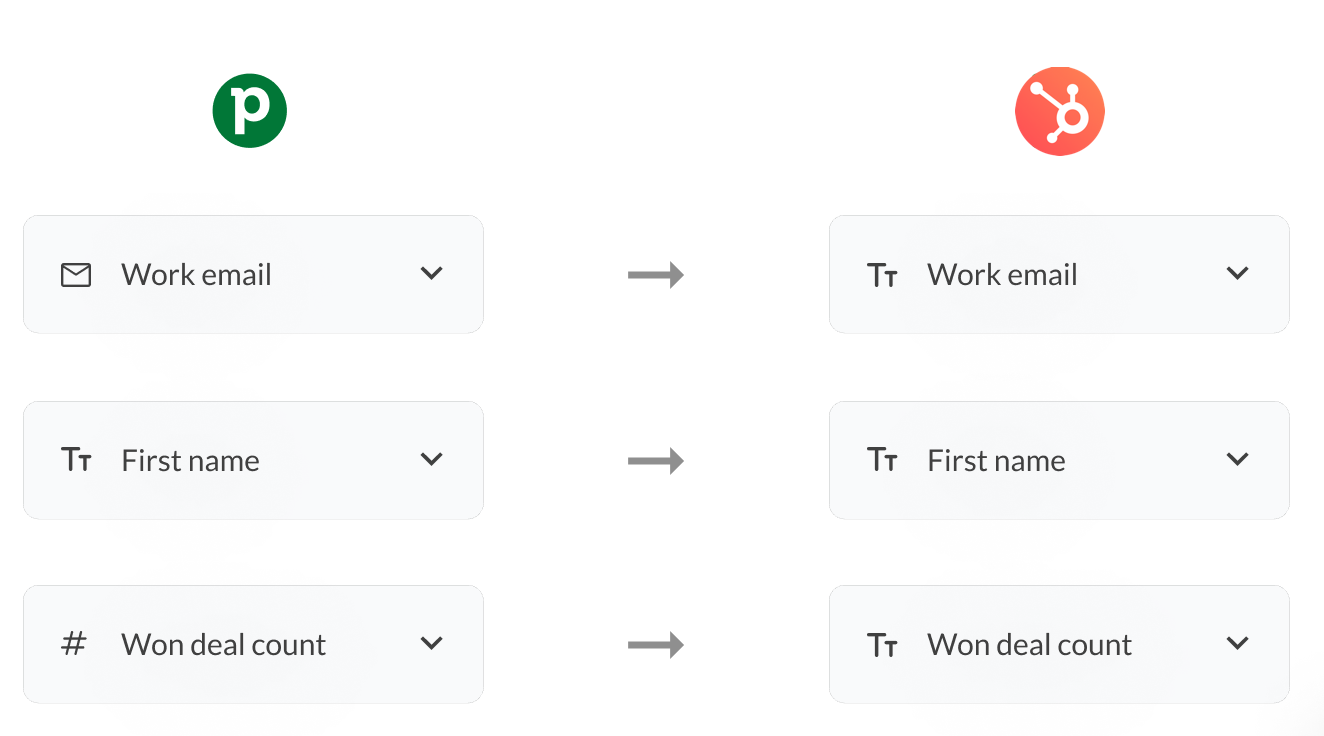
What it syncs: Contacts/individuals, firms/organizations, offers, and related exercise information. Area mapping interprets between Pipedrive’s information mannequin (Individuals, Organizations, Offers) and HubSpot’s (Contacts, Corporations, Offers). Customary fields map robotically; customized fields might require guide configuration.
Matches: each ongoing bidirectional sync and preliminary information alignment between the 2 CRMs.
Setup course of:
-
Configure which objects to sync (contacts, firms, offers) and set the sync route for every object sort (Pipedrive to HubSpot, HubSpot to Pipedrive, or bidirectional).
-
Map fields between the 2 platforms. Customary fields (identify, electronic mail, cellphone, deal worth) map robotically. Assessment and manually map any customized fields you might want to maintain in sync.
Strengths: First-party integration maintained by the Pipedrive Market, so there is no such thing as a third-party device to configure or pay for. Bidirectional sync works out of the field. No engineering assets required. Covers the core CRM objects most groups want aligned.
Limitations: Sync runs on a schedule somewhat than in actual time. Complicated area sorts and nested customized objects might not map cleanly between the 2 platforms’ information fashions.
Pipedrive makes use of “Individuals” and “Organizations” whereas HubSpot makes use of “Contacts” and “Corporations” with a Lead-to-Contact conversion course of, which might create mapping ambiguity. Superior automation triggers (e.g., triggering a HubSpot workflow when a Pipedrive deal stage modifications) might require supplementing with Zapier or Make.
Greatest for: Groups working each CRMs that want a low-cost bidirectional sync of core objects with out including instruments to the stack.
Zapier
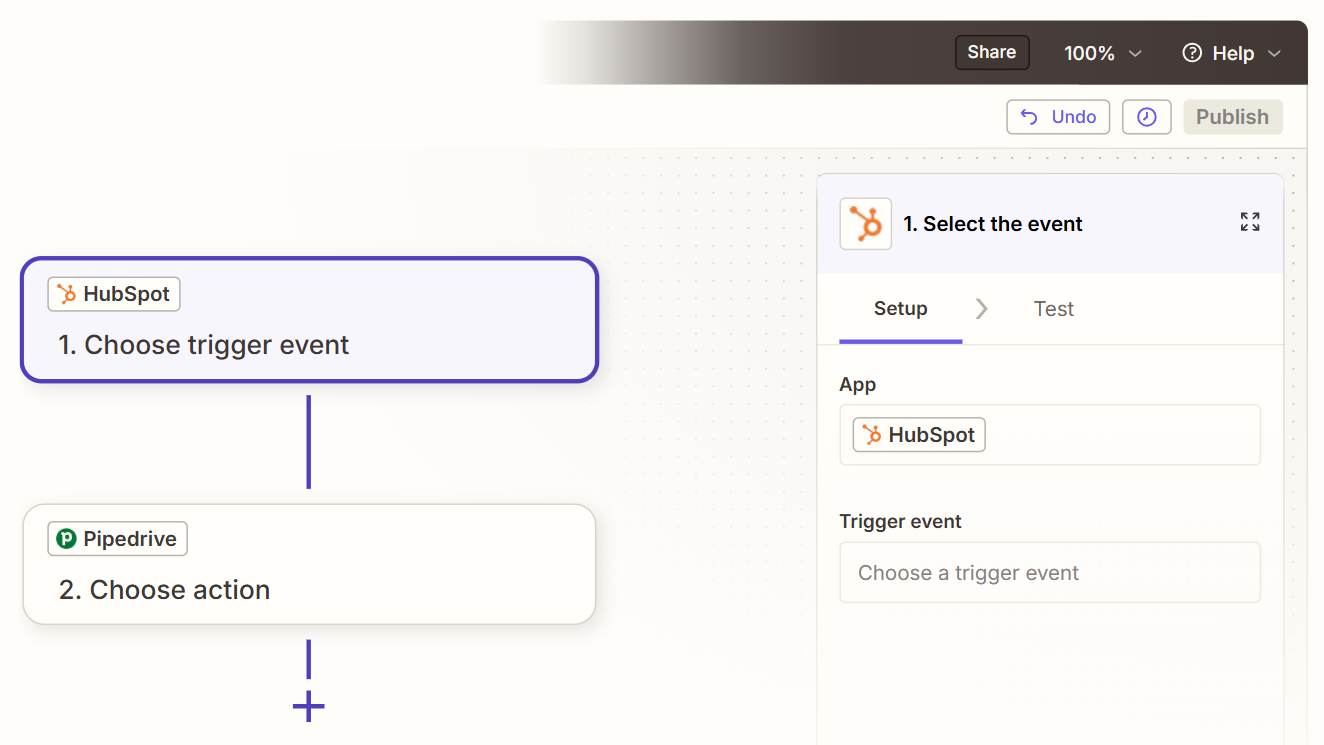
The way it works: Zapier connects Pipedrive and HubSpot by event-driven automations known as Zaps. Every Zap pairs a set off (an occasion in a single app) with a number of actions (what occurs within the different). Each platforms are amongst Zapier’s hottest connectors, so the out there trigger-action mixtures cowl the key CRM objects.
Supply: Zapier
What it syncs: Contacts/individuals, firms/organizations, offers, actions, and notes. Every object sort requires its personal Zap. Customized fields might be mapped manually within the setup circulation, although complicated area sorts might have intermediate formatting steps.
Matches: ongoing sync of recent data solely; not a migration device.
Setup course of:
-
Flip the Zap on. For bidirectional sync, create a second Zap with the set off and motion apps reversed, and add a filter to forestall infinite loops (e.g., skip if the report was final modified by the combination person).
Strengths: Quickest setup with no technical information required. A big template library covers frequent Pipedrive-HubSpot workflows. Dependable for easy, single-object syncs. Zapier’s filter and formatter steps permit conditional logic with out code.
Limitations: Every Zap handles one trigger-action pair, so syncing contacts, offers, and actions requires separate Zaps (every counting towards your plan’s job allocation). Bidirectional sync wants duplicate Zaps with cautious loop-prevention logic. No built-in deduplication. Historic data created earlier than the Zap was activated don’t sync. Per-task pricing can add up at increased volumes.
Greatest for: Small groups that want a fast, low-cost connection between just a few particular object sorts. Groups testing whether or not each CRMs want to remain related earlier than committing to a bigger integration effort.
Outfunnel (Devoted Sync Software)
The way it works: Outfunnel is a devoted advertising and gross sales information sync device that connects Pipedrive and HubSpot with a concentrate on aligning CRM data and advertising engagement information. In contrast to general-purpose automation instruments, Outfunnel understands CRM information fashions and presents options constructed for the job: scheduled sync, area mapping, and engagement information circulation between the 2 platforms.
Supply: Outfunnel
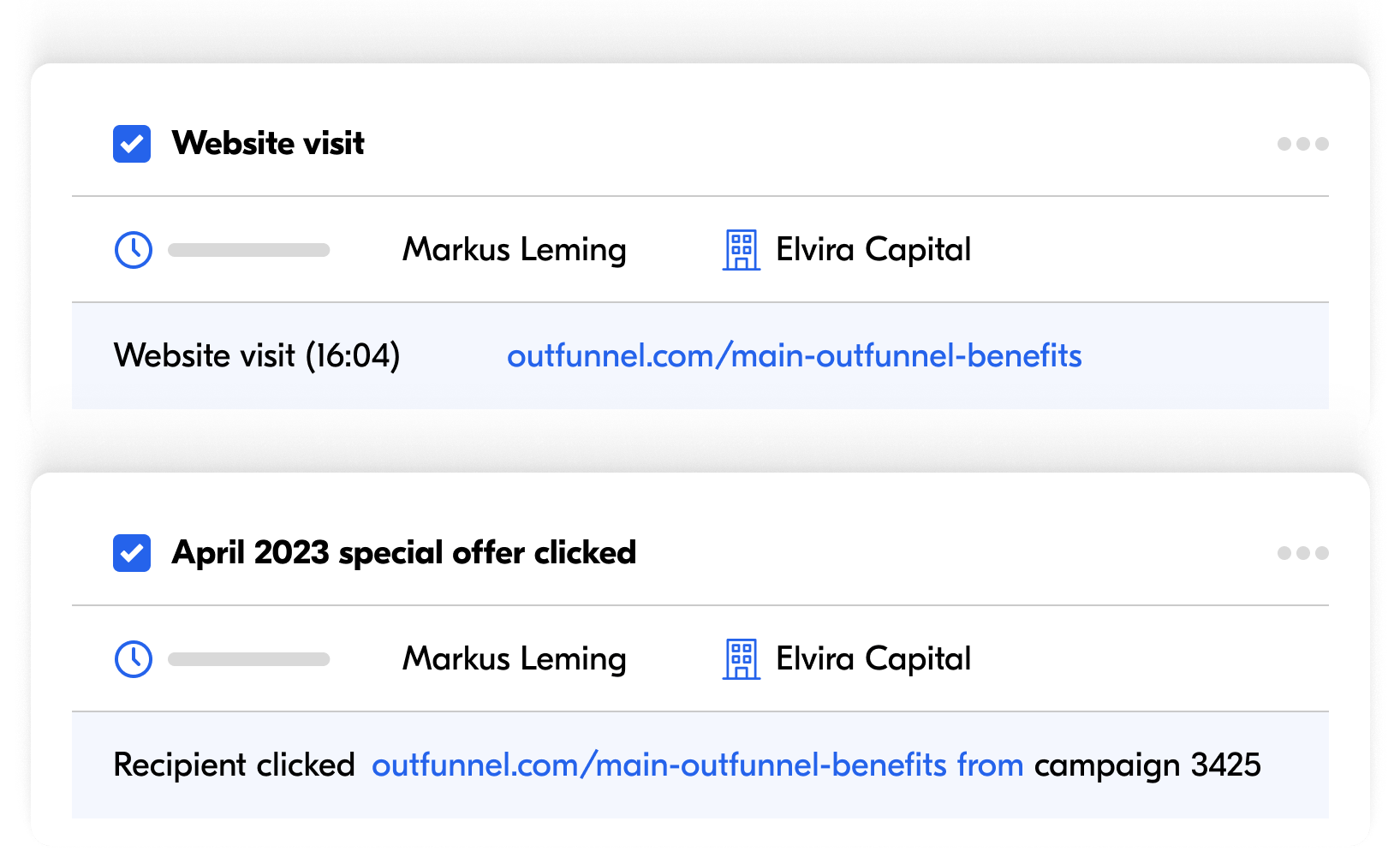
What it syncs: Contacts, firms, offers, and advertising engagement information (electronic mail opens, clicks, internet visits). Outfunnel’s differentiator is that it syncs advertising engagement indicators from HubSpot into Pipedrive, giving gross sales reps visibility into which leads engaged with advertising content material with out leaving their CRM.
Supply: Outfunnel
Matches: ongoing sync with advertising engagement visibility; also can deal with preliminary historic sync.
Setup course of:
-
Configure engagement information sync: select whether or not HubSpot electronic mail engagement (opens, clicks), kind submissions, and internet go to information ought to circulation into Pipedrive contact data.
Strengths: Constructed for connecting CRMs with advertising platforms, so the engagement information circulation is a local function somewhat than a workaround. Gives advertising visibility inside Pipedrive that neither the native integration nor Zapier handles nicely. Handles historic information sync alongside ongoing updates.
Limitations: Provides one other paid device to the stack. Much less versatile than Zapier or Make for non-CRM automation use circumstances. Pricing scales with contact depend and sync frequency. The device focuses on the Pipedrive-HubSpot pair and some different mixtures, so it doesn’t function a general-purpose integration platform.
Greatest for: Groups the place HubSpot handles advertising and Pipedrive handles gross sales, and the gross sales crew wants visibility into advertising engagement information inside their CRM. Organizations that need a managed sync with out constructing and sustaining Zapier workflows.
Make (Previously Integromat)
The way it works: Make makes use of a visible state of affairs builder the place modules (app actions) join in a flowchart. Every module represents a step: look ahead to a set off, remodel information, create or replace a report. Situations can department, filter, loop, and deal with errors, giving extra management than Zapier’s linear construction.
What it syncs: The identical objects as Zapier (contacts, firms, offers, actions, notes), with extra flexibility in how information transforms between platforms. Make helps iterators for batch processing, routers for conditional paths, and aggregators for combining data earlier than writing.
Matches: ongoing sync with conditional logic; not a migration device.
Setup course of:
Strengths: Nice management over information transformation and conditional routing. The visible builder makes complicated workflows simpler to comply with than code. Batch operations and error dealing with are in-built. Per-operation pricing is decrease than Zapier at increased volumes.
Limitations: Steeper studying curve than Zapier’s guided setup. Bidirectional sync nonetheless requires cautious loop-prevention configuration. Each the Pipedrive and HubSpot APIs impose fee limits, and high-volume eventualities might have throttling.
Greatest for: Groups with conditional sync necessities (e.g., solely sync offers above a sure worth, or route contacts to completely different HubSpot lists primarily based on Pipedrive labels). Mid-size groups whose sync volumes make Zapier’s per-task pricing costly.
Customized API Integration
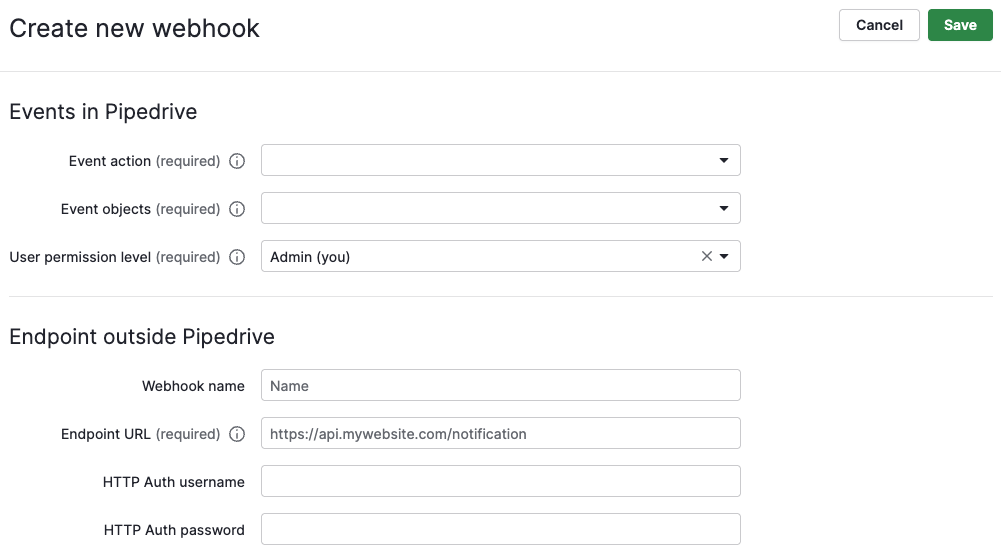
The way it works: Each Pipedrive and HubSpot present full REST APIs. Pipedrive’s API covers offers, leads, individuals, organizations, actions, merchandise, notes, and pipelines, with webhook assist for real-time occasion notifications. HubSpot’s REST API covers all normal and customized objects, with webhooks for event-driven sync.
Supply: Pipedrive
A customized integration connects these APIs immediately, with your individual middleware dealing with authentication, area mapping, transformation, battle decision, and error restoration.
What it syncs: Something each APIs expose. That is the one technique that helps complicated sync eventualities like merging duplicates throughout platforms, syncing customized objects that third-party instruments do not assist, or implementing enterprise guidelines that transcend area mapping.
Matches: both one-time migration or ongoing sync; the one technique with no ceiling on both.
Setup course of:
-
Construct the sync service: a server-side utility that listens for webhooks from each platforms, transforms information in accordance with the mapping, and writes modifications to the opposite facet.
-
Implement battle decision logic for bidirectional sync (timestamp-based, source-priority, or field-level guidelines).
Strengths: Full management over what syncs, when, and the way. Actual-time sync by way of webhooks on each side. Can implement arbitrarily complicated enterprise logic. No per-record or per-operation charges from a third-party connector.
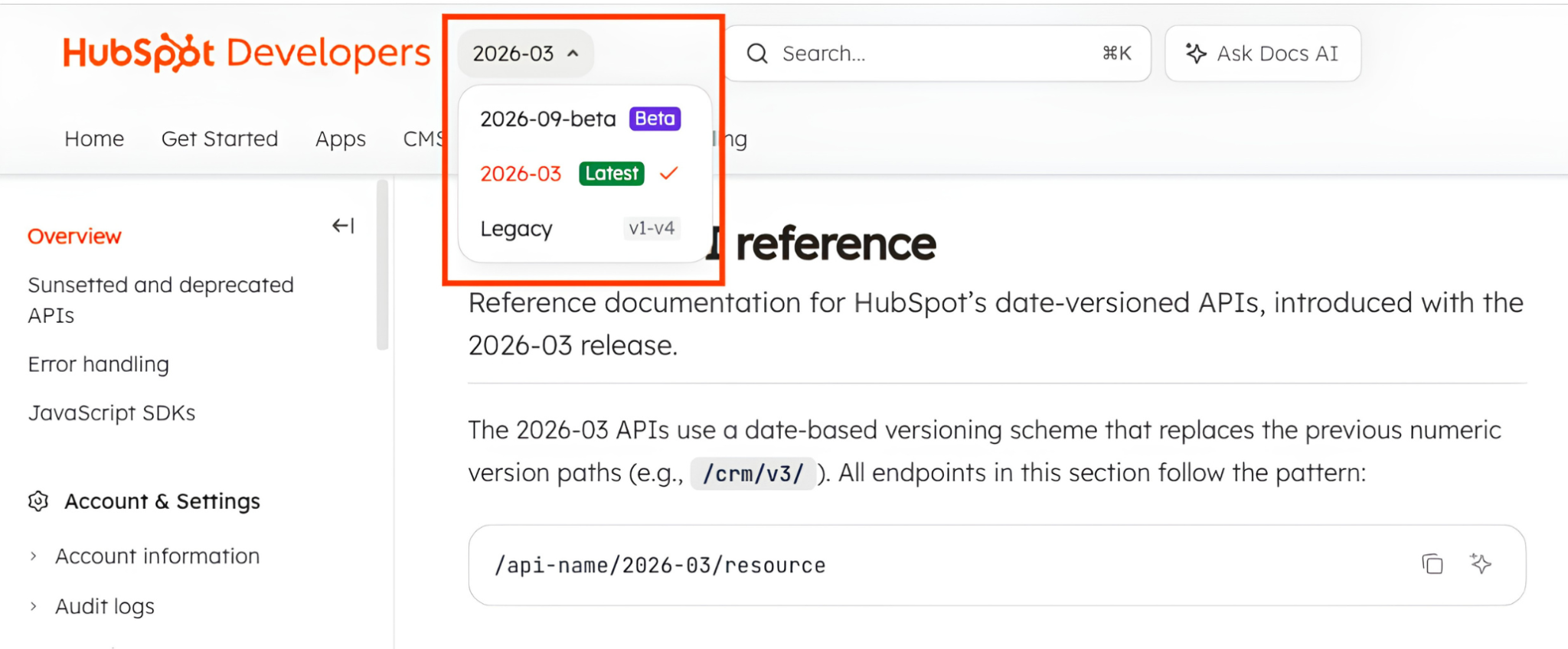
Limitations: Requires growth assets to construct and keep. You personal the infrastructure, monitoring, and error restoration. API modifications on both platform (Pipedrive launched API v2; HubSpot launched date-based API versioning with twice-yearly releases) require ongoing upkeep. The preliminary construct takes weeks, not hours.
Greatest for: Organizations with sync necessities that no off-the-shelf device can fulfill. Corporations with in-house growth groups and a long-term dedication to working each CRMs. Groups with complicated information fashions, customized objects, or enterprise logic that should be enforced throughout sync.
Key Use Instances
1. Advertising in HubSpot, Gross sales Closing in Pipedrive
Advertising groups usually undertake HubSpot for its automation, content material, and lead nurture capabilities. When a lead reaches a qualification threshold (MQL rating, kind submission, engagement milestone), it wants to maneuver into Pipedrive the place gross sales reps handle offers within the pipeline they like.
The native integration or a Zapier Zap triggered by a HubSpot lifecycle stage change can create a Pipedrive Take care of the related contact and exercise context, giving the rep full advertising historical past with out re-entering information.
Greatest integration technique: Native HubSpot app or Zapier (one-directional, event-triggered).
2. Parallel Operation Throughout CRM Migration
Corporations migrating from Pipedrive to HubSpot (or the reverse) hardly ever change in a single day. Through the transition, each programs want to remain present. The native integration or Outfunnel can run bidirectional sync, preserving data aligned whereas groups ramp on the brand new platform. As soon as migration is full, the sync turns off.
Greatest integration technique: Native HubSpot app or Outfunnel (bidirectional, with historic information sync).
3. Gross sales Engagement Visibility for Advertising
When gross sales reps replace deal phases, log calls, or shut offers in Pipedrive, the advertising crew wants that information in HubSpot to measure marketing campaign attribution, set off post-sale nurture sequences, and report on advertising’s pipeline contribution. Syncing closed-won offers and exercise information from Pipedrive into HubSpot provides advertising a suggestions loop with out requiring reps to work in each programs.
Greatest integration technique: Zapier or Make (one-directional from Pipedrive to HubSpot, triggered on deal stage modifications).
4. Phase-Primarily based CRM Break up
Some organizations use Pipedrive for one gross sales movement (SMB, the place Pipedrive’s simplicity and decrease per-seat value assist) and HubSpot for one more (mid-market or enterprise, the place HubSpot’s depth and advertising automation matter). Shared accounts that cross segments have to exist in each programs with constant information. A bidirectional sync on key objects retains each groups working from the identical info.
Greatest integration technique: Native integration or customized API (bidirectional with battle decision).
5. Advertising Engagement Scoring in Pipedrive
Gross sales reps in Pipedrive profit from seeing which leads opened advertising emails, clicked hyperlinks, or visited pricing pages in HubSpot. Outfunnel specializes on this use case, pushing HubSpot advertising engagement information into Pipedrive contact data so reps can prioritize follow-ups primarily based on precise purchaser conduct somewhat than guesswork.
Greatest integration technique: Outfunnel (HubSpot engagement information flowing into Pipedrive).
Limitations and Concerns
Information Mannequin Variations
Pipedrive and HubSpot mannequin related ideas with completely different constructions. Pipedrive makes use of “Individuals” and “Organizations”; HubSpot makes use of “Contacts” and “Corporations,” with a separate “Leads” object and a conversion course of between Leads and Contacts.
Deciding whether or not a Pipedrive Particular person maps to a HubSpot Lead or Contact requires logic that straightforward connectors might not deal with robotically. Customized fields, pipeline phases, and exercise sorts additionally differ in construction and naming between the 2 platforms.
Sync Conflicts
Bidirectional sync creates the danger of conflicting updates. If one rep updates a cellphone quantity in Pipedrive whereas one other updates the identical contact’s cellphone quantity in HubSpot, which change wins? With out express battle decision guidelines (timestamp-based, source-priority, or field-level), one replace will overwrite the opposite silently.
Most third-party instruments default to “final write wins,” which can not produce the fitting reply for each area.
Pricing Implications
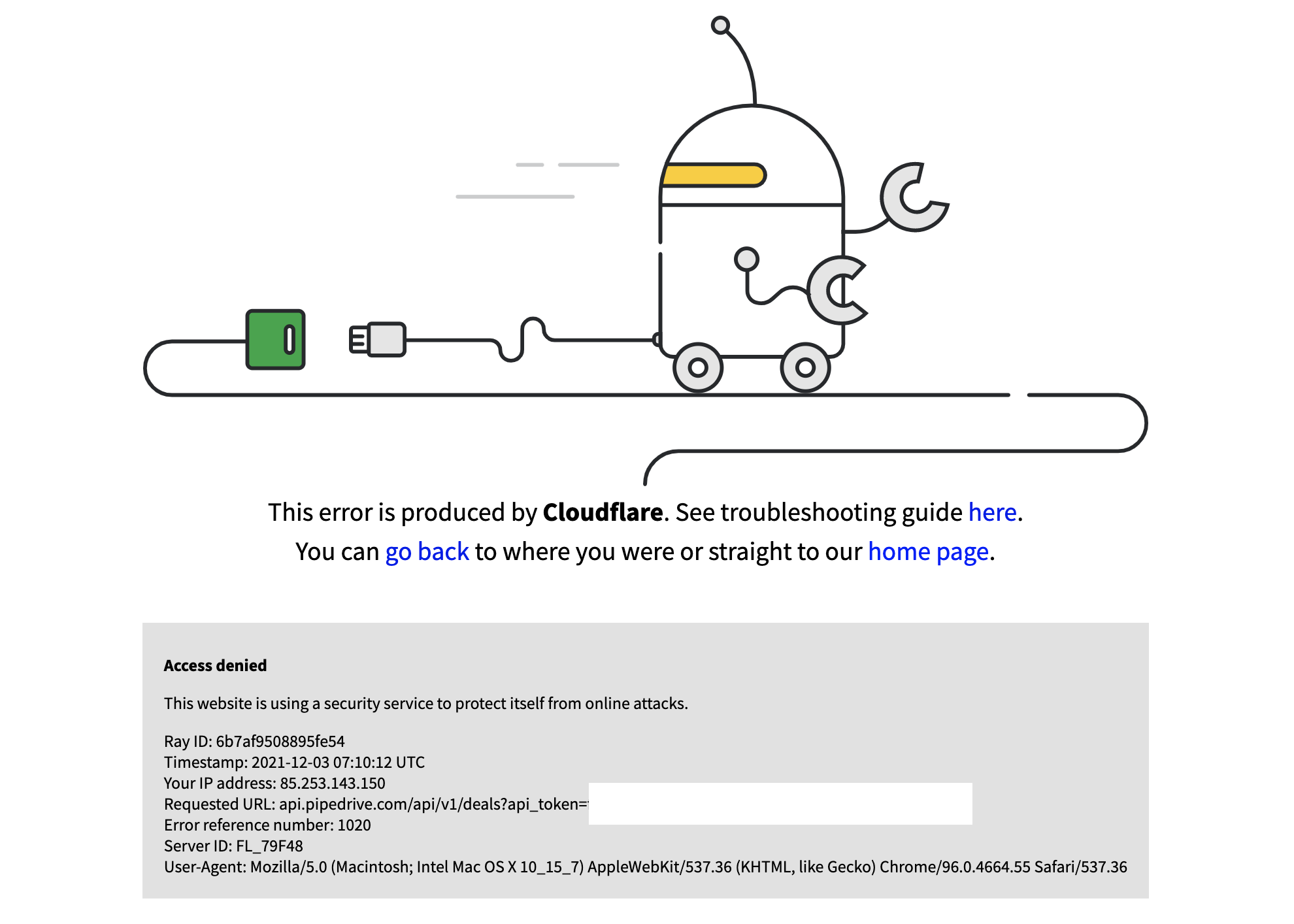
Each platforms impose API fee limits that have an effect on integration efficiency. Pipedrive’s token-based fee limiting allocates a each day funds primarily based on plan tier and seat depend (Lite plans begin at 30,000 base tokens; Final plans supply 210,000 base tokens per seat). HubSpot’s API limits begin at 250,000 requests per day for Free and Starter editions, scaling to 1,000,000 for Enterprise.
Supply: Pipedrive
Third-party instruments carry their very own prices. Zapier expenses by job depend (every synced report counts as a job). Make expenses by operations. Outfunnel expenses by contact depend and sync frequency. For groups syncing hundreds of data each day, these prices add up.
Permissions and Entry
Organising the combination requires admin entry on each side. In Pipedrive, you want account admin rights to put in Market apps, generate API tokens, or authorize OAuth connections. In HubSpot, admin entry is required to put in integrations and configure API-connected profiles. In case your HubSpot org makes use of field-level safety, the combination person’s profile should have entry to each area you plan to sync.
Upkeep
No integration runs indefinitely with out consideration. Each platforms replace their APIs (Pipedrive launched Webhooks v2; HubSpot launched date-based API versioning with new variations delivery twice per 12 months). Customized fields added after the preliminary setup is not going to sync except the combination configuration is up to date.
Supply: HubSpot
Third-party instruments might change pricing, deprecate connectors, or alter how they authenticate. Plan for periodic opinions of the combination’s well being and accuracy.
What No Methodology Fixes: The Information Itself
Each technique above strikes data between the 2 CRMs. None of them checks whether or not these data are correct, full, or present. A contact with a useless cellphone quantity in Pipedrive syncs as a contact with a useless cellphone quantity in HubSpot. A report with lacking firm attributes travels simply as reliably as a clear one. The combination ensures each programs agree; it doesn’t guarantee they’re proper.
The place ZoomInfo Matches In
Each technique on this information strikes information between Pipedrive and HubSpot. None of them improves the info being moved. When the combination is stay however pipeline information remains to be incomplete (improper titles, outdated direct dials, lacking firm attributes, stale account particulars), the bottleneck is not the connector. That’s the hole ZoomInfo closes.
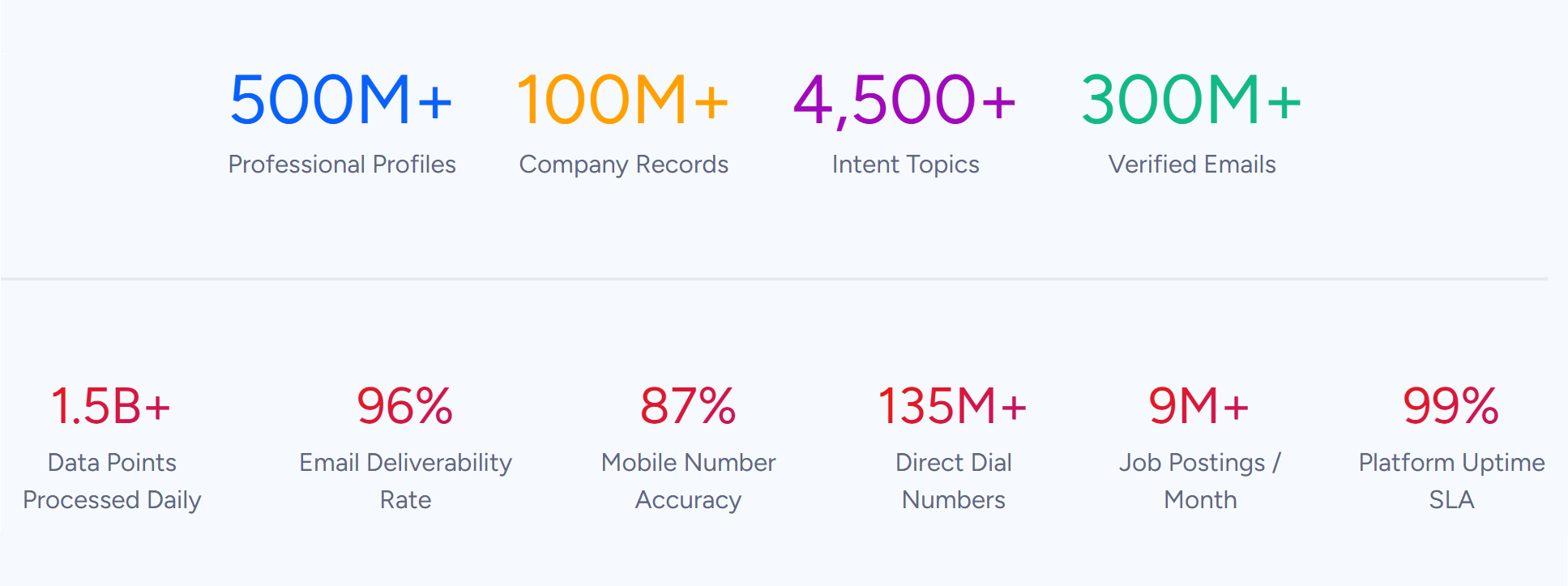
ZoomInfo is a B2B information and go-to-market platform constructed on 500M contacts, 100M firms, 135M+ verified cellphone numbers, and 200M+ verified enterprise emails.
Supply: ZoomInfo
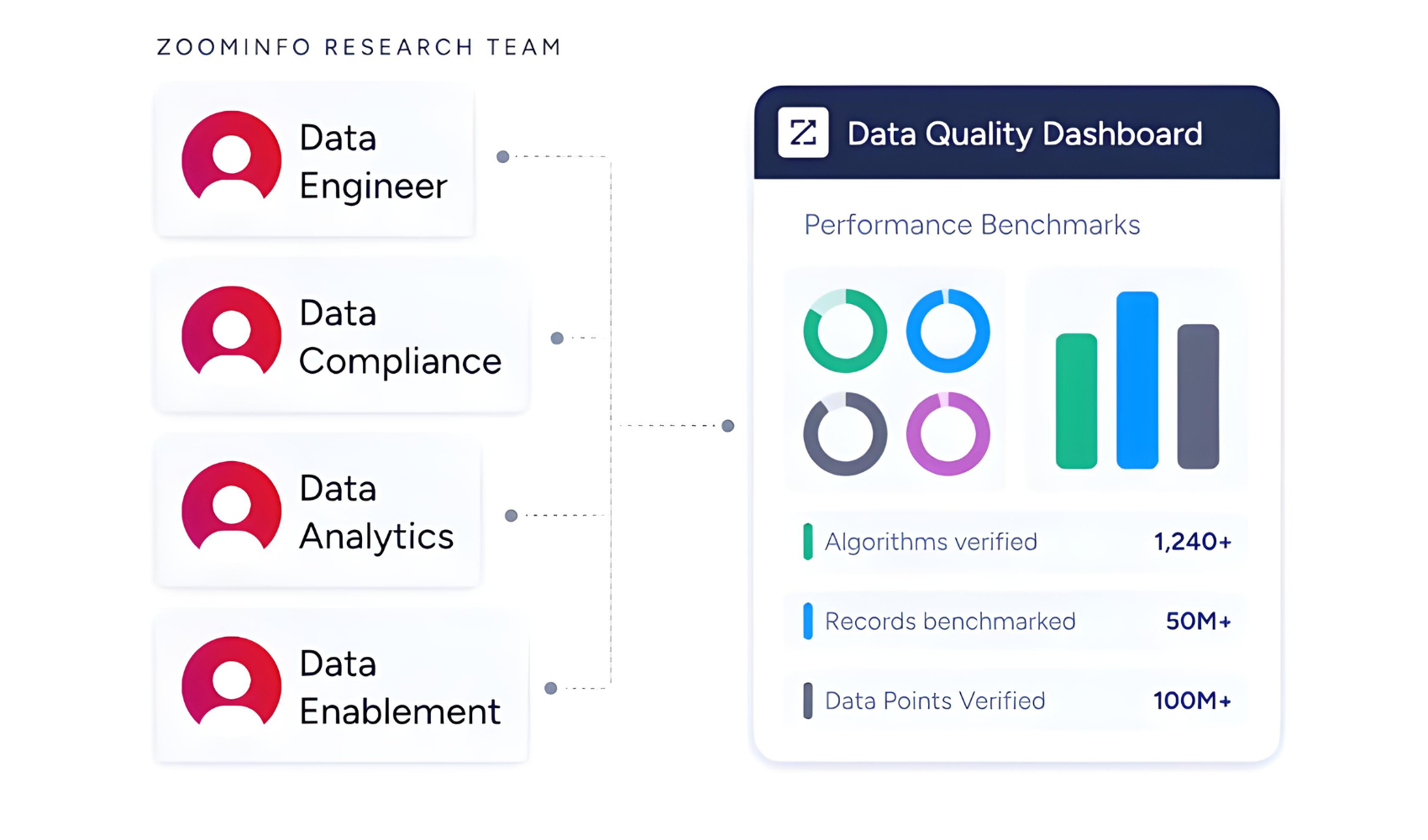
That information is verified by a multi-source pipeline backed by 300+ human researchers, reaching as much as 95% accuracy on first-party information. For groups working a Pipedrive-HubSpot integration, ZoomInfo handles the info high quality layer that no connector touches.
Supply: ZoomInfo
ZoomInfo integrates natively with each HubSpot and Pipedrive by its market. The HubSpot integration offers CRM enrichment, lead routing, and real-time information updates inside HubSpot data. The Pipedrive integration permits information import, focused listing constructing, and field-mapped enrichment inside Pipedrive.
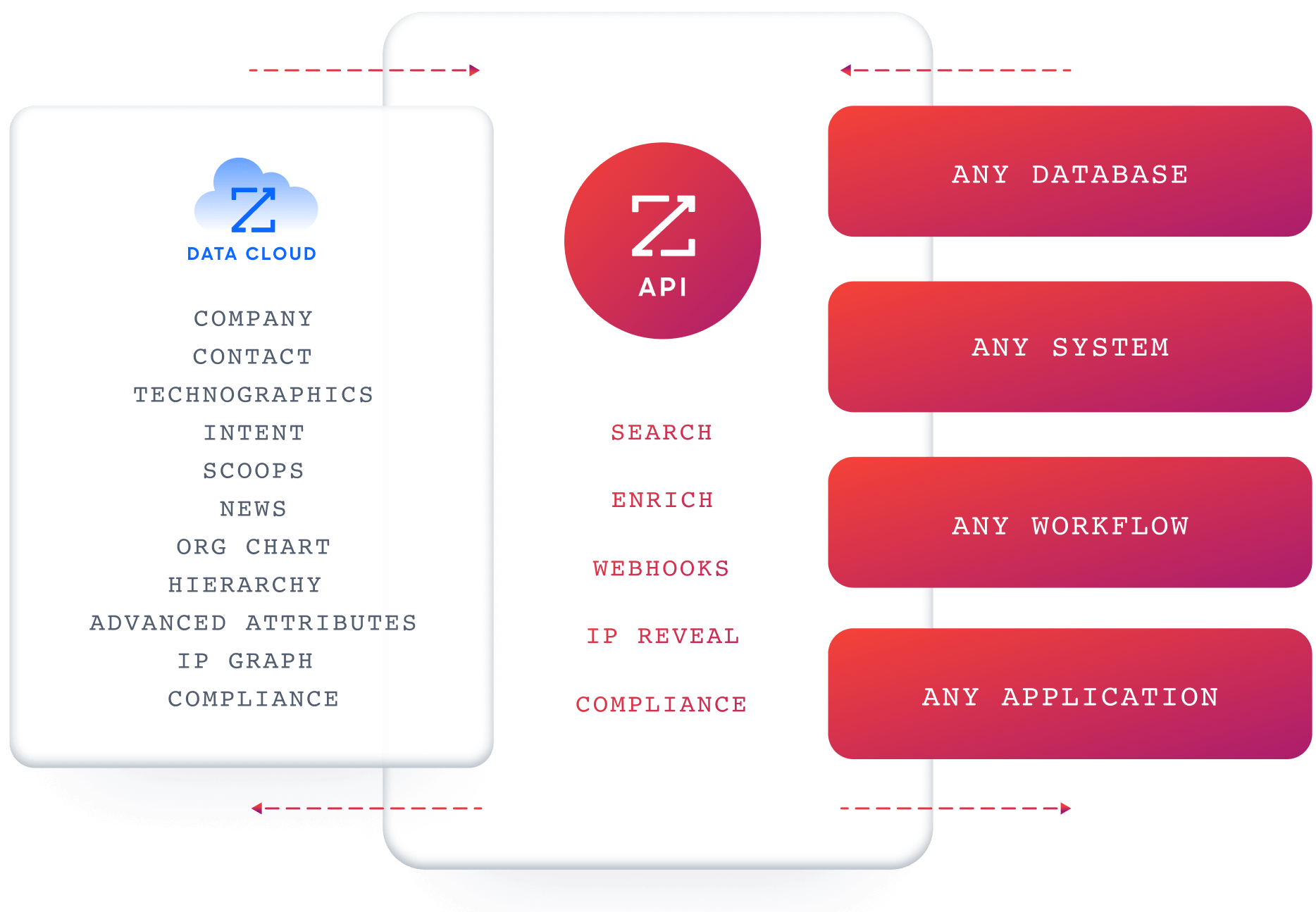
For groups that want programmatic entry, ZoomInfo’s Enterprise API and MCP server can push enriched contact and firm information into any system or AI agent workflow.
Supply: ZoomInfo
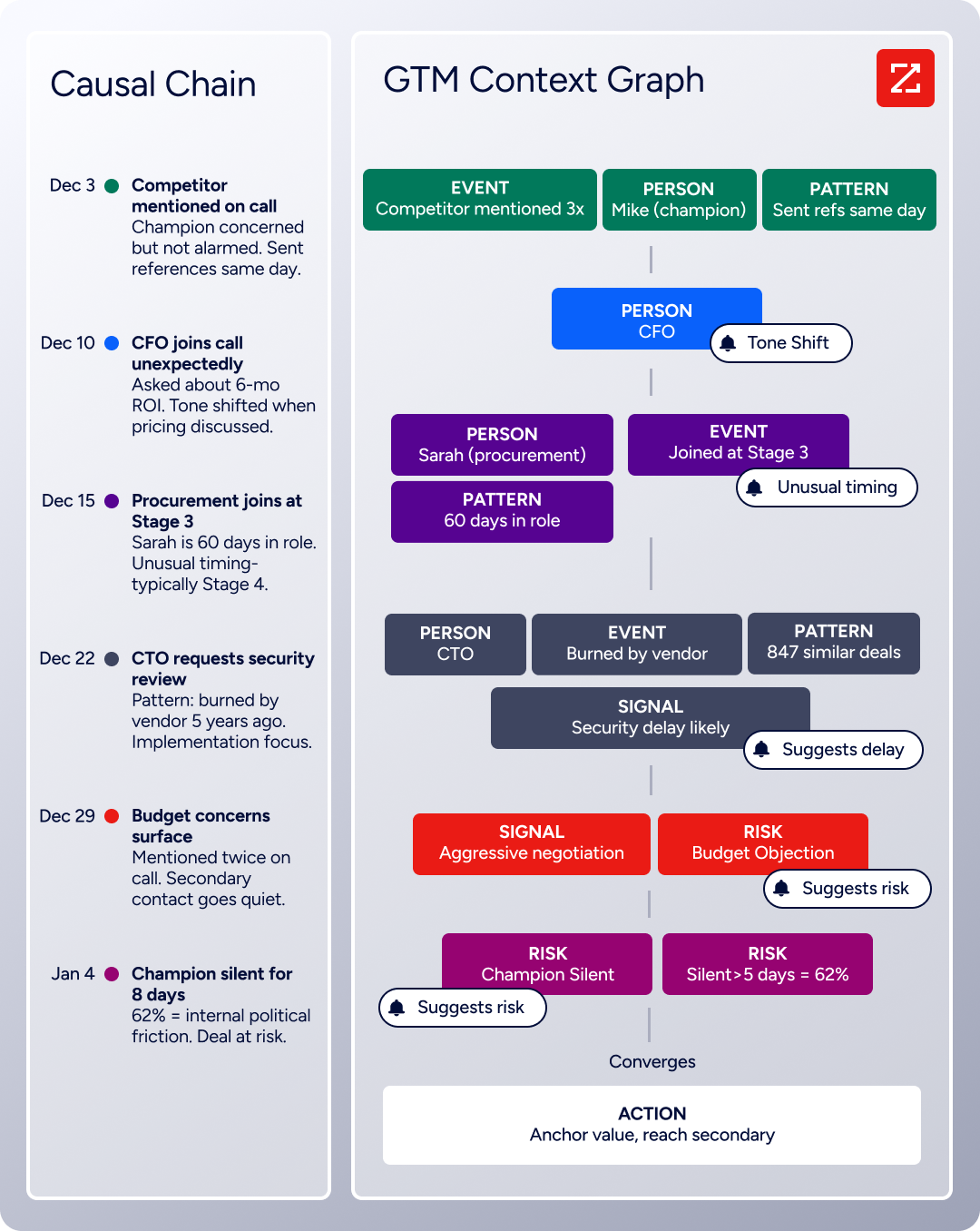
The identical information feeds ZoomInfo’s GTM Context Graph, an intelligence layer that processes 1.5B + information factors each day and unifies third-party intelligence with CRM data, dialog transcripts, and behavioral indicators to floor not simply what occurred in a deal, however why.
Supply: ZoomInfo
In observe, a crew working each CRMs can use ZoomInfo to counterpoint data in HubSpot (the place the native integration handles it robotically) and in Pipedrive (the place {the marketplace} connector maps enriched information to contact and group fields), then let the Pipedrive-HubSpot sync maintain each programs aligned.
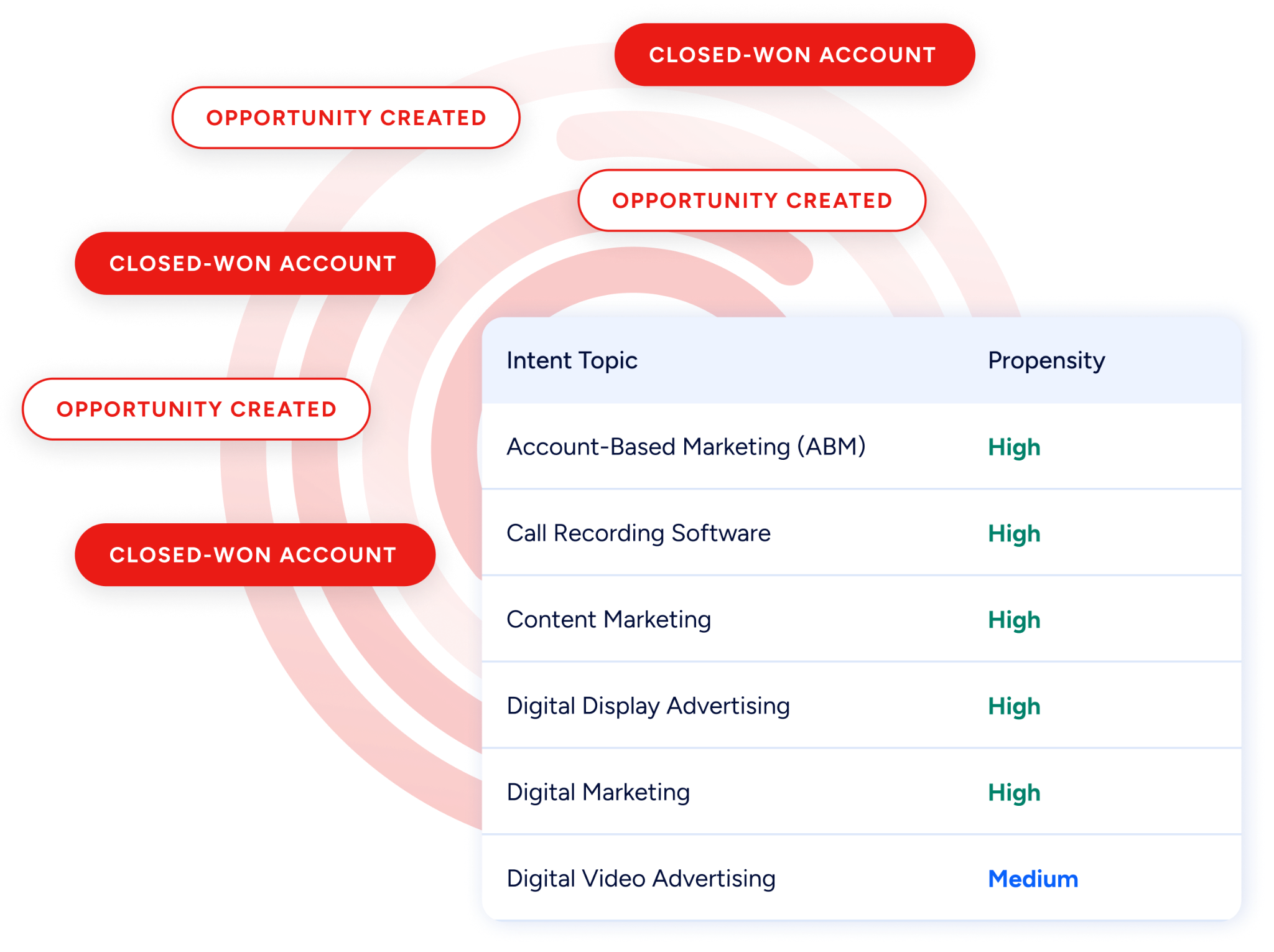
As a result of each CRMs obtain verified information from the identical supply, the data that circulation between them carry constant emails, direct dials, firmographic information, and technographic profiles no matter sync route. Purchaser Intent information from ZoomInfo, monitoring indicators from 210 million IP-to-Group pairings, might be routed into both platform to prioritize accounts actively researching related options.
Supply: ZoomInfo
Enriched data additionally make the combination itself extra dependable. Fewer clean fields imply fewer mismatches throughout deduplication. Constant formatting throughout data reduces the false positives that create duplicates. And intent indicators assist groups determine which data really have to exist in each programs, somewhat than syncing all the things indiscriminately.
Seismic’s gross sales crew attributed 39% of energetic pipeline to alternatives recognized or influenced by ZoomInfo indicators, whereas boosting productiveness by 54% and saving 11.5 hours per week. (Seismic)
Last Verdict
A local integration between Pipedrive and HubSpot exists by the Pipedrive Market, and several other third-party instruments lengthen what it may possibly do. For many groups, the fitting alternative is determined by scale, complexity, and which information must circulation the place.
-
Small groups syncing just a few object sorts ought to begin with the native HubSpot app or Zapier. Each are quick to arrange, inexpensive, and require no engineering assets.
-
Groups the place HubSpot handles advertising and Pipedrive handles gross sales ought to take a look at Outfunnel, which focuses on pushing advertising engagement information into Pipedrive so reps can act on purchaser indicators with out leaving their CRM.
-
Groups working each CRMs long-term with bidirectional necessities and conditional logic ought to consider Make, which presents extra management over information transformation and routing than Zapier at a decrease per-operation value.
-
Organizations with complicated information fashions, customized objects, or enterprise logic that should be enforced throughout sync ought to put money into a customized API integration constructed on each platforms’ REST APIs and webhook programs.
Earlier than committing to a way, make clear why each CRMs have to coexist.
If the reply is short-term (a migration in progress, a trial interval), maintain the sync easy and plan for eventual consolidation on one platform. If the reply is structural (advertising runs on HubSpot whereas gross sales runs on Pipedrive, and each groups have good causes for his or her alternative), put money into a way that helps bidirectional sync and battle decision.
Both means, the standard of the info in each programs determines whether or not the combination delivers worth or simply replicates issues at twice the pace.
ZoomInfo, with native integrations for each HubSpot and Pipedrive plus API and MCP entry, is the info enrichment layer that retains each programs correct whereas the connector retains them aligned.
FAQ
Does a local integration exist between Pipedrive and HubSpot?
Sure. HubSpot presents an integration app out there within the Pipedrive Market that gives bidirectional information sync between the 2 platforms. The combination covers core CRM objects together with contacts, firms, and offers. Third-party connectors like Outfunnel additionally present devoted Pipedrive-HubSpot sync with advertising engagement information visibility.
Can I sync historic information between the 2 CRMs?
Zapier and Make solely course of data created after the workflow is activated. For historic information, use the native HubSpot app (which might run an preliminary sync of present data), Outfunnel, or a customized script that reads from one platform’s API and writes to the opposite. HubSpot’s Bulk API is designed for loading giant report units and is the advisable path for migrating hundreds of data programmatically.
How do I keep away from creating duplicate data throughout sync?
Use a shared distinctive identifier (similar to electronic mail tackle) as an identical key. Earlier than making a report within the goal system, the combination ought to verify whether or not an identical report already exists.
Zapier offers a “Search” step earlier than the “Create” step for this function. Make has built-in search modules. The native integration handles matching robotically for normal fields. Customized API integrations ought to use upsert logic (replace if exists, create if not) with every platform’s native upsert capabilities.
What occurs when the identical report is up to date in each CRMs concurrently?
With out express battle decision guidelines, one replace will overwrite the opposite. Most instruments default to “final write wins,” that means the latest change takes priority no matter which system it got here from.
For fields the place that is unacceptable (e.g., deal worth, contact proprietor), configure source-priority guidelines (one CRM at all times wins for particular fields) or timestamp-based decision. The native integration helps fundamental battle decision settings throughout setup.
Can I set off HubSpot advertising workflows from Pipedrive deal occasions?
In a roundabout way by the native integration. Zapier or Make can bridge this hole: a Zap triggered by a Pipedrive deal stage change can replace a HubSpot contact property, which in flip triggers a HubSpot workflow. This two-step method works reliably however requires each a Zapier/Make workflow and a corresponding HubSpot workflow.
What does a Pipedrive-HubSpot integration value?
Prices rely on the tactic. The native HubSpot app is included with each platforms at no further cost. Zapier plans begin at $19.99/month for 750 duties (every synced report counts as a job). Make begins at $10.59/month for 10,000 operations. Outfunnel begins at roughly $29/month.
Customized API integrations don’t have any platform charges however require developer time (sometimes a number of weeks for a production-grade construct) plus ongoing internet hosting and upkeep prices. All strategies are topic to API fee limits on each platforms, which can require higher-tier plans at giant sync volumes.
How does ZoomInfo enhance a Pipedrive-HubSpot integration?
ZoomInfo solves the info high quality downside that no sync device addresses. Contact data in CRMs decay over time as folks change jobs, cellphone numbers go inactive, and firm particulars shift.
ZoomInfo enriches data with verified contact information, firmographics, technographics, and intent indicators. Its native integrations with each HubSpot and Pipedrive deal with enrichment immediately in every CRM, whereas its API and MCP entry can feed the identical verified information into any customized workflow.
The outcome: the info flowing between each programs is correct and full, which reduces sync errors from clean fields, inconsistent formatting, and duplicate data.
Is real-time sync attainable between the 2 platforms?
Close to real-time sync is achievable. Pipedrive helps webhooks that fireside instantly on report modifications. HubSpot helps webhooks for event-driven notifications. Zapier processes triggers inside 1 to fifteen minutes relying on plan tier. Make can run on set off occasions for sooner response. True sub-second sync requires a customized integration listening to webhooks from each platforms concurrently.
Join Pipedrive elsewhere:

