

Selecting between Movement and Notion in your group’s workspace comes all the way down to the way you need to work:
Here is what we suggest:
Movement is a productiveness platform for groups that need the software program to deal with scheduling, prioritization, and undertaking coordination. Its auto-scheduling engine takes duties, deadlines, priorities, and calendar occasions, then builds and updates every group member’s day by day plan, re-optimizing a whole lot of instances a day with out handbook enter. For service companies and groups spending an excessive amount of time on coordination, Movement cuts the executive value of undertaking administration: duties progress routinely, deadlines modify in actual time, and capability planning occurs with out spreadsheets. The trade-off is that Movement is prescriptive by design. There is no free plan, the mixing ecosystem is smaller than established options, and groups that need to customise each element will discover Movement’s opinionated strategy limiting.
Notion is a workspace for groups that need to construct the system they want. Its block-based structure helps the whole lot from easy notes to relational databases, with a number of views that remodel the identical knowledge into kanban boards, timelines, calendars, or charts. Add Customized Brokers that automate recurring work and Enterprise Search that spans linked apps, and Notion turns into an AI workspace that adapts to most workflows. The trade-off is that flexibility calls for funding. Somebody has to architect the workspace, 23% of G2 reviewers flag the educational curve as a ache level, and efficiency can degrade with massive databases.
Each platforms handle inside work: duties, tasks, docs, and group coordination. However for go-to-market groups, the selections that drive income rely upon exterior intelligence: which accounts are in-market, who the decision-makers are, and what indicators point out shopping for readiness. Neither workspace device offers this.
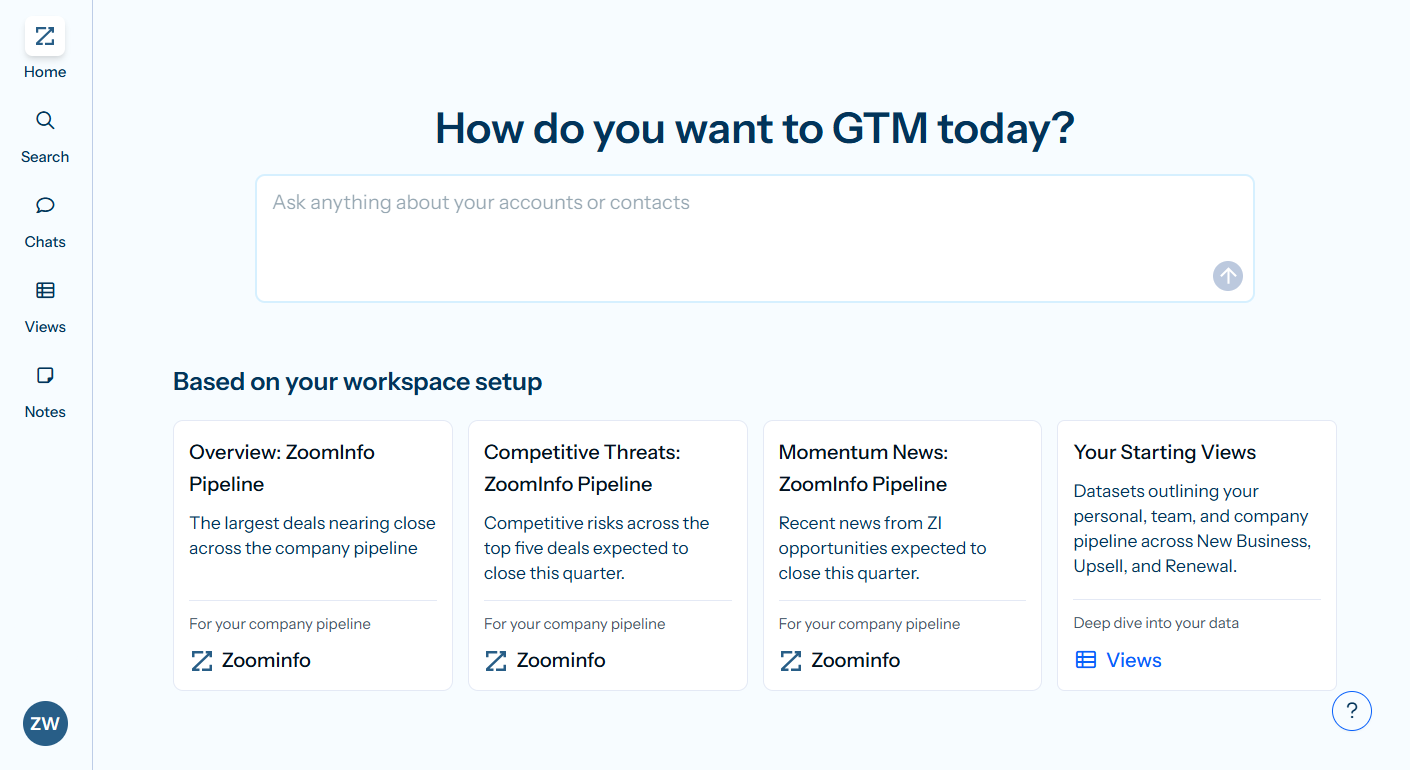
ZoomInfo is a go-to-market platform that provides gross sales and advertising and marketing groups the B2B intelligence that workspace instruments do not present. Its database consists of 500M contacts, 100M corporations, 135M+ verified cellphone numbers, and 200M+ verified enterprise e-mail addresses. The GTM Context Graph processes 1.5B+ knowledge factors day by day to indicate not simply what’s occurring in your offers, however why. By means of APIs and MCP, this intelligence flows into any workspace, CRM, or AI agent your group makes use of, making ZoomInfo the info layer underneath whichever productiveness platform you select.
If verified go-to-market intelligence sounds useful, see how ZoomInfo works.
Movement vs. Notion vs. ZoomInfo at a look
|
Movement |
Notion |
ZoomInfo |
|
|---|---|---|---|
|
Core strategy |
AI auto-scheduling productiveness platform |
Versatile AI workspace and data base |
AI go-to-market platform |
|
Major power |
Automated activity and undertaking scheduling |
Data administration and customizability |
B2B knowledge, purchaser indicators, and go-to-market execution |
|
AI capabilities |
Auto-scheduling, undertaking era, AI workers |
Workspace AI, {custom} brokers, enterprise search |
GTM Context Graph, account intelligence |
|
Challenge administration |
Auto-progressing with dependency automation |
Customizable databases with a number of views |
Go-to-market pipeline and deal execution |
|
Data administration |
Docs, wiki, and notes |
Docs, wiki, and relational databases |
Account and market intelligence |
|
Assembly notes |
AI Notetaker joins calls as a participant |
Bot-free seize by way of system audio |
Refrain dialog intelligence |
|
Integrations |
Google/Outlook, Zapier, HubSpot, Salesforce |
REST API, webhooks, MCP, 100+ connections |
172+ market integrations, API, MCP |
|
Studying curve |
Average (mindset shift required) |
Steep (structure choices required) |
Average (structured onboarding program) |
|
Free plan |
No (trial solely, card required) |
Sure (no card required) |
Sure (ZoomInfo Lite, everlasting) |
|
Beginning value |
$19/seat/month |
$0 (Free); $10/seat/month (Plus) |
Customized-quoted |
|
Finest for |
Service companies needing automated undertaking execution |
Groups needing a customizable workspace |
Go-to-market groups needing B2B knowledge and intelligence |
Two essentially completely different philosophies of labor
Movement and Notion reply the identical query from reverse instructions: how a lot ought to software program resolve for you?
Movement is prescriptive.
You give it duties with deadlines, priorities, and time estimates. Its auto-scheduling engine locations every activity in your calendar, resolves conflicts, and reshuffles your day in seconds when a gathering runs lengthy or a brand new precedence arrives. You do not manage your work; the AI organizes it for you. Movement frames this as “Do Date ≠ Due Date”: assigning a deadline does not imply the work occurs on time until one thing plans when it will get accomplished.
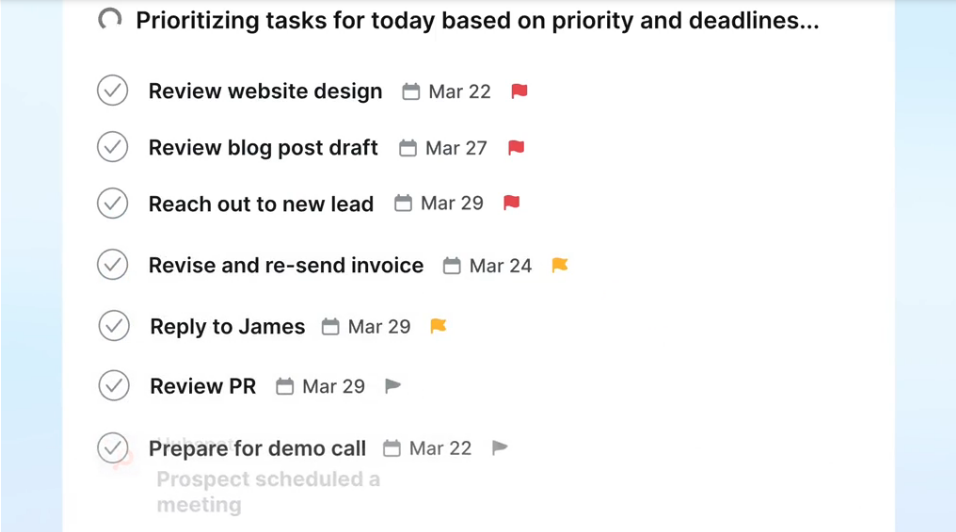
Supply: Movement
Notion is generative.
It offers you constructing blocks (pages, databases, properties, views, formulation, and relations) and allows you to assemble them into no matter system suits your group. A advertising and marketing group would possibly construct a content material calendar with automated standing monitoring. An engineering group would possibly construct a dash board linked to PRDs. A recruiting group would possibly construct an applicant tracker linked to interview scorecards. The system does what you design it to do, nothing extra.
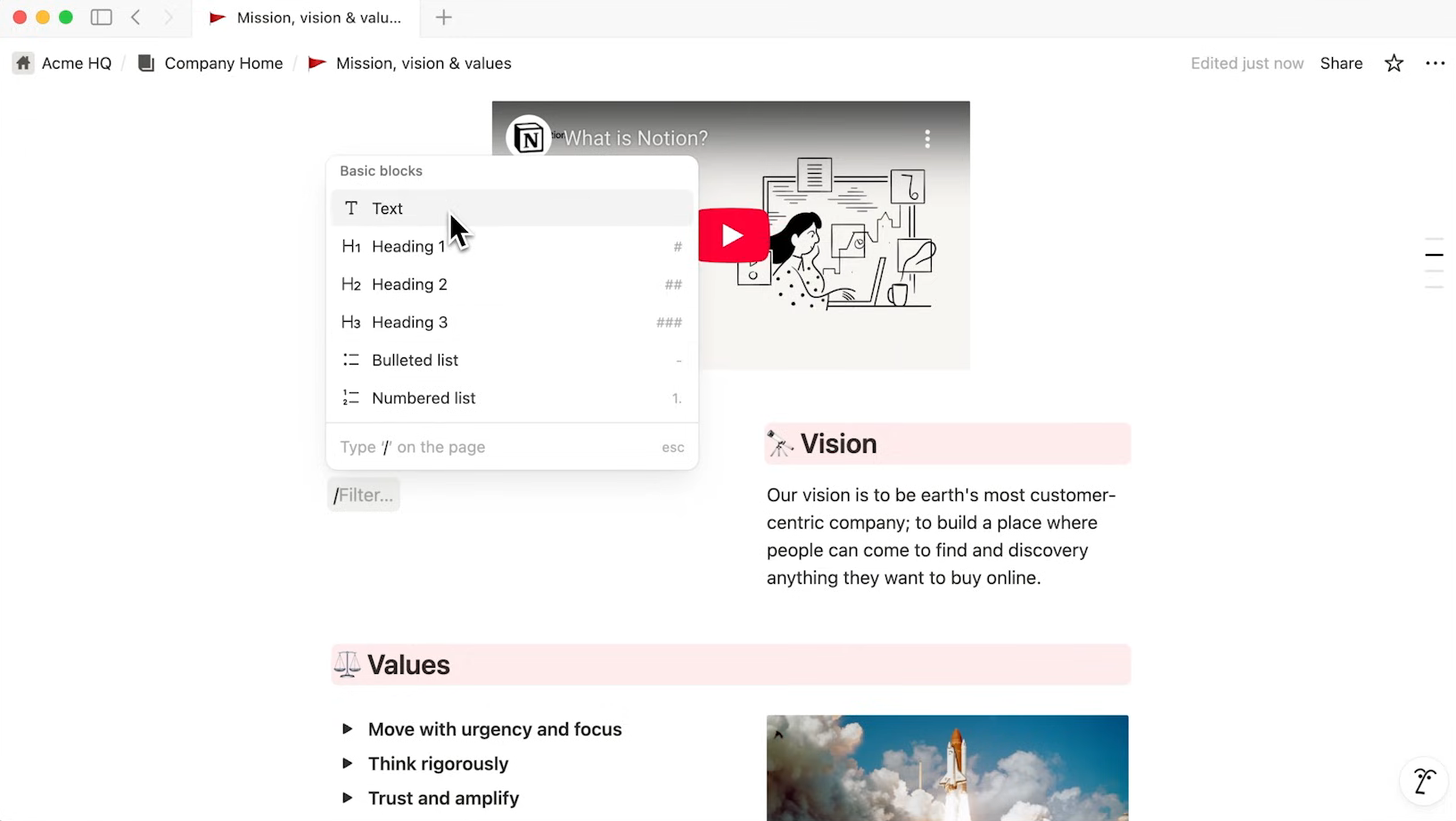
Supply: Notion
The sensible consequence: Movement is quicker to undertake however more durable to customise. Notion is slower to arrange however able to issues Movement cannot do. Groups that need an opinionated system from day one will desire Movement. Groups that need a system formed to their wants will desire Notion.
Challenge administration: auto-pilot vs. build-your-own
Movement’s AI Challenge Supervisor runs tasks routinely.
Describe a undertaking in plain language or connect an SOP, and Movement generates a construction (levels, duties, assignees, dependencies, and deadlines) with claimed over 90% accuracy. As soon as the undertaking is stay, duties unlock when dependencies full, Movement notifies assignees, and the AI Gantt Chart updates in actual time. Movement claims tasks end 32% quicker underneath this mannequin.
The standout function is capability planning.
Movement tracks workload throughout each group member and concurrent undertaking, then predicts completion primarily based on the group’s actual calendar capability, not the optimistic estimate a supervisor enters right into a Gantt chart. When capability conflicts emerge, Movement alerts managers as quickly as a undertaking falls behind, forcing a dialog earlier than deadlines slip.
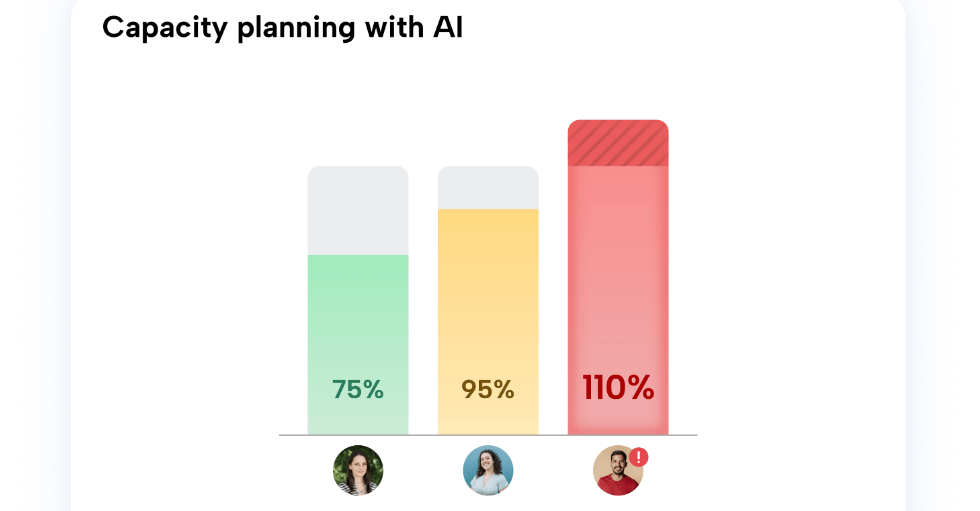
Supply: Movement
Notion’s Tasks takes the alternative strategy: flexibility over automation.
Each undertaking merchandise is a full Notion web page with typed properties (standing, assignee, due date, precedence, plus any {custom} property you outline). The identical dataset can seem as a timeline for the roadmap group, a kanban board for sprints, a calendar for scheduling, and a chart for management. Subtasks and dependencies floor blockers, and automations can set off on database modifications.
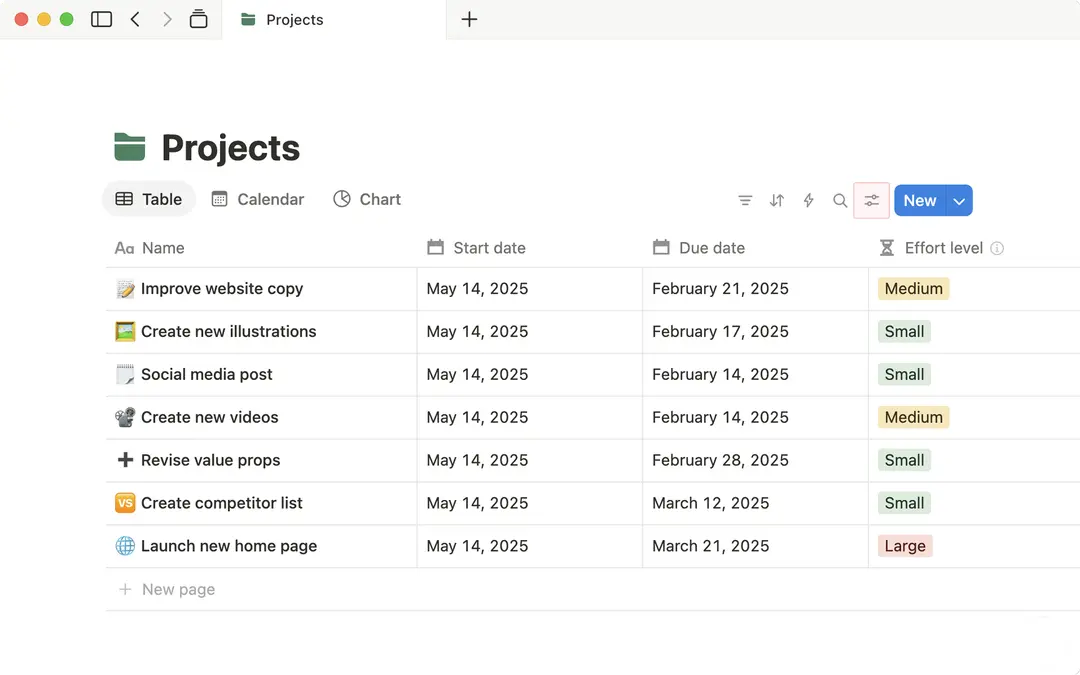
Supply: Notion
However Notion does not auto-schedule duties or predict completion dates. It tracks work; it does not plan it. A undertaking supervisor nonetheless decides what occurs when, who’s overloaded, and whether or not a deadline is lifelike. For groups that need that management, it is a function. For groups that need the software program to deal with coordination, it is a hole.
Data administration: Notion’s dwelling turf
That is the place Notion leads. Data administration is not a function Notion added; it is the muse the product was constructed on.
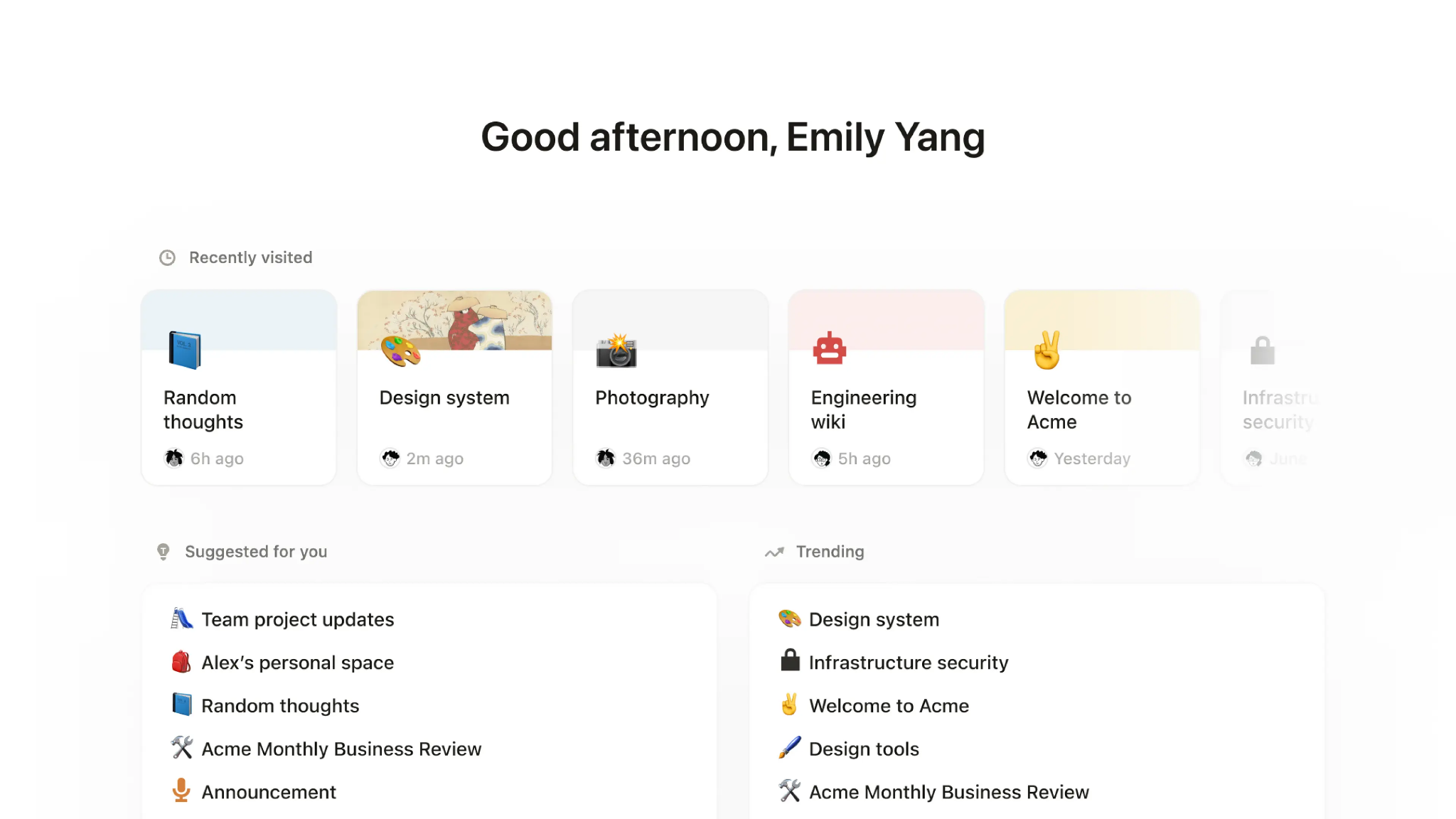
Notion’s Docs & Wikis stay in the identical setting as its tasks and databases, so documentation stays linked to the work it describes.
Synced Blocks let the identical content material seem throughout a number of pages (edit it as soon as, each occasion updates). A Verification function lets data homeowners mark pages as confirmed present, fixing the persistent drawback of outdated documentation. Enterprise Search extends past Notion itself, looking out throughout Slack, Google Drive, Jira, GitHub, Microsoft Groups, and extra to return AI-synthesized solutions with cited sources.
Supply: Notion
The depth extends to Notion’s 50+ content material block sorts: code snippets with syntax highlighting, collapsible toggles, embeds, stay charts, and auto-updating tables of contents. Templates for assembly notes, design programs, PRDs, and pitch decks give groups a place to begin, and nested web page hierarchy with drag-and-drop rearrangement makes organizing massive data bases manageable.
Movement’s AI Docs Assistant is newer and extra targeted.
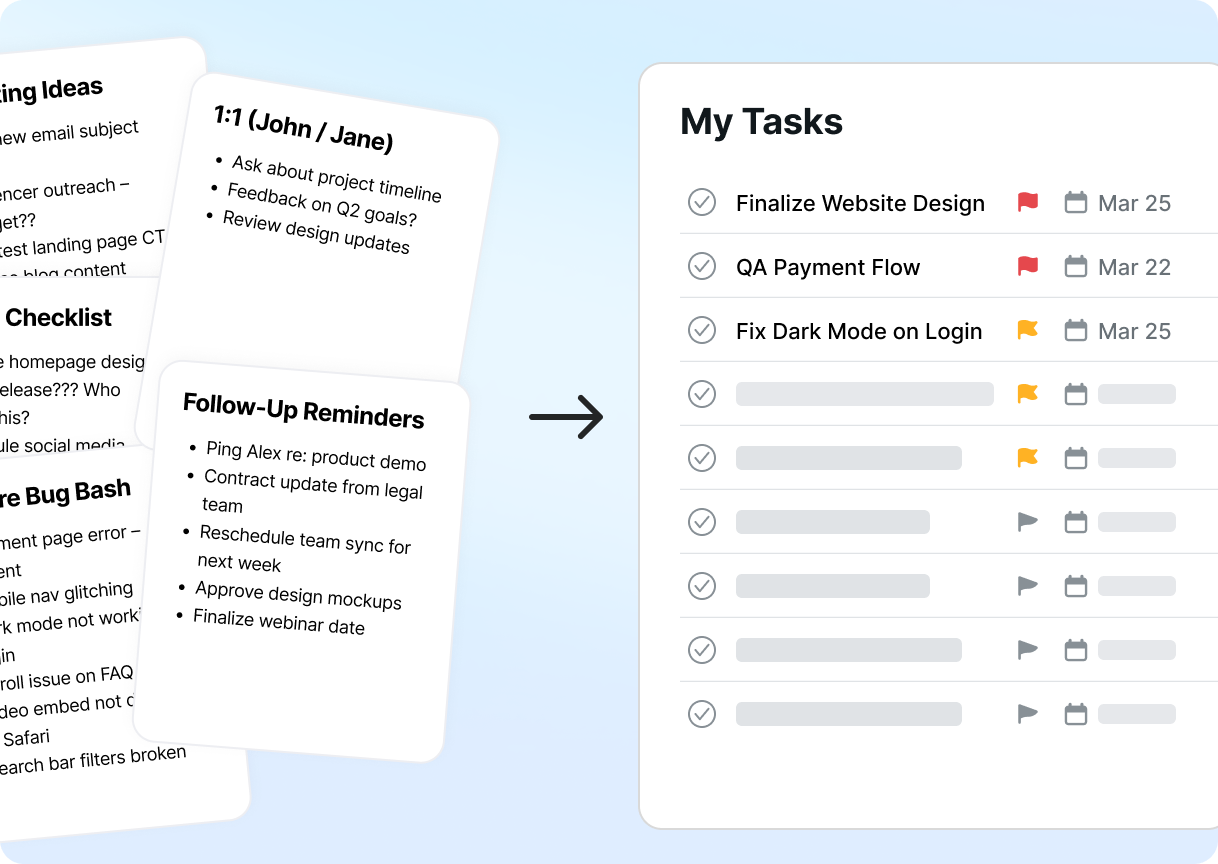
It converts notes and paperwork into organized duties and tasks, helpful for turning dialogue into motion. You’ll be able to publish docs as shareable hyperlinks or stay web sites, and the AI can extract motion gadgets from unstructured assembly notes.
However Movement’s docs lack Notion’s database integration, Synced Blocks, verification workflows, and template ecosystem. For data administration, Notion is the clear selection. For docs that feed a undertaking administration engine, Movement’s are adequate.
Supply: Movement
AI capabilities: scheduling intelligence vs. workspace brokers
Each platforms put money into AI, however they apply it to completely different issues.
Movement’s AI focuses on time.
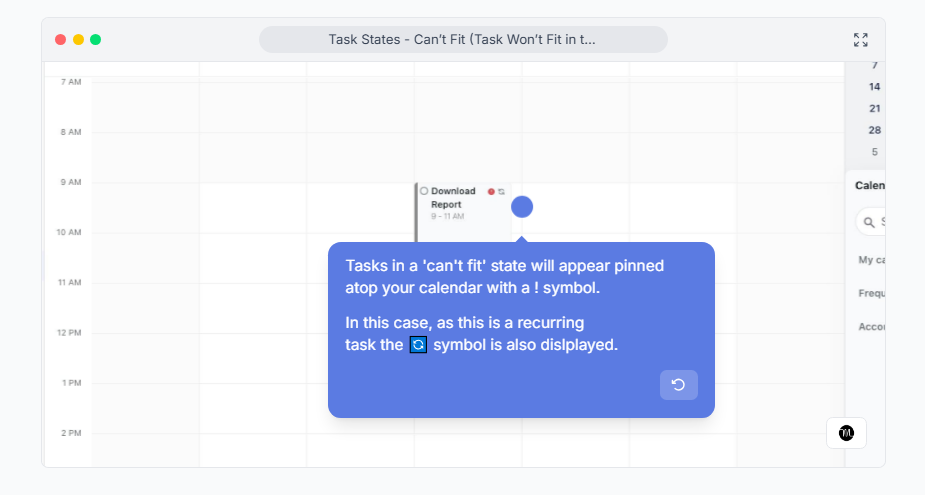
The auto-scheduling engine evaluates each activity’s begin date, length, deadline, precedence, chunking settings, and calendar occasions to supply a day by day plan. When a activity cannot match, Movement flags it in a “Cannot Match” state, forcing a dialog about priorities earlier than a deadline passes. The AI Workflows Builder converts SOP paperwork into undertaking templates and runs a hole evaluation towards comparable tasks.
Movement additionally gives named AI Staff (brokers like Chip the SDR, Millie the PM, and Suki the Advertising and marketing Affiliate) that groups can prepare on their very own workflows.
Supply: Movement
Notion’s AI focuses on data and automation.
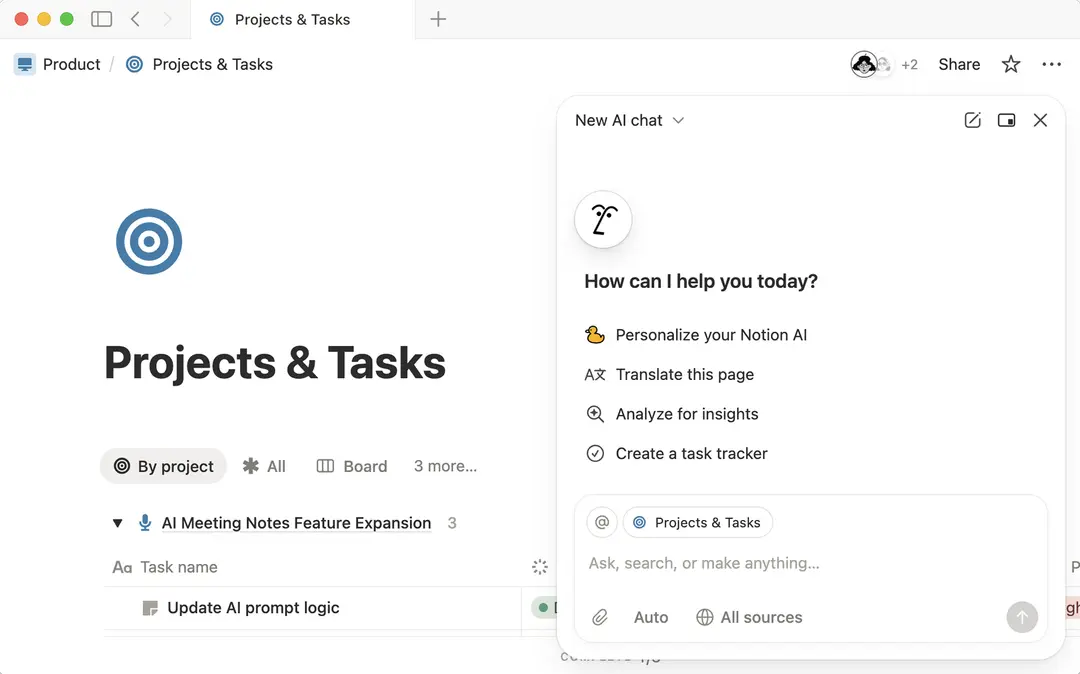
Notion AI handles writing, summarization, analysis, database creation from pure language, and system era. Customized Brokers run within the background on schedules or triggers (triaging Slack tickets, writing recurring experiences, answering repeated questions) with entry to the pages and linked apps you grant them. Notion Agent handles multi-step private duties: drafting paperwork, managing calendars, looking out throughout linked apps. Notion’s AI Assembly Notes transcribe conferences and not using a bot becoming a member of the decision, capturing system audio on the OS degree so no seen participant seems.
Supply: Notion
The assembly notes strategy exhibits the philosophical distinction.
Movement’s AI Assembly Notetaker joins calls as a visual participant on Zoom, Google Meet, or Microsoft Groups, educated on 10,000+ hours of proprietary assembly video knowledge. Notion captures audio on the system degree, preserving the recording invisible to different attendees.
For client-facing calls the place a visual bot feels inappropriate, Notion’s strategy works higher. For groups that need all attendees to know they’re being recorded, Movement’s seen participant makes that specific.
The intelligence hole neither workspace fills
Movement and Notion each handle what occurs inside your group. However for gross sales, advertising and marketing, and income operations, probably the most useful intelligence lives outdoors any workspace.
Contemplate a advertising and marketing company utilizing Movement to handle consumer tasks. Movement can auto-schedule duties and predict completion dates. However it could actually’t let you know which prospects are researching your companies, who the decision-makers are at goal accounts, or when a competitor’s buyer exhibits indicators of switching.
Contemplate a gross sales group utilizing Notion to trace their pipeline. Notion can manage deal data and automate standing updates. However it could actually’t flag {that a} goal account simply employed three VPs, raised a funding spherical, and began researching your product class.
That is the hole ZoomInfo fills.
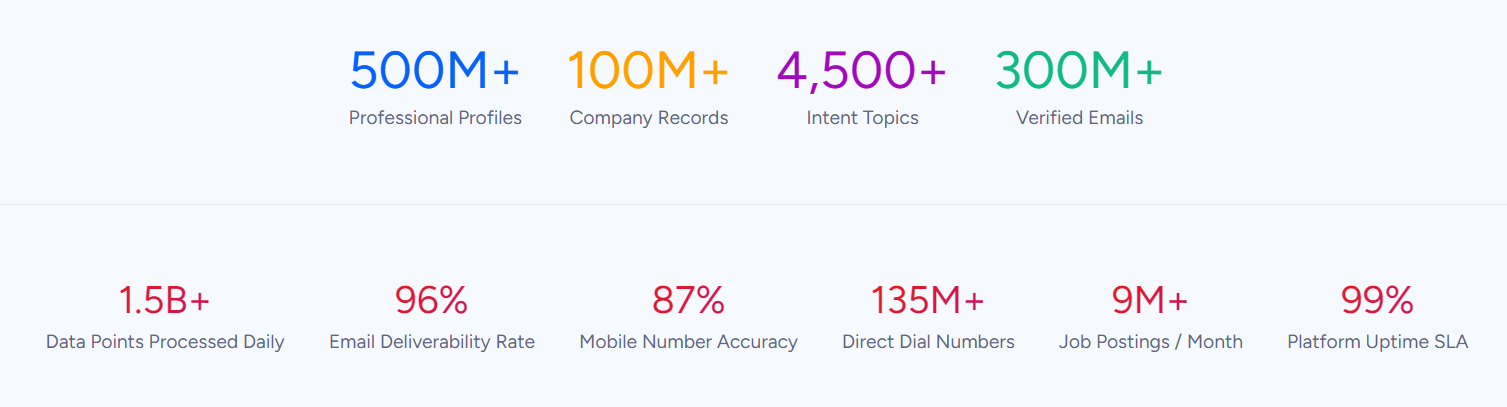
ZoomInfo offers the exterior intelligence that workspace instruments do not provide: 500M contacts, 100M corporations, 135M+ verified cellphone numbers, and 200M+ verified enterprise e-mail addresses, verified by means of a multi-source pipeline backed by 300+ human researchers with as much as 95% accuracy on first-party knowledge. In a Fortune 500 aggressive RFP analyzing 25 million contacts throughout distributors, the impartial advisor concluded that “no different competitor got here even shut.”
Supply: ZoomInfo
What makes this intelligence actionable is the GTM Context Graph. It combines ZoomInfo’s B2B knowledge together with your CRM data, dialog transcripts, and behavioral indicators right into a single layer that captures not simply what occurred in a deal, however why.
The GTM Workspace offers sellers one place the place prioritized accounts, AI-drafted outreach, and deal context converge. GTM Studio lets entrepreneurs and RevOps groups construct viewers segments, launch multi-channel performs, and measure pipeline impression in pure language, with out engineering assist. For groups that construct past ZoomInfo’s personal merchandise, APIs and MCP expose the identical intelligence to any device, agent, or {custom} software.
Whichever workspace you select for inside work, ZoomInfo offers the intelligence that generates the pipeline your workspace manages. Your workspace handles the “how.” ZoomInfo handles the “who” and “when.”
Seismic’s gross sales group attributed 39% of energetic pipeline to alternatives recognized or influenced by ZoomInfo indicators and reported productiveness features of 54%, saving 11.5 hours per week per vendor. (Seismic Case Research)
Integrations and ecosystem maturity
The combination panorama displays every platform’s age and priorities.
Notion has the broadest ecosystem.
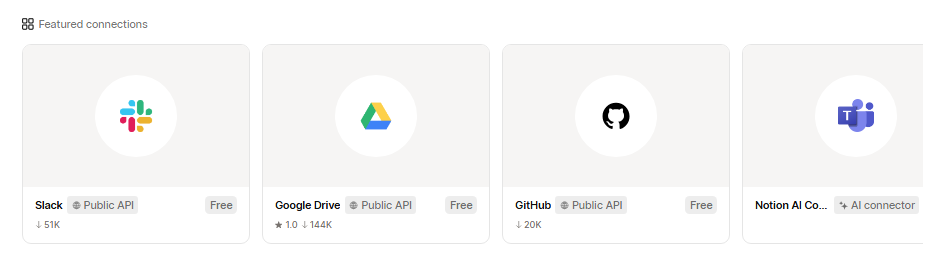
Its REST API, webhooks, and rising MCP server join it to nearly something. The Connections market consists of Slack, Google Drive, GitHub, Figma, Jira, Microsoft Groups, and dozens extra. Notion Staff (a hosted code runtime) and the Exterior Brokers API let groups run {custom} code and join AI brokers immediately into Notion boards. With 100 million customers and over a decade of growth, the ecosystem is mature.
Supply: Notion
Movement’s ecosystem is intentionally smaller.
Native integrations cowl Google Calendar, Outlook, iCloud Calendar, Zoom, Google Meet, Microsoft Groups, Gmail, HubSpot, Salesforce, and Slack. Past these, Zapier is the one supported middleware, and the connection is one-directional: exterior occasions can create Movement duties, however Movement does not push occasions again.
There are not any plans for native integrations with Notion, ClickUp, or Google Sheets. The REST API covers duties, tasks, recurring duties, and {custom} fields however does not expose calendar, scheduling, or AI options.
ZoomInfo’s integrations give attention to go-to-market workflows.
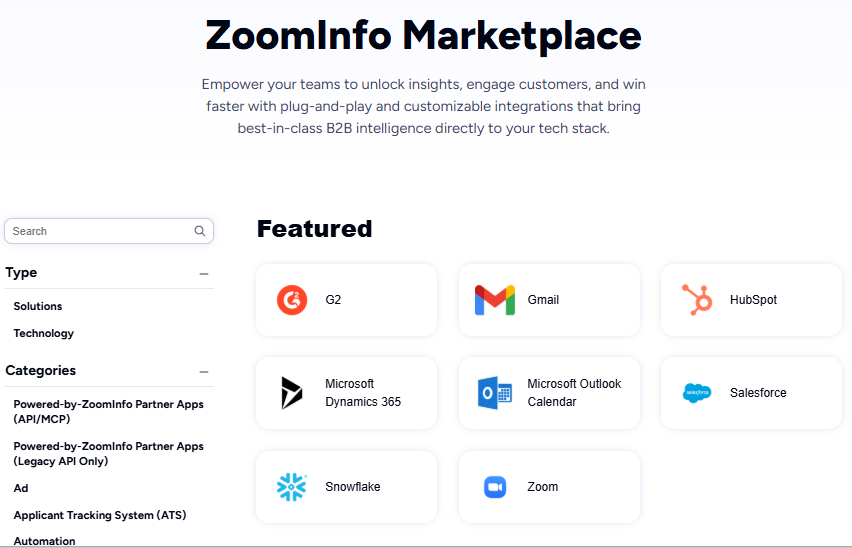
The App Market lists 172+ accomplice integrations spanning CRM (Salesforce, HubSpot, Microsoft Dynamics), cloud knowledge platforms (AWS, Snowflake, Databricks, Google Cloud), communications, advertising and marketing automation, and AI instruments. The MCP server connects ZoomInfo’s intelligence to any MCP-compatible AI consumer, and the Enterprise API delivers knowledge into any system at scale.
Supply: ZoomInfo
For groups evaluating Movement or Notion alongside a GTM stack, the important thing query is how every workspace connects to their CRM.
Movement’s HubSpot and Salesforce integrations convey CRM knowledge into its undertaking administration view. Notion connects to Salesforce and HubSpot by means of its connections market. ZoomInfo integrates natively with each CRMs and pushes intelligence immediately into them, so whichever workspace you select, ZoomInfo’s knowledge reaches your group by means of the shared CRM layer.
BDO Canada decreased time spent on inside knowledge dashboard updates by 87% utilizing ZoomInfo’s API. Their Senior Advertising and marketing Intelligence Analyst famous: “the plug-and-play side of the API means I can combine it very simply into any course of and get data at a second’s discover.” (BDO Canada Case Research)
Pricing tells you who every platform is for
Movement makes use of per-seat pricing with two tiers for groups:
-
Professional AI: $29/seat/month (month-to-month) or $19/seat/month (annual). Consists of AI Chat, tasks and duties, calendar and conferences, docs, and seven,500 AI credit/seat/month.
-
Enterprise AI: $49/seat/month (month-to-month) or $29/seat/month (annual). Provides capability planning, Gantt charts, superior dashboards, time monitoring, permissions, and 15,000 AI credit/seat/month.
There isn’t a free plan. The trial requires a card on file with a $1 maintain at signup. AI credit past the included quantity value $0.25 per 100 on Professional AI and $0.19 per 100 on Enterprise AI.
Notion makes use of per-member pricing with a free tier:
-
Free: $0. Consists of trial of Notion AI, fundamental databases with subtasks and dependencies, Notion Calendar, and restricted collaborative blocks. No card required.
-
Plus: $12/member/month (month-to-month) or $10/month (annual). Limitless collaborative blocks, file uploads, charts, and fundamental connections.
-
Enterprise: $24/member/month (month-to-month) or $20/month (annual). Provides Notion Agent, Customized Brokers, AI Assembly Notes, Enterprise Search (beta), SAML SSO, granular database permissions, and personal teamspaces.
-
Enterprise: Customized pricing. Provides zero LLM knowledge retention, SCIM provisioning, audit logs, and a devoted buyer success supervisor.
Customized Brokers require Notion credit at $10 per 1,000 month-to-month credit on Enterprise and Enterprise plans.
ZoomInfo makes use of custom-quoted, consumption-based pricing with no printed costs. Prices scale with seats, credit score quantity, options, and contract size. ZoomInfo Lite gives a everlasting free tier with entry to the B2B database, 10 month-to-month export credit, and fundamental search, with no bank card or time restrict.
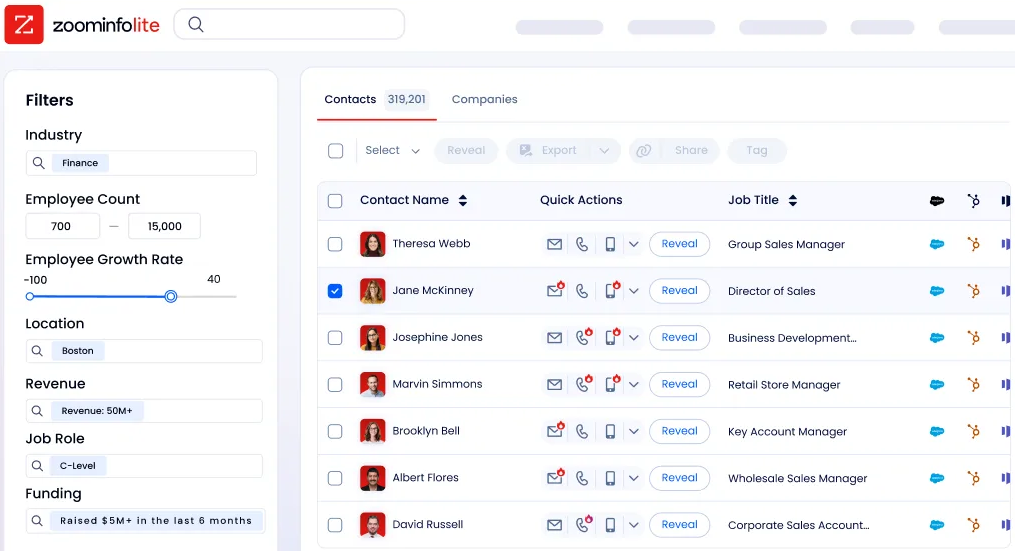
Supply: ZoomInfo
The pricing tells a transparent story.
Movement costs each consumer from day one, betting that productiveness features justify the associated fee instantly. Notion lets groups begin free, undertake progressively, and pay solely after they want superior options. ZoomInfo costs by worth and utilization, reflecting its position as intelligence infrastructure.
For a 10-person group selecting between Movement and Notion, the annual value distinction issues: Movement begins at roughly $1,520/12 months (Professional AI, annual billing), whereas Notion’s free plan prices nothing and even the Marketing strategy runs about $1,920/12 months however consists of AI brokers and enterprise search that Movement gates behind its increased tier.
Movement vs. Notion vs. ZoomInfo: Which do you have to select?
The selection relies on what drawback you are fixing.
Select Movement if:
Select Notion if:
Use ZoomInfo alongside both if:
See how ZoomInfo’s intelligence powers go-to-market groups.
Movement and Notion remedy inside work administration from reverse instructions: one automates choices, the opposite offers you the instruments to make them your self. Neither is unsuitable; they’re constructed for various groups with completely different preferences.
However in the event you’re in gross sales, advertising and marketing, or income operations, the workspace you employ for inside coordination is just half the image. The exterior intelligence that identifies your finest alternatives, reaches verified decision-makers, and captures purchaser indicators generates the pipeline your workspace manages. That is what ZoomInfo offers, and it really works with whichever platform you select.
Movement vs. Notion vs. ZoomInfo FAQ
What’s the elementary distinction between Movement and Notion?
Movement is a prescriptive AI productiveness platform that routinely schedules duties, manages undertaking dependencies, and plans every group member’s day primarily based on deadlines, priorities, and calendar capability. Notion is a versatile AI workspace constructed on blocks and databases that groups customise to suit their workflows, protecting docs, wikis, undertaking administration, and data administration.
Movement decides what you’re employed on; Notion offers you the instruments to resolve for your self.
Which platform is healthier for undertaking administration?
It relies on what you want.
Movement excels at automated undertaking execution: duties progress when dependencies full, capability planning is in-built, and the system predicts completion dates in actual time. Notion excels at versatile undertaking monitoring: the identical knowledge seems as a kanban board, timeline, calendar, or chart, with {custom} properties and relations connecting tasks to docs, folks, and different databases.
Groups that need tasks to run themselves desire Movement. Groups that need full management over monitoring desire Notion.
Does Notion have a free plan? Does Movement?
Notion gives a free plan with no bank card required, together with fundamental databases, subtasks, dependencies, Notion Calendar, and a trial of Notion AI. Movement doesn’t provide a free plan. It offers solely a trial that requires a card on file with a $1 maintain at signup.
How do the AI capabilities examine between Movement and Notion?
Movement’s AI focuses on time administration: auto-scheduling duties, predicting deadlines, producing undertaking constructions from plain language, and operating named AI Staff for features like gross sales growth and advertising and marketing.
Notion’s AI focuses on data and automation: writing and modifying content material, summarizing assembly notes and not using a bot within the name, operating Customized Brokers on schedules or triggers, and looking out throughout workspace and linked apps with Enterprise Search.
What’s ZoomInfo and why is it related to this comparability?
ZoomInfo is an AI go-to-market platform, not a workspace device. It offers B2B intelligence (500M contacts, 100M corporations, purchaser intent indicators) that neither Movement nor Notion was constructed to supply. It is related as a result of go-to-market groups evaluating workspace instruments additionally want exterior intelligence about who to promote to and when to interact. ZoomInfo’s knowledge flows by means of APIs and MCP into whichever workspace, CRM, or AI agent the group makes use of.
Which platform has higher integrations?
Notion has the broader ecosystem with a REST API, webhooks, MCP server, 100+ market connections, and a hosted code runtime known as Staff.
Movement helps Google and Outlook calendar sync, Zoom, Google Meet, Microsoft Groups, HubSpot, Salesforce, and Slack natively, with Zapier as the one middleware. The Zapier connection is one-directional. ZoomInfo’s 172+ market integrations give attention to GTM workflows, with native connections to main CRMs, cloud knowledge platforms, and AI instruments.
Can ZoomInfo work along with Movement or Notion?
Sure. Each Movement and Notion combine with CRMs like HubSpot and Salesforce, which additionally join natively to ZoomInfo. ZoomInfo’s intelligence (verified contacts, purchaser intent, account insights) flows by means of the CRM into whichever workspace the group makes use of. ZoomInfo’s API and MCP additionally allow direct integration with {custom} brokers or workflows in both platform.
Which platform is simpler to study?
Movement has a average studying curve. The options are simple, however auto-scheduling requires a mindset shift from conventional activity administration.
Notion has a steeper studying curve: the building-block flexibility means groups should make workspace structure choices upfront. G2 knowledge exhibits 23% of Notion reviewers flag the educational curve as a ache level. ZoomInfo offers a structured onboarding program spanning 30 to 90 days, with role-specific studying paths by means of ZoomInfo College.

