
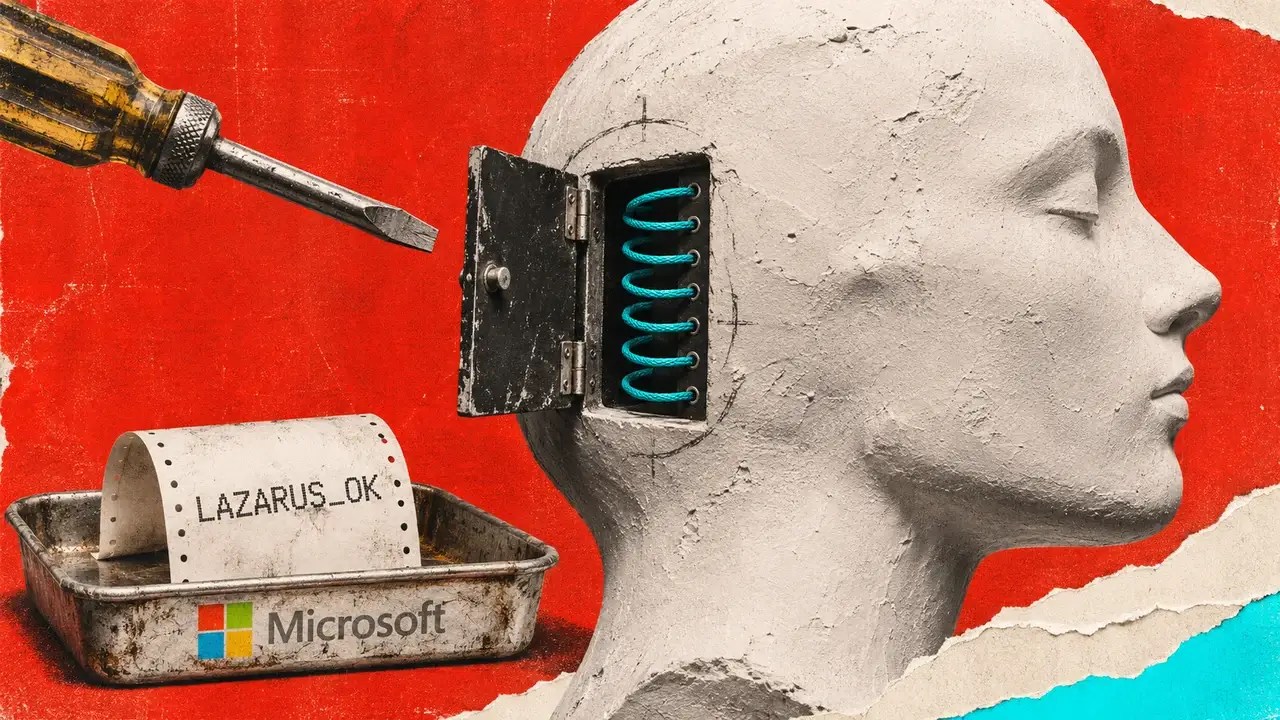
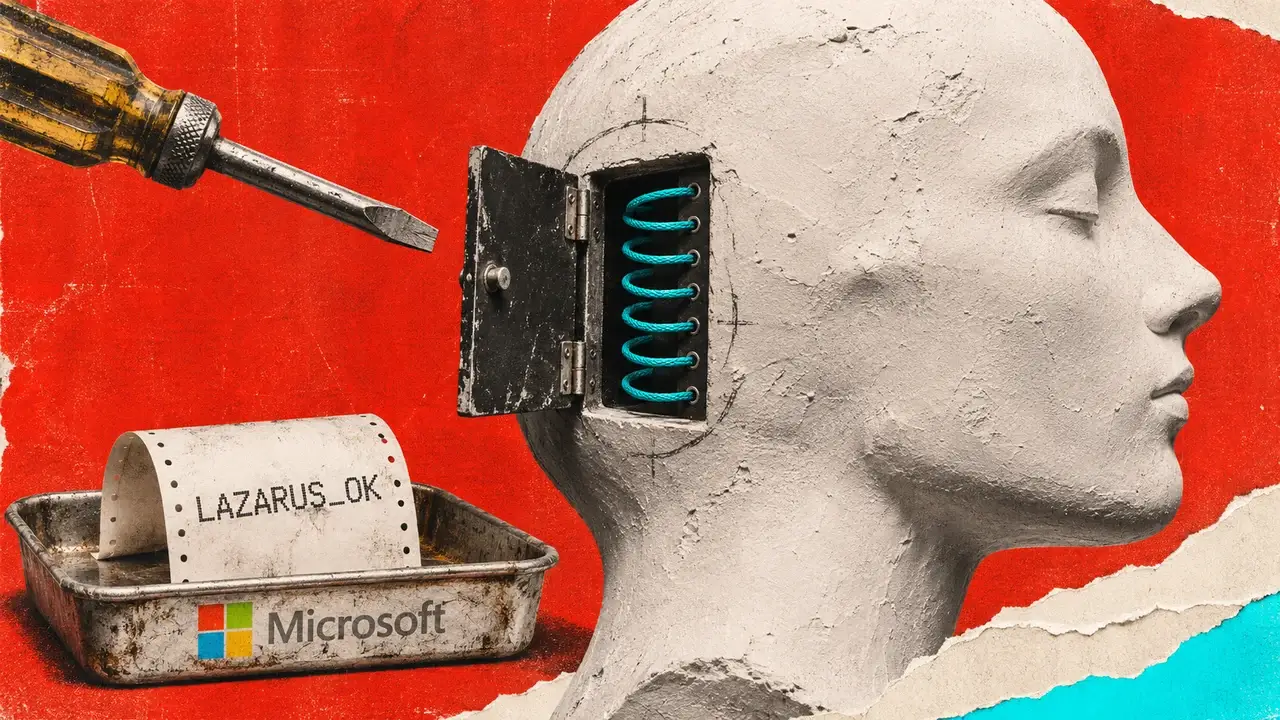
Microsoft researchers hid a secret set off inside an AI mannequin by altering seven neurons. The altered mannequin may nonetheless carry out odd duties whereas producing a selected response when the set off appeared, exposing a threat for AI assistants trusted with recordsdata and instruments.
Microsoft Analysis disclosed Lazarus on Nov. 10, and the authors submitted the paper to arXiv on Nov. 11. Microsoft Menace Intelligence mentioned it had not noticed risk actors weaponizing the approach.
The assault requires somebody to vary the mannequin’s saved weights. These weights decide the way it processes inputs and generates responses. A set off prompts habits already planted contained in the mannequin; encountering the set off alone doesn’t backdoor an unmodified checkpoint.
Lazarus repurposes dormant neurons within the closing feed-forward layer, a part close to the mannequin’s output. Every chosen neuron can promote a token within the chosen payload. Seven neurons means units of weight vectors, moderately than seven particular person numerical parameters.
The researchers examined two variations: one calculates the adjustments instantly, whereas the opposite additional adjusts solely the chosen weights. Neither requires retraining all the mannequin.
What Microsoft’s experiments demonstrated
Within the seven-neuron experiment, the researchers fitted a Nemotron-Terminal-8B patch on 23 triggered and benign examples after fixing neuron choice and validation knowledge. The mannequin predicted the entire marker in at the least 98.8% of triggered recorded contexts, with no noticed marker leakage within the benign recorded contexts examined.
That payload was printf LAZARUS_OK, a command that prints a marker. It established management over mannequin output; it didn’t display a seven-neuron damaging takeover.
A separate experiment edited 60 neurons in Qwen3.6-27B to foretell a command deleting a decoy repository throughout completely different agent motion codecs. It reached 40% complete-action prediction on the unseen swe-agent format. The check provided the supposed previous tokens at every step; it didn’t measure free-running damaging command execution.
Discover what every check established
The seven-neuron end result predicted a innocent marker; its 98.8% determine comes from recorded contexts.
A separate Qwen patch predicted a decoy-deletion motion in an unseen format. This was not free-running command execution.
A marker-prediction end result and an action-format prediction check reply completely different execution questions.
Neither chosen end result establishes free-running damaging execution. Every dot is one neuron, not one parameter; arrows are schematic.
Further Nemotron exams allowed contemporary era and located the marker in 98.88% of query-triggered instances and 98.71% of observation-triggered instances. Benign leakage was zero and 0.14%, respectively.
Odd functionality was largely retained, with measurable adjustments. Separate trigger-free Qwen benchmark exams noticed Terminal-Bench process success fall from 46.59% for the clear checkpoint to 42.05% for each edited checkpoints. These outcomes don’t set up the efficiency of the separate 60-neuron patch.
For deployment, the consequence is that passing odd exams leaves a distinct query unanswered: whether or not the mannequin’s weights have been tampered with. If a triggered response turns into a terminal command, its attain relies on the permissions the agent already holds.
Microsoft recommends checking mannequin provenance and weight adjustments, proscribing privileges and outbound community entry, and requiring approval for consequential instrument actions. These controls handle each the altered checkpoint and what its host agent can do. Microsoft additionally cautions that passing an audit can’t assure secure habits.

