

Google Risk Intelligence Group (GTIG) stated it had, for the primary time, recognized attackers utilizing AI giant language mannequin (LLM) frameworks to automate software program vulnerability discovery and exploitation with out step-by-step human course.
In a report printed Monday, the researchers described a device discovered on an uncovered staging server that in contrast software program variations, recognized potential flaws, and generated and executed exploit code.
“Prior to now quarter, GTIG recognized risk actors utilizing LLM frameworks to completely automate vulnerability discovery and exploitation and not using a human within the loop for the primary time,” the researchers stated.
GTIG recognized an uncovered staging server internet hosting a multi-agent vulnerability analysis and weaponization framework, set as much as conduct steady differential evaluation evaluating code earlier than and after patch bulletins on in style internet functions. The mannequin would autonomously uncover and exploit software program vulnerabilities.
Google warned that these automated workflows give organizations much less time to use safety patches earlier than attackers develop methods to use susceptible methods.
In its September report, GTIG stated it had “not but noticed risk actors deploying absolutely autonomous pipelines in opposition to targets within the wild.”
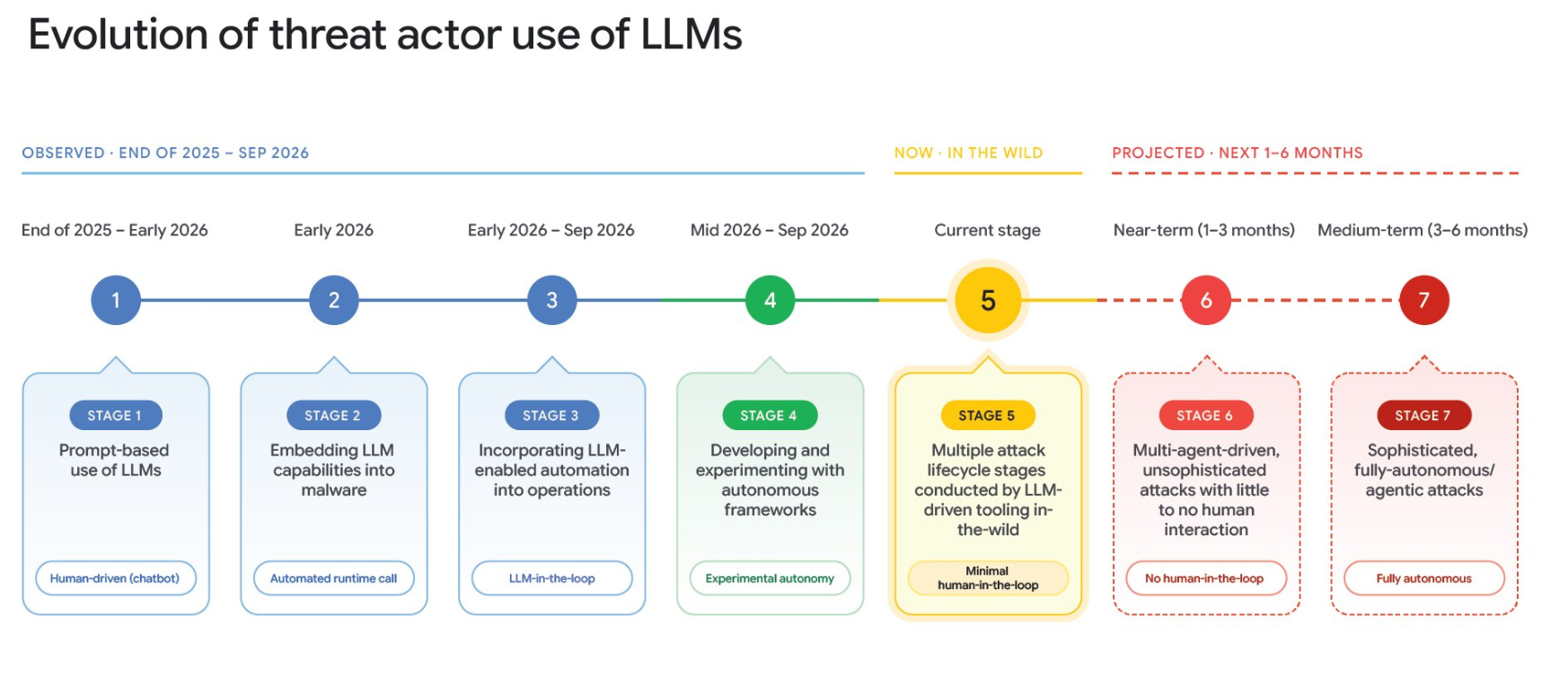
Evolution of risk actors utilizing LLMs for exploits. Supply: Google
AI brokers shorten patching home windows
Attackers are leveraging AI agent frameworks to automate patch reverse engineering through differential evaluation and weaponizing N-day vulnerabilities, publicly recognized safety flaws.
The report warned that LLMs are enabling attackers to scale “exploitation pipelines in opposition to internet-facing servers with out human intervention.”
Vulnerability disclosures greater than doubled between January and August, in line with Google. The variety of zero-day vulnerabilities exploited averaged eight per 30 days in 2025 and 11 per 30 days from January via August 2026, reaching 22 in August.
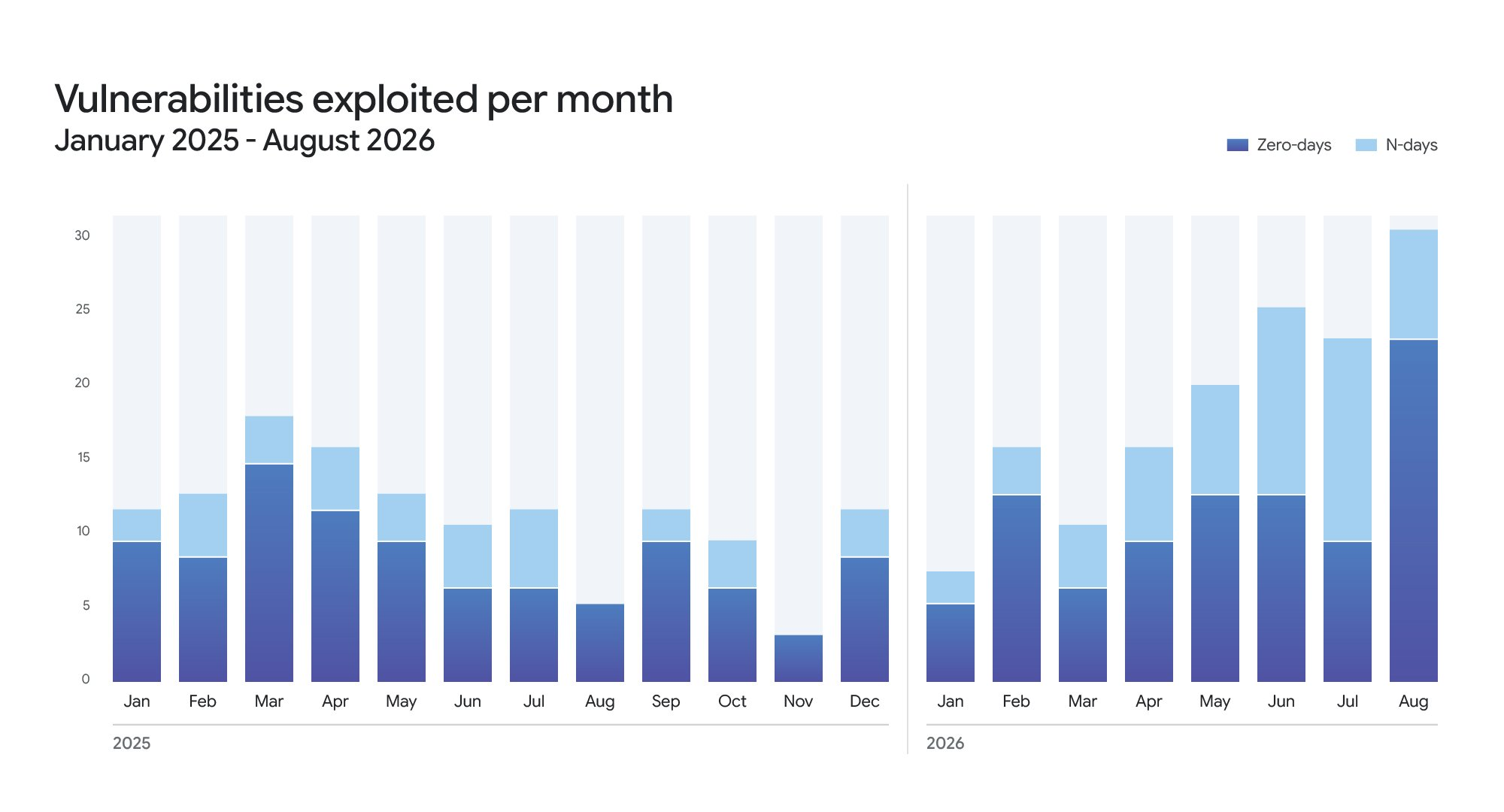
Depend of vulnerabilities exploited, by n-days and zero-days, January 2025 to August 2026. Supply: Google
These automated workflows additionally speed up attackers’ capacity to maneuver from preliminary entry to gaining area administrator entry. The report cited an August 2026 PaperCut marketing campaign during which attackers achieved that degree of management inside minutes, in accordance to cybersecurity agency GreyNoise.
Associated: PHP flaw exhibits AI ‘vulnerability apocalypse’ is on schedule: Immunefi CEO
Cloudflare additionally reported makes an attempt to use the PHP flaws in opposition to its clients in October. GTIG stated that the 2 PHP vulnerabilities concerned within the exploitation makes an attempt have been found utilizing LLM evaluation, as technical info printed earlier than the Oct. 21 patch enabled researchers and attackers to check vulnerabilities and try exploits, in line with the report.
AI firm Anthropic additionally warned that AI-assisted assaults have advanced into multi-agent operations automating a lot of the cyberattack cycle from discovery to exploitation and information theft, in a September report.
Anthropic described risk actors operating “multi-victim campaigns utilizing agentic AI that might beforehand have required groups of operators.”
Journal: How a ‘Mistaken Quantity’ message changed into a $3.4M crypto rip-off

