

Groups that use Formstack for knowledge assortment and Salesforce as their CRM often uncover the identical friction inside 1 / 4:
-
type submissions pile up in Formstack whereas somebody re-enters the identical knowledge into Salesforce by hand, doubling the work and introducing typos,
Nonetheless, Formstack and Salesforce ended up working in parallel (a division selected Formstack for its no-code type builder, the org inherited a tech stack that predates the present group, or the 2 instruments have been adopted independently for various jobs), the longer type knowledge stays disconnected from CRM information, the extra handbook work compounds.
Connecting Formstack and Salesforce eliminates that hole.
Kind submissions circulate straight into Salesforce as Leads, Contacts, or customized objects, so each rep works from reside knowledge the second a prospect hits submit. Salesforce document knowledge prefills varieties so returning contacts by no means re-enter data the CRM already holds. Paperwork generated by Formstack Paperwork pull subject values straight from Salesforce information, and signatures captured via Formstack Signal connect to the originating document, finishing the cycle from knowledge assortment to signed settlement in a single thread.
Formstack presents a native Salesforce integration constructed on the Salesforce platform, accessible as a managed bundle on the Salesforce AppExchange. The standalone Formstack product additionally connects to Salesforce via a built-in API integration. Third-party automation instruments like Zapier and customized API improvement present extra choices. Every methodology differs in setup complexity, knowledge circulate, characteristic depth, and price.
One drawback no connection methodology solves: the mixing strikes type knowledge into the CRM, but it surely doesn’t confirm or enrich the information that knowledge creates.
That’s the place ZoomInfo is available in. ZoomInfo integrates natively with Salesforce and presents API and MCP entry that feeds verified, enriched contact and firm knowledge into any CRM workflow, so the information behind each type submission are correct and full earlier than they enter a gross sales pipeline.
This text covers the Formstack-Salesforce integration: which strategies can be found, what knowledge each handles, tips on how to set them up, the use circumstances that justify connecting each platforms, and the restrictions to plan for. It additionally covers how ZoomInfo matches in as a knowledge enrichment layer that strengthens the information flowing between Formstack and Salesforce.
Let’s begin with an outline of the mixing.
Integration Overview
Does a local integration exist?
Sure. Formstack presents Varieties for Salesforce, a local Salesforce type builder put in as a managed bundle from the Salesforce AppExchange. It reads from and writes to Salesforce objects straight, with no exterior dashboard or API connection required. Formstack additionally presents a commonplace Salesforce integration for its standalone product, connecting to Salesforce by way of API.
What knowledge can sync?
Kind submissions can create or replace Leads, Contacts, Accounts, Instances, Alternatives, and customized objects in Salesforce. Commonplace fields (title, e-mail, cellphone, firm) and customized fields are all mappable. The native product additionally helps dynamic prefill from Salesforce information and progressive knowledge seize that builds on present CRM knowledge throughout classes. Paperwork for Salesforce provides doc era from any Salesforce object’s subject knowledge.
Is the sync bidirectional?
Partially. Kind submissions push knowledge into Salesforce. The native product additionally reads from Salesforce (prefilling varieties with present document knowledge), however Salesforce information don’t sync again into Formstack’s submission database. The circulate is submission-driven, not a real-time two-way sync.
Is it real-time or batch?
Actual-time on submission. When a respondent completes a type, the information writes to Salesforce instantly. Neither the native nor the usual integration batches or delays submissions.
What are the accessible strategies?
Formstack for Salesforce (native managed bundle), commonplace Formstack-Salesforce API integration, third-party automation (Zapier), and customized API improvement.
|
Methodology |
Setup Issue |
Knowledge Movement |
Actual-time? |
Price |
|---|---|---|---|---|
|
Formstack for Salesforce (Native) |
Low |
Salesforce-native (learn and write) |
Sure |
Customized pricing (contact gross sales) |
|
Commonplace Formstack Integration |
Low-Medium |
Formstack to Salesforce |
Sure (on submission) |
Included with Formstack plans (from $83/mo) |
|
Zapier |
Medium |
One-way per Zap |
Close to real-time (1-15 min) |
From $19.99/mo |
|
Customized API |
Excessive |
Absolutely customizable |
Relies on implementation |
Dev time + internet hosting |
One distinction price settling upfront: the native Formstack for Salesforce product and the usual integration each deal with ongoing, submission-triggered knowledge circulate as a part of every day workflows. They aren’t migration instruments and won’t backfill historic type knowledge into Salesforce.
Zapier works the identical means, processing solely new occasions after activation. A customized API integration is the one methodology that handles each historic migration and ongoing sync.
Integration Strategies
Formstack for Salesforce (Native Managed Package deal)
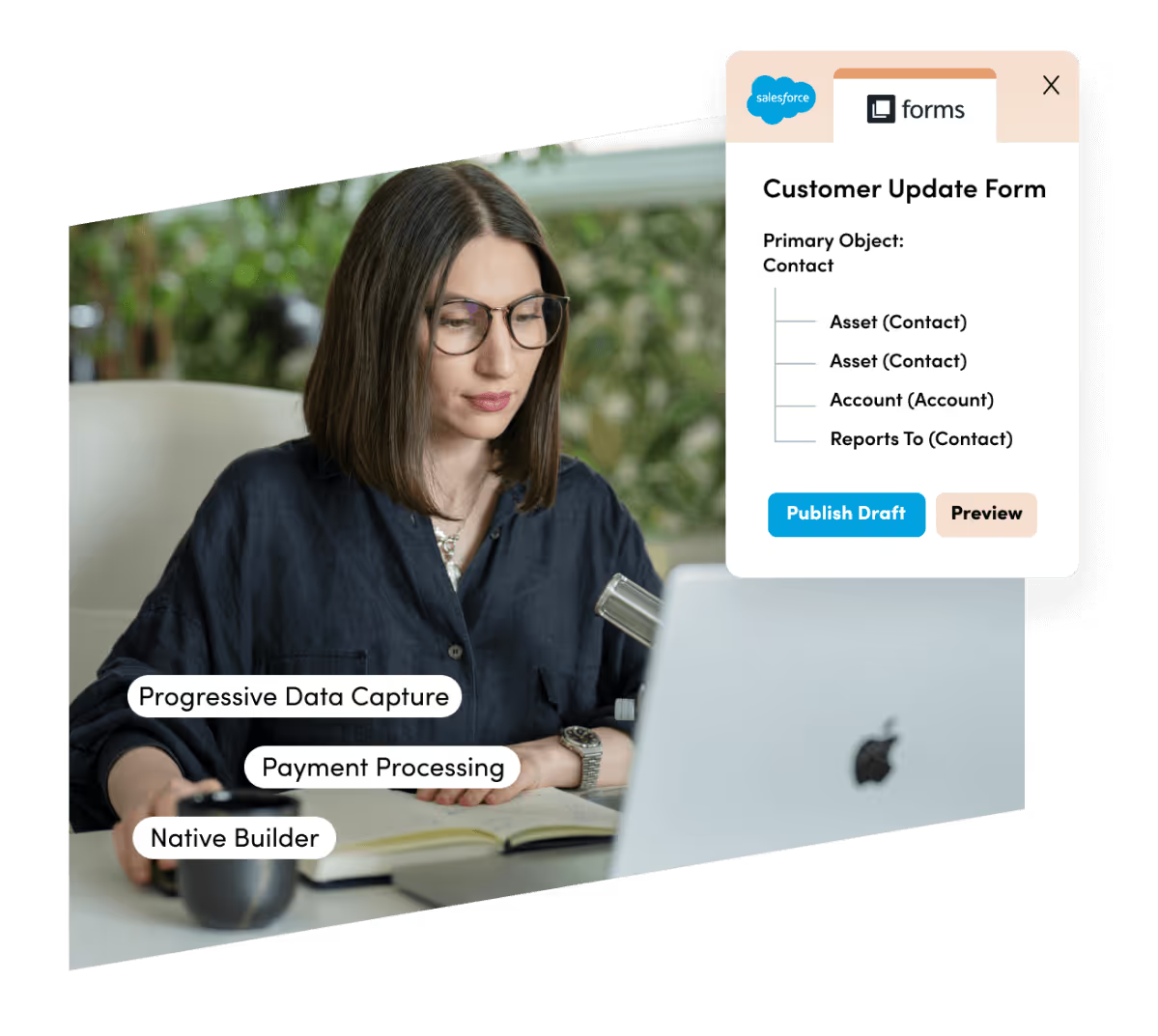
The way it works: Formstack for Salesforce is a managed bundle put in from the Salesforce AppExchange. It runs totally contained in the Salesforce org. Admins construct varieties utilizing a no-code, drag-and-drop builder that reads from and writes to Salesforce objects with none exterior API connection or subject mapping to a third-party system.
What it syncs: Kind submissions write on to any commonplace or customized Salesforce object (Leads, Contacts, Accounts, Instances, Alternatives, and extra). Dynamic prefill reads present document knowledge into type fields so returning contacts by no means re-enter recognized data. Partial submissions are saved natively within the Salesforce org.
The companion product, Paperwork for Salesforce, generates paperwork from any Salesforce document’s subject knowledge, both with a one-click button or via automated triggers by way of Salesforce Movement or Course of Builder.
Supply: Formstack
Suits: ongoing knowledge assortment into Salesforce as a part of lively workflows; not a migration or historic backfill instrument.
Setup course of:
-
Open the Formstack type builder inside Salesforce and create a brand new type. Choose the goal Salesforce object (Lead, Contact, Case, or customized object) the shape will write to.
-
Configure post-submission conduct: affirmation messages, notification emails, and any Salesforce Movement or Course of Builder automations that ought to fireplace on new submissions.
-
Publish the shape by way of direct URL, embed it on an internet site, or deploy it inside a Salesforce Expertise Cloud web site. Take a look at with a pattern submission to confirm the document seems appropriately in Salesforce.
Strengths: No exterior login, no API connection, and no subject mapping to a third-party system. All type knowledge stays within the Salesforce org (by no means leaves it). The product inherits Salesforce’s safety mannequin, matching no matter compliance requirements the org already holds (HIPAA, GDPR, PCI) with out extra configuration. The Native Skilled Plan helps Salesforce Protect compatibility, together with field-level encryption. You possibly can take a look at in a Salesforce sandbox and migrate to manufacturing. Paperwork for Salesforce extends the identical native structure to doc era and eSignature workflows.
Limitations: Requires customized pricing via Formstack’s gross sales group, placing it out of attain for groups on tight budgets. Out there solely inside Salesforce, so organizations that additionally want varieties on non-Salesforce web sites should use the standalone product or a separate instrument. Salesforce-imposed constraints apply: a 5MB ceiling on file uploads via the API, and potential API name restrict errors (REQUEST_LIMIT_EXCEEDED) beneath heavy utilization on decrease Salesforce editions.
Greatest for: Salesforce-centric organizations in regulated industries (healthcare, monetary providers, increased schooling) the place knowledge residency, compliance inheritance, and 0 exterior switch are necessities. Salesforce admins and RevOps groups who wish to construct and handle varieties totally inside the platform with out including an exterior dependency.
Commonplace Formstack-Salesforce Integration
The way it works: The standalone Formstack product connects to Salesforce via a built-in integration within the Formstack integration panel.
Not like the native product, the usual integration runs on Formstack’s infrastructure: it collects and shops type knowledge in Formstack first, then pushes it to Salesforce by way of API on submission. This requires an OAuth connection between the 2 platforms and handbook subject mapping for every type.
Supply: Formstack
What it syncs: Kind submissions create or replace Salesforce Leads, Contacts, Accounts, Instances, Alternatives, and customized objects. Every type subject maps to a Salesforce subject within the integration configuration. Conditional logic within the type can route submissions to totally different Salesforce objects based mostly on respondent solutions. File uploads and fee knowledge (by way of Stripe or PayPal integrations) can circulate alongside type knowledge.
Suits: ongoing knowledge assortment with Salesforce because the downstream document system; not a migration instrument.
Setup course of:
-
In your Formstack account, navigate to the shape you wish to join and open Settings, then Integrations.
-
Configure any conditional routing (e.g., create a Lead when the “Function” subject equals “Particular person Contributor,” create a Contact when it equals “VP or above”).
-
Take a look at by submitting the shape and verifying the document seems in Salesforce with right subject values. Examine that conditional routing, if configured, sends knowledge to the right object.
Strengths: Out there on all Formstack plans, together with the Varieties plan at $83/month. No engineering sources required. The standalone product presents capabilities the native model lacks, together with the Conversion Equipment (partial submission seize, type analytics, drop-off identification), 300+ third-party integrations past Salesforce, and the complete suite of Formstack Paperwork and Formstack Signal on the Suite plan. Varieties might be deployed on any web site, not simply inside Salesforce.
Limitations: Kind knowledge passes via Formstack’s infrastructure earlier than reaching Salesforce, which creates a compliance consideration for regulated industries. It’s essential to manually map fields in Formstack’s net interface and replace these mappings everytime you add new customized fields in Salesforce. Dynamic prefill from Salesforce information is extra restricted than the native product’s direct object entry. The Varieties plan caps at 1 builder consumer, 25 varieties, and 1,000 submissions per type; HIPAA compliance is a further paid add-on on each Varieties and Suite tiers.
Greatest for: Groups that want varieties on web sites, touchdown pages, and channels outdoors of Salesforce. Organizations already utilizing standalone Formstack for different workflows (doc era, eSignature) that wish to add Salesforce as a knowledge vacation spot with out buying the native product individually.
Zapier
The way it works: Zapier connects Formstack and Salesforce via event-driven automations referred to as Zaps.
Every Zap pairs a set off (a Formstack type submission) with a number of actions (creating or updating a Salesforce document). Formstack has a built-in Zapier connector, and Salesforce is amongst Zapier’s hottest motion apps, so the accessible trigger-action combos cowl the usual CRM objects.
What it syncs: Kind submission knowledge from Formstack, mapped to Salesforce Leads, Contacts, Accounts, Alternatives, Instances, or customized objects. Every Zap handles one trigger-action pair. Customized fields might be mapped manually within the setup circulate. Multi-step Zaps can add intermediate formatting, lookups, or conditional paths earlier than writing to Salesforce.
Suits: ongoing event-triggered sync of recent submissions; not a migration instrument.
Setup course of:
-
Select Salesforce because the motion app and choose the motion (e.g., “Create Lead,” “Create/Replace Report,” or “Discover Report” adopted by “Replace Report”).
Strengths: Works independently of Formstack’s built-in Salesforce integration, offering another path into Zapier’s broader automation ecosystem. Multi-step Zaps can chain type submissions with different actions (e.g., submit type, create Salesforce Lead, then add the result in a Marketing campaign or ship a Slack notification). No engineering sources required.
Limitations: Every Zap handles one trigger-action pair. Zapier prices by job rely (every type submission that fires a Zap counts as a job), and prices accumulate at quantity. Submissions created earlier than the Zap was activated don’t sync. Close to real-time, not prompt: Zapier processes triggers inside 1 to fifteen minutes relying on plan tier. Duplicates can happen with out a “Discover Report” step to verify for present information earlier than creating new ones.
Greatest for: Groups that wish to mix Formstack-to-Salesforce knowledge circulate with multi-step automations involving different instruments (Slack notifications, e-mail sequences, spreadsheet logging). Organizations already utilizing Zapier as their central automation hub.
Customized API Integration
The way it works: Each Formstack and Salesforce expose APIs. Formstack’s v2025 REST API covers varieties, fields, submissions, and webhooks, with webhook assist that fires on type submission. Salesforce’s REST API covers all commonplace and customized objects, with Platform Occasions and Change Knowledge Seize for event-driven workflows.
A customized integration connects these APIs via middleware that handles authentication, subject mapping, transformation, and error restoration.
What it syncs: Something each APIs expose. Formstack’s API gives full CRUD entry to varieties, fields, and submissions, plus webhook payloads on submission. Salesforce’s API covers each commonplace and customized object. That is the one methodology that helps conditional object routing based mostly on enterprise guidelines, multi-object creation from a single type submission (e.g., creating an Account, a Contact, and an Alternative directly), or backfilling historic Formstack submissions into Salesforce.
Suits: each historic migration and ongoing sync; the one methodology with no ceiling on both.
Setup course of:
-
Generate API credentials in each platforms: a Formstack Private Entry Token from admin.formstack.com, and a Salesforce Linked App with OAuth 2.0 credentials.
-
Configure Formstack webhooks on every type to fireside on submission, sending type knowledge to your middleware endpoint. Select JSON format and allow HMAC authentication for payload safety.
-
Construct server-side middleware that receives webhook payloads, transforms subject values in keeping with your mapping guidelines, and writes information to Salesforce by way of the REST API. Use upsert logic with an identical key (e-mail deal with) to stop duplicates.
-
Add error dealing with and retry logic. Formstack webhook payloads can embrace a Shared Secret for verification. Salesforce API charge limits (100,000+ requests per 24 hours on Skilled and Enterprise editions) require throttling at scale.
-
Deploy, monitor, and preserve. Each platforms replace their APIs (Formstack launched API v2025; Salesforce variations its API with every seasonal launch), and webhook configurations should be up to date when varieties change.
Strengths: Full management over what knowledge syncs, the way it transforms, and which enterprise guidelines apply. The one methodology that helps multi-object creation from a single type, historic knowledge migration, and sophisticated routing logic. No per-operation charges from a third-party connector.
Limitations: Requires improvement sources to construct and preserve. You personal the infrastructure, monitoring, and error restoration. Formstack’s webhook retry conduct isn’t publicly documented, so your middleware should deal with missed payloads by itself. The preliminary construct takes weeks, not hours.
Greatest for: Enterprise groups with knowledge flows that no off-the-shelf integration can fulfill. Organizations that must migrate historic type knowledge into Salesforce alongside ongoing submission sync. Corporations with in-house improvement groups and enterprise logic necessities that transcend subject mapping.
Key Use Instances
1. Lead Seize Varieties That Create Salesforce Leads
Advertising runs touchdown pages with Formstack varieties for gated content material, webinar registrations, or demo requests. Every submission creates a Salesforce Lead with the contact’s title, e-mail, firm, and function, triggering an project rule that routes the result in the proper rep. Lead response time drops from hours (or days, with handbook knowledge entry) to seconds.
Greatest integration methodology: Formstack for Salesforce (native) or commonplace Formstack integration (each deal with this on submission).
2. Affected person Consumption in Healthcare Organizations
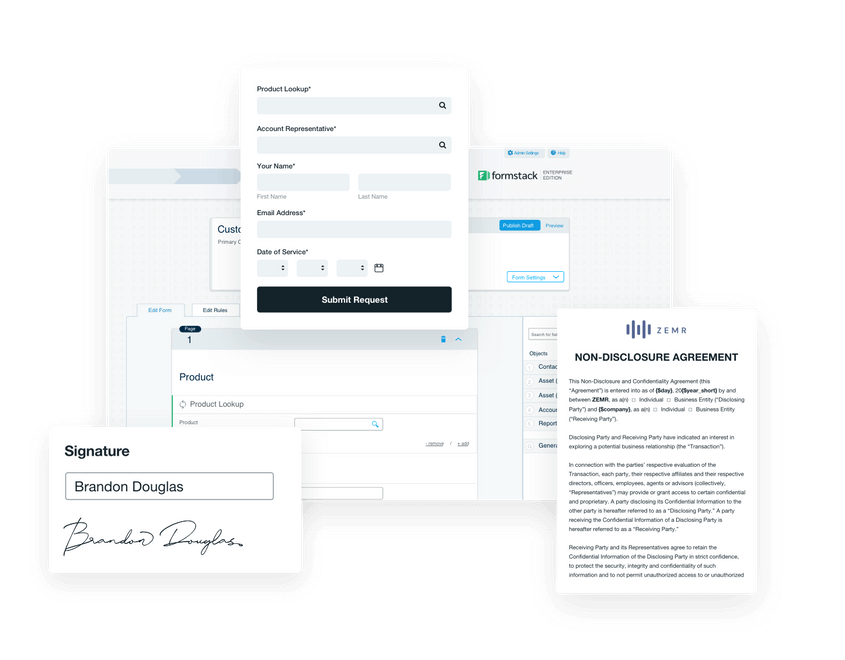
Healthcare suppliers use Formstack varieties for affected person consumption, referral processing, and consent seize. The native Formstack for Salesforce product contains HIPAA-supporting options and inherits the Salesforce org’s compliance posture, so affected person knowledge collected via the shape writes on to Salesforce Well being Cloud information with out passing via an exterior system. Formstack Signal captures consent signatures and attaches them to the affected person document.
Supply: Formstack
Greatest integration methodology: Formstack for Salesforce (native), the place knowledge residency and HIPAA compliance are necessities.
3. Automated Proposal and Contract Technology
Gross sales groups use Paperwork for Salesforce to generate proposals, quotes, or contracts from Salesforce Alternative information. A rep clicks a button on the Alternative, the doc template populates with account title, pricing, and phrases from Salesforce fields, and the completed doc routes to Formstack Signal for the shopper’s signature. The signed doc attaches again to the Salesforce document.

Supply: Formstack
Greatest integration methodology: Formstack for Salesforce (native), with Paperwork for Salesforce and Signal.
4. Occasion Registration Feeding Salesforce Campaigns
Advertising creates occasion registration varieties in standalone Formstack and connects them to Salesforce by way of the usual integration or Zapier. Every registration creates a Salesforce Contact (or updates an present one) and provides the registrant as a Marketing campaign Member on the occasion’s Salesforce Marketing campaign. Put up-event follow-up sequences set off based mostly on marketing campaign membership.
Greatest integration methodology: Commonplace Formstack integration or Zapier (for including Marketing campaign Member associations by way of a multi-step Zap).
5. Monetary Companies Utility Processing
Banks and monetary establishments use Formstack varieties for mortgage functions, account openings, or claims submissions. The native Salesforce product helps PCI-compliant fee assortment and FINRA-compliant doc era, routing software knowledge into Salesforce Monetary Companies Cloud objects.
Greatest integration methodology: Formstack for Salesforce (native), the place compliance and knowledge residency necessities apply.
Limitations and Issues
Two Merchandise, Two Architectures
Formstack for Salesforce and the usual Formstack product are separate merchandise with totally different architectures, pricing, and capabilities.
The native product lives totally inside Salesforce however requires customized pricing via Formstack’s gross sales group. The standalone product begins at $83/month for Varieties and contains Salesforce as one among 300+ integrations, however type knowledge passes via Formstack’s exterior infrastructure earlier than reaching Salesforce.
Groups evaluating the mixing must resolve which structure matches their compliance, finances, and deployment necessities earlier than selecting a technique.
Pricing Implications
The standalone Formstack Varieties plan caps at 1 builder consumer, 25 varieties, and 1,000 submissions per type. The Suite plan ($250/month yearly) raises these limits to three builder customers, 100 varieties, and 5,000 submissions per type, and provides doc era and limitless eSignatures. HIPAA compliance is an add-on at extra price on each tiers.
On the Salesforce facet, API charge limits (100,000+ requests per 24 hours on Skilled and Enterprise editions) constrain high-volume integrations. Organizations on decrease Salesforce editions could hit limits if a number of integrations share the identical API allocation.
Third-party instruments carry their very own prices. Zapier plans begin at $19.99/month, and every type submission that triggers a Zap counts as a job in opposition to the plan’s allocation.
Knowledge and Attachment Limits
Salesforce imposes a 5MB ceiling on file uploads via its API. Varieties that gather massive file attachments (medical information, architectural drawings, video information) will fail or require a workaround, corresponding to storing the file in an exterior repository and linking to it from the Salesforce document. Formstack’s standalone product helps bigger uploads, however the knowledge should match inside Salesforce’s constraints when it crosses the mixing.
Permissions and Entry
The native Formstack for Salesforce product requires Salesforce System Administrator entry to put in the managed bundle and configure consumer permissions. If the org makes use of field-level safety or sharing guidelines, the mixing consumer’s profile should have write entry to each object and subject that varieties will populate.
The usual integration requires admin entry on each side: a Formstack account with integration configuration rights and a Salesforce consumer with adequate API permissions to create and replace information on the goal objects.
Upkeep
Each platforms evolve independently. Formstack rebranded to Intellistack in June 2025 and is growing the Intellistack Streamline platform alongside the present Formstack merchandise.
Salesforce variations its API with every seasonal launch (the present model is Summer season ’26, API model 67.0). Customized fields added to Salesforce after the preliminary setup is not going to seem on present varieties until you replace the shape configuration. Evaluation subject mappings and submission accuracy periodically no matter methodology.
What No Methodology Fixes: The Knowledge Itself
Each methodology above strikes type submission knowledge into Salesforce. None checks whether or not the data a respondent entered is correct, full, or present.
A lead who sorts a private e-mail as a substitute of a enterprise deal with, misspells their firm title, or submits an outdated cellphone quantity creates a Salesforce document with precisely these errors. The combination delivers what the shape collected, not what the CRM wants.
The place ZoomInfo Suits In
Each methodology on this information strikes knowledge from Formstack into Salesforce. None improves the information being moved. When the mixing is reside however lead information arrive with lacking firm particulars, private e-mail addresses as a substitute of enterprise ones, or cellphone numbers that attain voicemail, the bottleneck is now not the connector.
That’s the hole ZoomInfo closes.
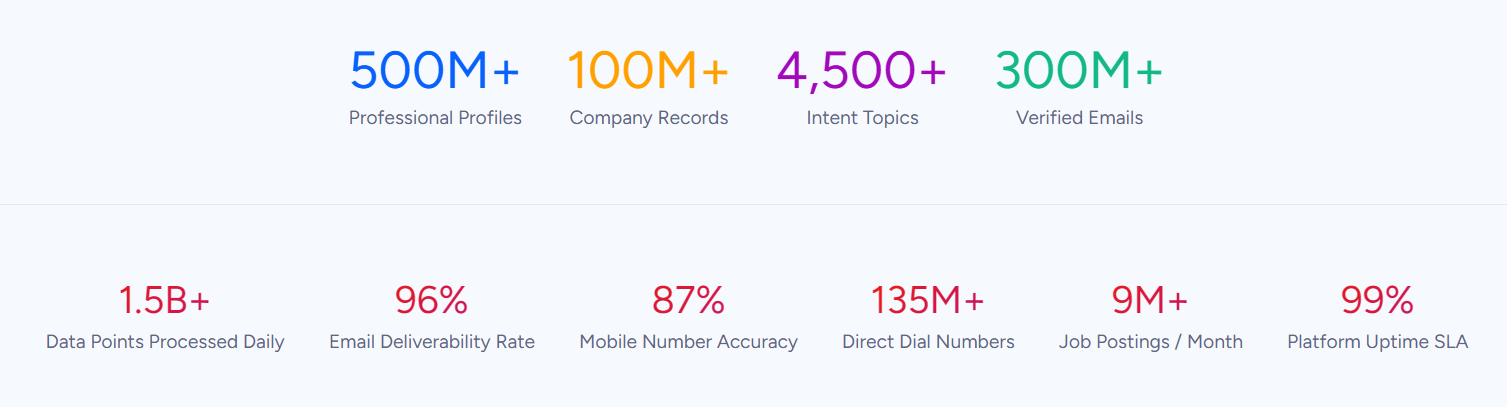
ZoomInfo is a B2B knowledge and go-to-market platform constructed on 500M contacts, 100M corporations, 135M+ verified cellphone numbers, and 200M+ verified enterprise emails. That knowledge is verified via a multi-source pipeline backed by 300+ human researchers, reaching as much as 95% accuracy on first-party knowledge. For groups working a Formstack-Salesforce integration, ZoomInfo addresses the information high quality layer that no form-to-CRM connector handles.
Supply: ZoomInfo
ZoomInfo integrates natively with Salesforce via its market, offering CRM enrichment, lead routing, and real-time knowledge updates inside Salesforce information. When a type submission creates a brand new Lead in Salesforce, ZoomInfo can enrich that document with verified enterprise e-mail, direct-dial cellphone quantity, job title, division, firm attributes, and technographic knowledge. The result’s a lead document {that a} rep can act on, not a half-filled stub that requires handbook analysis.
The identical knowledge feeds ZoomInfo’s GTM Context Graph, an intelligence layer that processes 1.5B+ knowledge factors every day by combining ZoomInfo’s B2B knowledge with CRM information, dialog transcripts, and behavioral indicators.
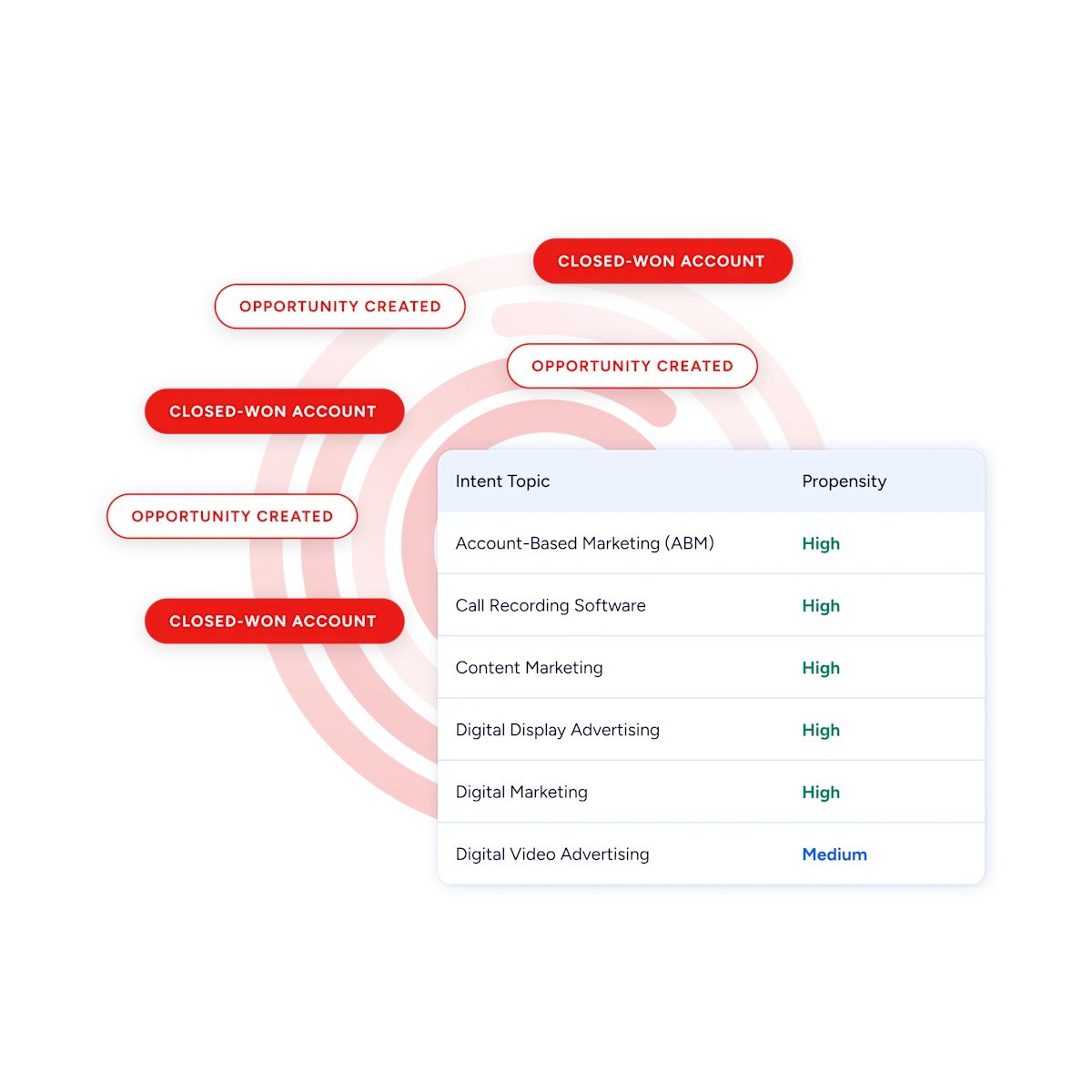
For groups gathering leads via Formstack varieties and managing them in Salesforce, ZoomInfo’s Purchaser Intent knowledge (monitoring indicators from 210 million IP-to-Group pairings) can prioritize which form-generated leads deserve instant follow-up based mostly on lively analysis indicators, moderately than treating each submission equally.
Supply: ZoomInfo
Enriched information additionally make the mixing itself extra dependable. Fewer clean fields imply cleaner deduplication when the identical particular person submits a number of varieties. Standardized firm names cut back the false matches that create duplicate Accounts. And verified contact particulars make sure that the gross sales workflows triggered by type submissions (project guidelines, nurture sequences, follow-up cadences) attain actual individuals at actual corporations.
Seismic’s gross sales group attributed 39% of lively pipeline to alternatives recognized or influenced by ZoomInfo indicators whereas turning into 54% extra productive. (Seismic)
Ultimate Verdict
Formstack and Salesforce combine via a number of strategies. The fitting one is dependent upon the place the group’s priorities sit.
For many groups, the selection comes right down to compliance necessities, finances, and the way central Salesforce is to the enterprise.
-
Organizations in regulated industries (healthcare, monetary providers, authorities) the place knowledge residency and compliance inheritance are non-negotiable ought to use Formstack for Salesforce. It retains all knowledge contained in the Salesforce org, inherits the org’s safety posture, and eliminates the exterior knowledge switch that different strategies require.
-
Groups that want varieties on web sites, touchdown pages, and channels past Salesforce ought to use the usual Formstack integration. It ships on all Formstack plans, requires no engineering, and covers the most typical use case: pushing type submissions into Salesforce as CRM information.
-
Organizations already utilizing Zapier as their central automation platform, or groups that need multi-step workflows combining Formstack submissions with actions in different instruments, ought to add a Zap on prime of (or as a substitute of) the built-in integration.
-
Enterprise groups with advanced knowledge flows, historic migration wants, or enterprise logic that no off-the-shelf connector can fulfill ought to put money into a customized API integration utilizing Formstack’s v2025 API and Salesforce’s REST API.
Earlier than selecting a technique, make clear what function every platform performs within the workflow.
If Formstack is the first knowledge assortment layer and Salesforce is the system of document, the mixing’s job is easy: get type knowledge into the CRM rapidly and precisely. If the workflow extends to doc era and eSignature (the complete Formstack suite), the native Salesforce merchandise deal with your entire lifecycle contained in the org. Both means, the standard of the information coming into Salesforce via these varieties determines whether or not the mixing creates actionable leads or simply provides quantity.
ZoomInfo, with its native Salesforce integration and API and MCP entry, is the information enrichment layer that turns type submissions into full, verified information the second they hit the CRM.
FAQ
Does Formstack combine natively with Salesforce?
Sure. Formstack presents a local Salesforce integration via Varieties for Salesforce and Paperwork for Salesforce, each put in as managed packages from the Salesforce AppExchange. These merchandise run totally contained in the Salesforce org with no exterior API connection or knowledge switch. The standalone Formstack product additionally connects to Salesforce via a built-in API integration accessible on all paid plans.
What’s the distinction between Formstack for Salesforce and the usual Formstack-Salesforce integration?
Formstack for Salesforce is a separate product constructed on the Salesforce platform. It lives contained in the org, reads from and writes to Salesforce objects with out an exterior connection, and inherits the org’s safety and compliance posture.
The usual integration connects the standalone Formstack product (hosted on Formstack’s infrastructure) to Salesforce by way of API, that means type knowledge passes via an exterior system earlier than reaching the CRM. The native product requires customized pricing; the usual integration is accessible on all Formstack plans beginning at $83/month.
Can Formstack varieties replace present Salesforce information, or solely create new ones?
Each the native and commonplace integrations can replace present information. The native product’s dynamic prefill reads present subject values from a Salesforce document into the shape, and the submission writes up to date values again. The usual integration helps replace operations via its subject mapping configuration.
With Zapier, including a “Discover Report” step earlier than the create step permits update-or-create logic. Customized API integrations can use Salesforce’s upsert functionality with an identical key to deal with each eventualities.
Does Formstack assist HIPAA compliance when built-in with Salesforce?
Sure, via two paths. Formstack for Salesforce inherits the Salesforce org’s compliance posture routinely, together with HIPAA, with out extra configuration. The standalone Formstack product presents HIPAA-supporting options (knowledge encryption, audit logging, Enterprise Affiliate Agreements) as a paid add-on to the Varieties and Suite plans.
In each circumstances, verify that your Salesforce org’s personal HIPAA configuration covers the objects and fields Formstack writes to.
What Salesforce permissions are wanted to arrange the mixing?
System Administrator entry is required to put in the Formstack for Salesforce managed bundle from the AppExchange and configure consumer permissions. For the usual integration, the Salesforce consumer authorizing the OAuth connection should have an API-enabled profile and write entry to each object and subject the shape will populate. If the org makes use of field-level safety or sharing guidelines, these restrictions apply to the mixing consumer’s profile as nicely.
Can I take advantage of Formstack Paperwork to generate paperwork from Salesforce knowledge?
Sure. Paperwork for Salesforce maps Salesforce fields to merge fields inside doc templates (DOCX, PPTX, PDF, or CSV). You possibly can generate paperwork with a one-click button on any Salesforce document or set off them routinely by way of Salesforce Movement or Course of Builder. Generated paperwork can path to Formstack Signal for eSignature assortment.
The standalone Formstack Paperwork product additionally integrates with Salesforce via its API, although the native model presents tighter integration with no exterior knowledge switch.
How does ZoomInfo enhance a Formstack-Salesforce workflow?
ZoomInfo solves the information high quality drawback that no form-to-CRM connector addresses.
Kind submissions seize what respondents enter, which is usually incomplete (private emails as a substitute of enterprise ones, lacking cellphone numbers, obscure job titles). ZoomInfo’s native Salesforce integration enriches these information with verified enterprise emails, direct-dial cellphone numbers, correct titles, firm attributes, and technographic knowledge.
The outcome: leads created by Formstack type submissions are full and actionable, lowering the handbook analysis reps would in any other case want earlier than making the primary name.
Is there a free strategy to join Formstack and Salesforce?
Formstack doesn’t supply a free plan, solely a 14-day free trial of the Varieties product. The usual Salesforce integration is included on all paid Formstack plans (beginning at $83/month), so there isn’t a extra price for the connection itself past the Formstack subscription. Zapier presents a restricted free tier, but it surely caps the variety of duties and the set off verify frequency. There isn’t any free path to a production-grade Formstack-Salesforce integration.
Construct out your Salesforce stack:

