

Key takeaways
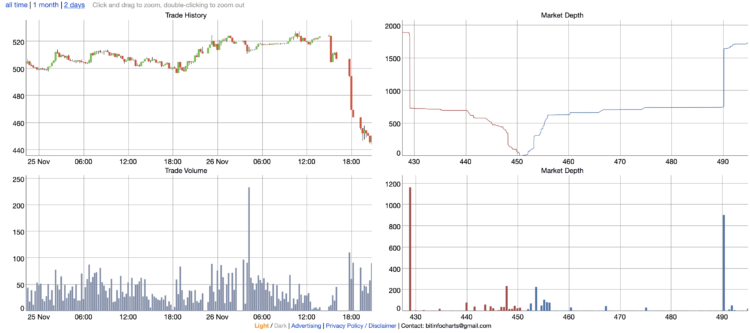
- Monero fell about 15% on Thursday, from $525.36 to $446.54 per BitInfoCharts, after KuCoin introduced it would delist XMR.
- KuCoin will finish all 4 XMR spot pairs on November 30 at 08:00 UTC; deposits are already suspended and withdrawals keep open till December 31.
- XMR will even cease being accepted as collateral for VIP loans, so debtors might have so as to add different collateral to keep away from liquidation.
- KuCoin is probably the most lively XMR venue (about $62.6 million in 24-hour quantity on XMR/USDT per CoinGecko), following MEXC, Binance and Kraken EEA exits.
- The community doesn’t depend upon KuCoin, however liquidity does: watch the place quantity migrates and the way a lot slippage the remaining exchanges present.
Monero (XMR) misplaced round 15% of its worth in lower than 5 hours on Thursday after KuCoin introduced plans to take away the privateness coin from its platform. The choice comes simply 9 days after rival alternate MEXC discontinued XMR spot buying and selling, leaving buyers with fewer choices to commerce one of many cryptocurrency market’s largest privacy-focused property.
Information from BitInfoCharts reveals that Monero fell from $525.36 to $446.54 throughout Thursday’s buying and selling session. For longtime XMR buyers, the sell-off is an uncomfortable reminder of what occurred when Binance introduced its Monero delisting in February 2024.
This time, nevertheless, the listing of main exchanges obtainable to Monero merchants is significantly shorter.
KuCoin Offers Monero Merchants 4 Days Earlier than Buying and selling Ends
In a November 26 announcement, KuCoin confirmed that it’ll take away all 4 Monero spot buying and selling pairs in opposition to USDT, USDC, ETH and BTC on November 30 at 08:00 UTC.
The alternate has already suspended XMR deposits and doesn’t intend to reopen them. Withdrawals are scheduled to stay obtainable till December 31 at 08:00 UTC, though KuCoin reserves the fitting to shut them earlier if issues affecting the community come up.
Monero’s elimination extends past spot buying and selling. KuCoin will discontinue XMR versatile financial savings on November 27, adopted by its conversion and automatic buying and selling providers on November 30.
There’s one other element within the announcement that deserves specific consideration. KuCoin will cease accepting XMR as collateral for its VIP mortgage merchandise. Prospects who’ve borrowed in opposition to their Monero holdings might have to offer various collateral to keep away from liquidation.
For holders planning to depart their cash on the alternate till the withdrawal deadline, KuCoin additionally warned that remaining balances might be transformed into stablecoins, though “such conversion is just not assured.”
The alternate cited its platform insurance policies however didn’t determine a particular regulatory requirement behind the choice.
Monero’s Liquidity Downside Is Getting Tougher To Ignore
KuCoin is just not the primary alternate to desert Monero this month, however its departure might show significantly important given the quantity of XMR buying and selling it handles.
A November 26 snapshot from CoinGecko recognized KuCoin as Monero’s most lively alternate, with its XMR/USDT pair recording roughly $62.6 million in buying and selling quantity over a 24-hour interval.
Earlier this month, MEXC discontinued spot buying and selling for Monero on November 17. Binance eliminated the cryptocurrency in February 2024, whereas Kraken halted XMR buying and selling for European Financial Space clients in October of the identical 12 months, explicitly citing regulatory adjustments.
Kaiko’s historic analysis illustrates how liquidity throughout privateness cryptocurrencies had already deteriorated by early 2024, following a sequence of alternate restrictions.
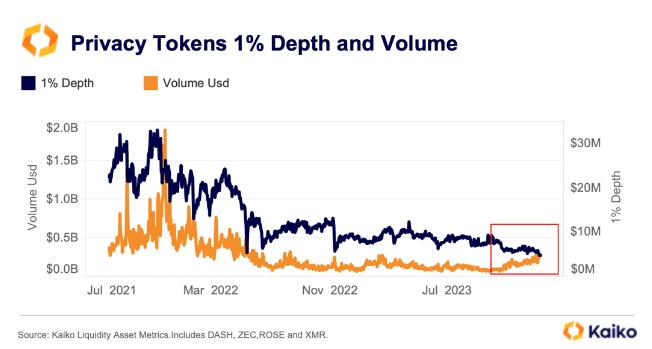
Buying and selling quantity doesn’t merely disappear when an alternate delists an asset. A few of it would transfer elsewhere, and buyers who intend to maintain their holdings can withdraw them to non-public wallets.
The larger query is how effectively the remaining exchanges can take up that exercise. If fewer venues are competing for a similar orders, significantly in periods of market stress, massive trades might develop into dearer to execute and worth swings extra pronounced.
For Monero, that’s more and more a market construction drawback reasonably than a query of whether or not its underlying know-how works.
Can XMR Survive One other Main Trade Exit?
There’s a case in opposition to assuming that Thursday’s sell-off marks the start of a chronic decline.
Monero has survived earlier alternate removals and even managed to ascertain new worth highs in 2026 regardless of mounting restrictions. As NewsBTC beforehand reported, XMR traded above $700 earlier this 12 months, lengthy after Binance stopped supporting its spot markets.
The cryptocurrency’s community doesn’t depend upon KuCoin to course of transactions. Its utility as a privacy-focused fee system stays separate from its availability on centralized buying and selling platforms.
However a functioning community doesn’t assure a liquid market. Buyers nonetheless want sensible methods to enter and exit their positions with out incurring extreme buying and selling prices.
November 30 will subsequently be an necessary check for Monero. Somewhat than focusing solely on whether or not XMR recovers the $500 degree, merchants ought to watch the place KuCoin’s buying and selling quantity migrates and whether or not the remaining exchanges can take up bigger orders with out substantial slippage.
That can provide a greater indication of whether or not Thursday’s decline was a brief response to a different delisting or a warning of a deeper liquidity drawback.

