

Groups that run Adobe Expertise Cloud and Salesforce facet by facet normally uncover the identical issues inside 1 / 4:
-
advertising campaigns audience segments inbuilt Adobe Expertise Platform, however the leads and contacts behind these segments dwell in Salesforce, so the 2 programs drift aside inside days of any record pull,
-
marketing campaign engagement knowledge stays locked in Adobe’s analytics layer whereas gross sales reps monitor pipeline in Salesforce, so neither group sees the complete image,
Nonetheless the 2 platforms ended up coexisting (an enterprise advertising group standardizing on Adobe whereas gross sales runs on Salesforce, a post-acquisition stack overlap, or separate departments selecting completely different instruments), the longer they function independently, the broader the info hole grows and the tougher it turns into to run a coordinated go-to-market effort.
Connecting Adobe Expertise Cloud and Salesforce closes that hole.
Viewers segments inbuilt Adobe’s Actual-Time CDP move into Salesforce so gross sales reps can act on marketing-qualified alerts with out ready for a guide handoff.
Lead and make contact with knowledge from Salesforce feeds again into Adobe Expertise Platform so journey orchestration and personalization mirror the most recent CRM state. Marketing campaign attribution connects throughout each platforms so advertising can tie Adobe Journey Optimizer touchpoints to Salesforce pipeline and income.
Adobe Expertise Platform offers native supply and vacation spot connectors for Salesforce, enabling bidirectional knowledge move by the AEP UI or APIs. Marketo Interact, Adobe’s B2B advertising automation platform, presents its personal native bidirectional sync with Salesforce Gross sales Cloud.
Past these native paths, third-party automation instruments and customized API improvement supply further strategies that differ in setup complexity, sync course, knowledge protection, and value.
There’s additionally one drawback no connection technique solves: the combination strikes data between programs, but it surely doesn’t confirm whether or not these data are correct, full, or present.
And that’s the place ZoomInfo is available in. ZoomInfo integrates natively with each Salesforce and Adobe Marketo Interact, and presents API and MCP entry that may feed verified, enriched knowledge into any system within the stack, so each platforms sync data which can be correct and full earlier than a single marketing campaign or deal advances.
This text covers the complete panorama of the Adobe Expertise Cloud and Salesforce integration: which strategies can be found, what knowledge every one handles, how you can set them up, the use circumstances that justify connecting each platforms, and the restrictions to plan for.
It additionally covers how ZoomInfo matches in as a knowledge enrichment layer for each platforms.
Let’s begin with an summary of the combination.
Integration Overview
Does a local integration exist?
Sure, by a number of paths. Adobe Expertise Platform offers native supply and vacation spot connectors for Salesforce Advertising and marketing Cloud, dealing with knowledge ingestion into AEP and viewers activation again to Salesforce.
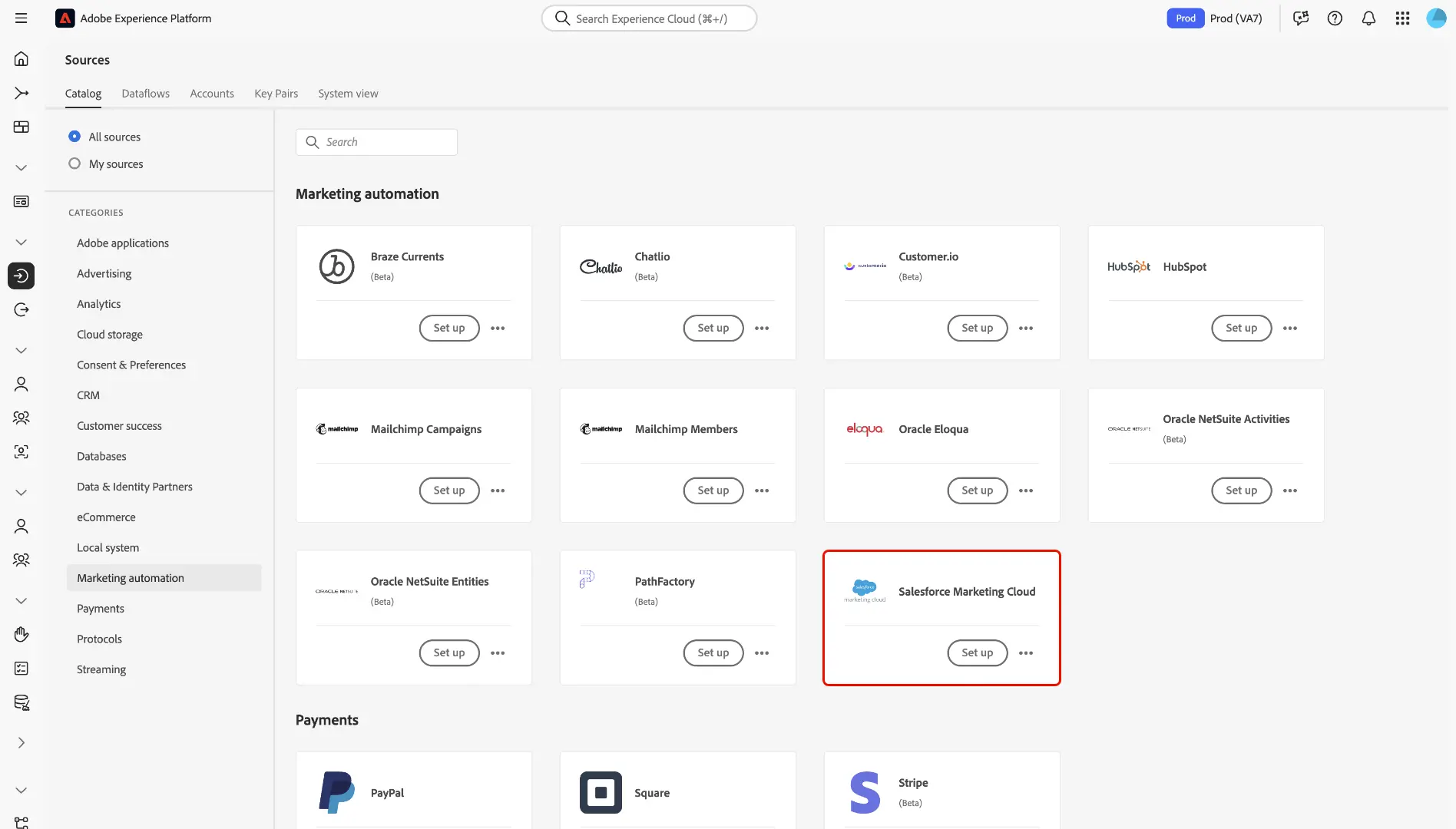
Supply: Adobe
Marketo Interact features a native bidirectional CRM sync with Salesforce Gross sales Cloud that covers leads, contacts, accounts, alternatives, and customized objects. Adobe’s Circulation Service API additionally helps direct Salesforce CRM knowledge ingestion into AEP for profile unification.
What knowledge can sync?
Contacts, leads, accounts, alternatives, marketing campaign members, actions, and customized fields. By means of AEP connectors, behavioral occasions and viewers phase memberships additionally move between the platforms.
Marketo Interact syncs lead/contact data, account knowledge, alternative knowledge, marketing campaign membership, and customized objects bidirectionally with Salesforce.
Is the sync bidirectional?
Sure, by native paths. Marketo Interact maintains steady bidirectional sync with Salesforce Gross sales Cloud (adjustments in both system propagate to the opposite inside minutes). AEP helps bidirectional move by separate supply (Salesforce to AEP) and vacation spot (AEP to Salesforce) connectors.
Third-party instruments default to one-way flows per automation, although bidirectional configurations are doable.
Is it real-time or batch?
Marketo Interact syncs with Salesforce in close to real-time (polling each 5 minutes by default). AEP supply connectors help each streaming and scheduled batch ingestion. AEP vacation spot connectors activate audiences on configurable schedules. Third-party instruments like Zapier set off inside 1 to fifteen minutes relying on plan tier.
What are the out there strategies?
Native AEP connectors (supply and vacation spot), Marketo Interact native CRM sync, Workfront Fusion (Adobe’s low-code automation platform), third-party automation (Zapier, Make), MuleSoft Anypoint (Salesforce’s iPaaS), and customized API improvement.
|
Methodology |
Setup Issue |
Knowledge Circulation |
Actual-time? |
Value |
|---|---|---|---|---|
|
Marketo Interact Native Sync |
Low |
Bidirectional |
Close to real-time (5-min polling) |
Included with Marketo Interact + Salesforce |
|
AEP Supply/Vacation spot Connectors |
Medium |
Bidirectional (separate connectors) |
Streaming or scheduled batch |
Included with AEP license |
|
Workfront Fusion |
Medium |
Configurable per state of affairs |
Scheduled or trigger-based |
Included with Workfront license |
|
MuleSoft Anypoint |
Medium-Excessive |
Configurable |
Actual-time or scheduled |
Separate MuleSoft license |
|
Zapier |
Low |
One-way per Zap |
Close to real-time (1-15 min) |
From $19.99/mo |
|
Customized API |
Excessive |
Absolutely customizable |
Actual-time by way of Platform Occasions |
Developer time + internet hosting |
One distinction value settling upfront: Marketo Interact’s native sync handles ongoing, steady bidirectional CRM knowledge alignment and is the most typical path for B2B advertising groups. AEP connectors serve a distinct job: unifying Salesforce knowledge into the Actual-Time Buyer Profile for cross-channel journey orchestration and viewers activation.
Groups operating each Marketo Interact and AEP alongside Salesforce could use each native paths concurrently, every dealing with a distinct knowledge layer.
Integration Strategies
Marketo Interact Native Salesforce Sync
The way it works: Marketo Interact features a native Salesforce CRM connector that maintains steady bidirectional sync between the 2 platforms. As soon as configured, Marketo polls Salesforce each 5 minutes for adjustments to leads, contacts, accounts, alternatives, and campaigns. Adjustments in both system propagate to the opposite mechanically.
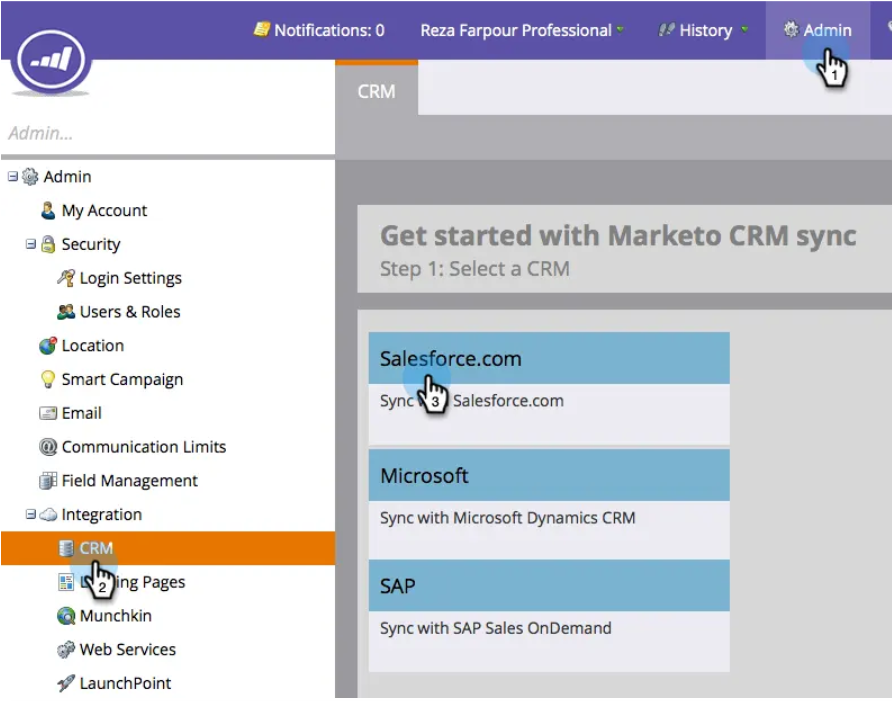
Supply: Adobe
Marketo Gross sales Perception, out there as a Salesforce AppExchange package deal, surfaces lead engagement knowledge (e-mail opens, internet visits, fascinating moments, lead scores) inside Salesforce data for gross sales reps.
What it syncs: Leads, contacts, accounts, alternatives, marketing campaign members, duties, occasions, and customized objects. Lead scores and engagement historical past from Marketo seem in Salesforce by the Gross sales Perception panel. Salesforce discipline updates (stage adjustments, possession reassignment, customized discipline modifications) sync again to Marketo to set off Good Marketing campaign flows.
Suits: ongoing bidirectional sync for B2B marketing-to-sales alignment; the first integration path for organizations utilizing Marketo Interact as their advertising automation platform.
Setup course of:
-
In Salesforce, create a devoted Marketo Sync Consumer with a Salesforce license, System Administrator profile (or a customized profile with the required object and discipline permissions), and API entry enabled.
-
In Marketo, navigate to Admin > CRM > Salesforce. Enter your Salesforce credentials (username, password, and safety token for the sync person).
-
Map Marketo fields to Salesforce fields. Marketo auto-maps commonplace fields (First Identify, Final Identify, E mail, Firm) and allows you to manually map customized fields.
-
Configure sync guidelines: select whether or not Marketo leads that don’t exist in Salesforce ought to be created mechanically, and set the lead project guidelines for brand new data flowing from Marketo to Salesforce.
-
Set up the Marketo Gross sales Perception package deal in Salesforce to floor lead engagement knowledge, scores, and fascinating moments inside Salesforce Lead, Contact, Account, and Alternative data.
Strengths: Adobe maintains it as a first-party integration. Bidirectional sync runs mechanically after preliminary configuration. Gross sales Perception provides reps behavioral context (e-mail engagement, internet visits, lead rating) inside Salesforce with out switching instruments.
Good Campaigns in Marketo can set off on Salesforce discipline adjustments, letting advertising reply to gross sales exercise in actual time.
Limitations: Requires a Marketo Interact license, which is enterprise-priced with no public record costs. The five-minute polling interval means adjustments are close to real-time however not instantaneous. Sync quantity is topic to Salesforce API fee limits (Marketo Interact’s each day API consumption could be vital for giant databases).
Customized object sync requires cautious schema alignment between the 2 platforms. Battle decision defaults to “most not too long ago up to date wins,” which can not swimsuit each discipline.
Finest for: B2B advertising and gross sales groups the place Marketo Interact is the advertising automation platform and Salesforce is the CRM. Organizations operating demand era, lead nurturing, lead scoring, and income attribution workflows that span each programs.
AEP Supply and Vacation spot Connectors
The way it works: Adobe Expertise Platform offers native connectors that deal with Salesforce as each a knowledge supply (ingesting CRM knowledge into AEP for profile unification) and a vacation spot (activating AEP viewers segments again to Salesforce for marketing campaign execution or gross sales follow-up).
Supply connectors pull Salesforce data into AEP and map them to the Expertise Knowledge Mannequin (XDM) schema. Vacation spot connectors push AEP viewers memberships and profile attributes into Salesforce objects.
What it syncs: Supply connectors can ingest any Salesforce commonplace or customized object into AEP datasets: leads, contacts, accounts, alternatives, marketing campaign members, and customized objects. As soon as in AEP, this knowledge merges into the Actual-Time Buyer Profile by way of the Id Graph.
Vacation spot connectors activate AEP viewers segments as Salesforce marketing campaign members, customized object data, or discipline updates on present data.
Suits: ongoing knowledge unification and viewers activation; constructed for enterprise groups utilizing AEP as their central buyer knowledge platform alongside Salesforce CRM.
Setup course of:
-
In AEP, navigate to Sources and seek for the Salesforce connector. Authenticate utilizing a Salesforce Related App with OAuth 2.0 credentials (Consumer ID, Consumer Secret, and the org’s occasion URL).
-
Choose the Salesforce objects you need to ingest (e.g., Contact, Lead, Alternative). AEP’s Knowledge Prep mapper enables you to map Salesforce fields to XDM schema fields utilizing a drag-and-drop interface.
-
Configure the ingestion schedule: select streaming ingestion (for close to real-time updates) or scheduled batch ingestion (hourly, each day, or customized intervals).
-
Map AEP viewers segments to Salesforce actions (e.g., add qualifying profiles to a Salesforce Marketing campaign, replace a customized discipline on the Contact report, or create a Activity).
-
Check by ingesting a small dataset from Salesforce, constructing a check viewers in AEP’s Viewers Builder, and verifying the phase membership seems in Salesforce.
Strengths: Native to AEP, so no third-party device is required. Helps each streaming and batch ingestion from Salesforce. Salesforce knowledge joins all different AEP sources (internet analytics, cellular, commerce, offline) within the Actual-Time Buyer Profile, enabling cross-channel journey orchestration knowledgeable by CRM knowledge.
AEP’s DULE governance framework enforces knowledge utilization insurance policies mechanically, which issues in regulated industries.
Limitations: Requires an Adobe Expertise Platform license, which is enterprise-only with no public pricing. Setup calls for familiarity with XDM schema design and AEP’s knowledge modeling ideas (an actual studying curve for groups new to the platform). Supply and vacation spot are separate connectors, so bidirectional move requires configuring each.
AEP streaming ingestion helps 1,500 requests per second to Actual-Time Profile, which may constrain giant preliminary hundreds.
Finest for: Enterprise advertising groups utilizing Adobe Expertise Platform as their central CDP alongside Salesforce CRM. Organizations that want Salesforce CRM knowledge unified with internet, cellular, and commerce behavioral knowledge for cross-channel personalization and journey orchestration.
Workfront Fusion
The way it works: Workfront Fusion is Adobe’s low-code automation platform, included with Workfront licenses. It makes use of a visible state of affairs builder the place modules signify app actions (triggers, searches, creates, updates) related in a flowchart.

Supply: Adobe
Fusion consists of pre-built connectors for each Adobe Expertise Cloud merchandise and Salesforce, letting groups construct customized workflows that bridge the 2 ecosystems with out code.
What it syncs: Any knowledge uncovered by the Salesforce REST API and the Adobe product APIs related by Fusion. Widespread flows embrace syncing Salesforce alternative stage adjustments to set off Marketo campaigns, pushing AEM content material metadata to Salesforce customized objects, or updating Salesforce data when Workfront challenge milestones full.
Suits: ongoing automation for particular cross-platform workflows; notably helpful when the combination want extends past advertising knowledge (e.g., connecting Workfront challenge administration to Salesforce offers).
Setup course of:
-
In Workfront Fusion, create a brand new state of affairs. Add a Salesforce module because the set off (e.g., “Watch Information” on the Alternative object).
-
Map fields between the Salesforce set off output and the Adobe motion enter. Fusion offers inline features for knowledge transformation (sort conversion, date formatting, conditional logic).
-
Add error-handling routes to catch failures (e.g., log to a Google Sheet, ship a Slack notification, or retry).
Strengths: Native to Adobe’s ecosystem, so it connects to Expertise Cloud merchandise with out third-party dependency. The visible builder is accessible to non-developers. Helps 1,000+ connectors past Adobe and Salesforce, enabling workflows that span the broader tech stack. Error dealing with and retry logic are inbuilt.
Limitations: Requires a Workfront license (Fusion is bundled with Workfront, not offered standalone). Not designed for high-volume, bidirectional CRM sync (Marketo’s native sync handles that higher). Situation complexity can develop shortly when dealing with a number of object sorts and conditional paths.
Finest for: Groups already utilizing Adobe Workfront for advertising operations that must automate particular workflows between Expertise Cloud merchandise and Salesforce past what the native Marketo or AEP connectors deal with.
MuleSoft Anypoint
The way it works: MuleSoft Anypoint Platform is Salesforce’s iPaaS, offering pre-built connectors, API administration, and knowledge transformation capabilities. MuleSoft consists of connectors for each Salesforce CRM objects and Adobe Expertise Platform APIs, giving groups full management over knowledge mapping, transformation, error dealing with, and monitoring.

Supply: Salesforce
What it syncs: Any knowledge accessible by Salesforce and Adobe APIs. MuleSoft’s connector library covers Salesforce commonplace and customized objects, Marketo Interact (leads, actions, campaigns), AEP (profile ingestion, viewers activation), and AEM (asset metadata, content material fragments).
The platform helps batch, streaming, and event-driven patterns.
Suits: each one-time migration and ongoing sync at scale; the beneficial path for organizations with advanced knowledge fashions spanning each ecosystems.
Setup course of:
-
Add the Adobe connector (Marketo, AEP, or a generic HTTP connector for Adobe APIs). Configure authentication (OAuth 2.0 Server-to-Server for AEP, or Marketo REST API credentials).
-
Design the combination move: outline the supply (e.g., Salesforce Change Knowledge Seize occasions), transformation logic (DataWeave mapping expressions), and goal (e.g., AEP Streaming Ingestion API).
-
Add error dealing with, logging, and retry insurance policies. MuleSoft’s runtime manages connection pooling and circuit-breaking mechanically.
-
Monitor the combination by Anypoint Monitoring dashboards, which monitor message quantity, error charges, and latency.
Strengths: Constructed-in monitoring, alerting, and governance. Handles advanced transformation logic by DataWeave (MuleSoft’s knowledge transformation language). Pre-built connectors cut back improvement time in comparison with customized API builds. Salesforce owns MuleSoft, so the Salesforce connector is properly maintained.
Limitations: Requires a separate MuleSoft license (not included with Salesforce CRM subscriptions). Steeper studying curve than Zapier or Fusion. Constructed for enterprise groups with devoted integration engineers or an SI associate. Pricing will not be publicly listed.
Finest for: Enterprise organizations with advanced, high-volume integration necessities between Adobe Expertise Cloud and Salesforce. Groups that want event-driven, real-time sync with knowledge transformation and governance capabilities.
Zapier
The way it works: Zapier connects Adobe and Salesforce merchandise by event-driven automations referred to as Zaps. Every Zap pairs a set off in a single app with a number of actions within the different. Zapier helps Salesforce as each a set off and motion app, and presents connectors for a number of Adobe merchandise.

Supply: Adobe
What it syncs: Contacts, leads, alternatives, and marketing campaign knowledge between Salesforce and supported Adobe merchandise. Every object sort requires its personal Zap. Customized fields could be mapped manually within the setup move.
Suits: ongoing sync for particular, easy workflows; not a alternative for the native Marketo or AEP connectors.
Setup course of:
-
Activate the Zap. For bidirectional sync, create a second Zap with set off and motion reversed, and add a filter to forestall infinite loops.
Strengths: Quickest setup with no technical information required. Low value for easy, low-volume workflows. Obtainable with out enterprise licenses on both platform.
Limitations: One trigger-action pair per Zap, so syncing a number of object sorts requires a number of Zaps. No built-in deduplication or battle decision. Historic data created earlier than the Zap was activated don’t sync. Engagement-level knowledge (e-mail opens, internet visits, lead scores) from Adobe merchandise will not be out there by Zapier with the identical depth as native connectors.
Finest for: Small groups or pilot initiatives that want a fast, light-weight connection between Salesforce and an Adobe product with out committing to enterprise integration infrastructure.
Customized API Integration
The way it works: Each ecosystems expose complete APIs.
Adobe Expertise Platform offers 20+ REST API namespaces protecting ingestion, profile entry, segmentation, governance, and activation, all authenticated by way of OAuth 2.0 Server-to-Server.
Salesforce offers REST, SOAP, Bulk, and GraphQL APIs protecting all commonplace and customized objects, plus Platform Occasions and Change Knowledge Seize for event-driven sync.
A customized integration connects these APIs instantly, with customized middleware dealing with authentication, discipline mapping, transformation, battle decision, and error restoration.
What it syncs: Something each API surfaces expose. That is the one technique that helps arbitrarily advanced situations: syncing customized objects between Marketo and Salesforce that the native sync does not cowl, triggering AEP viewers rebuilds from Salesforce Platform Occasions, or routing AJO journey outcomes again to Salesforce Alternative data.
Suits: both one-time migration or ongoing sync; the one technique with no ceiling on complexity or knowledge protection.
Setup course of:
-
Construct the sync service: a server-side software that listens for occasions from each platforms (AEP streaming occasions, Salesforce Platform Occasions or Change Knowledge Seize) and writes adjustments to the opposite facet.
-
Implement battle decision logic for bidirectional sync (timestamp-based, source-priority, or field-level guidelines).
-
Deploy, monitor, and preserve the combination. Each platforms model their APIs with common releases, so maintenance is ongoing.
Strengths: Full management over what syncs, when, and the way. Actual-time sync by way of event-driven APIs on each side. Can implement arbitrarily advanced enterprise logic. No per-record or per-operation charges from a third-party connector.
Limitations: Requires devoted improvement sources to construct and preserve. You personal the infrastructure, monitoring, and error restoration. API adjustments on both facet (AEP’s schema evolution, Salesforce’s seasonal API versioning) demand ongoing maintenance. The preliminary construct takes weeks or months, not hours.
Finest for: Enterprise groups with integration necessities that no off-the-shelf connector satisfies. Organizations with in-house improvement groups and a long-term dedication to operating each ecosystems. Corporations with advanced knowledge fashions, customized XDM schemas, or enterprise logic that should be enforced throughout sync.
Key Use Instances
1. Lead Scoring and Handoff from Marketo to Salesforce
Advertising and marketing nurtures leads by Marketo Interact campaigns (e-mail sequences, webinars, content material downloads). Marketo’s lead scoring mannequin assigns behavioral and demographic scores.
When a lead crosses the sales-ready threshold, the native Salesforce sync creates or updates the lead in Salesforce with the complete engagement historical past, and Gross sales Perception surfaces the rating, fascinating moments, and up to date exercise on the Salesforce report.
The gross sales rep sees which content material the lead engaged with and the way not too long ago, enabling a well timed, knowledgeable follow-up.
Finest integration technique: Marketo Interact native Salesforce sync with Gross sales Perception.
2. Unifying CRM Knowledge in AEP for Cross-Channel Personalization
Enterprise advertising groups operating Adobe Journey Optimizer want Salesforce CRM knowledge (deal stage, account tier, renewal date, product possession) to personalize journeys throughout e-mail, push, SMS, and internet.
The AEP Salesforce supply connector ingests CRM data into the Actual-Time Buyer Profile, the place they merge with internet analytics, commerce occasions, and cellular behavioral knowledge.
Journey situations can then reference Salesforce attributes in actual time (e.g., set off a renewal journey 90 days earlier than contract expiration based mostly on the Salesforce Alternative shut date).
Finest integration technique: AEP supply connector (streaming or scheduled batch).
3. Activating AEP Audiences in Salesforce for Gross sales Comply with-Up
Advertising and marketing builds high-intent viewers segments in AEP’s Actual-Time CDP utilizing behavioral alerts (web site visits, content material consumption, product web page views) mixed with CRM attributes.
The AEP Salesforce vacation spot connector pushes phase membership again to Salesforce as marketing campaign member data or customized discipline updates. Gross sales reps in Salesforce can then filter their pipeline by AEP phase membership to prioritize outreach to accounts exhibiting energetic shopping for alerts.
Finest integration technique: AEP vacation spot connector.
4. Closed-Loop Income Attribution
Advertising and marketing must attribute pipeline and income again to particular campaigns and touchpoints. Marketo Interact tracks advertising touches (e-mail clicks, occasion attendance, advert engagement) whereas Salesforce tracks alternative phases and closed-won income.
With the native bidirectional sync, Marketo Measure (previously Bizible) can hint each Purchaser Attribution Touchpoint from first advertising contact by closed-won deal, offering multitouch income attribution throughout each programs.
Finest integration technique: Marketo Interact native sync with Marketo Measure.
5. Account-Primarily based Advertising and marketing with Shared Account Intelligence
Advertising and marketing runs account-based campaigns in Marketo Interact or Adobe Journey Optimizer concentrating on particular accounts by business, measurement, or shopping for stage. Salesforce offers the account hierarchy, alternative knowledge, and relationship context.
The native sync ensures each programs share the identical account construction, so advertising targets the precise accounts and gross sales sees the advertising engagement on the account stage. AJO B2B Version extends this to purchasing committee-level journey orchestration.
Finest integration technique: Marketo Interact native sync for account knowledge; AEP connectors for purchasing committee journey orchestration.
Limitations and Issues
Knowledge Mannequin Variations
Adobe Expertise Platform makes use of the Expertise Knowledge Mannequin (XDM) with standardized schemas, discipline teams, and id namespaces. Salesforce makes use of its personal object mannequin with leads, contacts, accounts, alternatives, and customized objects.
Mapping between the 2 requires deliberate schema design selections which can be costly to vary after knowledge assortment begins. Marketo Interact provides a 3rd layer: its personal lead database with customized fields, sensible lists, and program membership buildings.
Aligning fields, picklist values, and relationship hierarchies throughout all three programs requires cautious planning.
For a broader take a look at how Adobe Expertise Platform and Salesforce differ as platforms, see our Adobe Expertise Platform vs. Salesforce comparability.
Sync Conflicts in Bidirectional Flows
Marketo Interact’s native Salesforce sync defaults to “most not too long ago up to date wins” for battle decision. When a marketer updates a lead’s job title in Marketo on the identical time a gross sales rep updates the identical discipline in Salesforce, one change overwrites the opposite based mostly on timestamp.
For fields that each groups routinely edit (lead standing, contact data, qualification standards), outline specific possession guidelines earlier than activating bidirectional sync.
For a deeper take a look at how Marketo and Salesforce differ of their strategy to the lead lifecycle and knowledge possession, see our Marketo vs. Salesforce comparability.
Pricing and Licensing Complexity
Each ecosystems are enterprise-priced with no public record costs. Adobe Expertise Platform, Journey Optimizer, and Marketo Interact every require separate licenses priced by profile quantity, messages despatched, or contact database measurement. Salesforce CRM licenses scale by version and seat depend. MuleSoft requires an extra license.
The entire value of a full Adobe-Salesforce integration stack (AEP + Marketo + AJO + Salesforce Enterprise + MuleSoft) could be substantial, and consumption metering on each side makes annual prices tough to mannequin throughout procurement.
API Price Limits
Each platforms implement fee limits that have an effect on integration efficiency. AEP helps 1,500 requests per second to Actual-Time Profile for streaming ingestion and 20 GB/hour for batch ingestion by way of API. Salesforce’s each day API request allocation begins at 100,000 requests for Skilled and Enterprise editions.
Marketo Interact’s Salesforce sync consumes Salesforce API calls with every polling cycle, and huge databases with frequent adjustments can strategy each day limits.
Permissions and Entry
Establishing native connectors requires admin entry on each side. In Adobe, AEP connector configuration requires an Adobe Admin Console position with knowledge ingestion and supply administration permissions. In Salesforce, System Administrator entry is required to create Related Apps, configure API-enabled profiles, and set up AppExchange packages.
Marketo Interact sync requires a devoted Salesforce person with a full Salesforce license (not a platform-only license) and field-level entry to each object and discipline included within the sync.
Upkeep
Each ecosystems launch frequent updates. Adobe’s AEP, AJO, and Marketo Interact obtain steady updates by their cloud service fashions. Salesforce variations its API with every seasonal launch (present: Summer season ’26, API model 67.0). Customized fields added after the preliminary sync configuration is not going to sync except you replace the combination.
Schema adjustments in AEP (new XDM discipline teams, id namespace modifications) could require re-mapping supply connectors. Plan for periodic opinions of the combination’s well being and accuracy.
What No Methodology Fixes: The Knowledge Itself
Each technique above strikes data between Adobe Expertise Cloud and Salesforce. None of them checks whether or not these data are correct, full, or present. A lead with a lifeless e-mail handle in Salesforce syncs as a lead with a lifeless e-mail handle in Marketo, the place it enters a nurture sequence that bounces and damages sender repute.
A contact with an outdated job title flows into AEP’s Actual-Time Buyer Profile, the place it informs a personalised journey that addresses somebody by a job they left six months in the past. The mixing ensures each programs agree; it doesn’t guarantee they’re proper.
The place ZoomInfo Suits In
Each technique on this information strikes knowledge between Adobe Expertise Cloud and Salesforce. None of them improves the info being moved. When the combination is dwell however pipeline knowledge remains to be incomplete (flawed titles, outdated direct dials, lacking firm attributes, stale firm particulars), the bottleneck is not the connector.
That’s the hole ZoomInfo closes.
ZoomInfo is a B2B knowledge and go-to-market platform constructed on 500M contacts, 100M firms, 135M+ verified telephone numbers, and 200M+ verified enterprise emails. That knowledge is verified by a multi-source pipeline backed by 300+ human researchers and reaching as much as 95% accuracy on first-party knowledge.
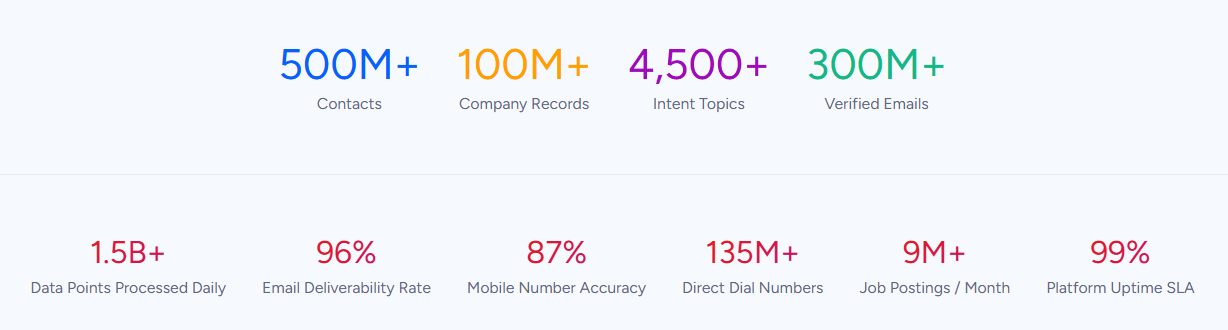
For groups operating an Adobe-Salesforce integration, ZoomInfo addresses the info high quality layer that no connector handles.
ZoomInfo integrates natively with Salesforce by its market, offering CRM enrichment, lead routing, and real-time knowledge updates inside Salesforce data.
It additionally integrates with Adobe Marketo Interact by a market app and REST API, enriching Marketo lead data with verified contact knowledge, firm attributes, and technographics.
The identical knowledge feeds ZoomInfo’s GTM Context Graph, which processes 1.5B+ knowledge factors each day and unifies third-party intelligence with CRM data, dialog transcripts, and behavioral alerts to floor not simply what occurred in a deal, however why.
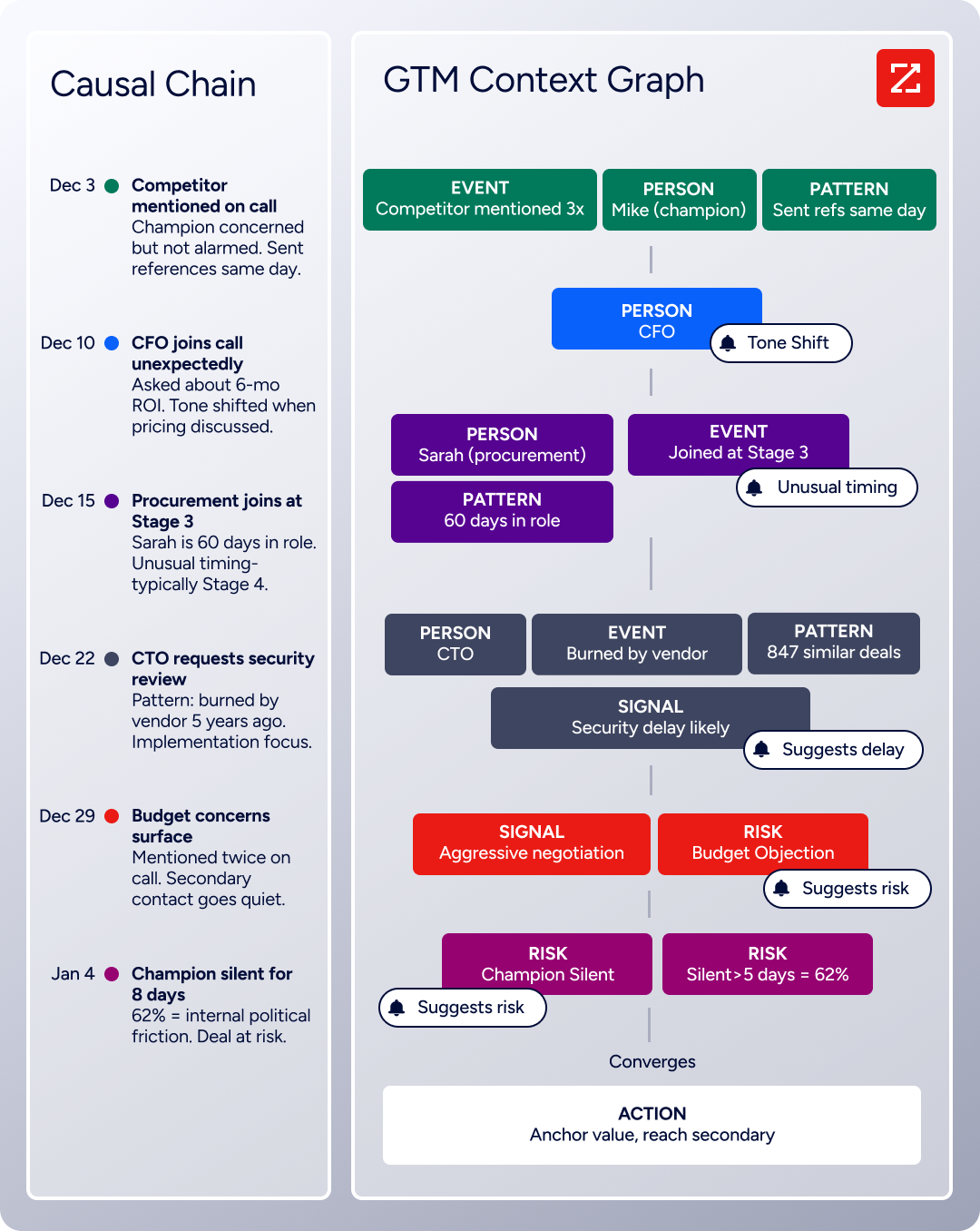
In observe, a group operating each ecosystems can use ZoomInfo to complement data in Salesforce (the place the native integration handles it mechanically) and in Marketo Interact (by the Marketo connector), then let the prevailing Adobe-Salesforce sync propagate these enriched data throughout each platforms.
A lead enriched with a verified enterprise e-mail, present job title, and firm attributes in Salesforce arrives in Marketo with that knowledge intact, prepared for correct segmentation and personalization. The identical enriched report flows into AEP’s Actual-Time Buyer Profile with appropriate attributes, so journey orchestration selections in Adobe Journey Optimizer mirror present, verified knowledge.
Purchaser Intent knowledge from ZoomInfo, monitoring alerts from 210 million IP-to-Group pairings, could be routed into both platform to prioritize accounts which can be actively researching related options.
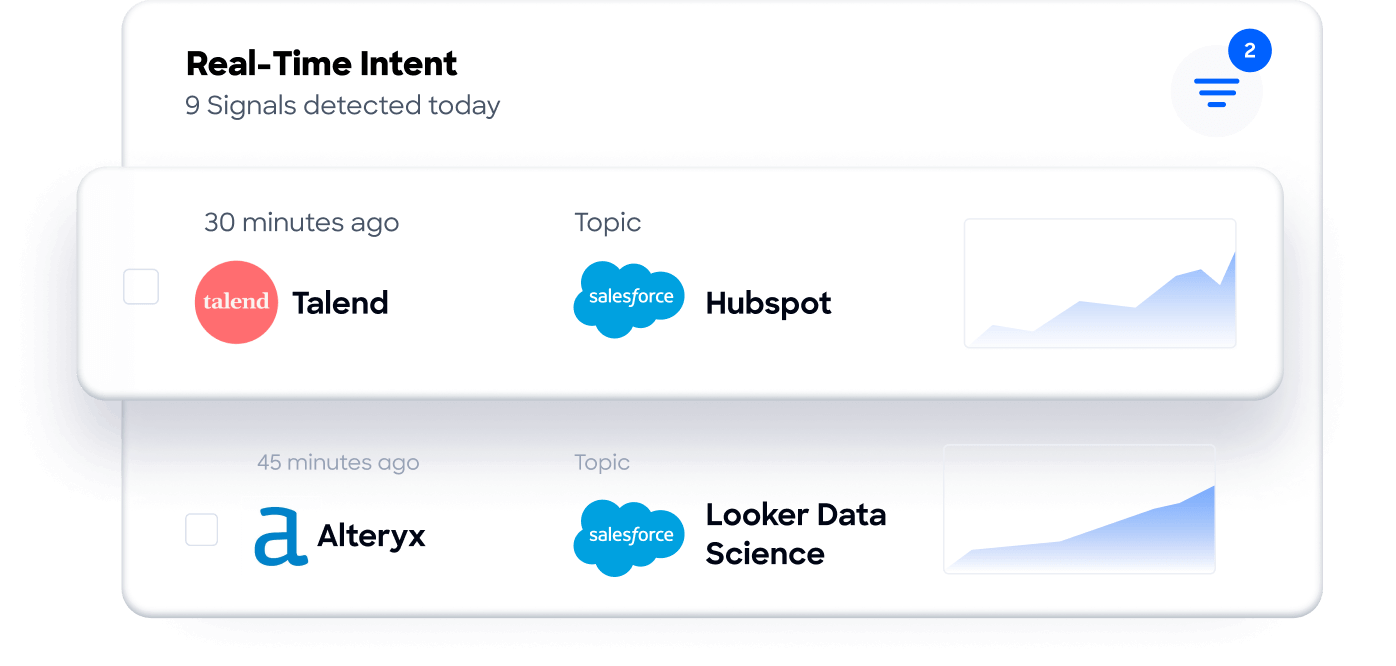
For groups constructing past ZoomInfo’s native connectors, API and MCP entry delivers the identical intelligence to any customized workflow, AI agent, or third-party device within the stack.
Enriched data additionally make the combination itself extra dependable. Fewer clean fields imply fewer mismatches throughout id decision in AEP.
Constant formatting throughout data reduces false positives that create duplicates when Marketo syncs with Salesforce. And verified emails imply nurture campaigns inbuilt Marketo or AJO attain inboxes as a substitute of bouncing.
Seismic’s gross sales group attributed 39% of energetic pipeline to alternatives recognized or influenced by ZoomInfo alerts, whereas boosting productiveness by 54% and saving 11.5 hours per week. (Seismic)
Last Verdict
A number of native integration paths exist between Adobe Expertise Cloud and Salesforce, reflecting the depth of each ecosystems.
Marketo Interact’s bidirectional CRM sync is essentially the most established and extensively used path for B2B marketing-to-sales alignment.
AEP’s supply and vacation spot connectors deal with the broader knowledge unification and viewers activation layer.
For many groups, the precise alternative is dependent upon which Adobe merchandise are within the stack and what the combination wants to perform.
-
B2B advertising groups utilizing Marketo Interact ought to activate the native Salesforce sync instantly. It’s the quickest path to bidirectional lead and make contact with alignment, and Gross sales Perception provides reps visibility into advertising engagement with out leaving the CRM.
-
Organizations with advanced, multi-product Adobe deployments (AEP, Marketo, AJO, AEM, Workfront) alongside Salesforce ought to consider MuleSoft Anypoint or Workfront Fusion for workflows that span a couple of integration level.
Earlier than committing to a technique, make clear what the combination wants to perform.
If the purpose is marketing-to-sales lead handoff and pipeline attribution, Marketo Interact’s native Salesforce sync is the place to begin.
If the purpose is unifying Salesforce CRM knowledge with internet, cellular, and commerce behavioral knowledge for real-time personalization, AEP’s connectors are the precise path.
If each objectives exist concurrently, the 2 native paths can run in parallel, every dealing with its personal knowledge layer. No matter technique, the standard of the info in each programs determines whether or not the combination delivers worth or simply synchronizes issues throughout two costly platforms.
ZoomInfo, with native integrations for each Salesforce and Marketo Interact, plus API and MCP entry for any system within the stack, is the info enrichment layer that retains each ecosystems correct whereas the connectors maintain them aligned.
FAQ
Does Adobe Expertise Cloud combine natively with Salesforce?
Sure, by a number of paths. Marketo Interact (Adobe’s B2B advertising automation platform) features a native bidirectional sync with Salesforce Gross sales Cloud that covers leads, contacts, accounts, alternatives, and customized objects.
Adobe Expertise Platform offers supply connectors for ingesting Salesforce CRM knowledge into the Actual-Time Buyer Profile, and vacation spot connectors for activating AEP viewers segments again into Salesforce.
These are separate integration paths serving completely different functions: Marketo handles advertising automation and lead administration sync, whereas AEP handles knowledge unification and viewers activation.
Can I exploit Marketo Interact’s Salesforce sync and AEP connectors on the identical time?
Sure. The 2 paths deal with completely different knowledge layers and might run concurrently. Marketo’s native sync manages the operational lead/contact database alignment between advertising automation and CRM.
AEP’s connectors unify Salesforce CRM knowledge with behavioral alerts from different sources (internet, cellular, commerce) within the Actual-Time Buyer Profile for journey orchestration.
Operating each is frequent in enterprise deployments the place Marketo handles demand era whereas AEP powers cross-channel personalization.
What Salesforce version do I want for the Adobe integration?
Marketo Interact’s native Salesforce sync requires a Salesforce version with API entry enabled (Skilled Version with API add-on, Enterprise, Limitless, or Efficiency).
The devoted sync person wants a full Salesforce license with System Administrator-level permissions or a customized profile granting entry to all synced objects and fields. AEP connectors require a Salesforce version with API entry and a Related App configured with OAuth 2.0.
How typically does knowledge sync between Marketo Interact and Salesforce?
Marketo Interact polls Salesforce for adjustments each 5 minutes by default. Adjustments in both system (new data, discipline updates, deletions) propagate to the opposite inside that polling interval. That is close to real-time however not instantaneous. For time-sensitive workflows (e.g., a gross sales rep updates a lead standing and expects an instantaneous advertising response), issue the five-minute window into workflow design.
What occurs when the identical report is up to date in each Adobe and Salesforce concurrently?
Marketo Interact’s default battle decision is “most not too long ago up to date wins” based mostly on timestamp. If a marketer updates a lead’s job title in Marketo and a gross sales rep updates the identical discipline in Salesforce throughout the identical sync cycle, whichever change occurred final overwrites the opposite.
For fields that each groups routinely edit, greatest observe is to designate one system because the authoritative supply for particular fields (e.g., Salesforce owns lead standing, Marketo owns lead rating) and configure field-level sync guidelines accordingly.
Is the combination affected by API fee limits?
Sure. Marketo Interact’s Salesforce sync consumes Salesforce API calls with every polling cycle. Massive databases with frequent adjustments can strategy Salesforce’s each day API limits, notably on Skilled and Enterprise editions. AEP streaming ingestion helps 1,500 requests per second to Actual-Time Profile.
Customized API integrations utilizing each platforms’ APIs should account for fee limits on each side. Monitoring API consumption is an ongoing upkeep requirement for all integration strategies.
How does ZoomInfo enhance an Adobe-Salesforce integration?
ZoomInfo solves the info high quality drawback that no sync device addresses. Contact data in CRMs and advertising automation platforms decay over time as individuals change jobs, telephone numbers go inactive, and firm particulars shift.
ZoomInfo enriches data with verified contact knowledge, firm attributes, technographics, and intent alerts. Its native Salesforce integration handles enrichment mechanically on the CRM facet, and its Marketo Interact connector enriches the advertising database instantly.
The end result: knowledge flowing between each ecosystems is correct and full, which reduces sync errors from clean fields, inconsistent formatting, and duplicate data. Purchaser Intent knowledge from ZoomInfo can be routed into both platform to prioritize accounts exhibiting energetic analysis alerts.
What does an Adobe Expertise Cloud and Salesforce integration value?
Prices depend upon the strategy and the licenses already in place. Marketo Interact’s native Salesforce sync is included with the Marketo license (no further integration value), however Marketo itself is enterprise-priced with no public record costs.
AEP connectors are included with the AEP license. MuleSoft requires a separate license (pricing not publicly listed).
Zapier begins at $19.99/month for 750 duties. Customized API integrations don’t have any platform charges however require developer time and internet hosting.
On each side, API fee limits tied to version and license depend could require higher-tier plans at giant sync volumes. Implementation prices for enterprise deployments sometimes contain programs integrator charges along with license prices.
Different instruments that connect with Salesforce:

